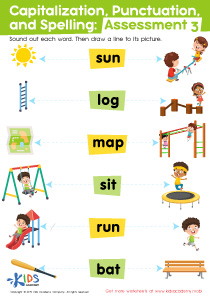
Understanding syllables Grammar Worksheets
3 filtered results
Difficulty Level
Grade
Age
-
From - To
Subject
Activity
Standards
Our "Understanding Syllables Grammar Worksheets" are designed to help young learners grasp the fundamentals of syllable segmentation and counts. Each worksheet offers engaging activities tailored for elementary students, aiding in the breakdown of words into simple, comprehensible parts. These exercises not only enhance phonemic awareness but also improve reading fluency and vocabulary. Ideal for classroom settings or home practice, our worksheets support a fun, interactive learning experience, ensuring children master the basics of syllables while fostering a love for language. Explore and boost your child's linguistic skills with our expert-crafted syllable worksheets.
Favorites
With answer key
Interactive
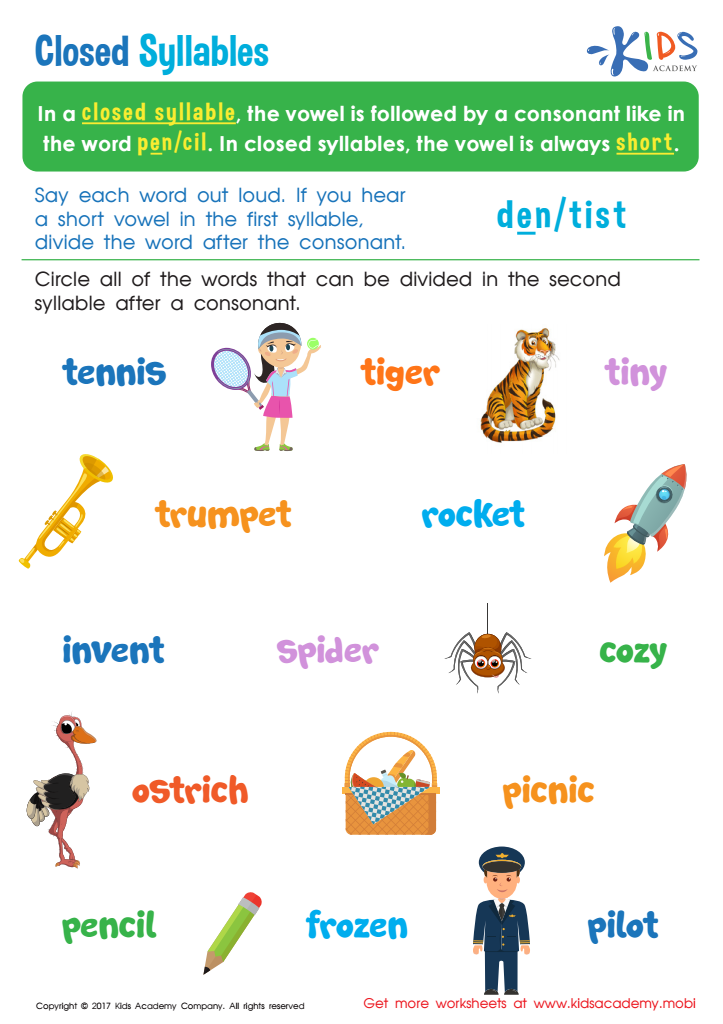
Closed Syllable Spelling Worksheet
Learning syllables can be tough, but we can make it easier! Look for long and short vowel sounds to identify closed syllables. This worksheet can help 3rd graders do just that, with its fun and colorful design.
 Assign to My Students
Closed Syllable Spelling Worksheet
Worksheet
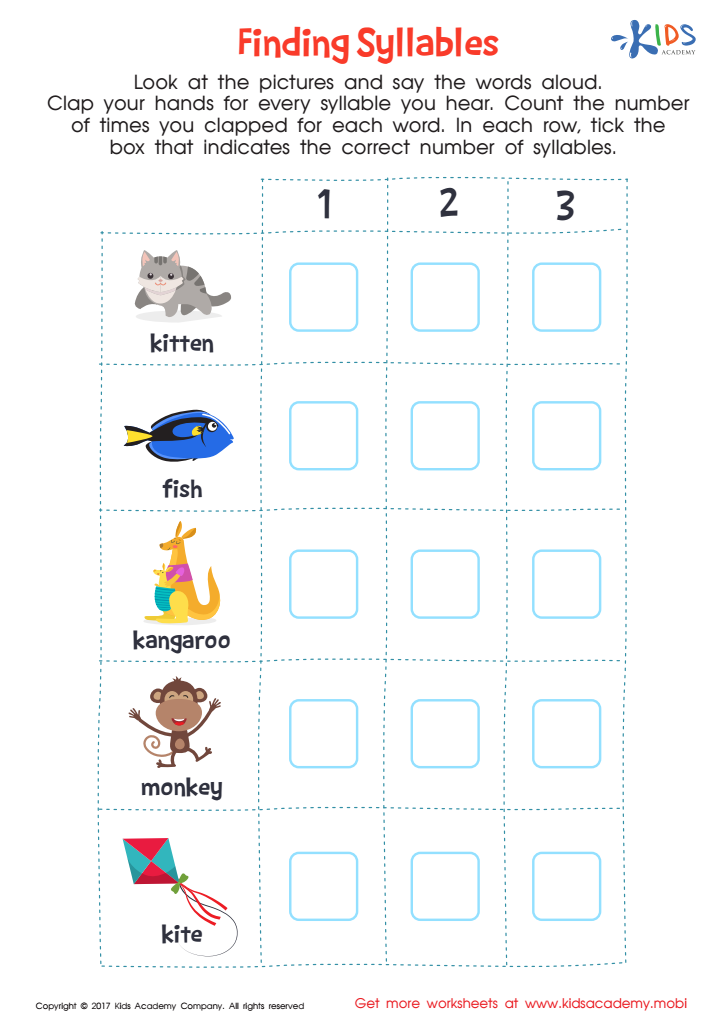
Finding Syllables Word Structure Worksheet
Have your kid clap and count syllables in words to improve their reading and spelling! Use this word structure worksheet for a fun activity - syllables!
Finding Syllables Word Structure Worksheet
Worksheet
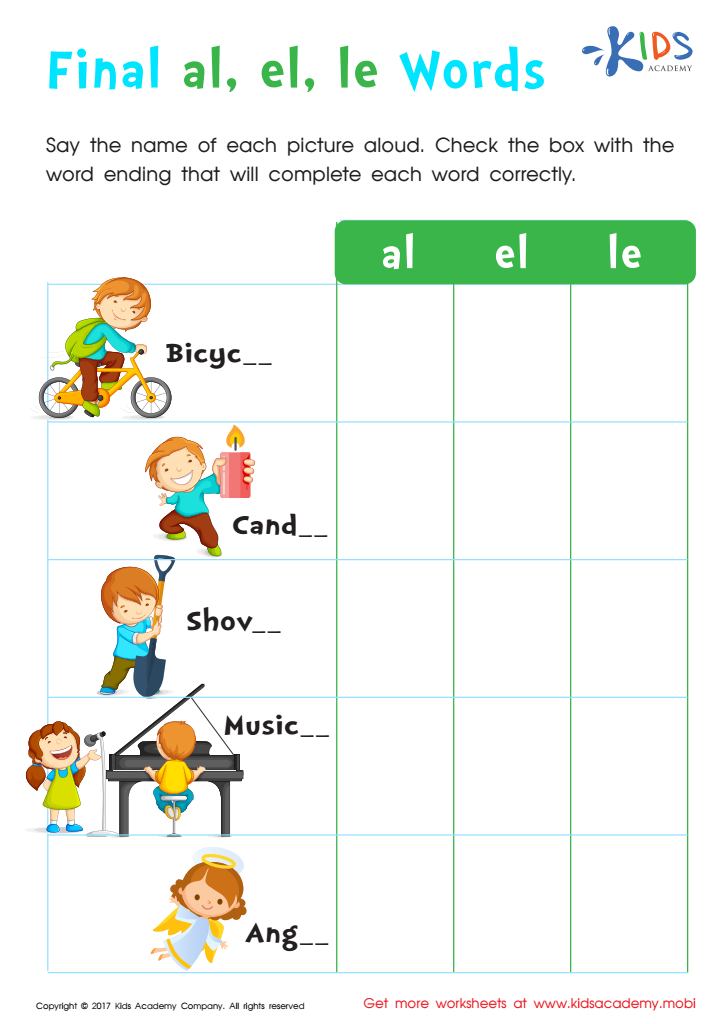
Spelling Words Ending with –le, –el and –al Worksheet
Spelling tricky words with the same ending sounds can be fun with this worksheet! Kids learn to spell -le, -el, and -al words while enjoying colorful pictures. It's a great way to refine their usage of tricky word endings.
Spelling Words Ending with –le, –el and –al Worksheet
Worksheet
Join Kids Academy for Free
Who is primarily going to use this learning content?



.jpg)



Understanding syllables and grammar is fundamental in young children's literacy development, so parents and teachers should prioritize this aspect of learning. Syllables, the building blocks of words, help students break down complex words into manageable parts. This segmentation aids in decoding new words, enhancing reading fluency and accuracy. When children grasp syllable patterns, they become more adept at spelling, as they can apply familiar rules to unfamiliar words.
Grammar, on the other hand, provides the structure needed for clear and effective communication. It helps children understand how words function together to form meaningful sentences. Mastering grammar enables students to express their thoughts coherently, both in speech and writing. This skill becomes increasingly important as they progress academically and need to articulate more complex ideas.
Moreover, a strong foundation in syllables and grammar boosts confidence. Children who read and write well are more likely to enjoy these activities, fostering a lifelong love for learning. This foundation also lays the groundwork for future academic success across subjects, as strong literacy skills are crucial for understanding textbooks, instructions, and writing reports.
In conclusion, investing time in teaching syllables and grammar equips children with essential tools for effective communication and overall academic achievement. Parents and teachers play a vital role in nurturing these skills.