Counting practice Writing Worksheets
4 filtered results
-
From - To
Enhance your child's counting skills with our Counting Practice Writing Worksheets! Perfect for early learners, these engaging worksheets provide a fun and interactive way for kids to practice writing numbers and mastering basic math concepts. Each worksheet features colorful designs and illustrations that captivate young minds while reinforcing important counting skills. From tracing numbers to completing sequences, these activities promote fine motor skills and number recognition. With various difficulty levels, our worksheets cater to all learning stages, making them ideal for home or classroom use. Start your child’s journey to numerical proficiency with our reusable and printable counting practice resources today!
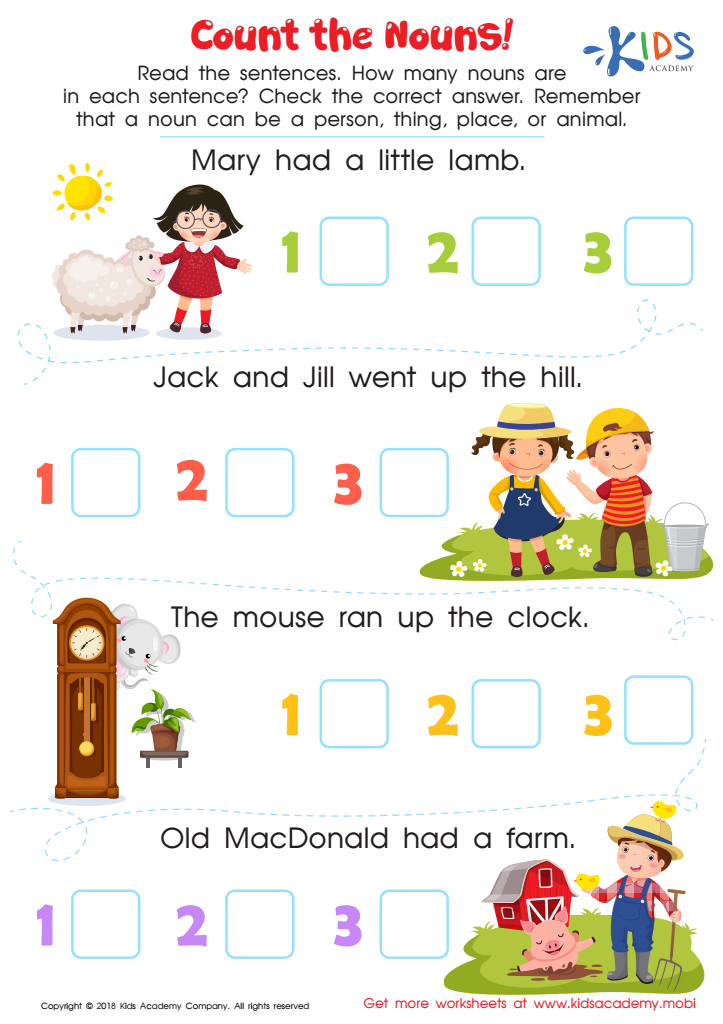
Count the Nouns Worksheet
 Assign to My Students
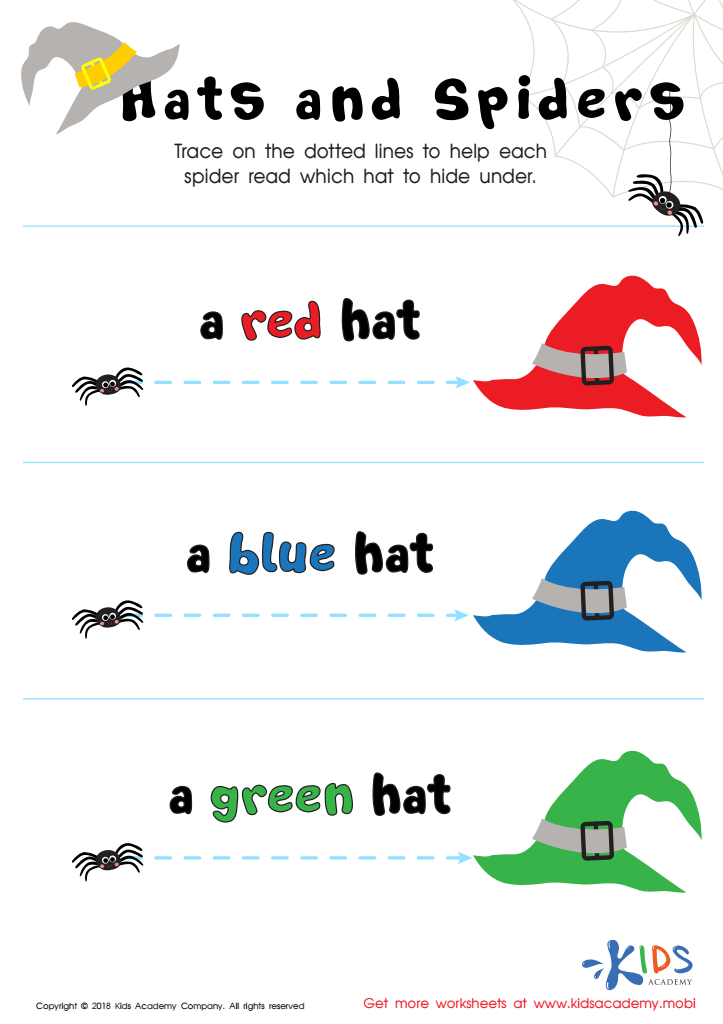
Read from Left to Right: Hats and Spiders Worksheet
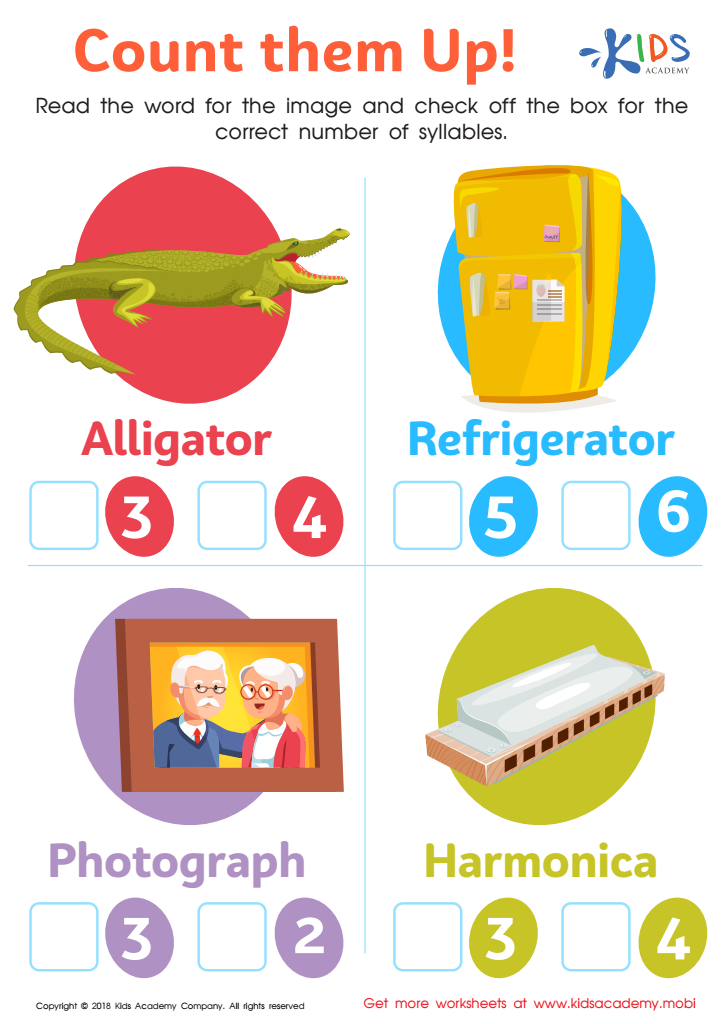
Count Them Up Worksheet

Deer Tracing Winter Words Worksheet







Counting practice writing is a fundamental skill that plays a vital role in a child's development, particularly in the early grades. First and foremost, it strengthens mathematical understanding. When children write numbers, they develop number sense and gain familiarity with numerical patterns. This practice helps them build a strong foundation for future math concepts.
Moreover, counting practice writing enhances fine motor skills, essential for handwriting and other manual tasks. By repeatedly forming numbers, children improve their coordination and dexterity, which contributes to their overall writing abilities. Additionally, it fosters critical thinking skills; children learn to recognize sequences, compare quantities, and solve problems through counting.
Furthermore, involves children and builds their confidence. As they see their own progress in counting through writing, it instills a sense of achievement. Parents and teachers who prioritize counting practice writing not only support numerical understanding but also contribute to a child's self-esteem and motivation towards learning.
Ultimately, integrating counting practice writing into educational routines nurtures a lifelong appreciation for mathematics and encourages a positive attitude toward learning in children. Investing time in this simple yet impactful practice can yield profound developmental benefits that extend beyond mathematics into other areas of learning.








