Phonics worksheets activities for Ages 3-8 - Page 2
25 filtered results
-
From - To
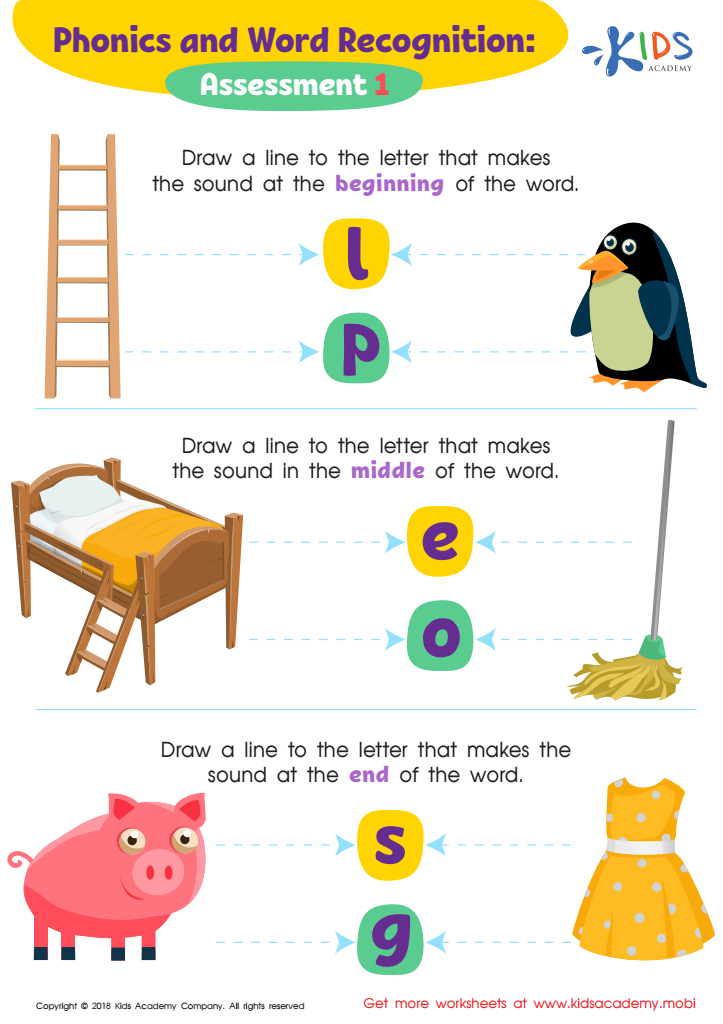
Phonics and Word Recognition: Assessment 1 ELA Worksheet
 Assign to My Students






Phonics activities are crucial for children aged 3-8 as they lay the foundation for reading and writing, essential skills for lifelong learning. Phonics teaches children the relationship between sounds and letters, enabling them to decode words and understand their structure. For young learners, mastering phonics enhances their ability to read independently, boosting their confidence and love for literature.
By engaging in phonics activities, such as rhyming games, sound matching, and letter recognition exercises, parents and teachers can help foster critical thinking and auditory skills. These activities also promote linguistic development, laying the groundwork for stronger communication abilities and comprehension skills.
Moreover, early exposure to phonics can significantly impact a child's academic trajectory, reducing the risk of reading difficulties later on. Children who acquire strong phonics skills are more likely to achieve literacy milestones and excel in other subjects.
Involved parents and teachers can create a nurturing and supportive learning environment, utilizing tools like phonics games, songs, and stories to make learning enjoyable. Ultimately, focusing on phonics equips children not just with reading skills but also with a robust foundation for all future educational endeavors, preparing them to navigate and succeed in an increasingly complex world.








