Filters

6 filtered results

Clear all filters
Favorites
With answer key
Interactive

6 filtered results

Difficulty Level

Grade


Subject

    Explore our engaging Physical Science worksheets designed specifically for children ages 3-8! These activities encourage young learners to discover the wonders of the physical world through fun and interactive challenges. With a variety of worksheets focusing on topics like motion, forces, materials, and simple machines, kids will enhance their understanding of basic science concepts while developing critical thinking skills. Each worksheet is crafted to be age-appropriate, ensuring that even the youngest learners can enjoy exploring science. Perfect for home or classroom use, these resources foster curiosity and promote hands-on learning experiences that inspire a lifelong passion for science. Discover the world of physical science today!

    Check out this FREE Physical Science Trial Lesson for age 3-8!

    D

    Favorites
    With answer key
    Interactive
    • Physical Science
    • 3-8
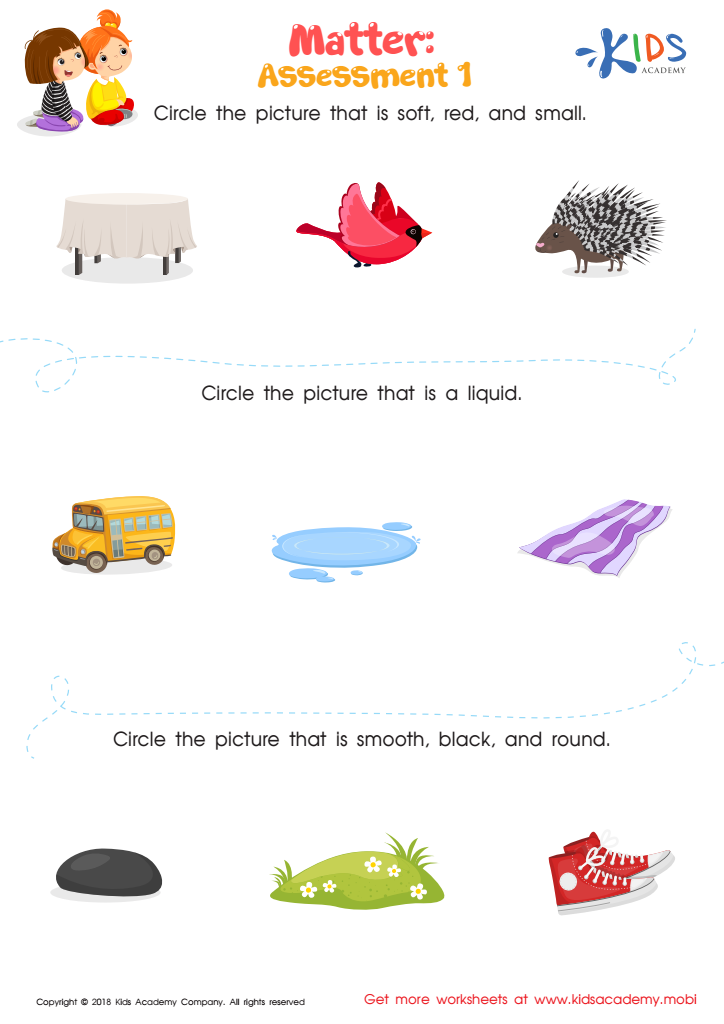
    Matter: Assessment 1 Worksheet
    Matter: Assessment 1 Worksheet

    Matter: Assessment 1 Worksheet

    Have your children learn that anything that has weight and takes up space is matter. Examples include buses, tables, people, animals, and more. Use this worksheet to help them identify the objects and circle the soft, red, and small one; the liquid; and the smooth, black, and round one.
    Matter: Assessment 1 Worksheet
    Worksheet
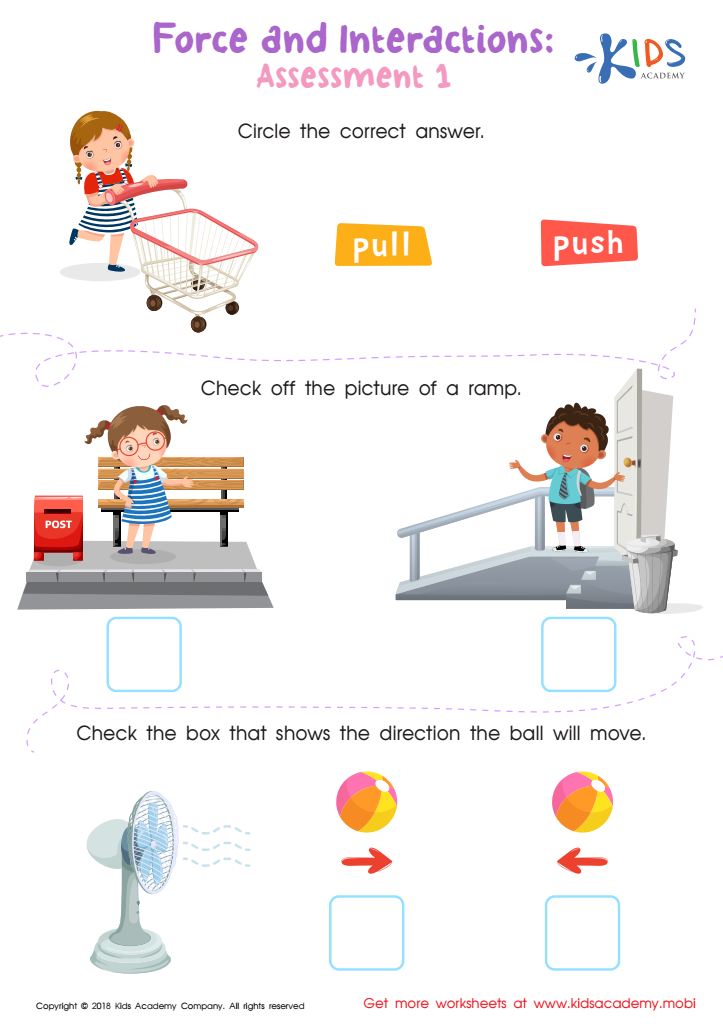
    Force and Interactions: Assessment 1 Worksheet
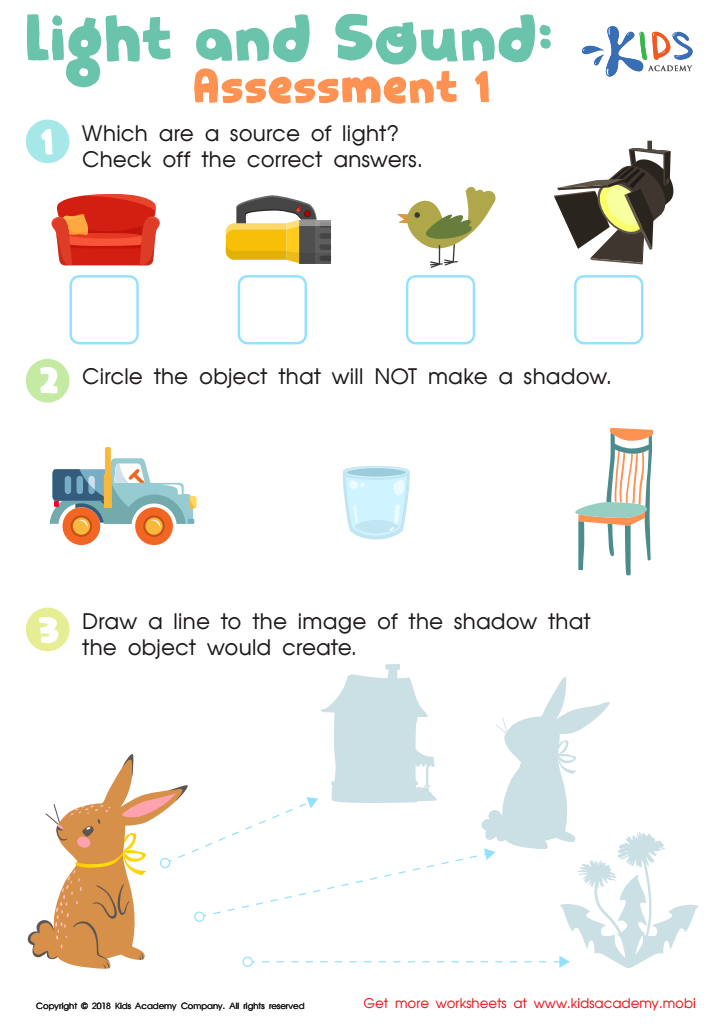
    Force and Interactions: Assessment 1 Worksheet

    Force and Interactions: Assessment 1 Worksheet

    Test your students' knowledge of pushing, pulling, ramps and wind with this worksheet. The first task requires them to identify push or pull pictures. The second asks them to identify a ramp and the third to explain which direction a ball will move when exposed to wind.
    Force and Interactions: Assessment 1 Worksheet
    Worksheet
    Light and Sound: Assessment 1 Worksheet
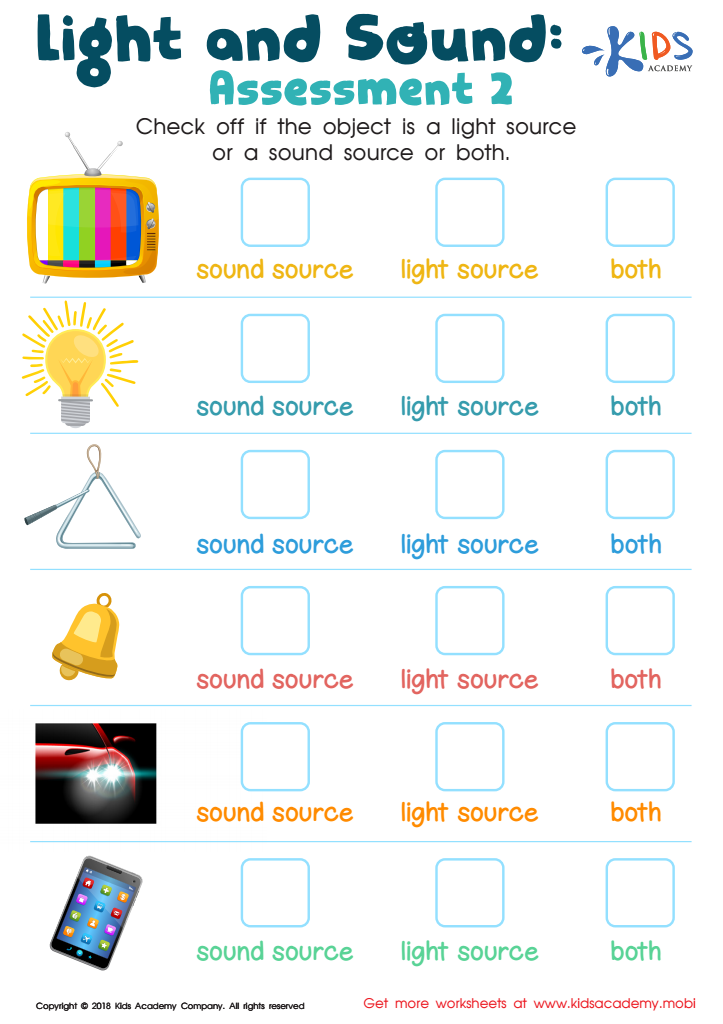
    Light and Sound: Assessment 1 Worksheet

    Light and Sound: Assessment 1 Worksheet

    Can your kids name a light source? Challenge them to name the sun and moon, then point out objects they use when the sun sets. Look through the worksheet with them and ask them to identify the light sources. Help them check off the correct answers.
    Light and Sound: Assessment 1 Worksheet
    Worksheet
    Light and Sound: Assessment 2 Worksheet
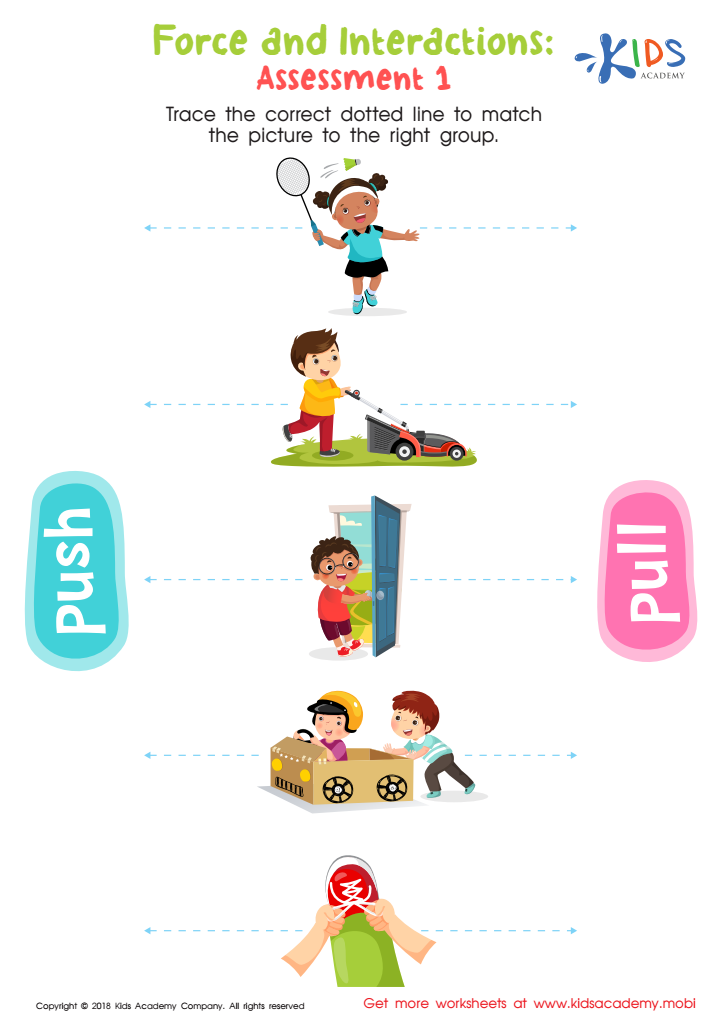
    Light and Sound: Assessment 2 Worksheet

    Light and Sound: Assessment 2 Worksheet

    This worksheet introduces your kids to light and sound, with common sources of each. Identify the objects and help them check if it's a light source, a sound source, or both. Colourful and simple, it's a great way to teach your little ones! (80 words)
    Light and Sound: Assessment 2 Worksheet
    Worksheet
    Force and Interactions: Assessment 2 Worksheet
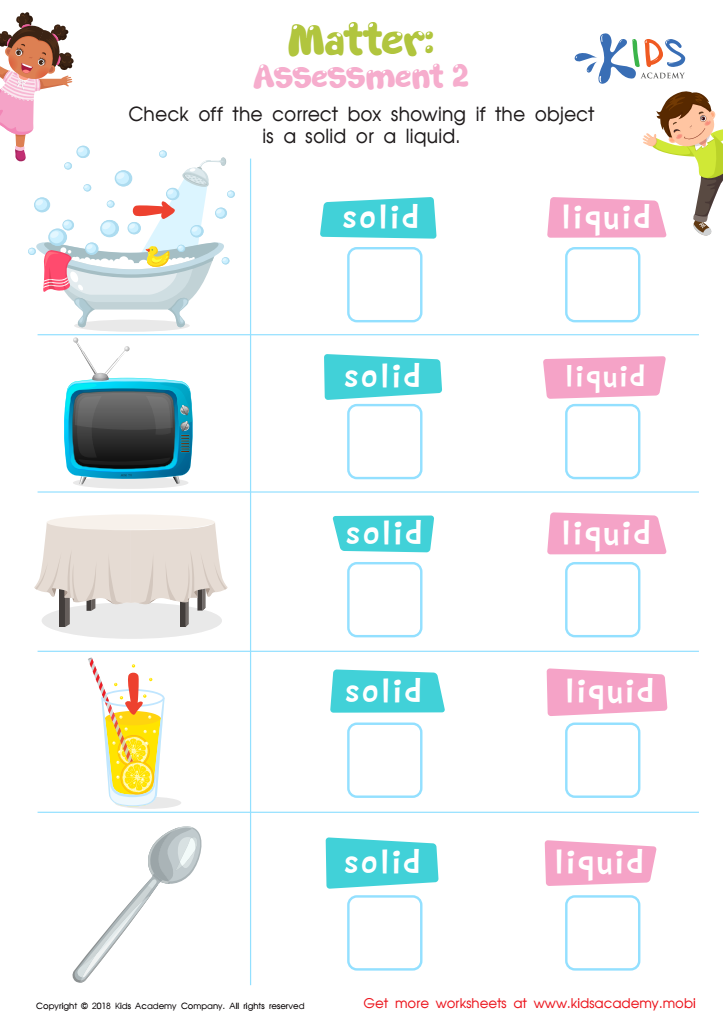
    Force and Interactions: Assessment 2 Worksheet

    Force and Interactions: Assessment 2 Worksheet

    Help your child see the difference between push and pull with this fun worksheet. Ask them to match each picture to the right group. The "push" is on the left and the "pull" is on the right. Assist them in tracing the activities and explain what it is the people are doing.
    Force and Interactions: Assessment 2 Worksheet
    Worksheet
    Matter: Assessment 2 Worksheet

    Matter: Assessment 2 Worksheet

    Matter: Assessment 2 Worksheet

    Identify the five objects in this worksheet as either solid or liquid. Ask your kids to check the correct box. Melting changes solids to liquids while freezing transforms liquids to solids.
    Matter: Assessment 2 Worksheet
    Worksheet


    Parents and teachers should prioritize physical science activities for children aged 3-8 as these foundational experiences play a crucial role in cognitive development and fostering a love for learning. At this young age, children's natural curiosity about the world around them is at its peak, making it an ideal time to introduce basic concepts of physical science, such as matter, energy, motion, and forces.

    Engaging in hands-on activities, like simple experiments with water, magnets, or building materials, helps young learners develop critical thinking and problem-solving skills. These activities encourage exploration, observation, and inquiry, allowing children to ask questions, make predictions, and draw conclusions based on their findings.

    Moreover, physical science activities promote fine motor skills and coordination, as children manipulate objects to understand scientific concepts. Collaborating on projects fosters teamwork and communication skills, strengthening social development.

    By nurturing a science-oriented mindset early on, parents and teachers instill confidence and curiosity in children that can create a lifelong passion for science and learning. Ultimately, engaging in physical science activities promotes intellectual growth, creativity, and a deeper understanding of the world, highlighting the importance of integrating these experiences into early education.