Addition & Subtraction worksheets activities for Ages 4-8 - Page 2
26 filtered results
-
From - To
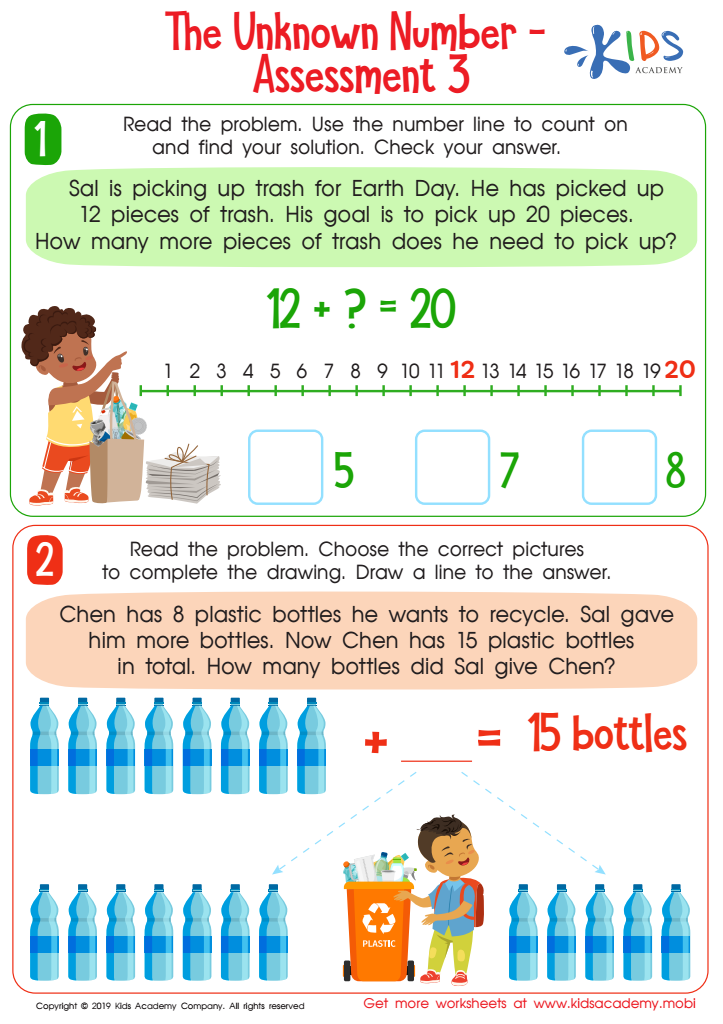
The Unknown Number - Assessment 3 Worksheet
 Assign to My Students
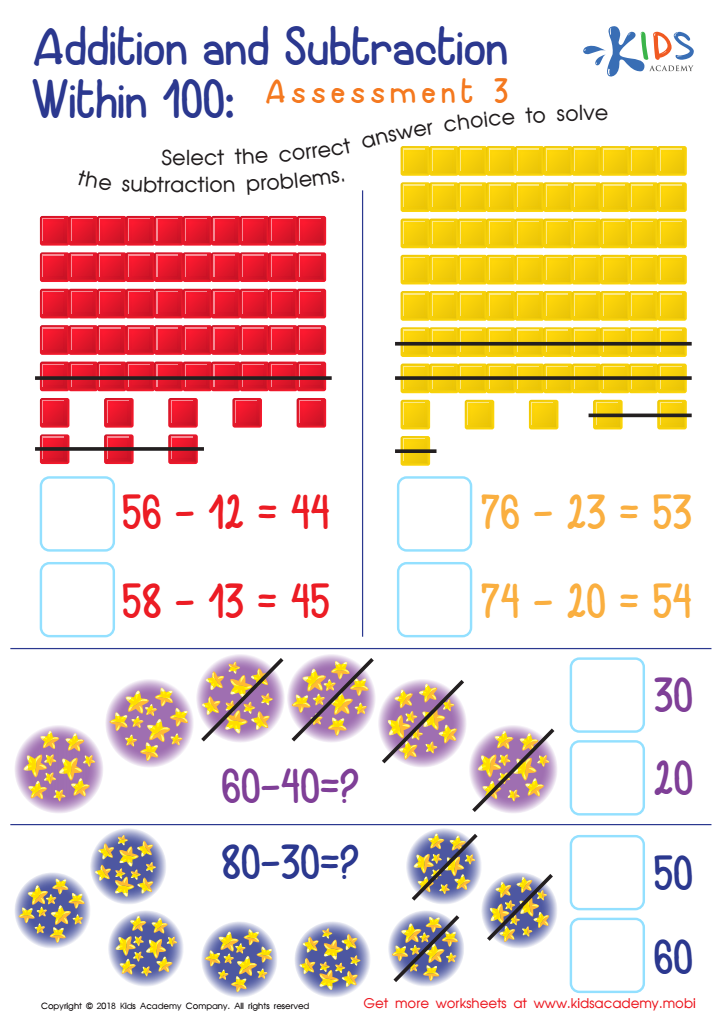
Addition and Subtraction Within 1: Assessment 3 Worksheet






.jpg)

Parents and teachers should prioritize addition and subtraction activities for children aged 4 to 8 because these foundational skills are crucial for overall mathematical development. At this age, children are starting to form their understanding of numbers and early mathematical concepts, making it an essential time for engaging them through interactive and fun activities. Mastering addition and subtraction not only helps them solve basic problems but also builds critical thinking and problem-solving skills, which are applicable in everyday life.
Early math education fosters cognitive development and encourages perseverance, as children learn to navigate challenges and celebrate their successes. Engaging in hands-on activities, like using blocks or interactive games, can make learning enjoyable, promoting positive associations with math. Furthermore, these activities promote language development as caregivers and educators discuss numbers, quantities, and problem-solving strategies with children.
Instilling a strong arithmetic foundation early on prepares children for more complex mathematics in later grades and boosts their confidence in their abilities. Ultimately, engaging in addition and subtraction activities helps create a supportive learning environment that values education, encourages curiosity, and prepares children for academic success.








