Phonics worksheets activities for Ages 4-8 - Page 2
25 filtered results
-
From - To
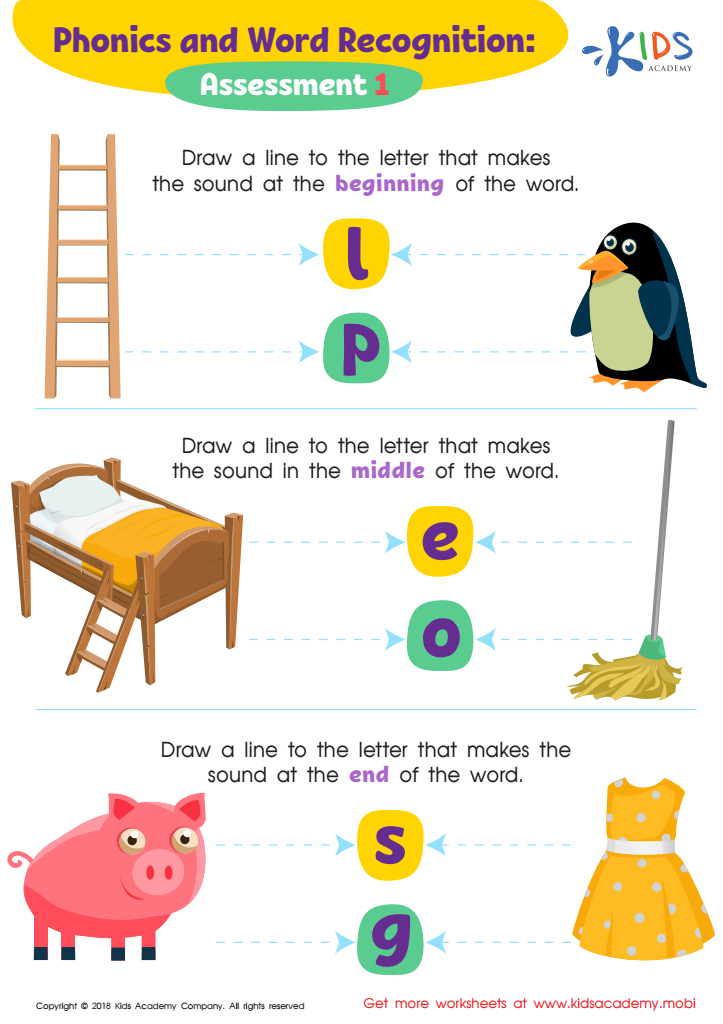
Phonics and Word Recognition: Assessment 1 ELA Worksheet
 Assign to My Students







Phonics activities are crucial for children aged 4-8 as they lay the foundation for reading and literacy skills. At this age, children's brains are developing at a rapid pace, making it an optimal time to introduce the relationship between sounds and letters. By engaging in phonics activities, kids learn to decode words, which improves their reading fluency and comprehension.
Understanding phonics enables children to sound out unfamiliar words, fostering a sense of independence in their reading journey. This independence boosts their confidence and motivation towards literacy, making reading a more enjoyable activity.
Moreover, phonics instruction has been shown to enhance children's spelling and vocabulary skills, contributing to their overall language development. It's also important for parents and teachers to realize that effective phonics instruction can reduce reading difficulties in the later years. By incorporating fun and engaging phonics activities, such as games, songs, and interactive experiences, adults can create a positive learning environment that supports a lifelong love for reading.
In summary, emphasizing phonics activities in early education not only nurtures essential literacy skills but also fosters confidence, independence, and a love for reading—crucial components for success in school and beyond.








