Phonics worksheets activities for Ages 5-9 - Page 2
25 filtered results
-
From - To
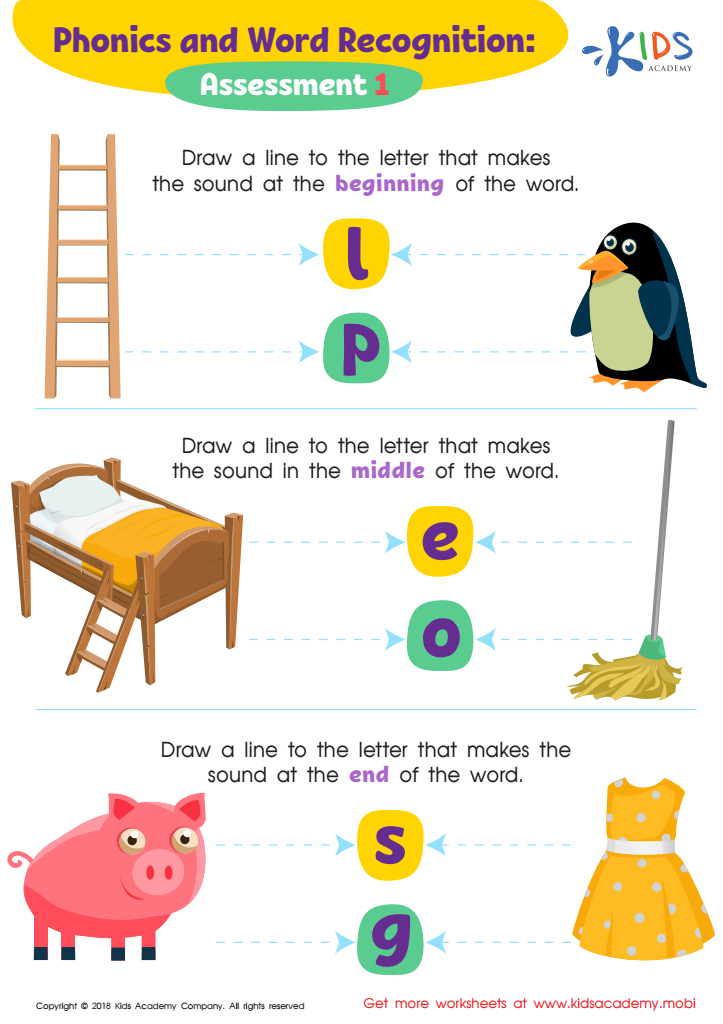
Phonics and Word Recognition: Assessment 1 ELA Worksheet
 Assign to My Students






.jpg)

Phonics activities play a crucial role in the literacy development of children aged 5-9, making them vital for parents and teachers. At this age, children are in a foundational stage of learning to read and write, where phonemic awareness—understanding how sounds form words—can significantly impact their literacy skills. Engaging in phonics activities helps children recognize letters and the sounds they represent, improving their ability to decode new words and enhancing their reading fluency.
Moreover, phonics instruction boosts spelling skills and comprehension as children learn to manipulate sounds and letters. This empowers them to take ownership of their reading and writing processes. For parents, supporting phonics learning at home reinforces classroom instruction and promotes a positive reading culture, fostering lifelong literacy habits. For teachers, well-structured phonics activities can be key to meeting diverse learning needs within the classroom, enabling targeted support for those struggling or advanced learners.
Ultimately, promoting phonics helps lay the groundwork for academically successful futures. As students increase their confidence and proficiency in reading, they are more likely to engage with books, cultivate a love for reading, and achieve overall academic success. Therefore, prioritizing phonics activities is essential for ensuring children's literacy growth.








