Songs and Poems worksheets activities for Ages 6-8 - Page 2
27 filtered results
-
From - To
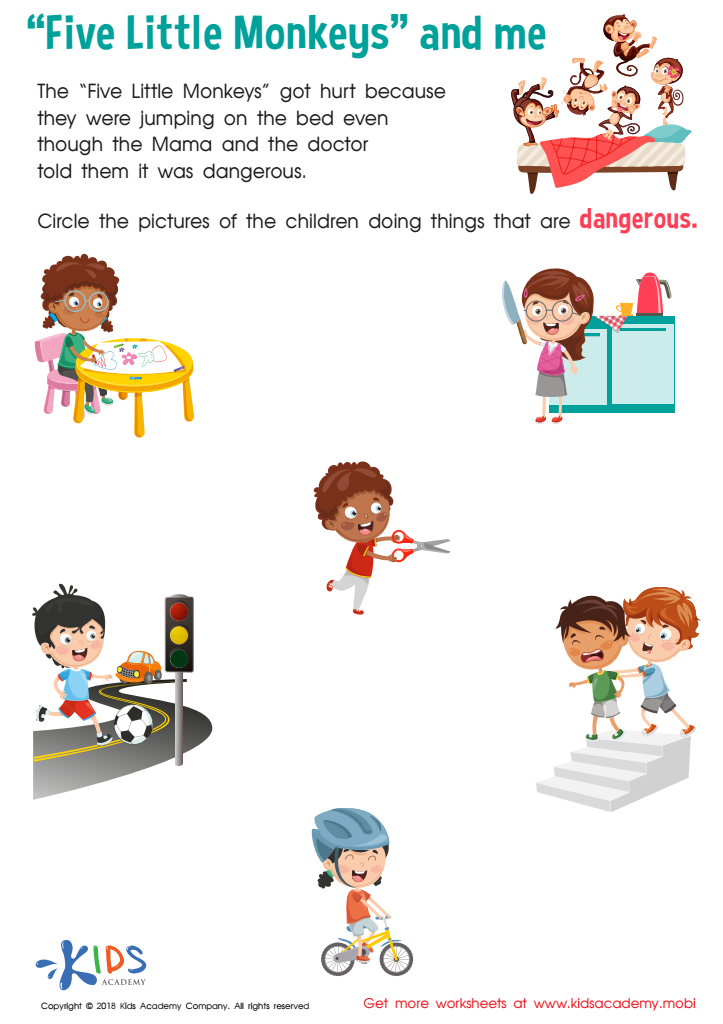
Five Little Monkeys and Me Worksheet
 Assign to My Students
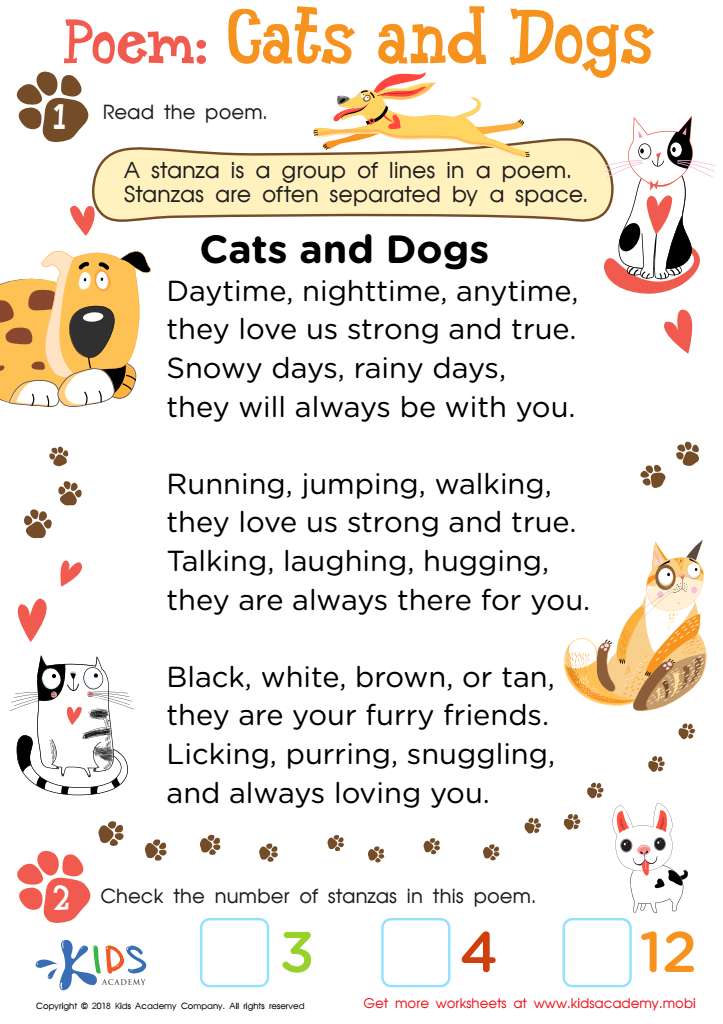
Poem: Cats and Dogs Worksheet
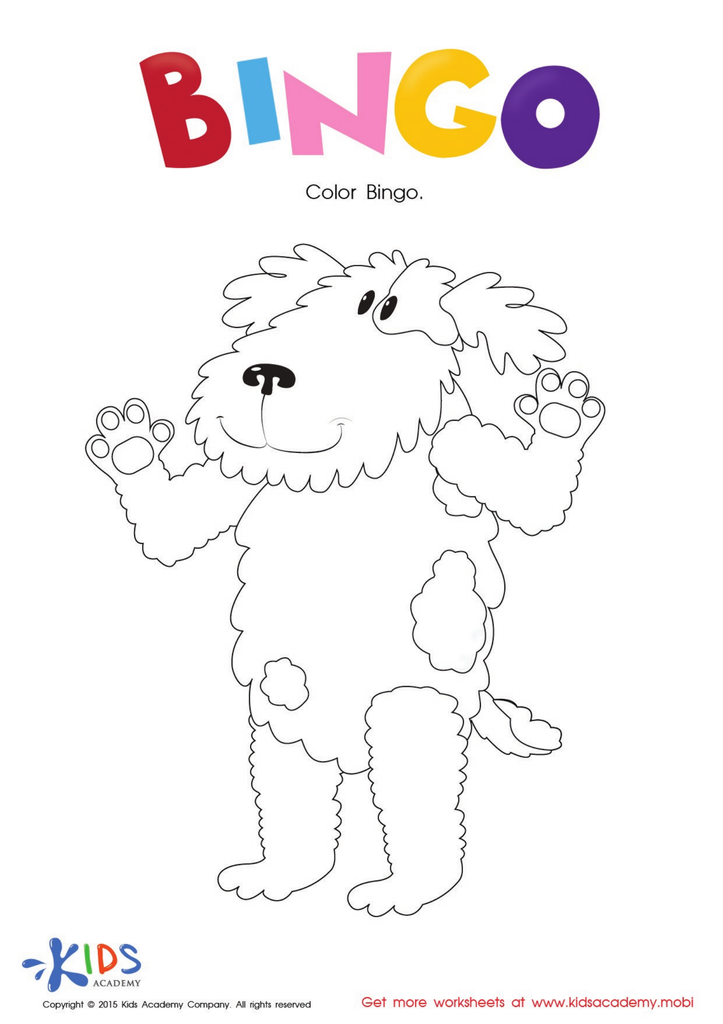
The Bingo Song: Coloring The Dog Worksheet






Songs and poems are invaluable tools for children aged 6-8, fostering essential developmental skills. First, they enhance language and literacy, introducing children to rhythms, rhymes, and patterns of speech that promote vocabulary development. Engaging with music and poetry nurtures listening skills, which are crucial for effective communication.
Moreover, these activities stimulate creativity and imagination. Writing and reciting poems, for example, allow children to express their thoughts and feelings, building their emotional intelligence. Music often encapsulates cultural narratives, providing an avenue for children to explore diversity and develop empathy.
Songs and poems also serve to improve memorization and recall skills. The repetitive nature of music makes information easier to digest, helping with retention of new concepts, vocabulary, and even numerical skills when incorporated.
Additionally, such activities promote social interaction. Singing together or sharing poetry can build a sense of community and teamwork among peers, fostering social skills and collaboration.
Finally, integrating songs and poems into the learning process can make educational content more enjoyable, encouraging a love for learning that can last a lifetime. In essence, investing time in these activities enriches a child's emotional, social, and intellectual development.








