
Easy Building Vocabulary worksheets activities for Ages 5-7
6 filtered results
Difficulty Level
Grade
Age
-
From - To
Subject
Activity
Standards
Discover our engaging "Building Vocabulary" worksheets designed specifically for children aged 5-7! These fun and interactive activities help young learners expand their vocabulary while fostering a love for language. Featuring colorful illustrations and relatable themes, each worksheet is crafted to enhance word recognition and comprehension skills. Activities range from matching words to images, fill-in-the-blank exercises, and creative writing prompts that encourage children's imagination. Perfect for classroom use or at-home learning, our easy-to-follow worksheets are a fantastic resource for early education. Start building a strong vocabulary foundation for your child today and watch their confidence in communication grow!
Favorites
With answer key
Interactive
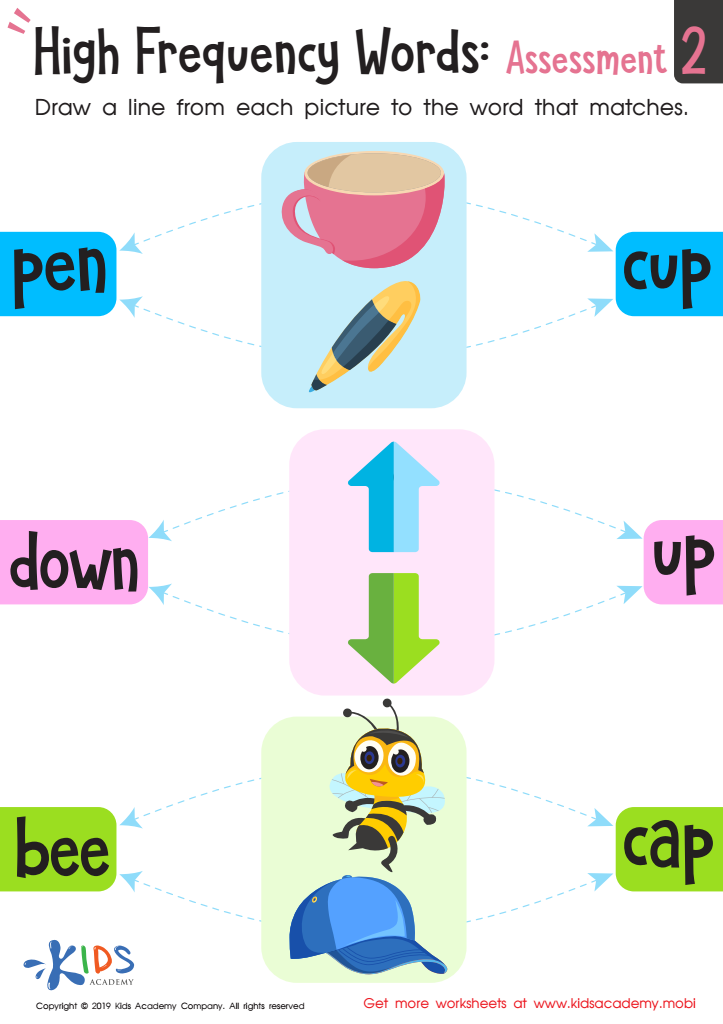
High Frequency Words: Assessment 2 Worksheet
Having knowledge of high frequency words can make emergent readers stronger and boost comprehension. This free assessment worksheet uses traceable lines to connect the picture to its corresponding words, allowing them to feel successful. It's a great way to reinforce high frequency words with familiar imagery.
 Assign to My Students
High Frequency Words: Assessment 2 Worksheet
Worksheet
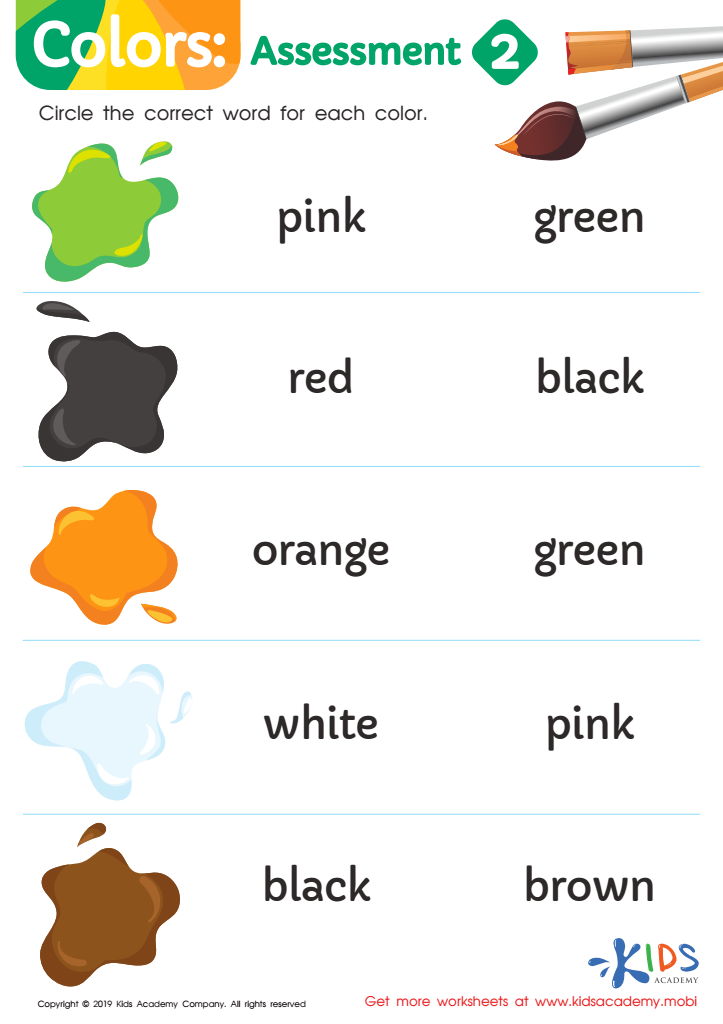
Colors: Assessment 2 Worksheet
Teach color words to young students to build fluency and confidence. Check knowledge with an assessment worksheet. Have students look at paint samples and circle the correct color word. This assessment helps parents and teachers measure a child’s accuracy when reading color words.
Colors: Assessment 2 Worksheet
Worksheet
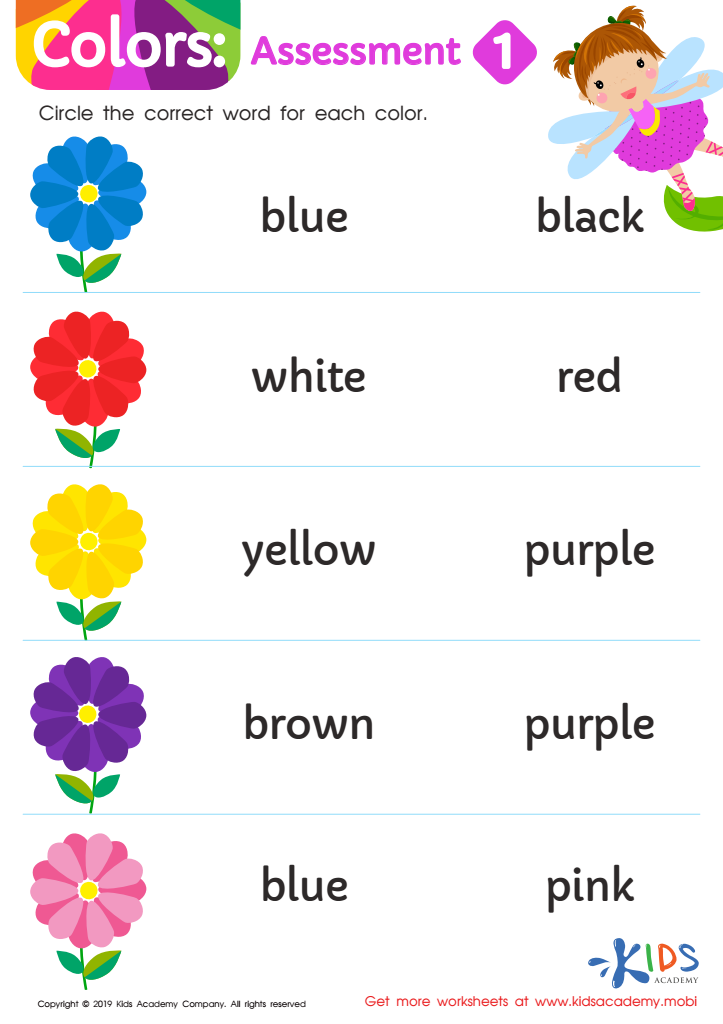
Colors: Assessment 1 Worksheet
Children can decode unfamiliar words by sounding them out or by recognizing sight words. Color words are an important part of sight word knowledge, so add them to your child's list! This color word worksheet is an effective assessment tool for teachers to use with preschool and kindergarten students. It checks their knowledge of five color words - they simply look at the flower and circle the appropriate color word!
Colors: Assessment 1 Worksheet
Worksheet
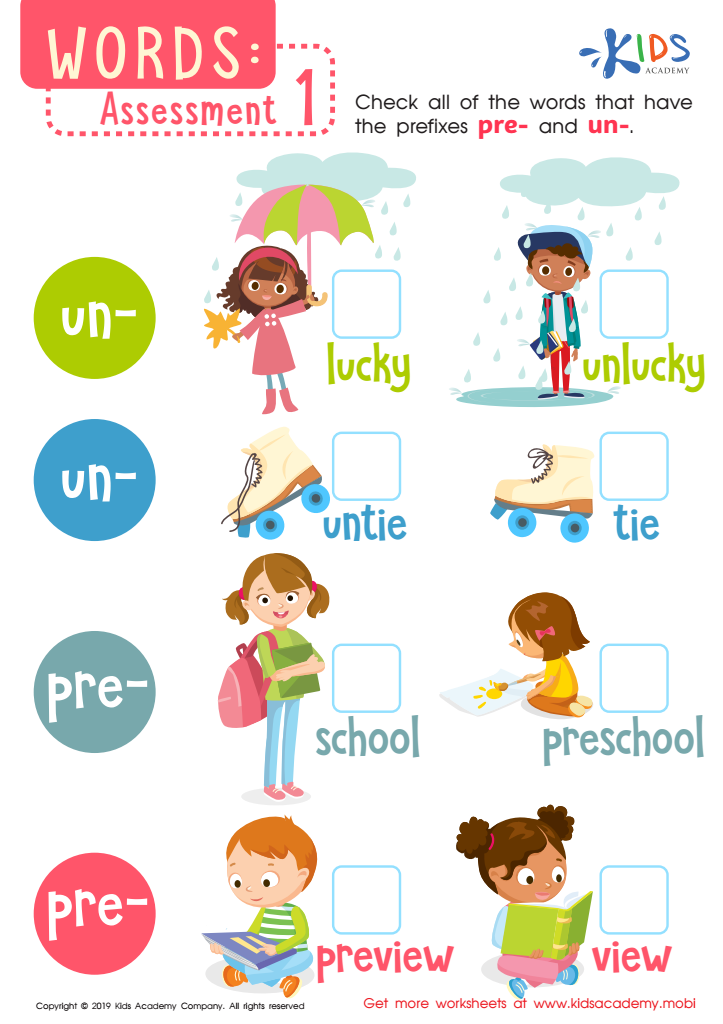
Words: Assessment 1 Worksheet
Help your child develop their knowledge of prefixes and suffixes with Kids Academy! This worksheet can test their understanding of pre- and un-. Have them view the illustrations and read the words to find the targeted prefix in each row. This is a great way to enhance their words and clarify meanings!
Words: Assessment 1 Worksheet
Worksheet
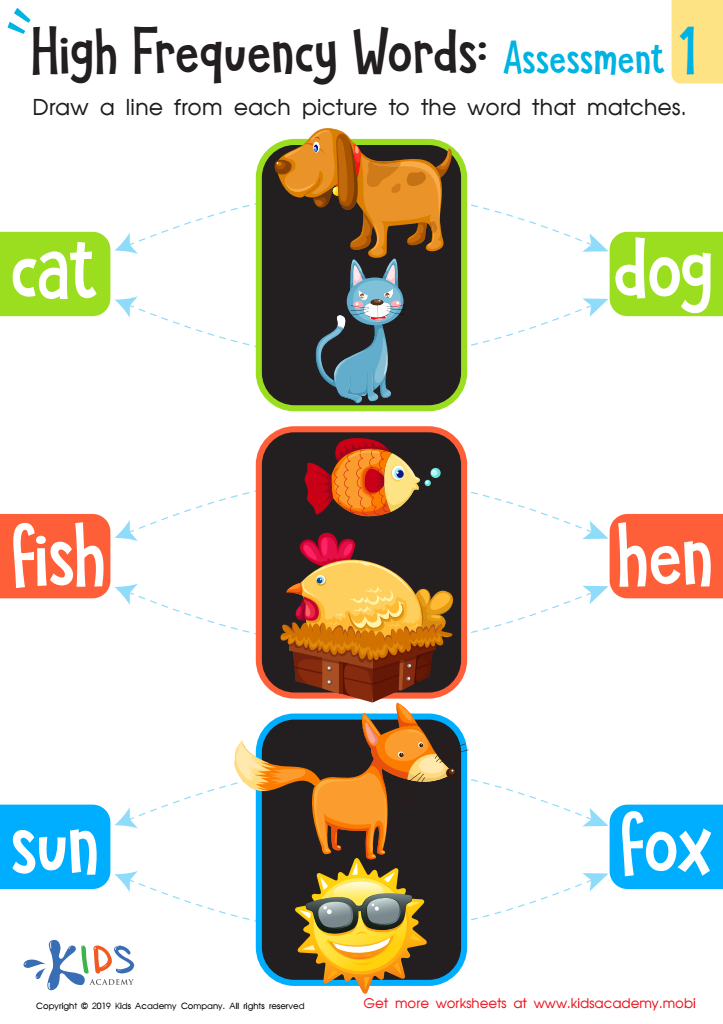
High Frequency Words: Assessment 1 Worksheet
Emergent readers need to know high-frequency words accurately and quickly to develop fluency. Connecting these words to colorful, fun pictures helps reading prosody. This assessment worksheet uses traceable lines to help learners match pictures to words.
High Frequency Words: Assessment 1 Worksheet
Worksheet
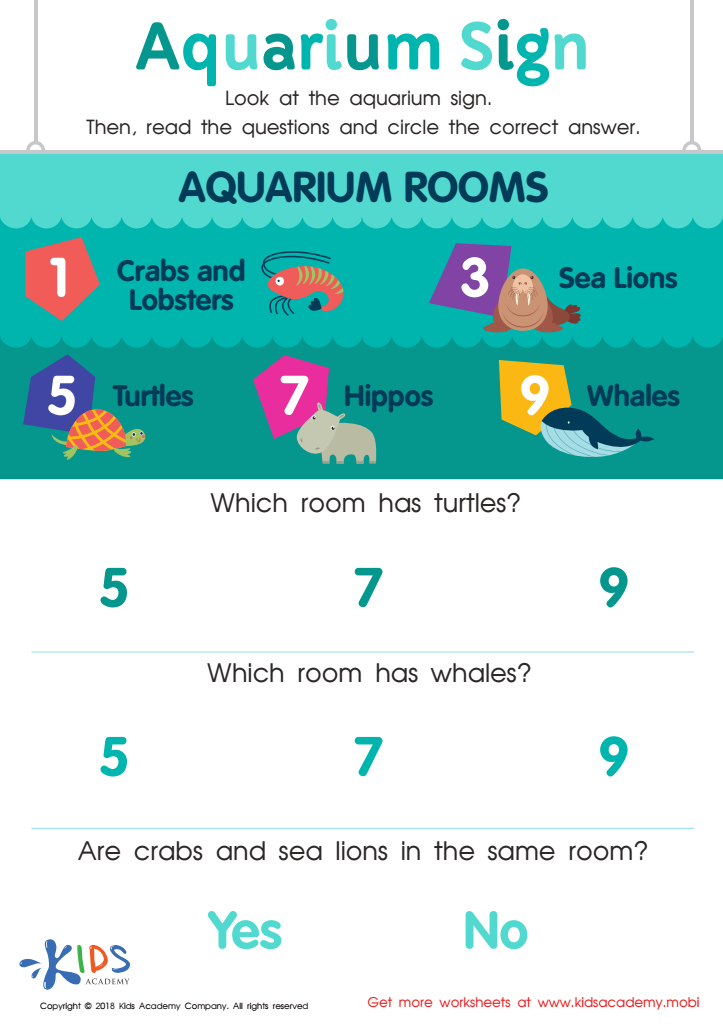
Assessment: Aquarium Sign Worksheet
Take your kids to an aquarium and marvel at the sea creatures! Help them identify the animals they see, and ask them which one is their favorite. Look at the aquarium sign and point to each creature. Ask your kids the questions and help them circle the right answer.
Assessment: Aquarium Sign Worksheet
Worksheet
Join Kids Academy for Free
Who is primarily going to use this learning content?







Parents and teachers should prioritize Easy Building Vocabulary activities for children aged 5-7 as these formative years are crucial for language development. First and foremost, a strong vocabulary enhances reading comprehension, allowing young learners to better understand stories and instructional materials. By actively engaging in vocabulary-building practices, children become more confident communicators, able to express their thoughts and ideas clearly.
Additionally, vocabulary activities often promote phonemic awareness and other foundational literacy skills, critical for successful reading and writing. Engaging, hands-on activities make learning enjoyable, fostering a love for language that can last a lifetime. These activities also encourage cognitive development, as children are invited to make connections between words, concepts, and their surroundings.
Furthermore, a rich vocabulary contributes to academic success across subjects. Children with a robust vocabulary tend to outperform their peers in various school areas. Lastly, involving parents and teachers in vocabulary development creates a supportive learning environment, cultivating cooperation and consistency in a child’s education.
Ultimately, investing in vocabulary-building activities enriches a child’s language skills, setting them up for future academic success and fostering effective communication in everyday life. By prioritizing vocabulary activities, we empower our youngest learners to thrive in an increasingly complex world.








