Normal Physical Science worksheets activities for Ages 3-8
4 filtered results
-
From - To
Explore our engaging Normal Physical Science worksheets designed specifically for children ages 3 to 8. These interactive activities provide young learners with hands-on experiences that nurture curiosity and foundational understanding of scientific concepts. From understanding basic elements of matter to exploring simple physical properties, our worksheets are ideal for home or classroom use. Each activity is tailored to reinforce key concepts through fun exercises, helping to build critical thinking and observational skills. Parents and educators will find these resources essential for inspiring a love of science in young minds. Discover the joy of learning with our comprehensive collection today!
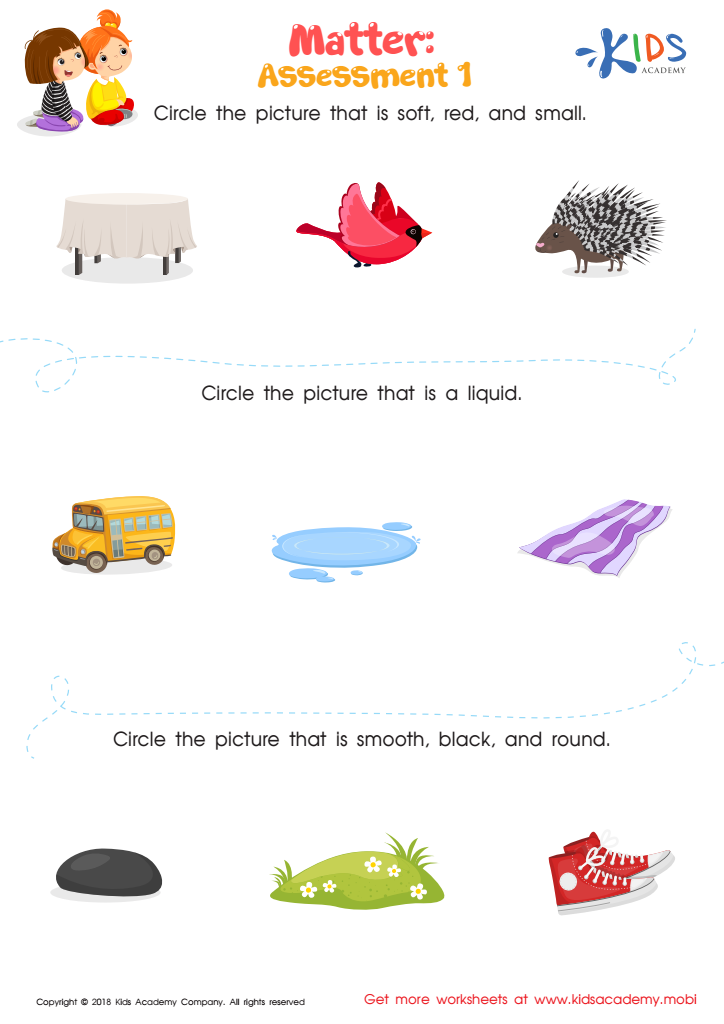
Matter: Assessment 1 Worksheet
 Assign to My Students
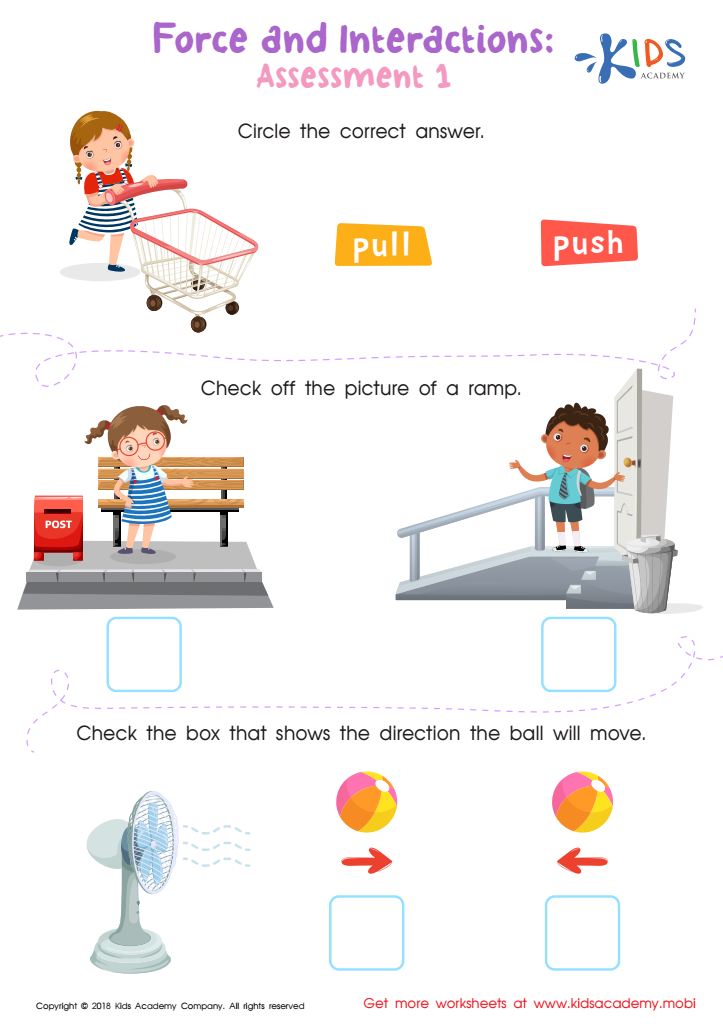
Force and Interactions: Assessment 1 Worksheet
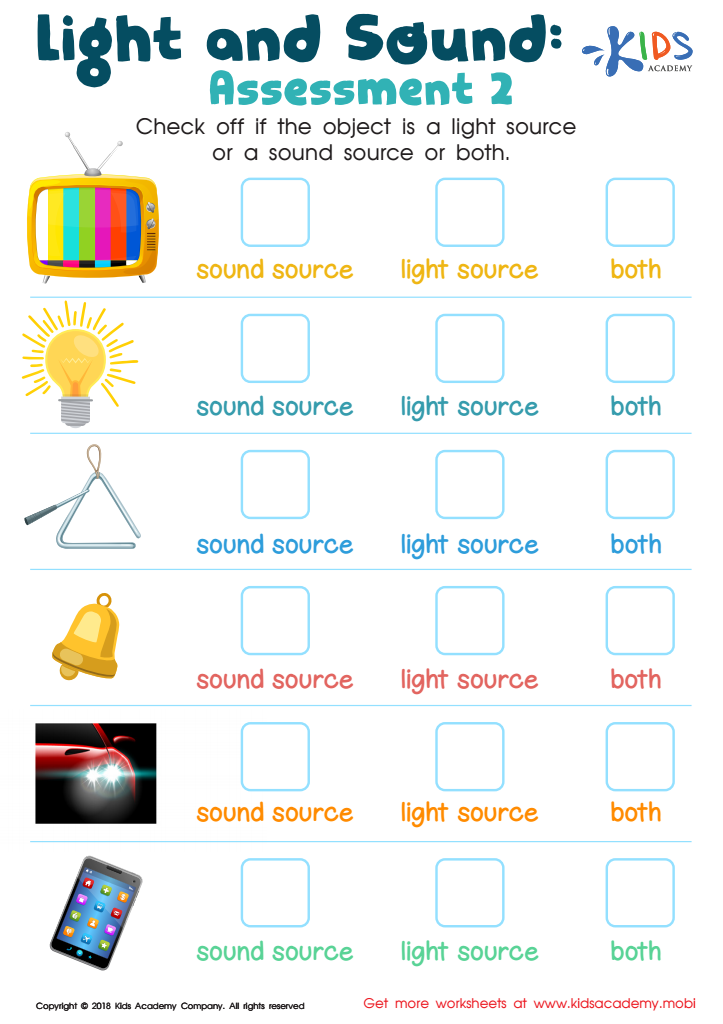
Light and Sound: Assessment 2 Worksheet
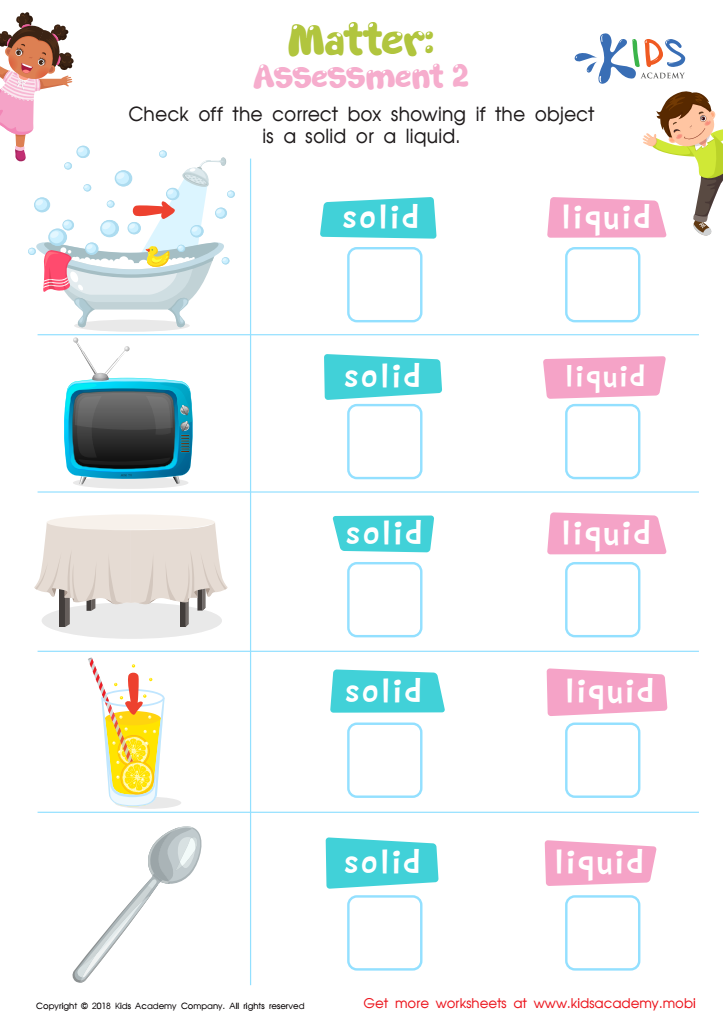
Matter: Assessment 2 Worksheet



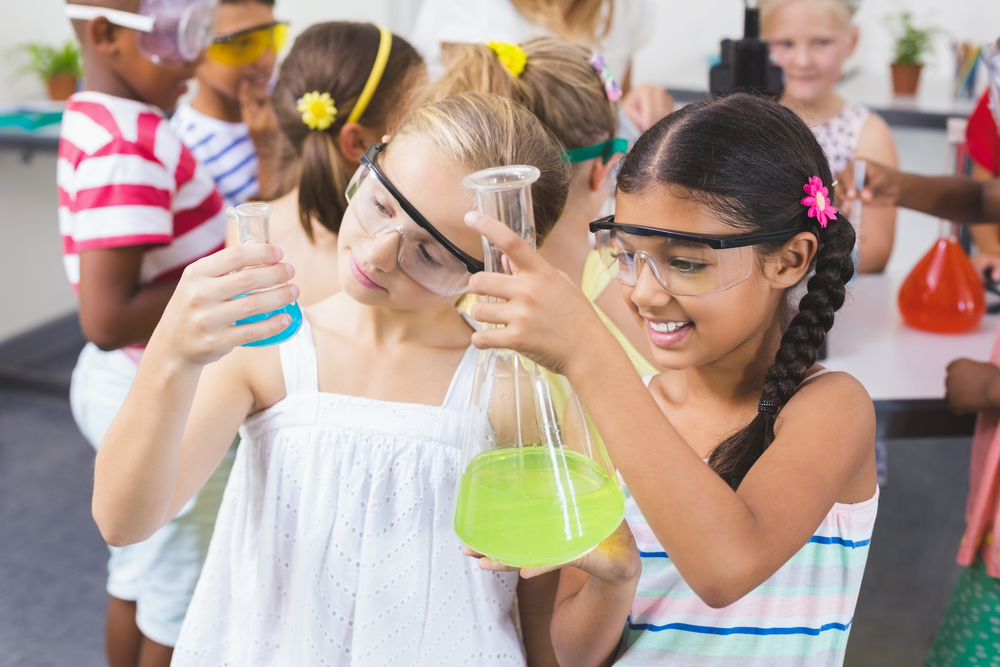



Parents and teachers should prioritize Normal Physical Science activities for children aged 3-8 because these experiences lay a crucial foundation for scientific literacy and critical thinking. Engaging young children in hands-on activities fosters curiosity and encourages exploration of the natural world around them. Through simple experiments and observations, children begin to understand fundamental concepts such as gravity, motion, and simple reactions, which are essential in developing their analytical skills.
Moreover, science activities promote language development by introducing new vocabulary associated with scientific concepts, fostering communication and expression. Collaborative projects also enhance social skills, as children learn to work in teams, share ideas, and discuss observations. This early exposure helps to nurture a love for learning and results in longer-term educational success.
Incorporating physical science into play-based learning also caters to different learning styles, ensuring that all children can engage in a way that resonates with them. Lastly, by participating in these activities, parents and teachers can stimulate children's critical thinking and problem-solving abilities, essential skills in today's rapidly evolving world. Ultimately, consistent exposure to science from an early age equips children with the tools they need to navigate, understand, and positively impact the world around them.








