
Normal Phonics worksheets activities for Ages 7-8
5 filtered results
Difficulty Level
Grade
Age
-
From - To
Subject
Activity
Standards
Explore our engaging Normal Phonics worksheets designed for children ages 7-8! These activities cultivate essential phonics skills through fun and interactive exercises, making learning a joyful experience. Your child will enhance their reading abilities with tasks that focus on word recognition, decoding, and phonemic awareness. Our printable worksheets provide clear instructions and captivating illustrations to keep young learners motivated and on track. Perfect for at-home practice or supplementing classroom learning, these resources help strengthen literacy foundations. Boost your child’s confidence in reading with our thoughtfully crafted phonics activities, ensuring they develop a love for learning along the way!
Favorites
With answer key
Interactive
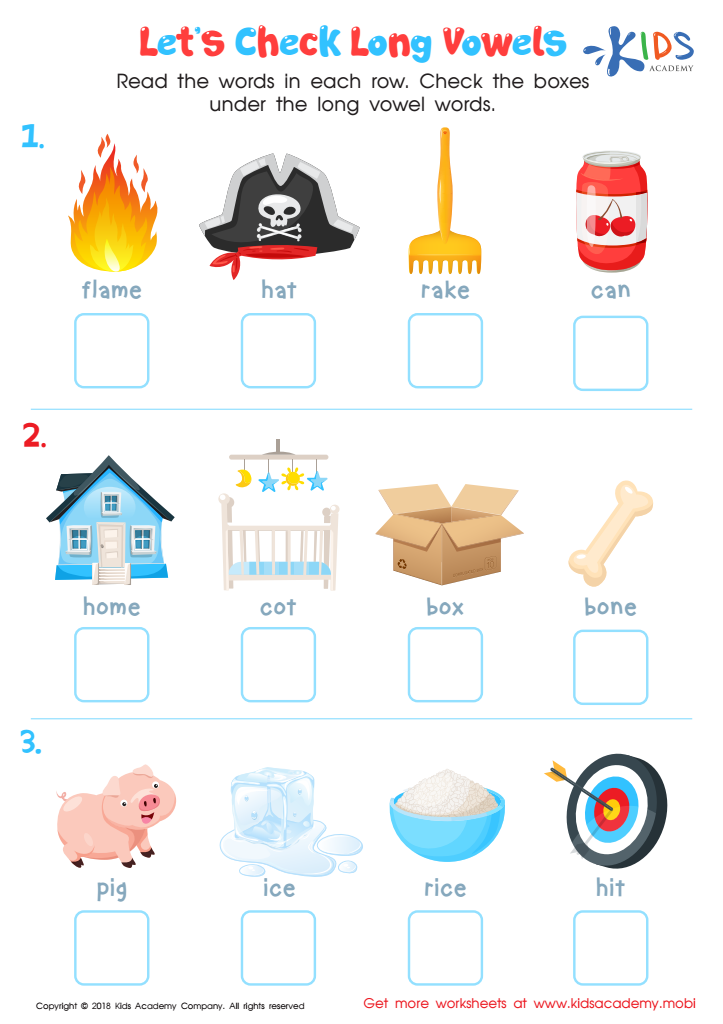
Let's Check Long Vowels: Assessment Worksheet
This worksheet helps your child identify objects and learn long vowel sounds. Ask them to say the names of the four objects in each row. Then, help them check the boxes to confirm they know the long vowel sounds. This will help them develop their reading skills.
 Assign to My Students
Let's Check Long Vowels: Assessment Worksheet
Worksheet
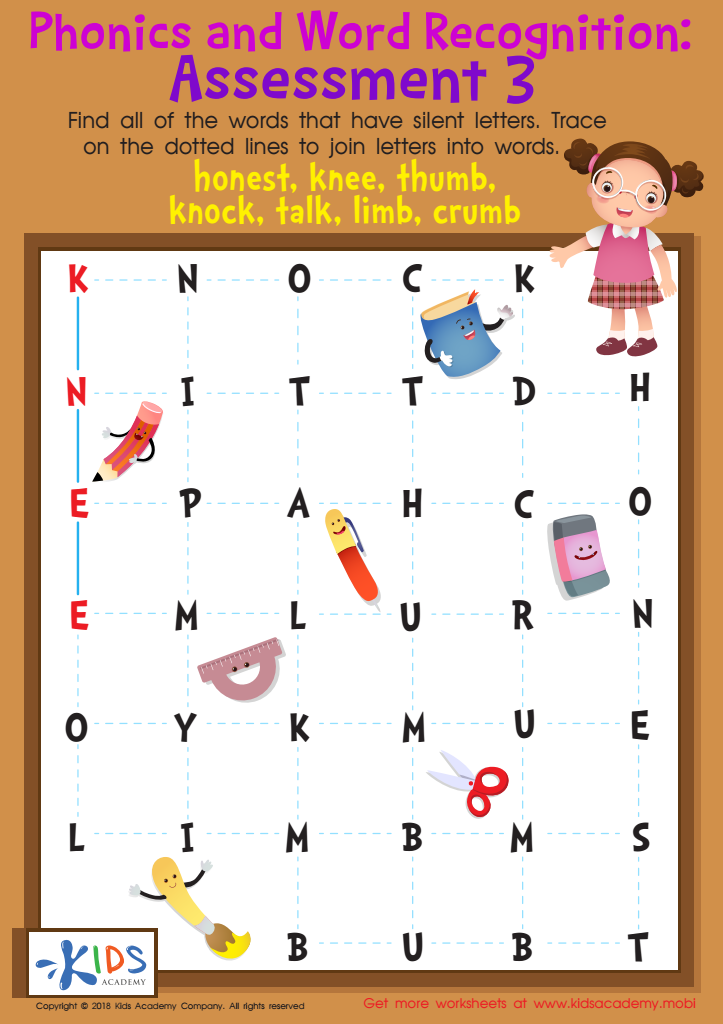
Phonics and Word Recognition: Assessment 3 Worksheet
Silent letters can be tricky for kids learning to read and write. Show them how they work with words like 'knee' and 'dumb'. Then, challenge them to come up with their own. Give them a worksheet with silent letters and trace the lines to join the letters into words.
Phonics and Word Recognition: Assessment 3 Worksheet
Worksheet
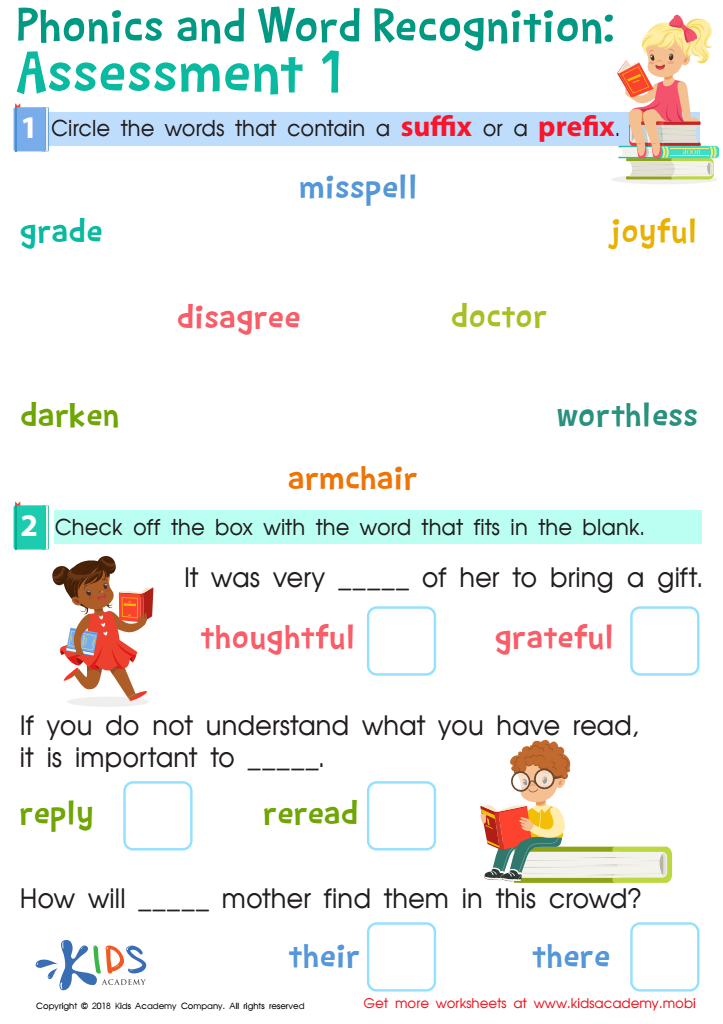
Phonics and Word Recognition: Assessment 1 Worksheet
Explain prefixes (words added to start of another word to give it a new meaning) and suffixes (added to end of word to change its meaning) to your kids with examples like 'unhappy' (prefix) and 'forgetful' (suffix). Now, help your child complete this worksheet, including circling words and checking boxes.
Phonics and Word Recognition: Assessment 1 Worksheet
Worksheet
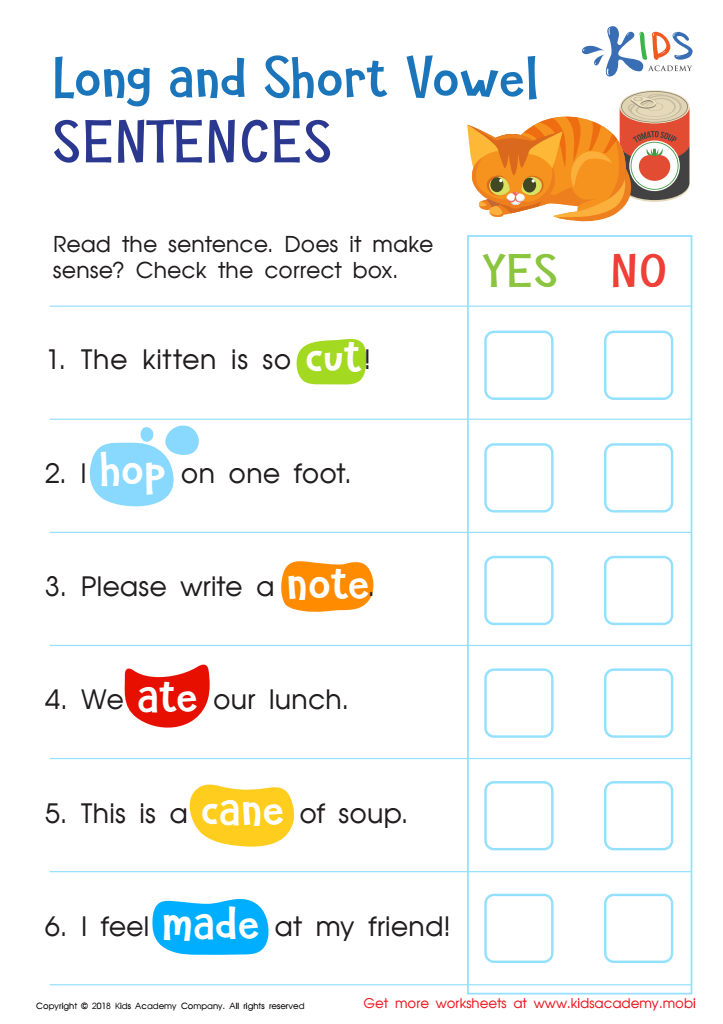
Long and Short Vowel Sentences: Assessment Worksheet
This printable worksheet helps kids practice differentiating between short and long vowel sounds. They'll use context clues to figure out which words make sense in simple sentences. A great way to build reading and writing skills!
Long and Short Vowel Sentences: Assessment Worksheet
Worksheet
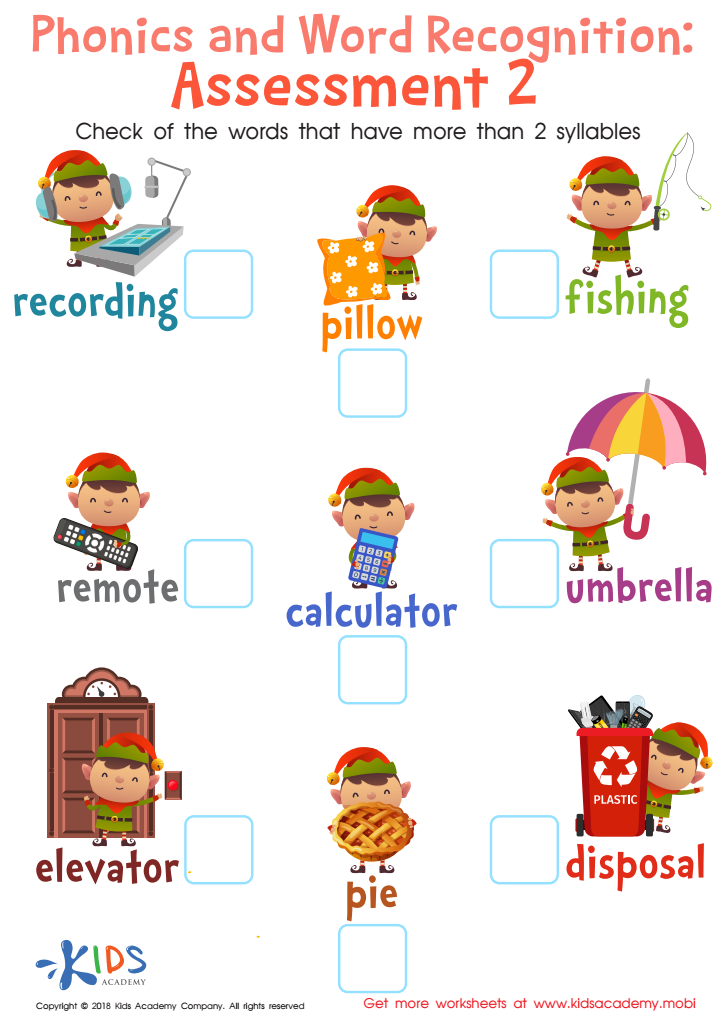
Phonics and Word Recognition: Assessment 2 Worksheet
Help your kids learn proper pronunciation by counting syllables. Most words they'll encounter have 1-3 syllables, making them simple to say. Have them repeat the words in your worksheet after you. Focus on longer words with more than two syllables.
Phonics and Word Recognition: Assessment 2 Worksheet
Worksheet
Join Kids Academy for Free
Who is primarily going to use this learning content?






Parents and teachers should prioritize Normal Phonics activities for children aged 7-8 because these foundational skills are crucial for literacy development. At this age, children transition from learning to read to reading to learn, making phonics an essential tool for decoding and understanding words.
Normal Phonics activities provide a systematic approach to teaching sound-letter relationships, helping children recognize patterns in language. This is vital for building strong reading skills, enhancing their ability to tackle complex texts encountered in later grades. Furthermore, these activities encourage vocabulary expansion and improve spelling, which are critical for effective communication.
Engaging in phonics not only supports academic success but also boosts self-confidence. Children who grasp phonics principles are more likely to enjoy reading, leading to a lifelong love of literature and learning. Additionally, phonics activities are often designed to be fun and interactive, fostering collaboration between parents and teachers to create a positive learning environment.
Ultimately, investing in Normal Phonics activities empowers children with the tools they need to achieve linguistic competence, setting the stage for future educational endeavors and success. By making phonics a priority, parents and teachers lay the groundwork for proficient readers who are better equipped for challenges ahead.








