Normal Poems worksheets activities for Ages 7-9
6 filtered results
-
From - To
Explore our engaging Normal Poems worksheets designed specifically for children aged 7-9! These activities introduce young learners to the joy of poetry through fun and creative exercises. Our worksheets encourage kids to appreciate rhyme, rhythm, and vivid imagery while enhancing their vocabulary and comprehension skills. With a variety of prompts, including fill-in-the-blanks and creative writing tasks, children will find inspiration to express themselves. Ideal for both classroom and home use, these resources make poetry accessible and enjoyable, fostering a lifelong love for literature. Download our Normal Poems worksheets today and watch your child's imagination bloom!
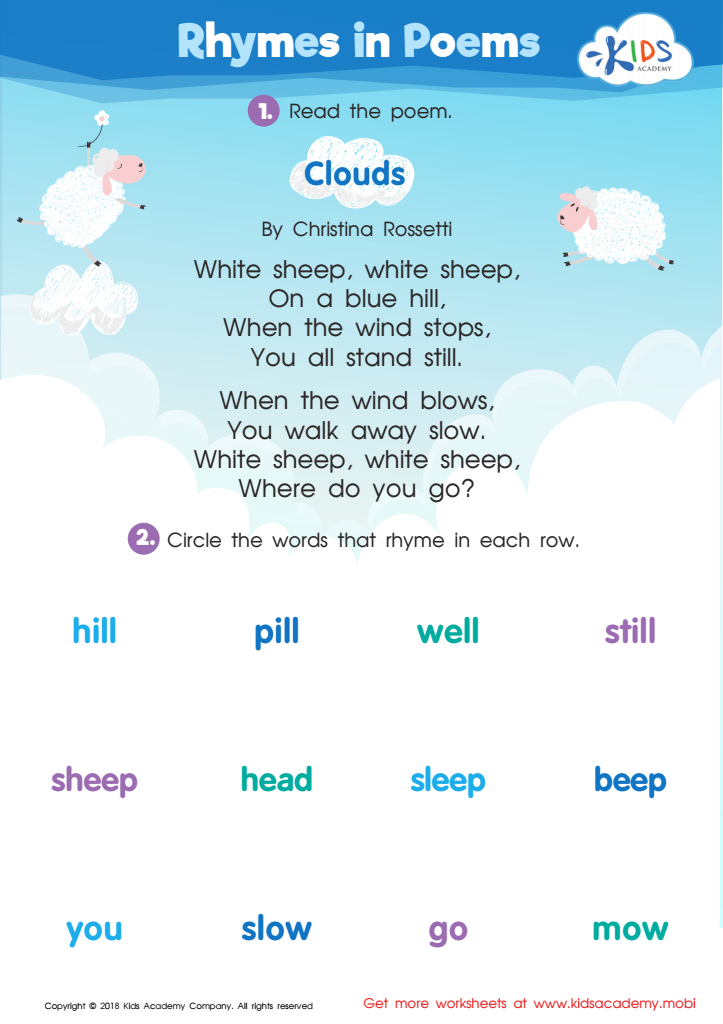
Rhymes in Poems Worksheet
 Assign to My Students
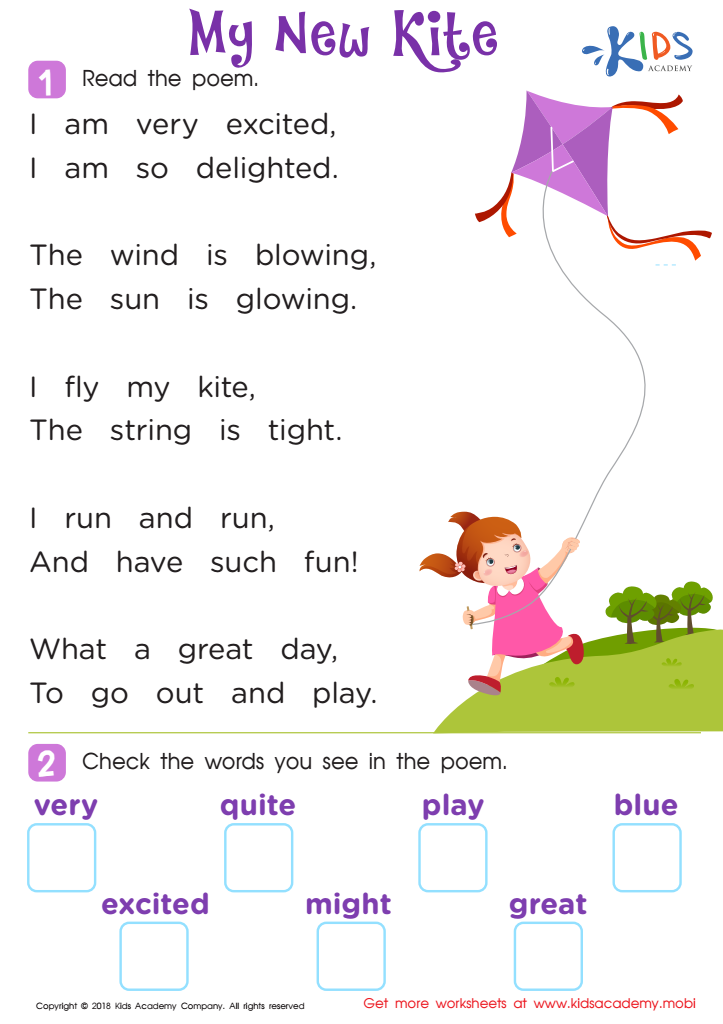
Poem: My New Kite Worksheet
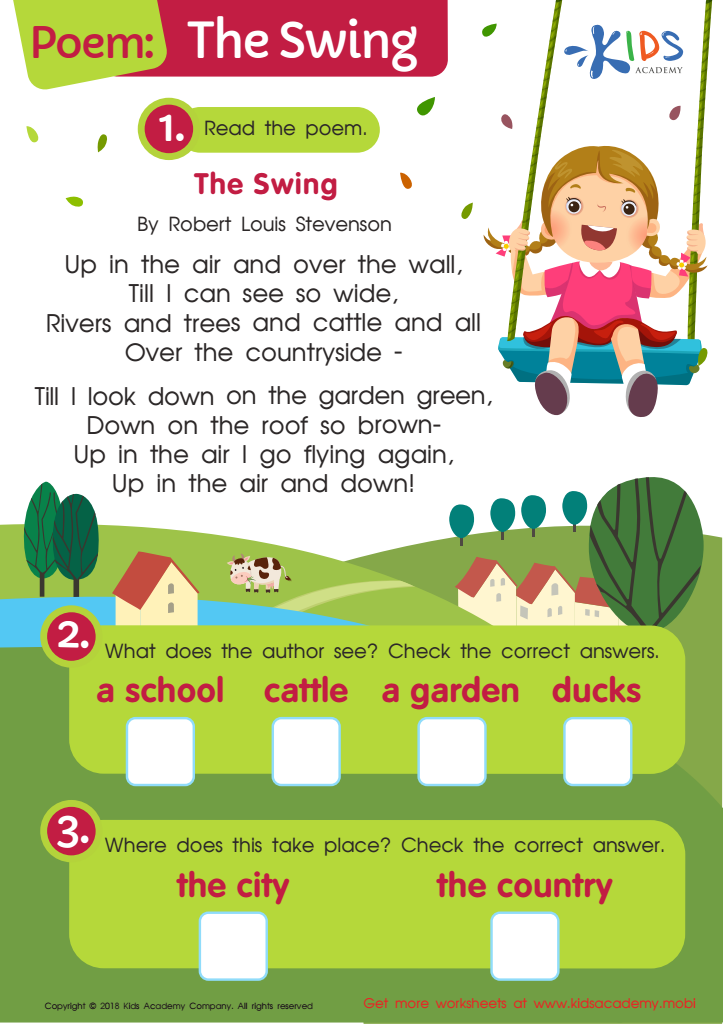
Poem: The Swing Worksheet
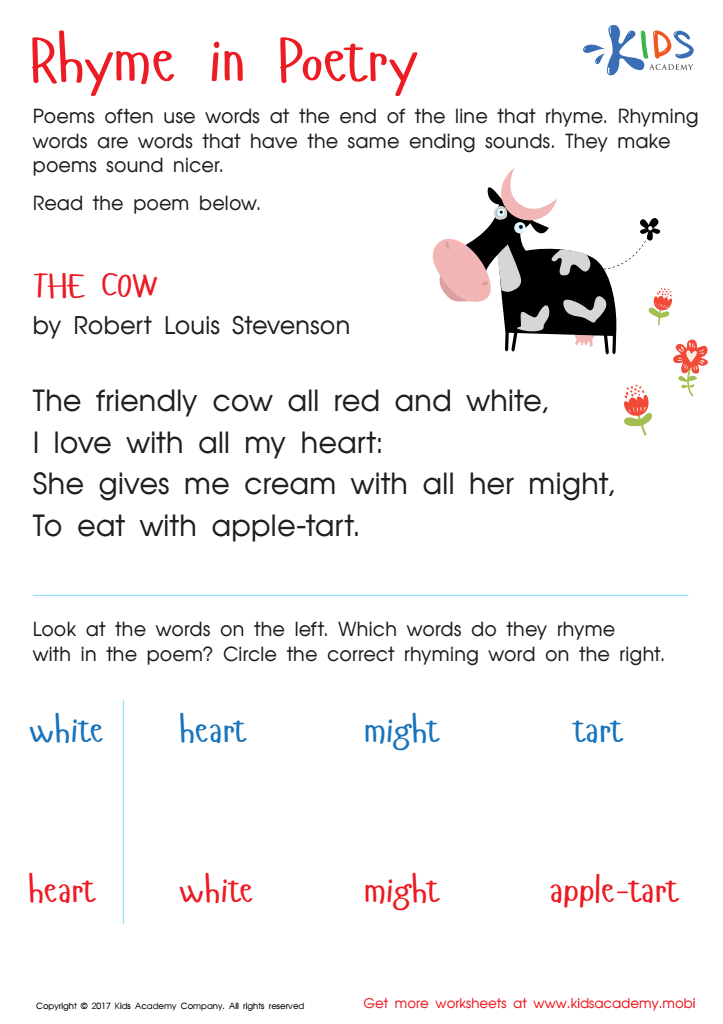
Rhyme In Poetry Worksheet
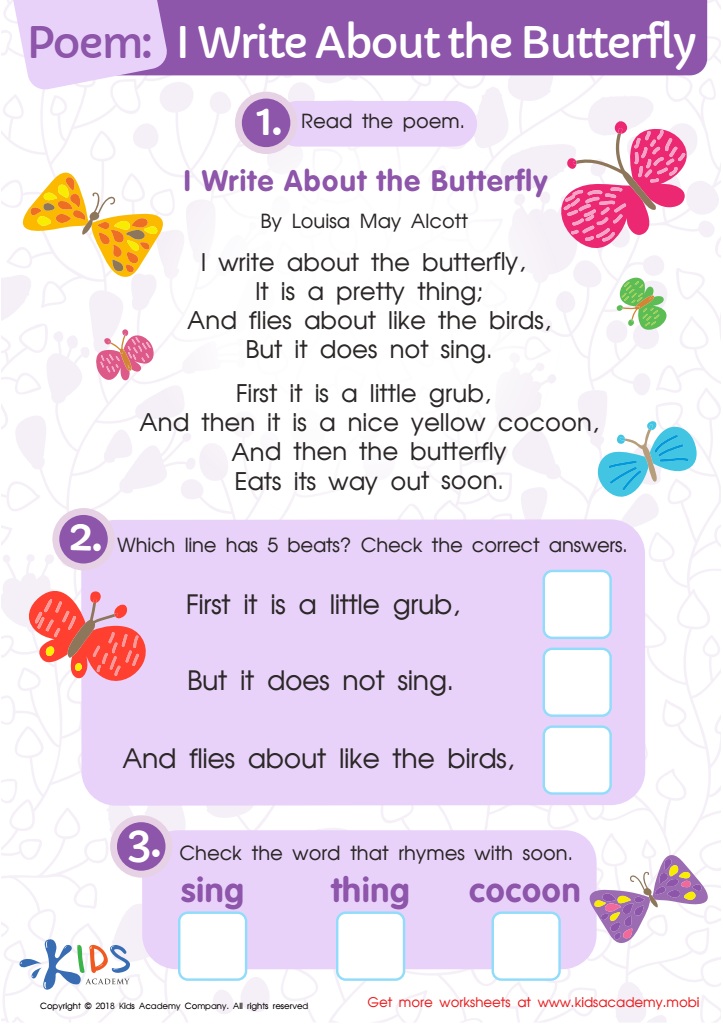
Poem: I Write About The Butterfly Worksheet
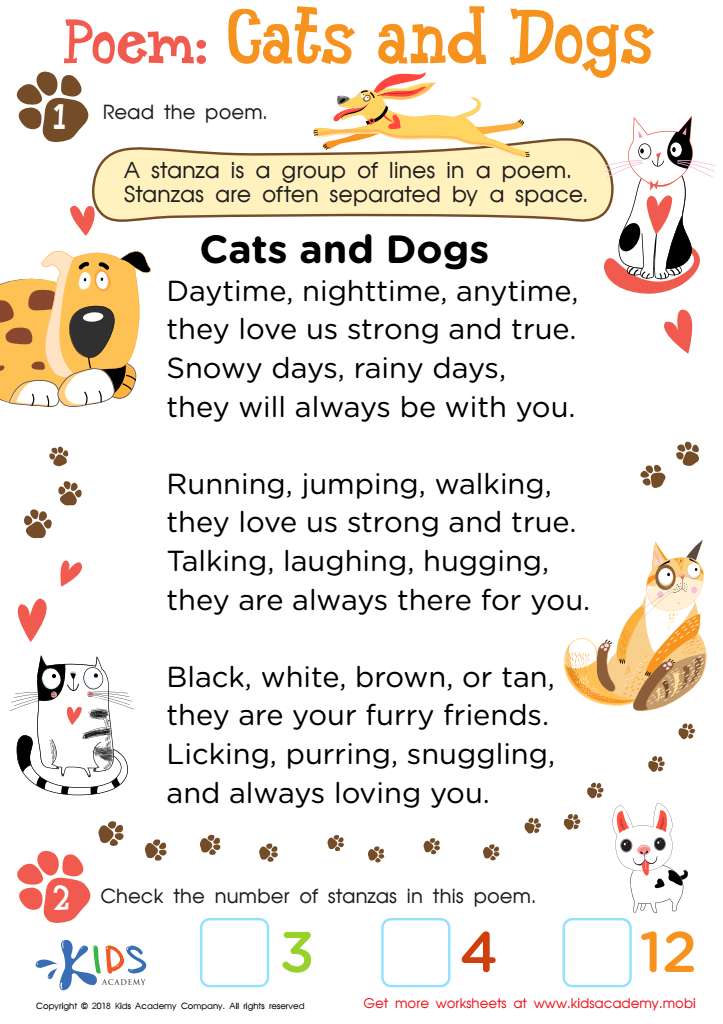
Poem: Cats and Dogs Worksheet






.jpg)

Parents and teachers should care about Normal Poems activities for children aged 7-9 for several reasons. Firstly, poetry fosters creativity and self-expression, allowing children to articulate their thoughts and feelings in a playful and imaginative way. Engaging with poetry can help enhance their vocabulary and language skills, as children encounter rich words and varied sentence structures that enhance their communication abilities.
Moreover, Normal Poems activities encourage critical thinking and comprehension. As children decipher the meanings behind poems, they develop interpretive skills and learn to appreciate the nuances of language. Such literary engagement stimulates cognitive growth and can improve literacy outcomes.
Additionally, poetry promotes emotional intelligence. Through exploring themes like friendship, nature, or belonging, children can reflect on their own experiences and emotions, which can enhance empathy and social awareness. Sharing and discussing poems in a group can also strengthen group dynamics and social skills.
Finally, incorporating poetry into learning supports diverse learning styles and can be a fun and interactive way to meet educational goals. Overall, Normal Poems activities provide a multifaceted approach to develop vital skills in young learners, nurturing both their minds and hearts.








