
Alphabet Recognition ABC Letters Worksheets for Ages 3-4
31 filtered results
Difficulty Level
Grade
Age
-
From - To
Subject
Activity
Standards
Discover our engaging Alphabet Recognition ABC Letters Worksheets, specially designed for children ages 3-4! These fun and interactive resources help young learners identify letters and develop essential pre-reading skills. Each worksheet features colorful illustrations, tracing activities, and stimulating games that cater to early childhood development. Our worksheets are perfect for both parents and educators, promoting a love for learning while enhancing fine motor skills. Whether at home or in the classroom, these printable practices provide a solid foundation for future literacy success. Start your child's exciting journey through the alphabet today with our easy-to-use worksheets!
Favorites
With answer key
Interactive
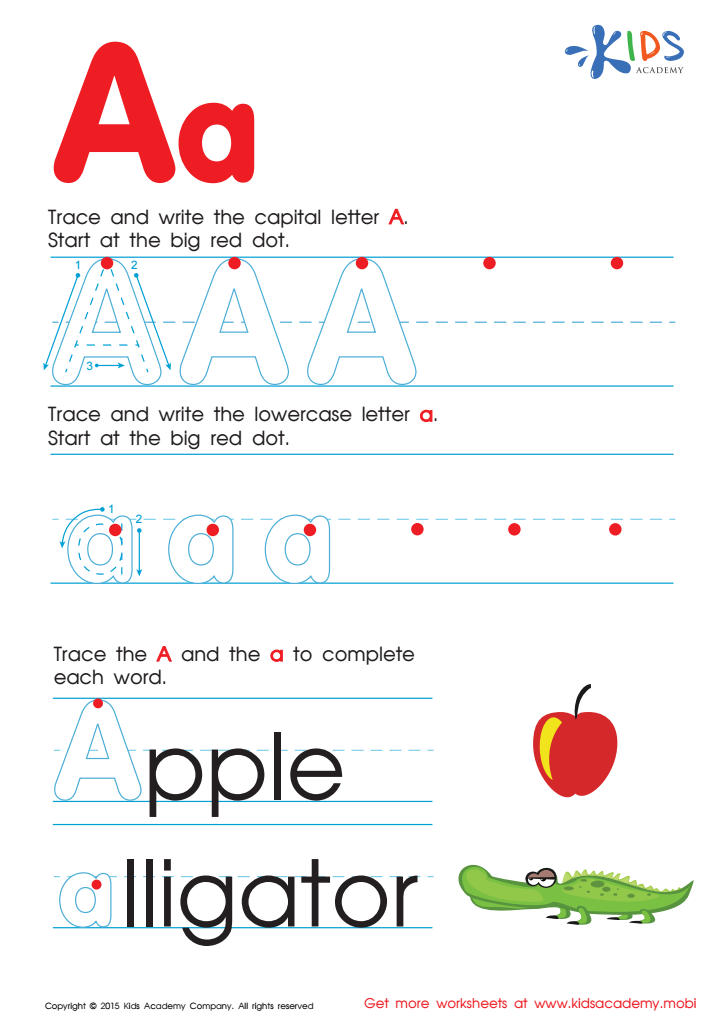
Letter A Tracing Page
Trace and write the letter "A"! Start with the big red dot, then do the capital and lowercase versions. Then write it again with two words - apple and alligator. Download more tracing worksheets at Kids Academy.
Letter A Tracing Page
Worksheet

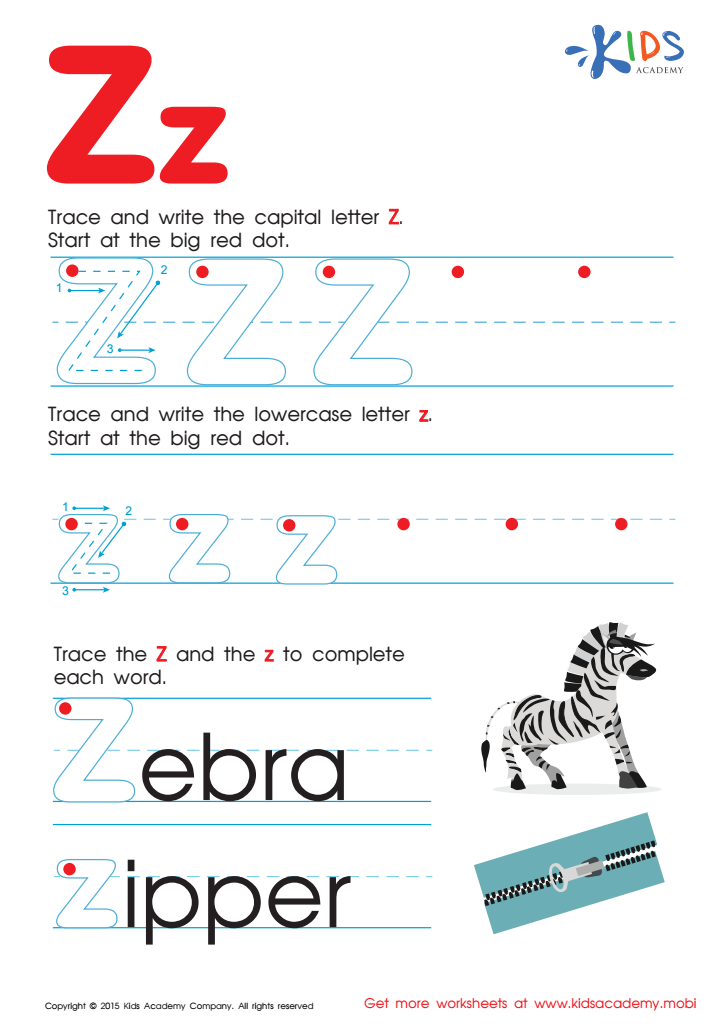
Letter Z Tracing Page
Trace and write capital "Z" and lowercase "z". Complete words "zebra" and "zipper". Be attentive and have fun! (80 words)
Letter Z Tracing Page
Worksheet
Letter O Tracing Page
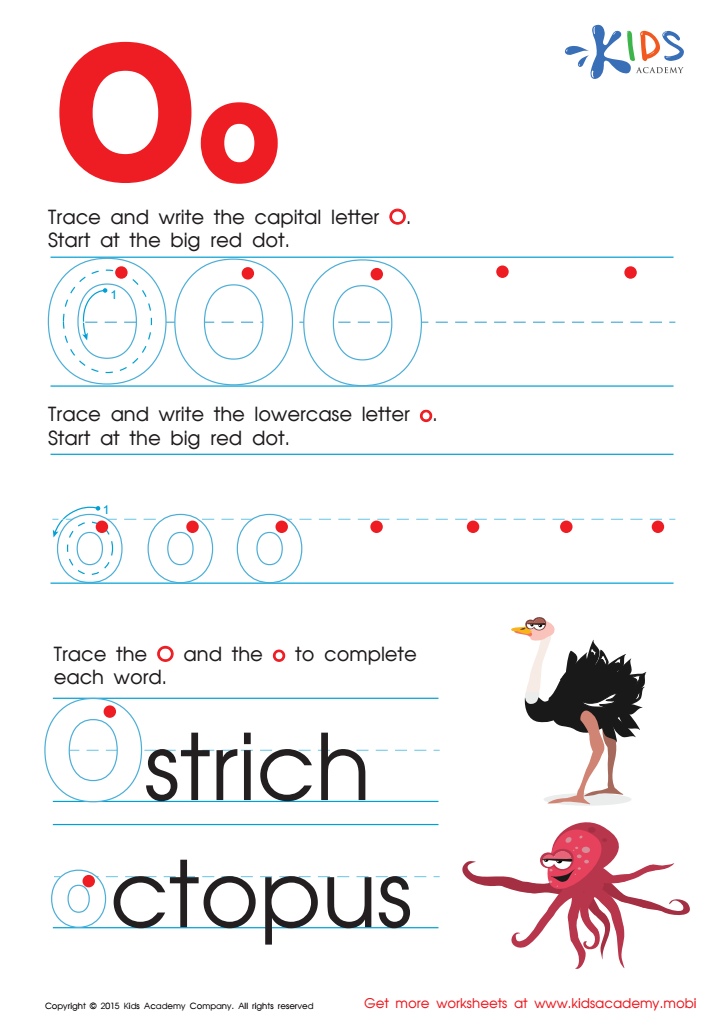
Practice writing the letter "O" with our new worksheet. Trace and write the letter several times, starting at the red dot. First do the uppercase letter, then the lowercase. Use the pictures to complete the words "Ostrich" and "octopus". Kids Academy offers more fun alphabet worksheets.
Letter O Tracing Page
Worksheet
Letter I Tracing Page
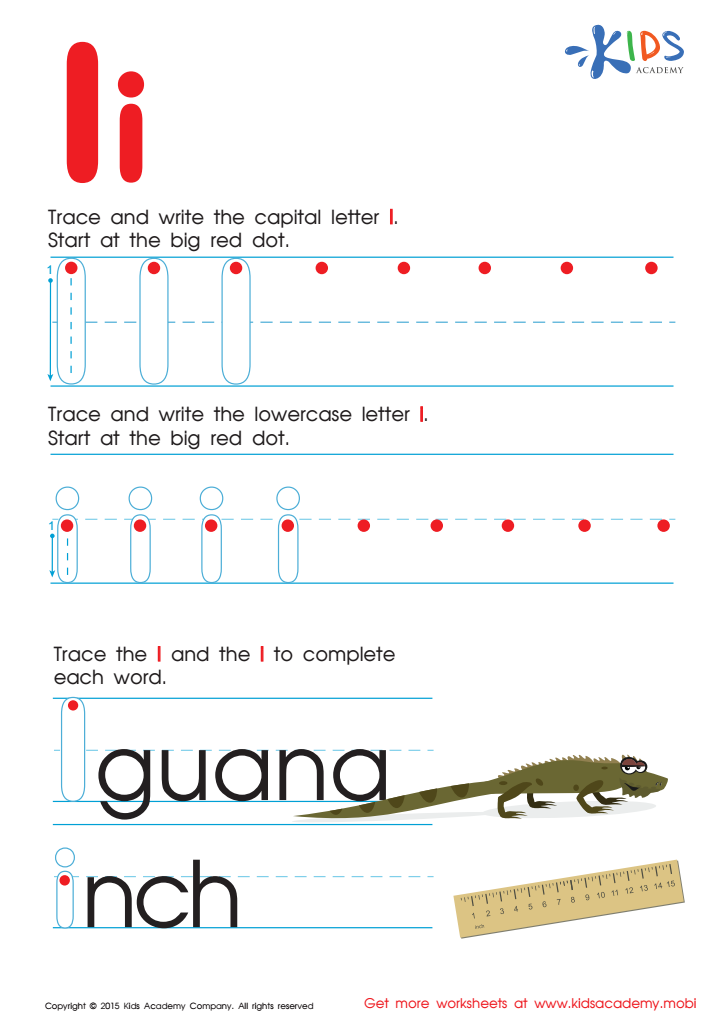
Trace and write "I" uppercase and lowercase. An iguana's tail looks like the uppercase "I" and the lowercase "i" is as small as an inch. Make learning fun with Kids Academy worksheets.
Letter I Tracing Page
Worksheet
My Colorful Name Worksheet
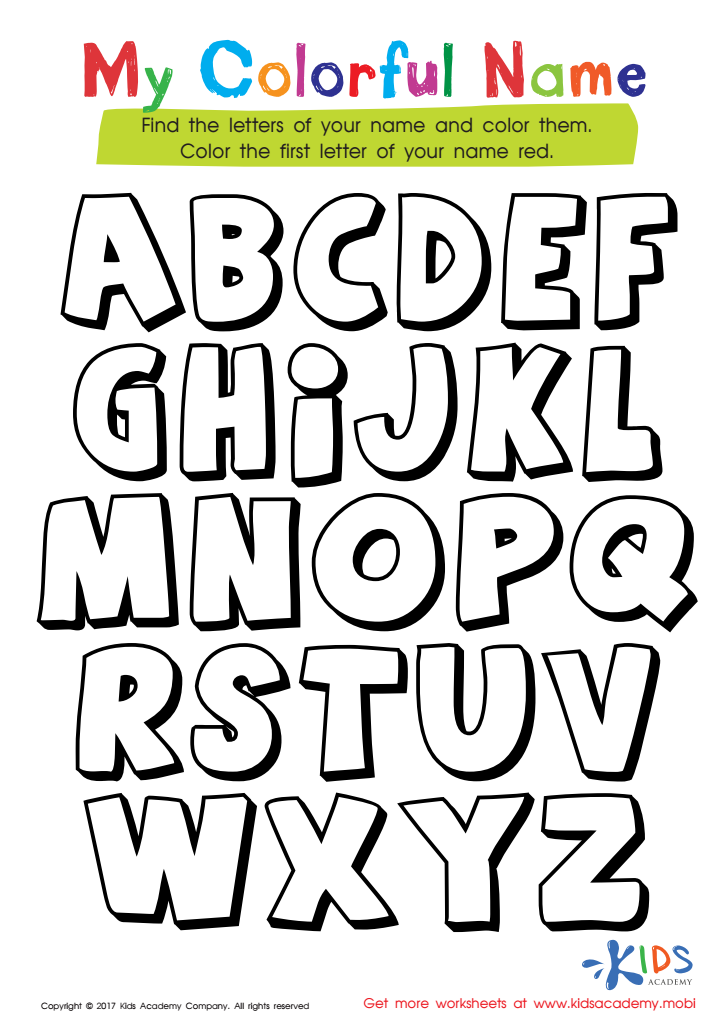
Writing their names is a milestone for children. With this worksheet, they recall the letters in their name and color the letters one at a time. Spelling and alphabet order are reinforced as they find each letter. Use this fun printable to help kids learn to write their names!
Download (PDF)
 Assign to My Students
Assign to My Students
My Colorful Name Worksheet
Worksheet
Letter B Coloring Sheet
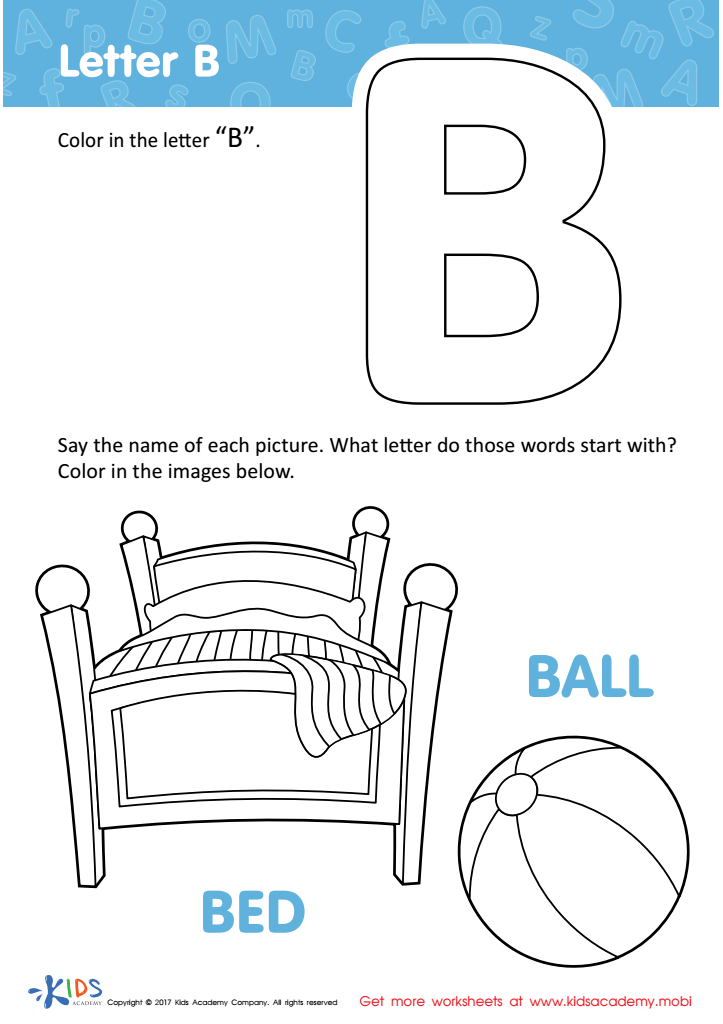
Kids will love coloring this page that features things they like - balls, bubbles, bugs and bedtime - all words starting with "B"! It's a great way to introduce the alphabet and increase their exposure to letters and sounds. Let them have fun and learn at the same time!
Download (PDF)
Assign to My Students
Assign to My Students
Letter B Coloring Sheet
Worksheet
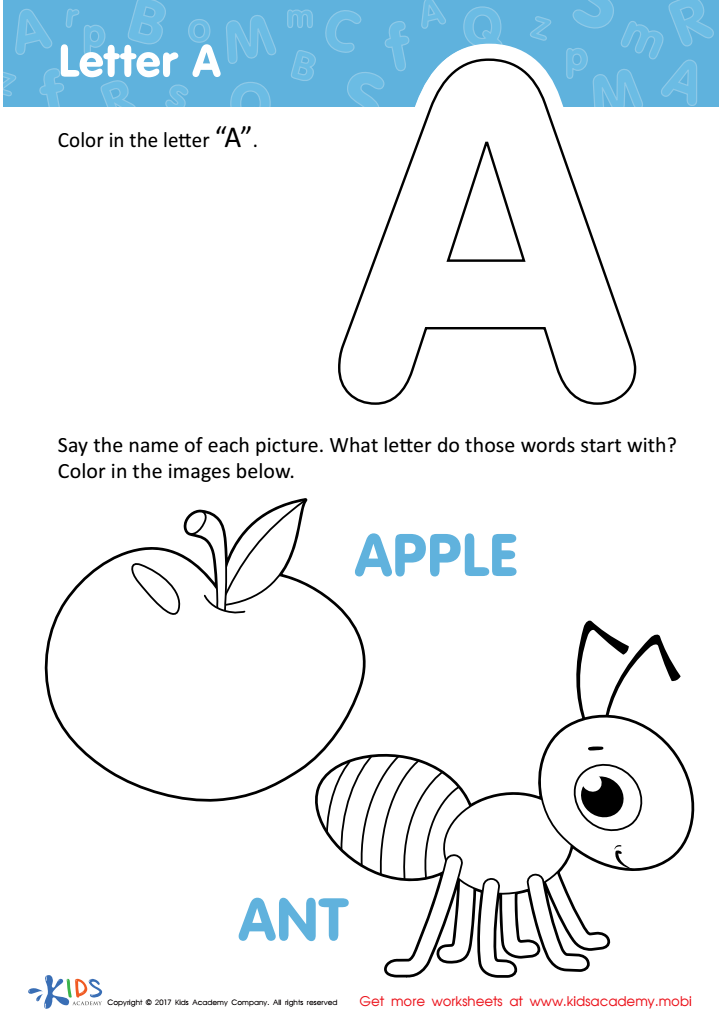
Letter A Coloring Sheet
This letter "A" coloring page is great for introducing kids to the alphabet! Let them exercise their creativity while they learn to recognize letters and sounds - it's a fun and easy way to help them get started.
Download (PDF)
Assign to My Students
Assign to My Students
Letter A Coloring Sheet
Worksheet
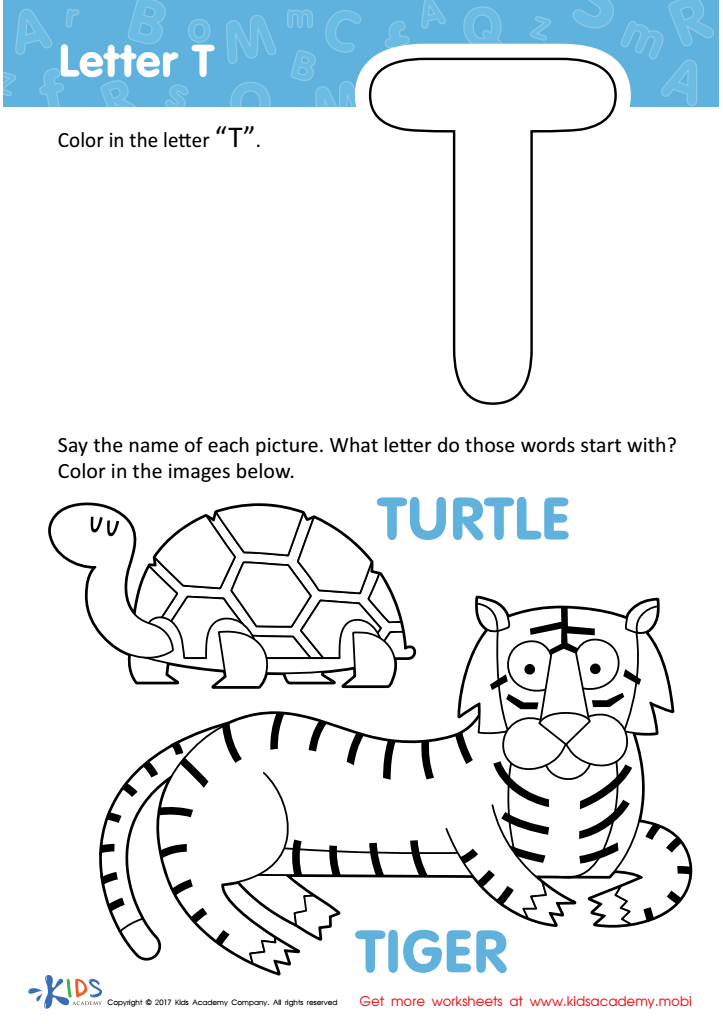
Letter T Coloring Sheet
Introduce your child to the letter "T" and its animals – turtles and tigers! With this coloring page, you can stimulate your child's imagination and creativity, while helping them recognize the letter "T". Have fun with your child and get coloring!
Download (PDF)
Assign to My Students
Assign to My Students
Letter T Coloring Sheet
Worksheet
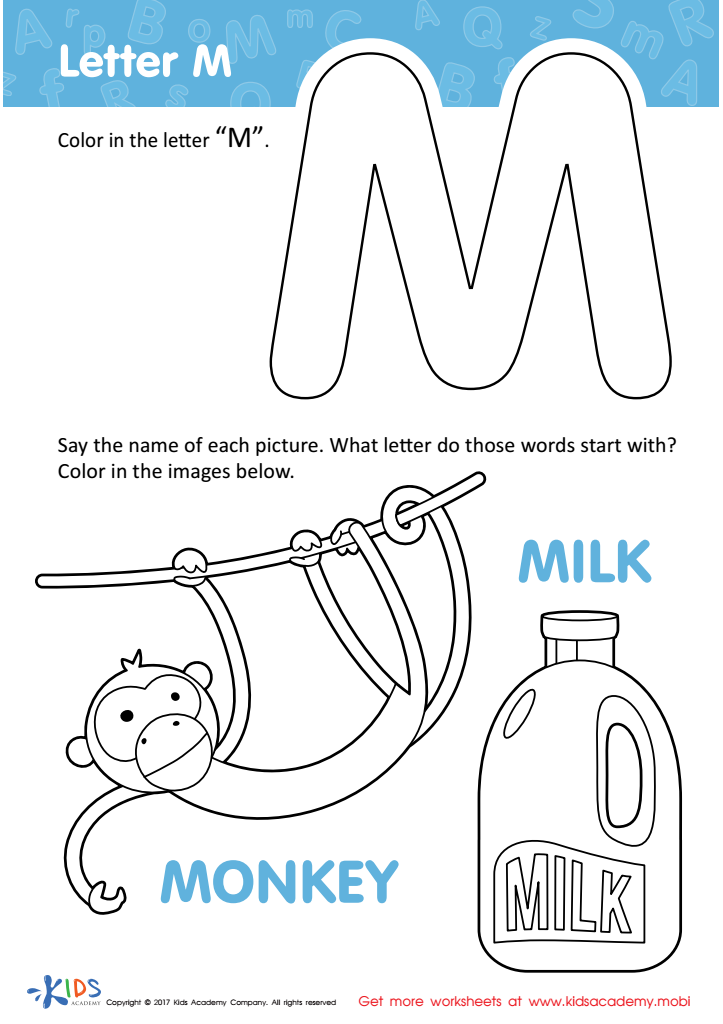
Letter M Coloring Sheet
Coloring this "M" page is fun and educational! Kids will enjoy the funny monkey and milk jug images, while learning to recognize the letter and all the words it makes.
Download (PDF)
Assign to My Students
Assign to My Students
Letter M Coloring Sheet
Worksheet
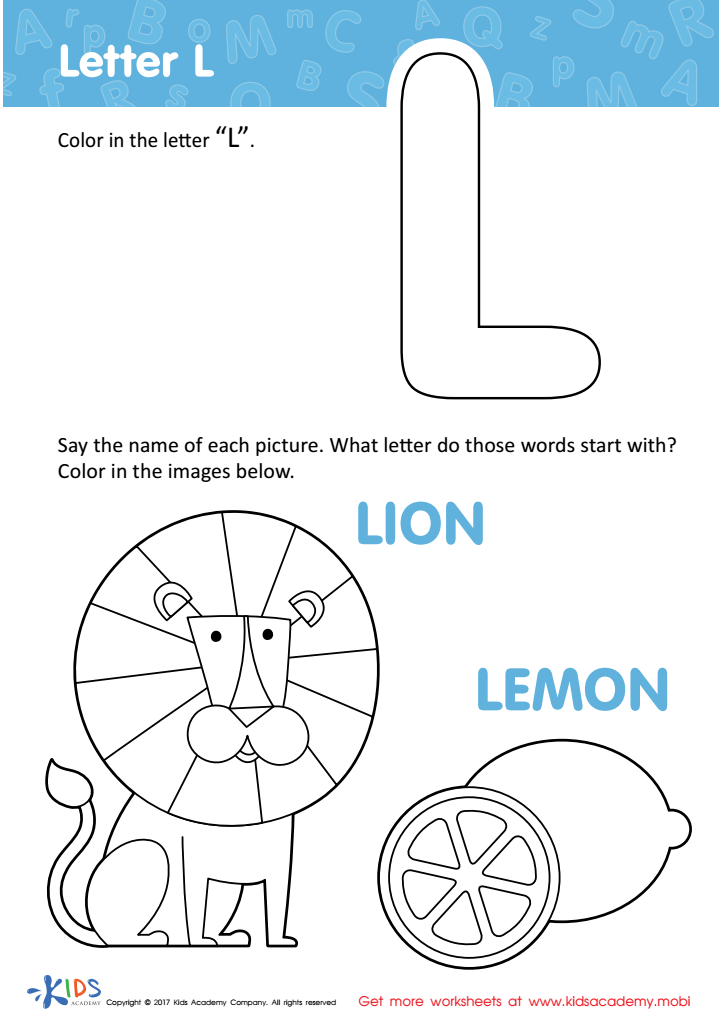
Letter L Coloring Sheet
Kids often struggle to say "L" and love it because so many things they love start with it! This coloring page combines the letter and fun images like a lemon and lion to teach and entertain!
Download (PDF)
Assign to My Students
Assign to My Students
Letter L Coloring Sheet
Worksheet
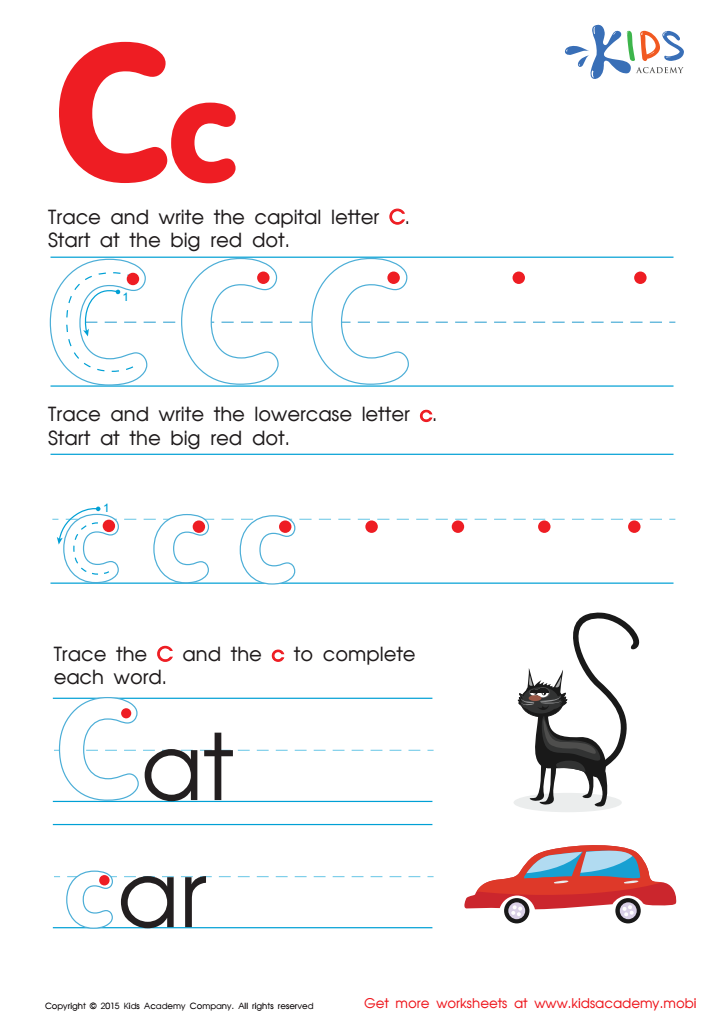
Letter C Tracing Page
Trace and write the letter 'C'! Put the pencil at the red dot then follow the lines – the capital letter first then the lowercase one. Cats love it and so will you! Get more free printables to practice tracing and writing.
Letter C Tracing Page
Worksheet
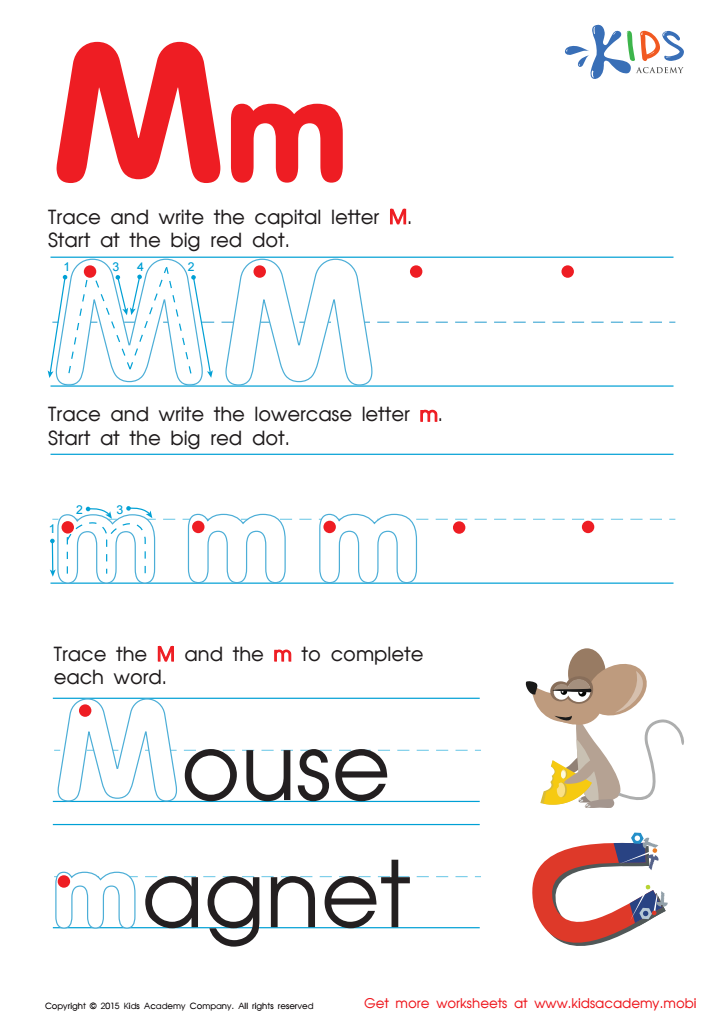
Letter M Tracing Page
Trace and write the letter "M" to help kids learn the alphabet. Start at the red dot and practice several times. Trace the capital letter first, then move on to the lowercase. Complete words like "mouse" and "magnet" in the further exercise. Get more free printables here.
Letter M Tracing Page
Worksheet
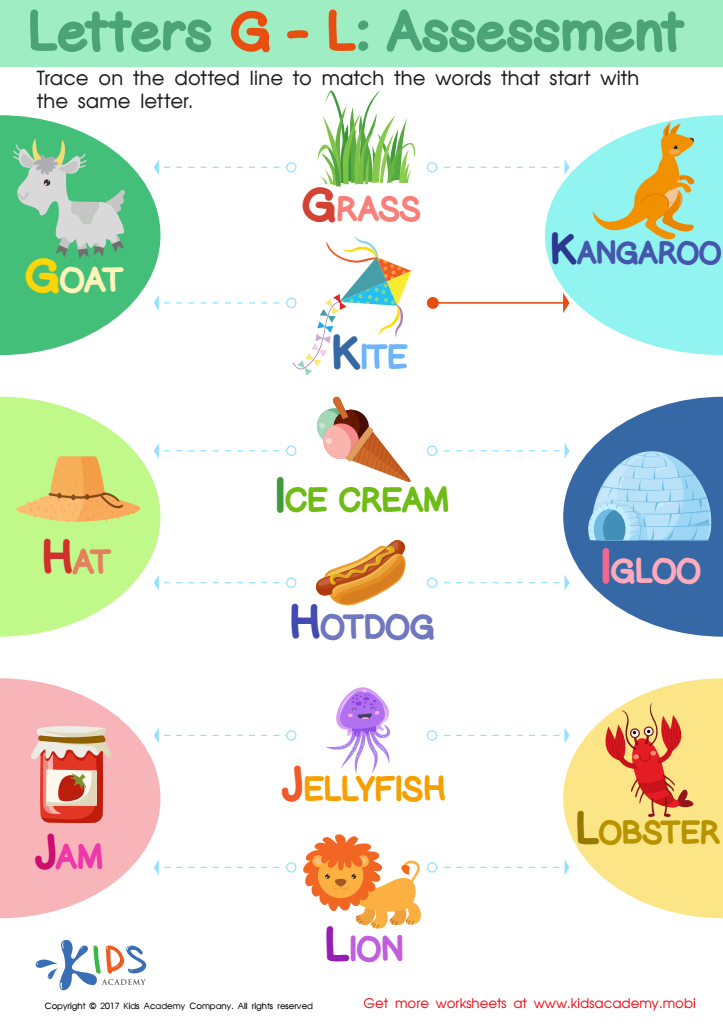
Letters G-L Worksheet
This fun worksheet helps preschoolers develop reading and phonics skills. It gets kids to match G-L words that start with the same letter, making it engaging and educational.
Letters G-L Worksheet
Worksheet
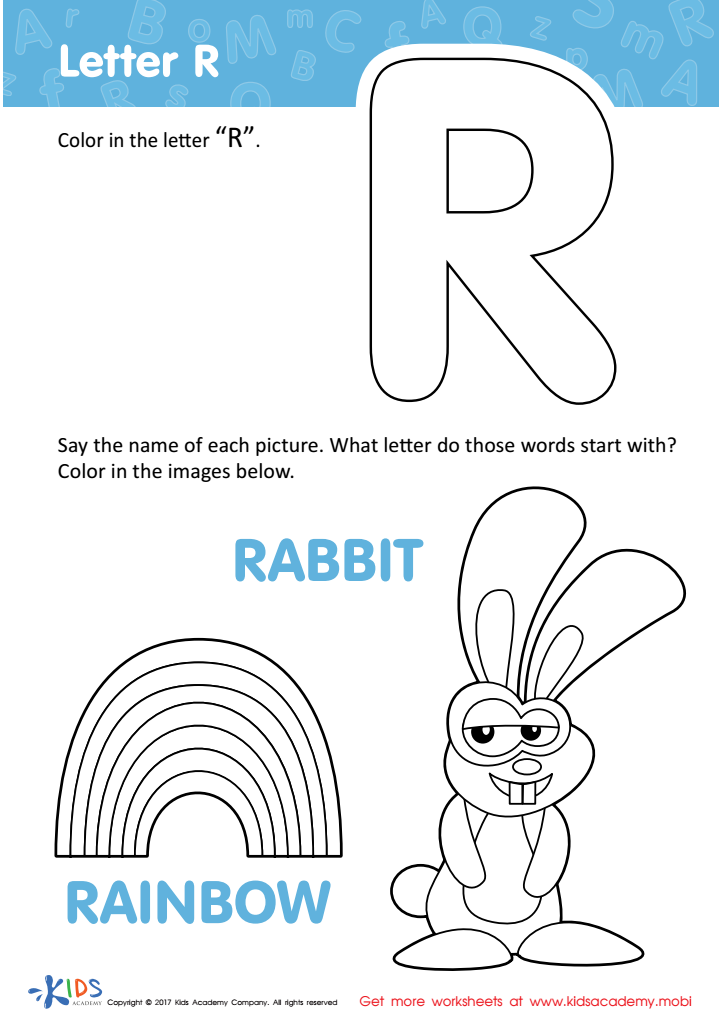
Letter R Coloring Sheet
Let your child explore the rainbow with this fun letter "R" coloring page! They can learn to recognize the letter and make connections to words, all while having fun! Make alphabet learning enjoyable with joyful coloring pages.
Download (PDF)
Assign to My Students
Assign to My Students
Letter R Coloring Sheet
Worksheet
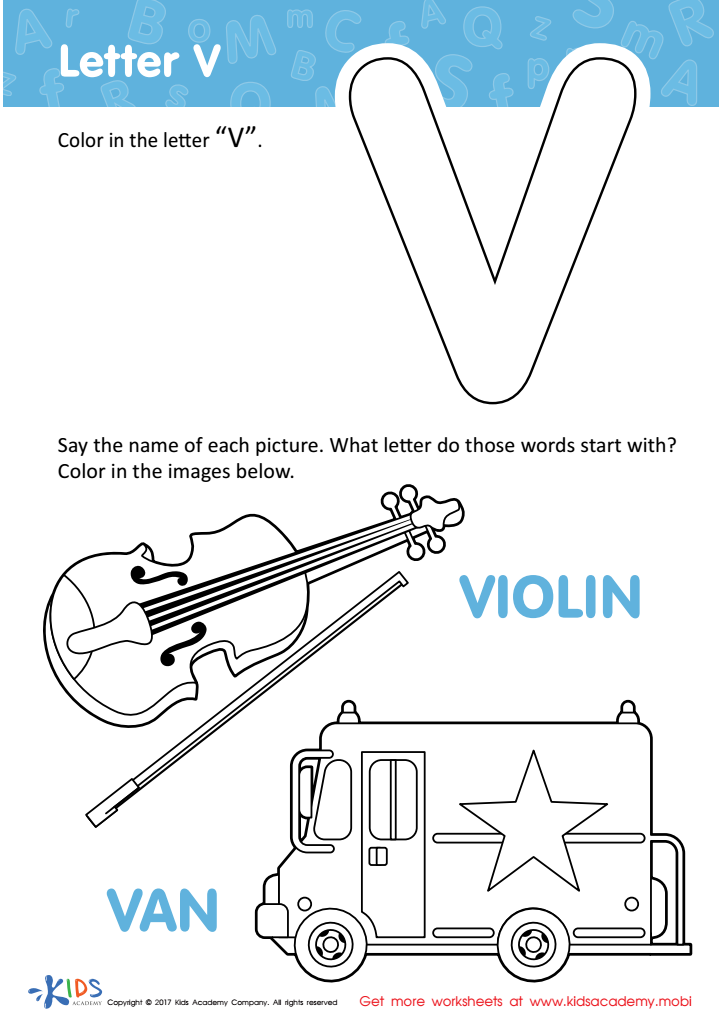
Letter V Coloring Sheet
This fun letter V coloring page can boost your child's knowledge of the letter "V" and its sound. Help them pronounce it correctly, too!
Download (PDF)
Assign to My Students
Assign to My Students
Letter V Coloring Sheet
Worksheet
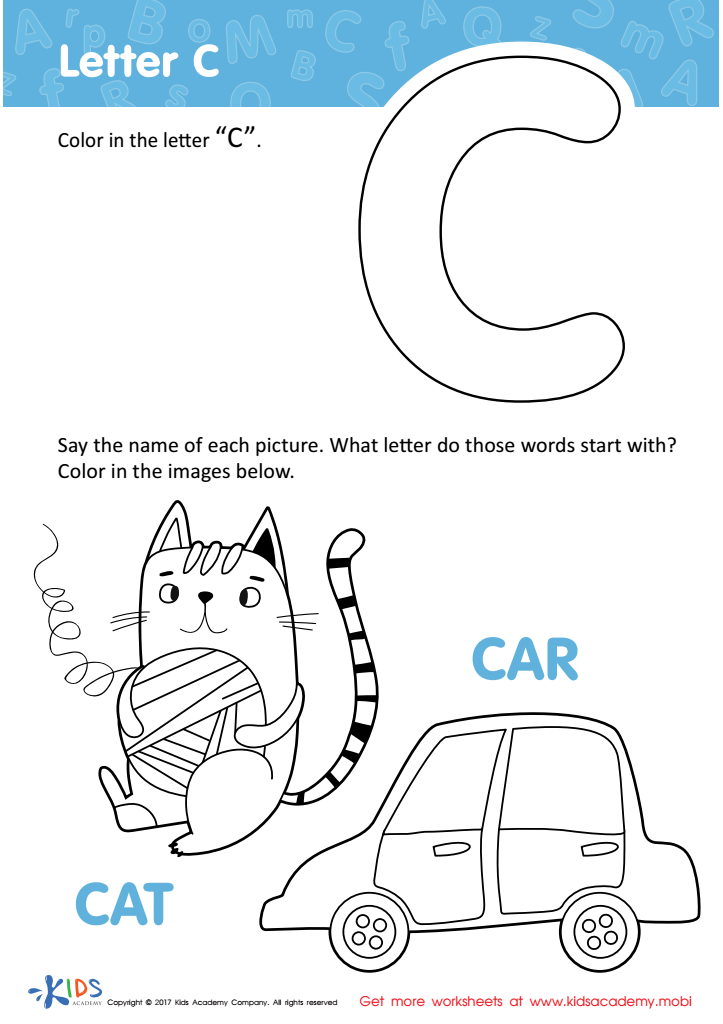
Letter C Coloring Sheet
Introduce kids to the letter 'C' with this fun coloring page! Exposing little ones to letters, words, and sounds helps them learn long before they can read. Start with simple words like 'cat' and 'car' - these are great first sight words for young children.
Download (PDF)
Assign to My Students
Assign to My Students
Letter C Coloring Sheet
Worksheet
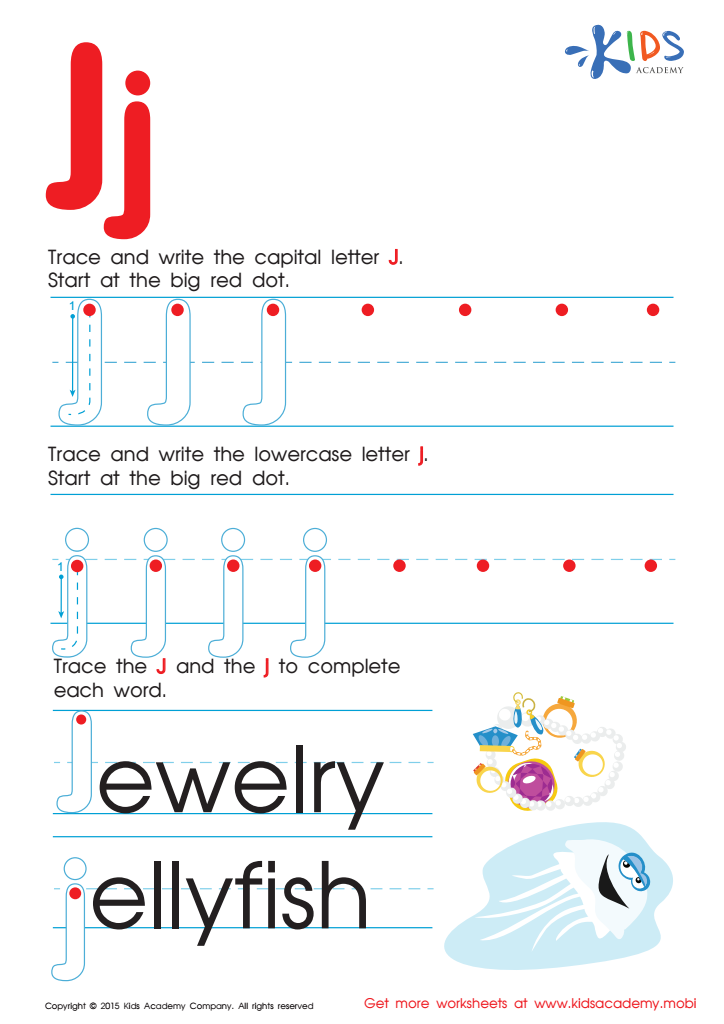
Letter J Tracing Page
Trace and write the letter "J" with our ABC worksheet - start at the big red dot! Have fun completing words like jewelry, jellyfish and more. Check out our kindergarten activities for more alphabet practice.
Letter J Tracing Page
Worksheet
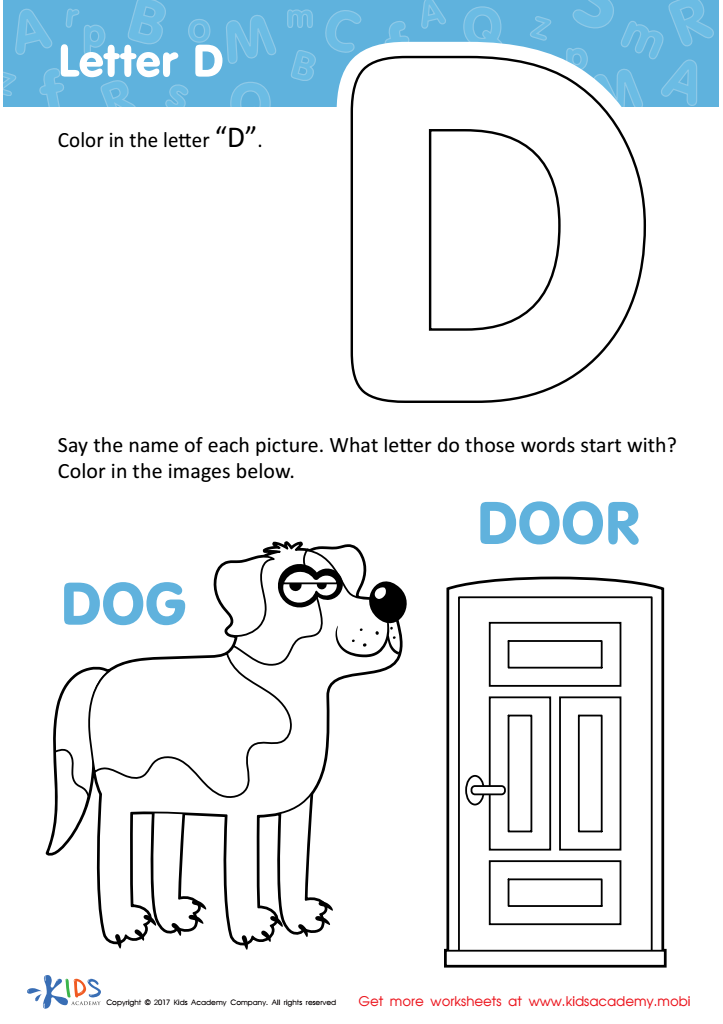
Letter D Coloring Sheet
Coloring with this letter "D" page is a great way to encourage your child's creativity while they learn the letter "D" and its sound. It's a fun activity to stimulate their imagination!
Download (PDF)
Assign to My Students
Assign to My Students
Letter D Coloring Sheet
Worksheet
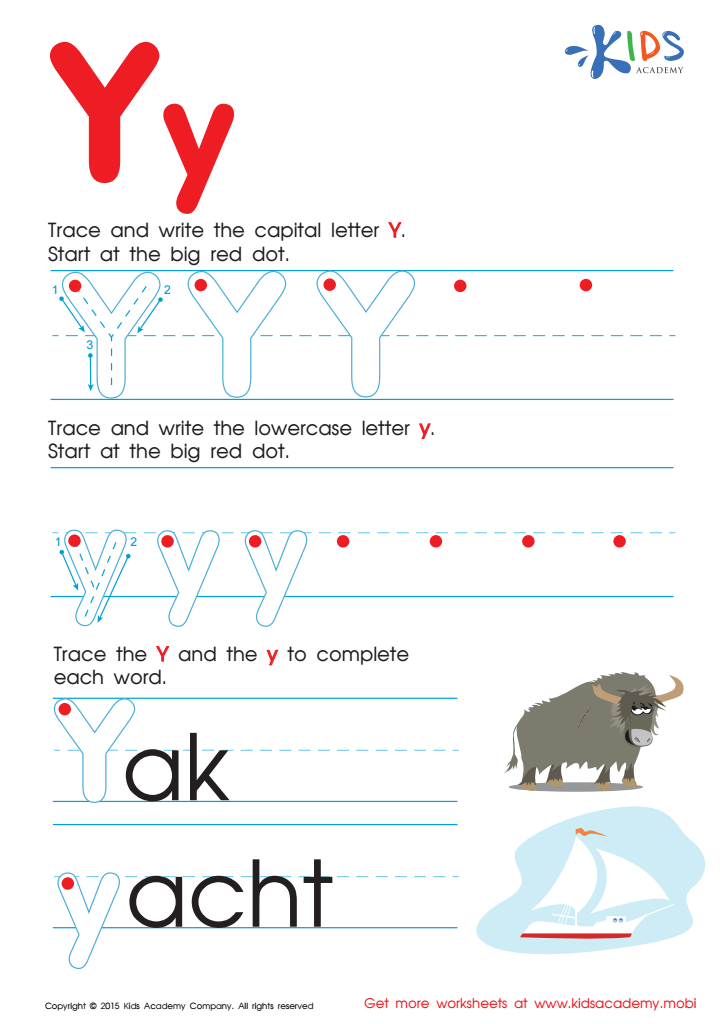
Letter Y Tracing Page
Trace the capital letter "Y" on the red dot, then trace and write the lowercase letter. Complete the words to help the Yak walk and the yacht swim. More worksheets at Kids Academy.
Letter Y Tracing Page
Worksheet
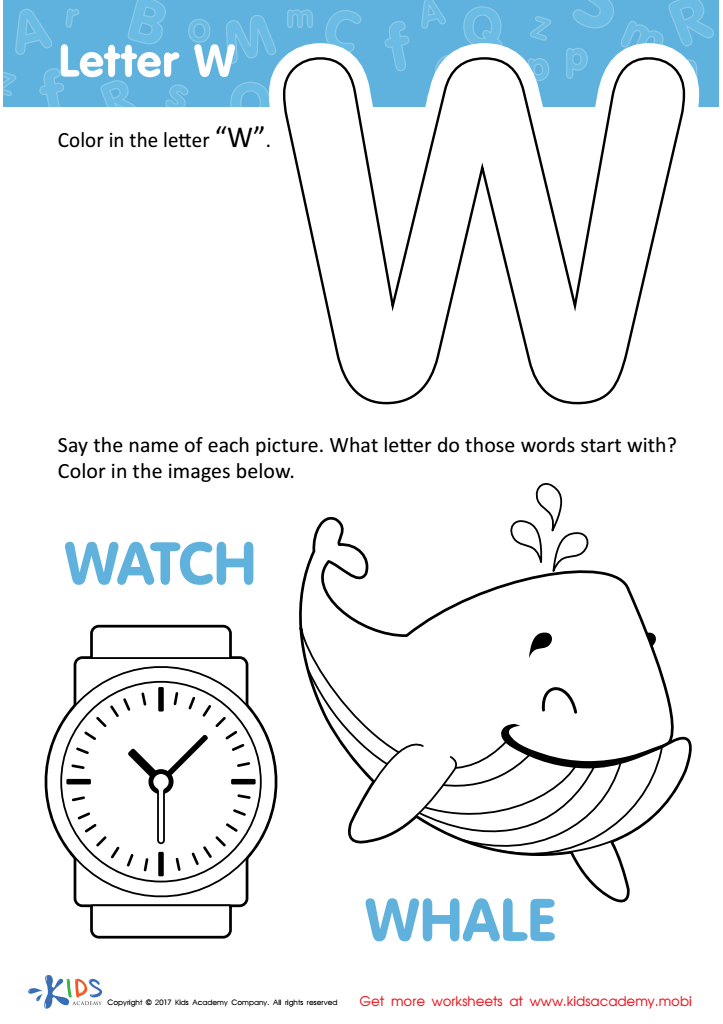
Letter W Coloring Sheet
Let your child have fun with this letter "W" coloring page! They can use their imagination to color the whale and discover the letter and its sound. Give them a helping hand to make it a whale of a time!
Download (PDF)
Assign to My Students
Assign to My Students
Letter W Coloring Sheet
Worksheet
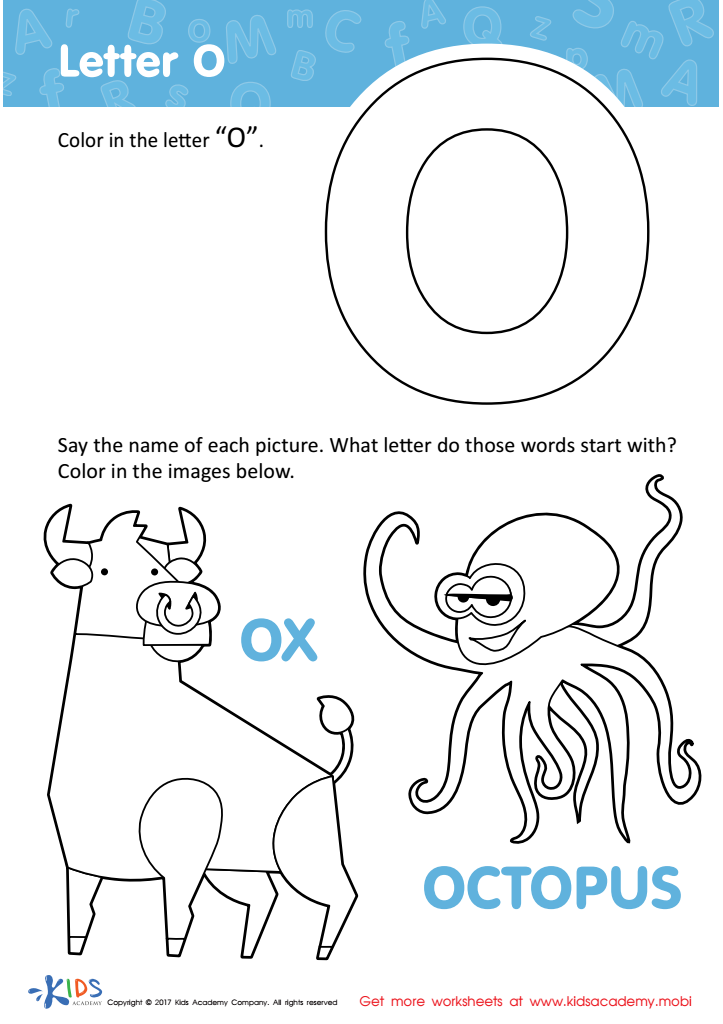
Letter O Coloring Sheet
Oh my! The letter "O" is so much fun. Coloring in the octopus and ox on this delightful letter "O" coloring page can help your child have fun while strengthening their recognition of the letter and sound.
Download (PDF)
Assign to My Students
Assign to My Students
Letter O Coloring Sheet
Worksheet
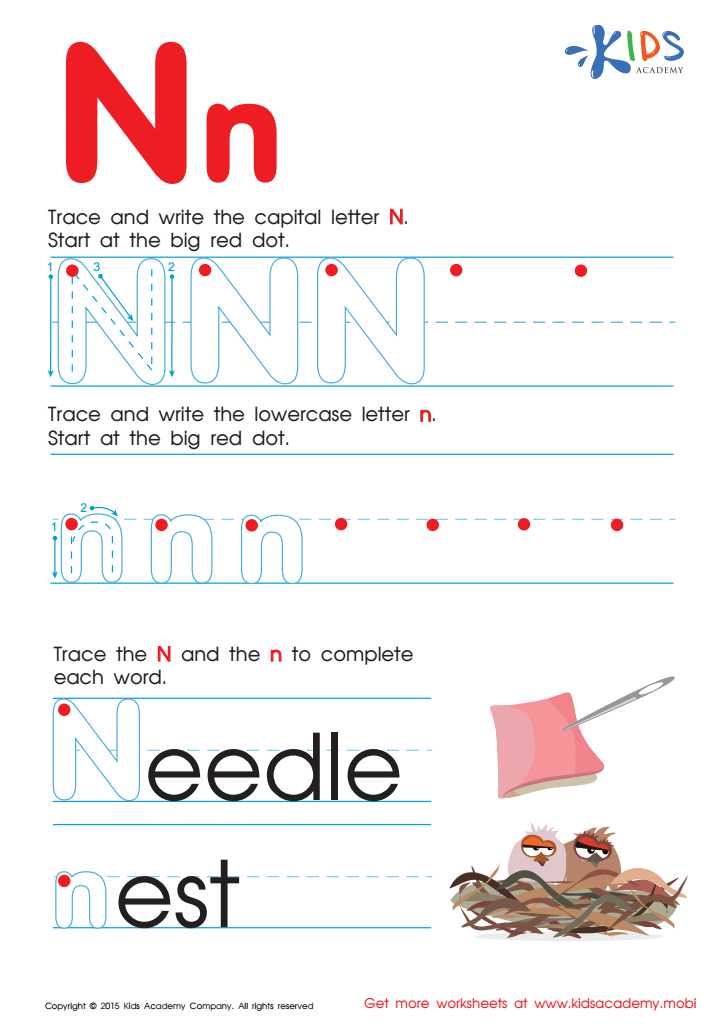
Letter N Tracing Page
Trace and write capital "N" and lowercase "n" several times. Then try forming words like "needle" and "nest". Master letter writing with Kids Academy's collection of ABC worksheets for kindergarten.
Letter N Tracing Page
Worksheet
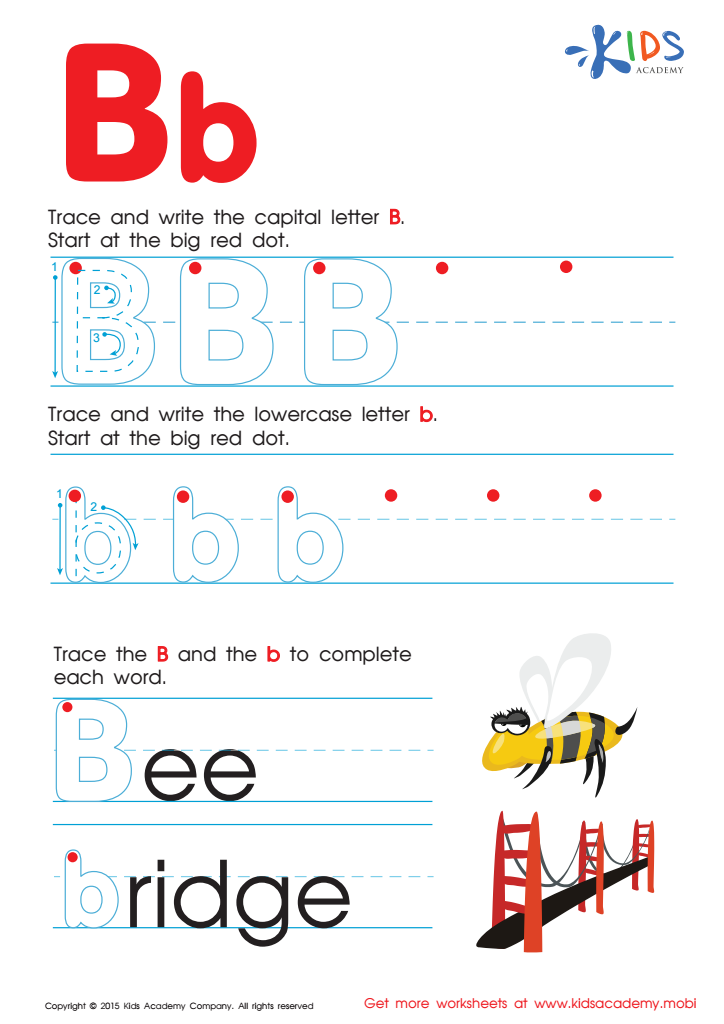
Letter B Tracing Page
Ready to learn the Alphabet? Put your pencil on the red dot and trace & write both capital & lowercase "B". Then have a look at the pictures. Catch the bee, cross the bridge & write the letters to complete the words. More ABC worksheets for kindergarten available!
Letter B Tracing Page
Worksheet
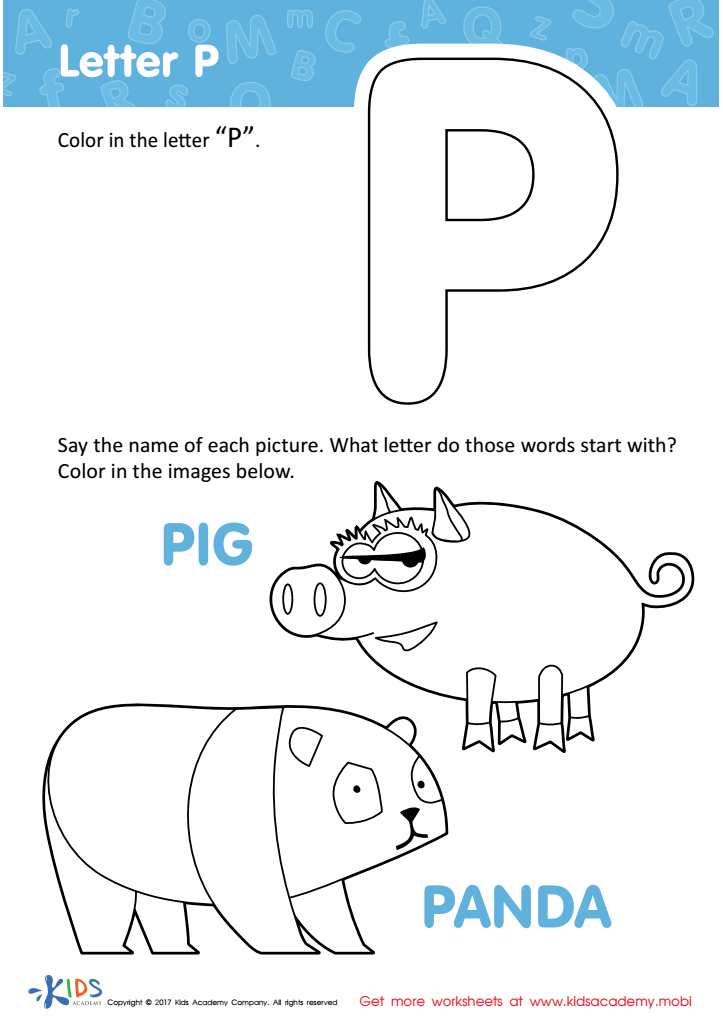
Letter P Coloring Sheet
Encourage your child's creativity and letter recognition with this "P" coloring page! Through coloring animals such as pigs and pandas, your little one will get to know the sound of the letter "P" and have fun too!
Download (PDF)
Assign to My Students
Assign to My Students
Letter P Coloring Sheet
Worksheet
Join Kids Academy for Free
Who is primarily going to use this learning content?








Alphabet recognition is a crucial foundational step in early literacy development, particularly for children ages 3-4. By understanding and recognizing the ABCs, young learners develop essential skills that pave the way for reading and writing. For parents and teachers, fostering letter recognition helps children make sense of the world around them and nurtures their curiosity about language.
During these formative years, children are highly responsive to their environments. Engaging them with fun and interactive activities around letters promotes cognitive development and strengthens their memory. Recognizing letters also supports phonemic awareness—an understanding of the sounds associated with each letter—which is vital for language acquisition and reading proficiency later.
Moreover, early alphabet recognition builds confidence and a love for learning. Children who can identify letters often feel a sense of accomplishment, encouraging them to explore further. Support from parents and teachers is essential in creating a positive learning atmosphere. As a strong early literacy foundation is built, children are better prepared to transition into more complex language skills, ultimately fostering a lifelong love for reading and learning. In summary, supporting alphabet recognition not only enhances language skills but also cultivates a supportive environment that encourages curiosity and motivation in young children.







