Sound-letter association Alphabet Worksheets for Ages 3-4
3 filtered results
-
From - To
Enhance your child's early literacy skills with our Sound-Letter Association Alphabet Worksheets designed specifically for ages 3-4. These engaging, interactive worksheets support young learners in recognizing letters and their corresponding sounds through fun activities and exercises. By playing with letters and sounds, children will build a strong foundation for reading readiness. Each worksheet features colorful illustrations and engaging tasks that make learning enjoyable. Perfect for homeschooling or supplementary practice, our resources encourage independent learning and boost confidence in early learners. Get started today and inspire a lifelong love for reading with our expertly crafted worksheets!
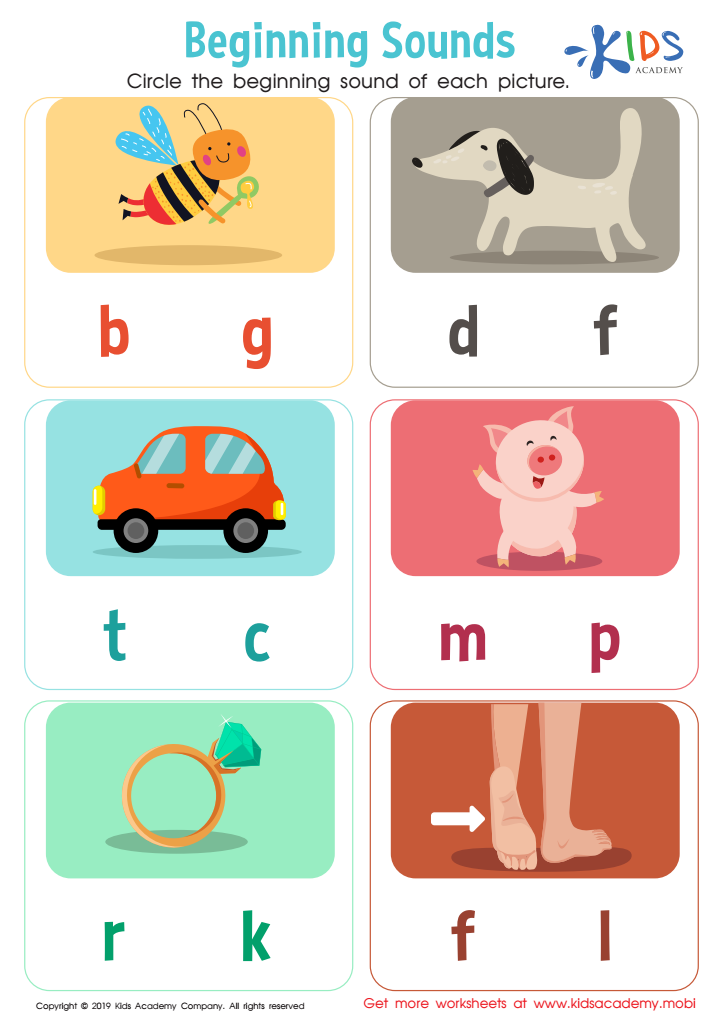
Beginning Sounds Worksheet
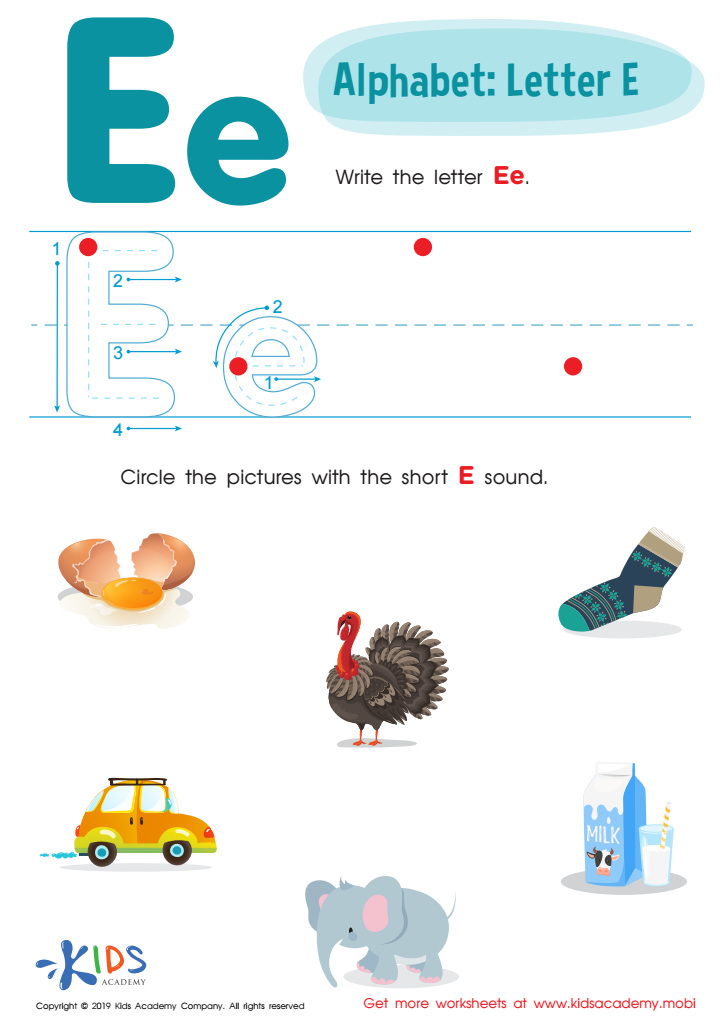
Letter E Tracing Worksheet
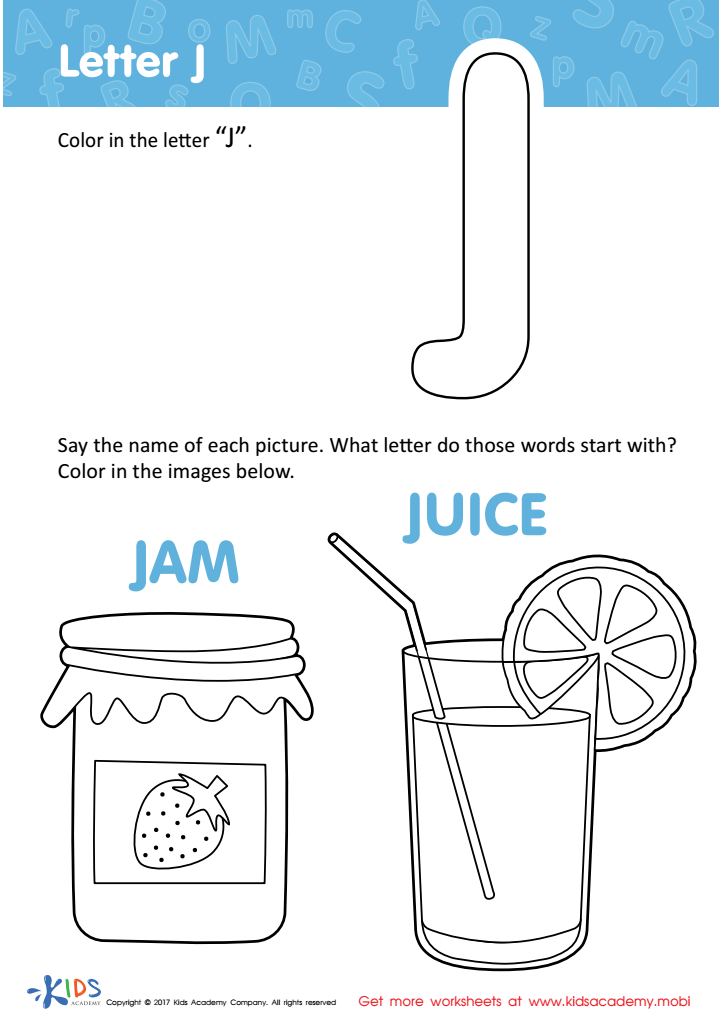
Letter J Coloring Sheet
 Assign to My Students







Sound-letter association is a crucial foundational skill for early literacy in children aged 3-4. Parents and teachers should prioritize this skill because it forms the basis for reading and writing. At this age, children are beginning to explore language, and developing the ability to connect sounds (phonemes) with their corresponding letters (graphemes) helps them recognize letters andBegin to decode words.
When children understand sound-letter relationships, they can more readily engage in phonetic spelling, making it easier for them to write down their thoughts as they begin to express themselves. It also enhances their listening skills, enabling them to differentiate between similar sounds, which is vital for reading comprehension later on.
Incorporating sound-letter activities—like songs, games, and interactive reading sessions—can make learning fun. When children associate letters with sounds through engaging methods, retention increases. Furthermore, supporting this early learning through intentional practices instills a sense of confidence and curiosity in young learners, fostering a lifelong love for reading and education.
Overall, developing sound-letter association at an early age equips children with essential skills that will serve as stepping stones for their academic journey, setting a pathway for future success in literacy.







