Animal Classification Worksheets for Ages 3-4
5 filtered results
-
From - To
Welcome to our Animal Classification Worksheets for Ages 3-4! Designed to introduce young learners to the diverse world of animals, these engaging worksheets help children develop essential categorization skills. Through fun activities, kids will explore various animal types and their features, encouraging curiosity and fostering learning about habitats, diets, and characteristics. Perfect for preschool and early learners, our worksheets promote fine motor skills while stimulating cognitive development. With colorful illustrations and simple tasks, these resources make learning about animals an enjoyable experience. Dive into the exciting journey of animal classification and enhance your child's understanding of nature with our vibrant worksheets!
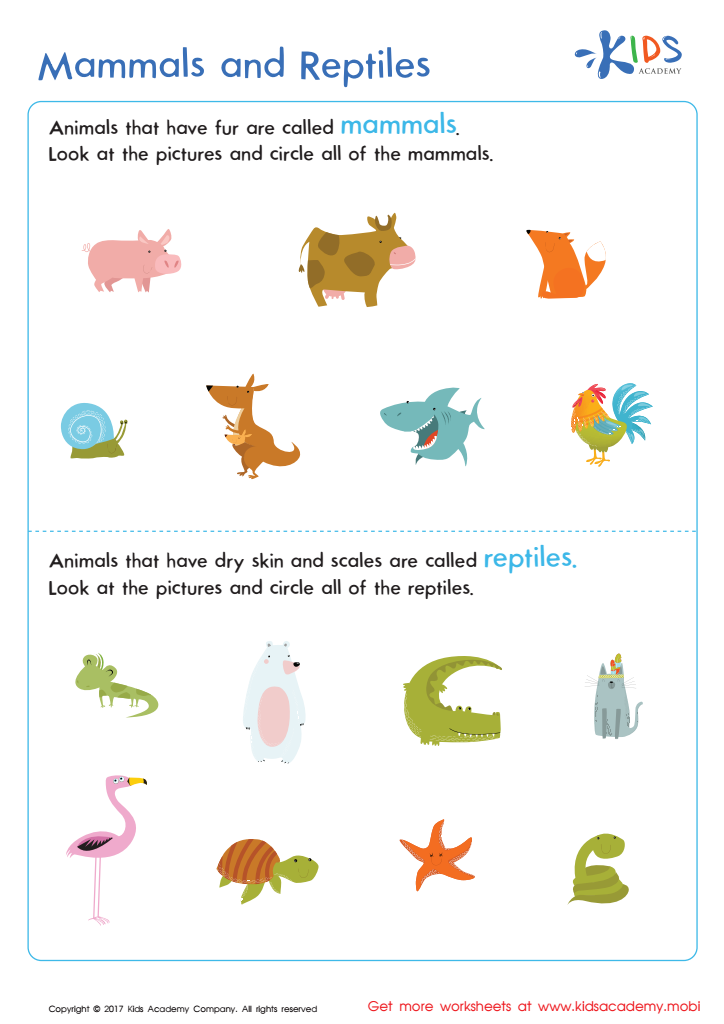
Mammals and Reptiles Worksheet
 Assign to My Students
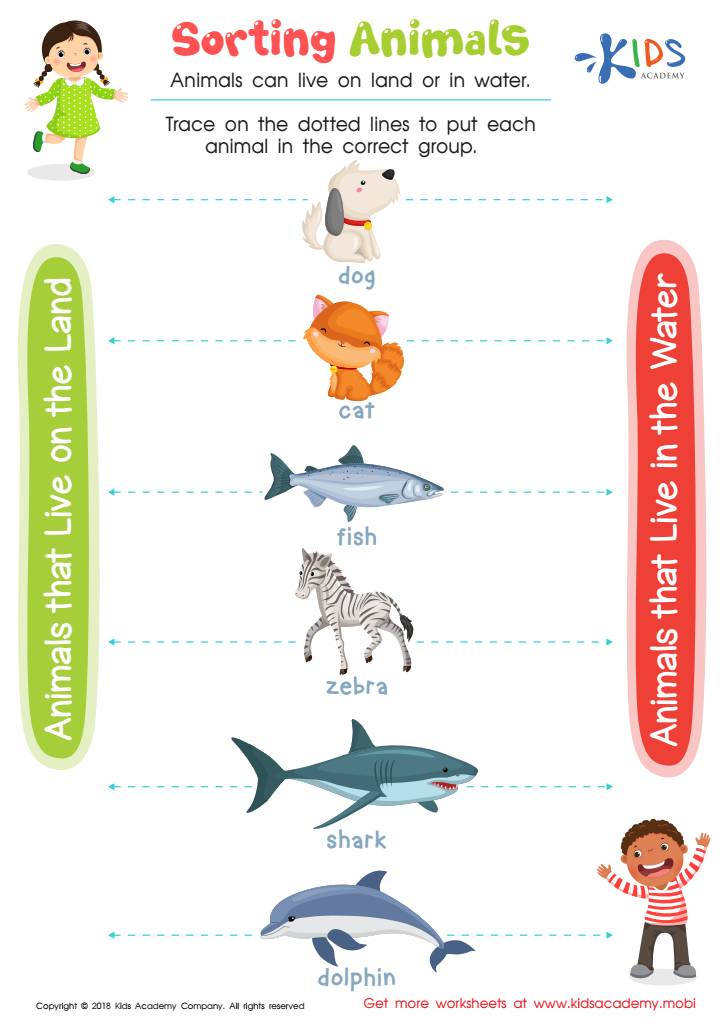
Sorting Animals Worksheet
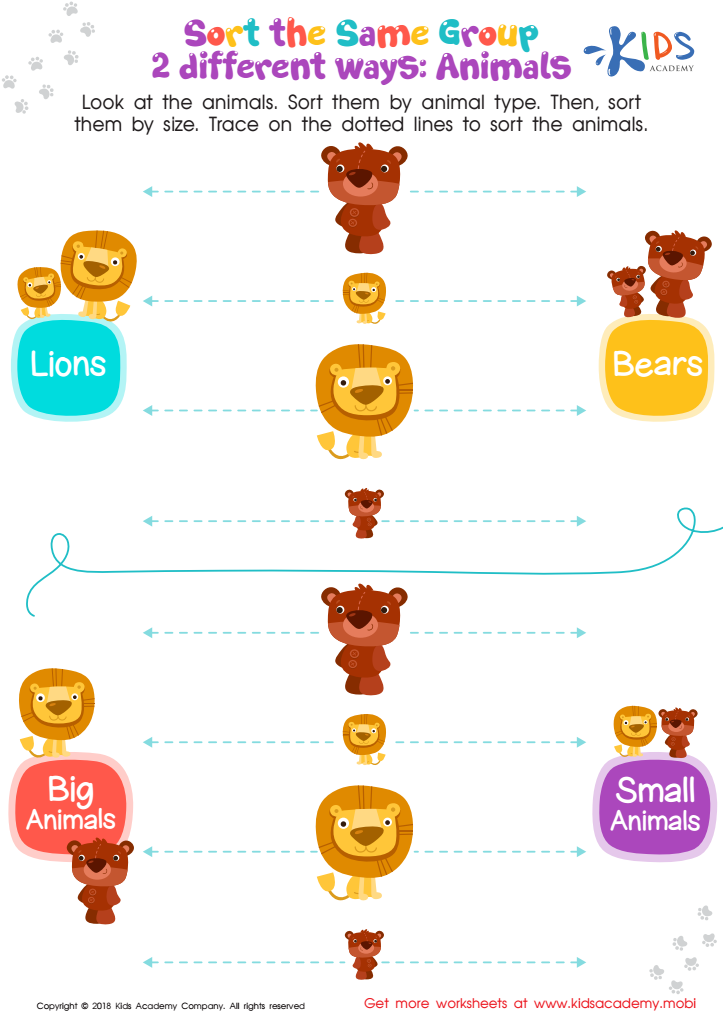
Sort the Same Group 2 Different Ways: Animals Worksheet
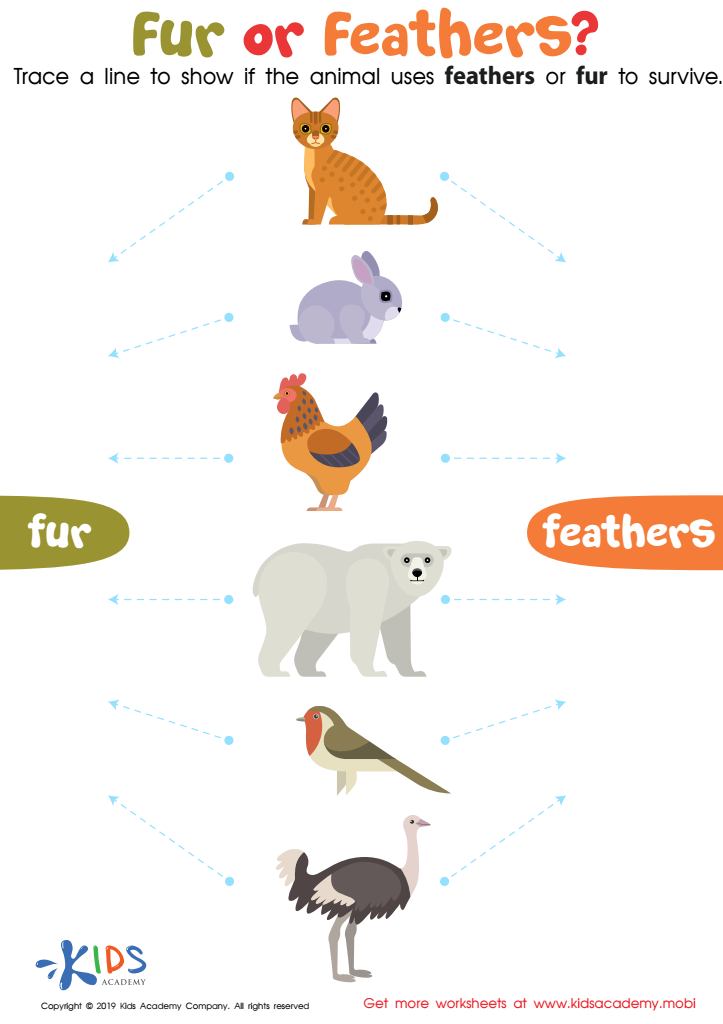
Fur or Feathers? Worksheet
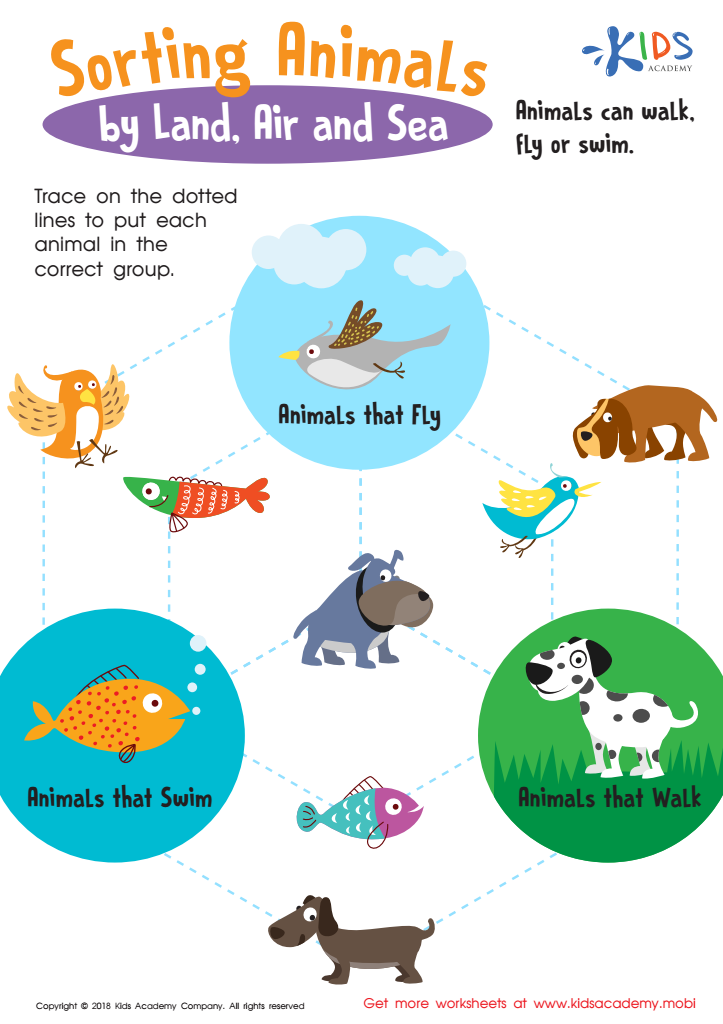
Sorting Animals by Land, Air and Sea Worksheet




Animal classification is an essential topic for young children because it lays the groundwork for their understanding of the natural world. For children aged 3-4, exploring the different categories of animals—such as mammals, birds, reptiles, amphibians, and fish—helps develop their cognitive skills. By identifying and categorizing animals, children begin to make connections and recognize patterns, which boosts critical thinking.
Additionally, discussing animal classification is an interactive way to teach valuable lessons about biology, diversity, and ecology. It encourages curiosity about the environment and promotes discussions about different habitats and the importance of each species within the ecosystem.
For parents and teachers, fostering this curiosity can lead to rich opportunities for learning. Engaging activities like sorting toys or nature walks can turn classification into an exciting game, making education enjoyable. Furthermore, learning about animals can help children develop empathy, as they learn to respect and appreciate living creatures.
In essence, animal classification enhances early learning experiences by integrating play with fundamental scientific concepts, encouraging lifelong learning habits. Parents and teachers who prioritize this topic support sustainable curiosity and foundational education, crucial for a child's growth and understanding of the world around them.








