Check out this FREE "Basic Addition Skills" Trial Lesson for age 3-4!

Writing Number Sentences for Addition Story Problems

Favorites
With answer key
Interactive
  • 3-4
  • Basic Addition Skills
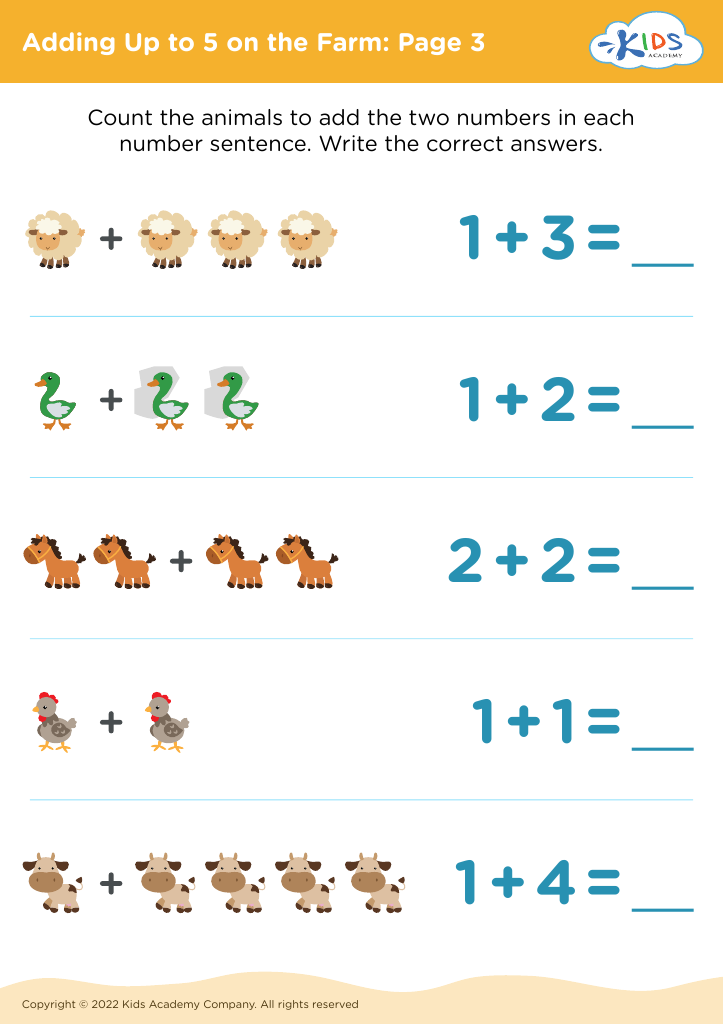
Adding Up to 5 on the Farm: Page 3
Worksheet
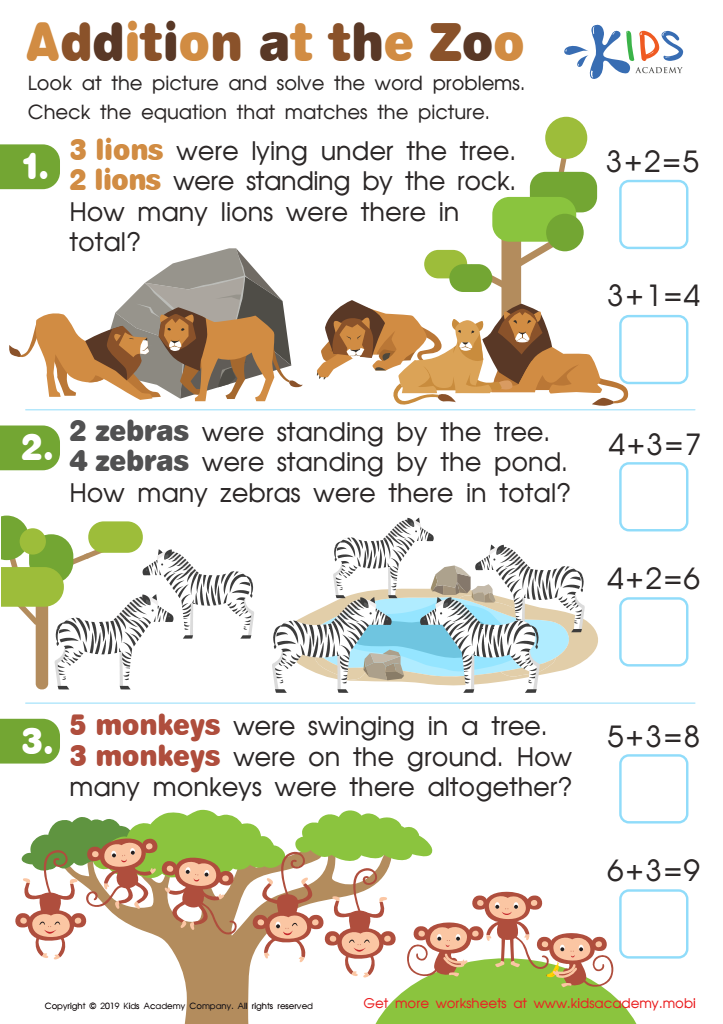
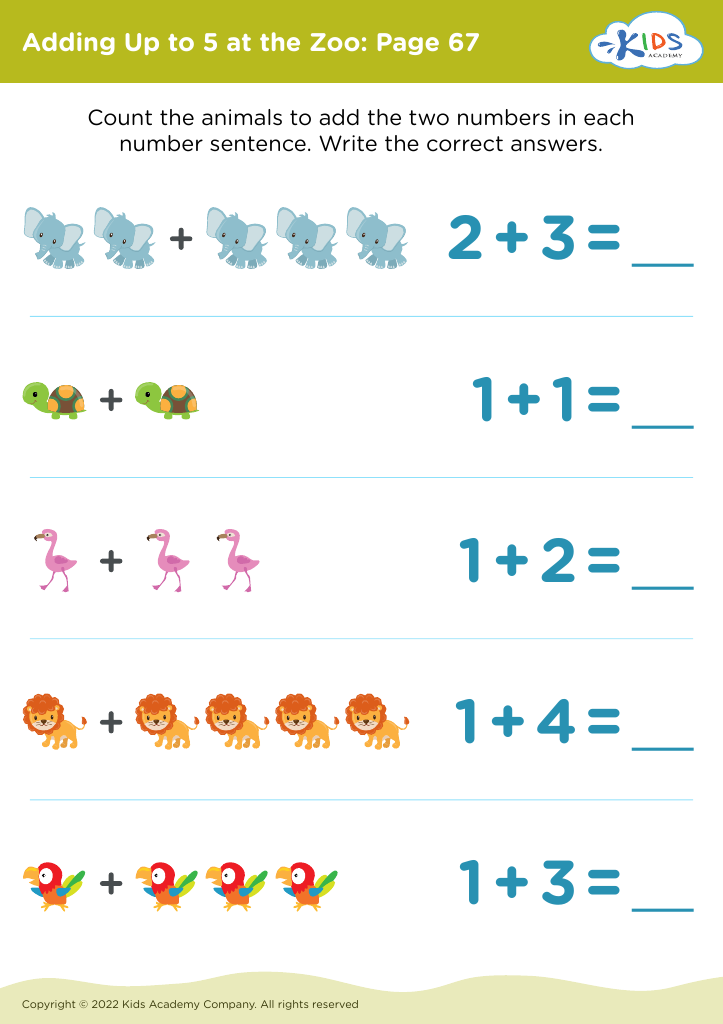
Addition at the Zoo Worksheet

Addition at the Zoo Worksheet

Visit the zoo with your kids and point out all the different animals. Ask them to name their favorites and identify animals on a worksheet. Challenge them to solve word problems related to the pictures. Ask them for the equation that fits the picture and check the answer.
Addition at the Zoo Worksheet
Worksheet
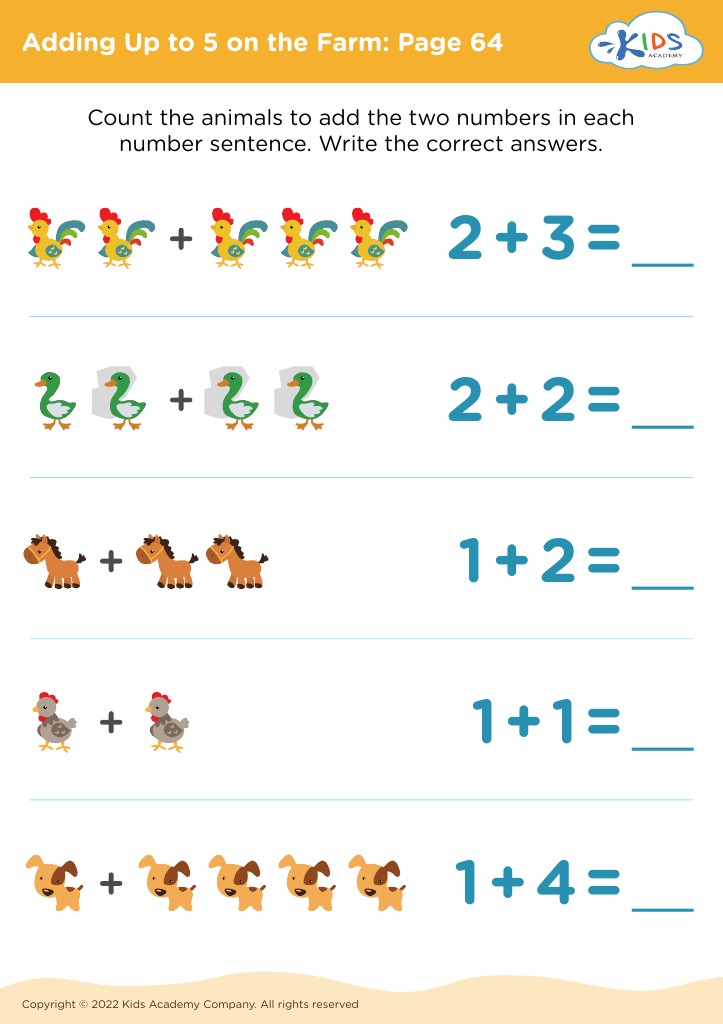
Adding Up to 5 on the Farm: Page 64
Worksheet
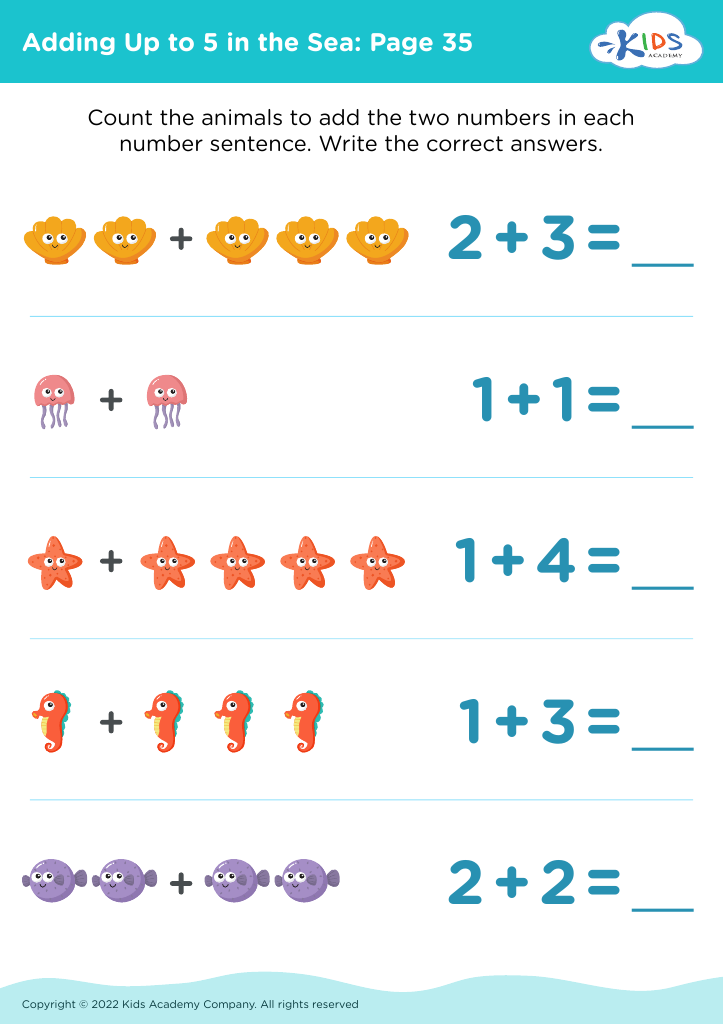
Adding Up to 5 in the Sea: Page 35
Worksheet
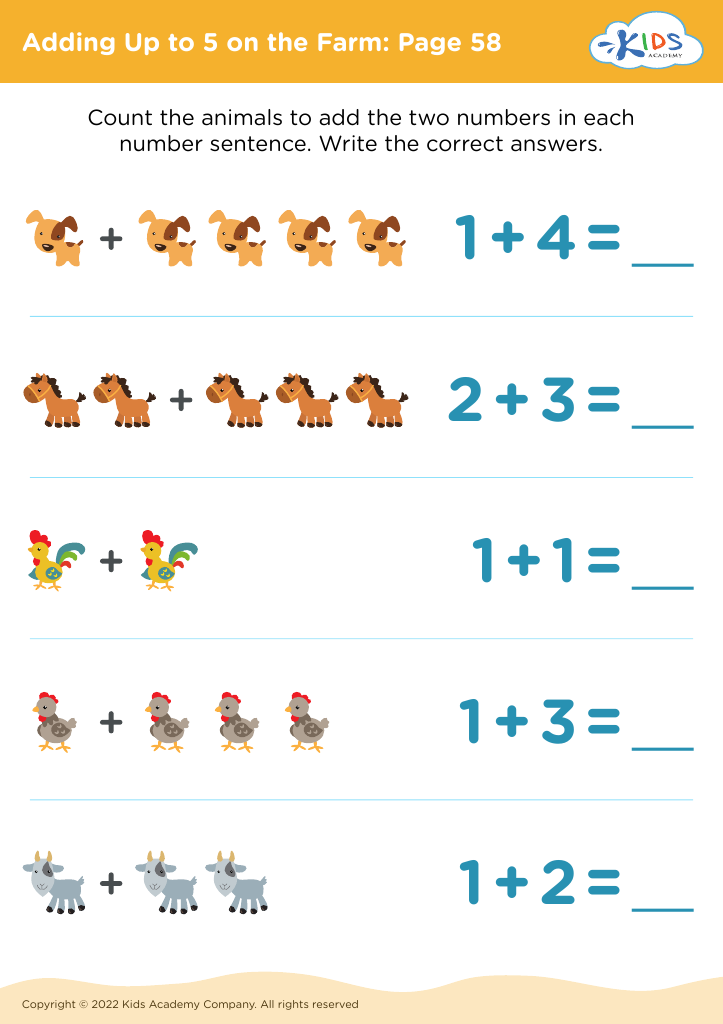
Adding Up to 5 on the Farm: Page 58
Worksheet
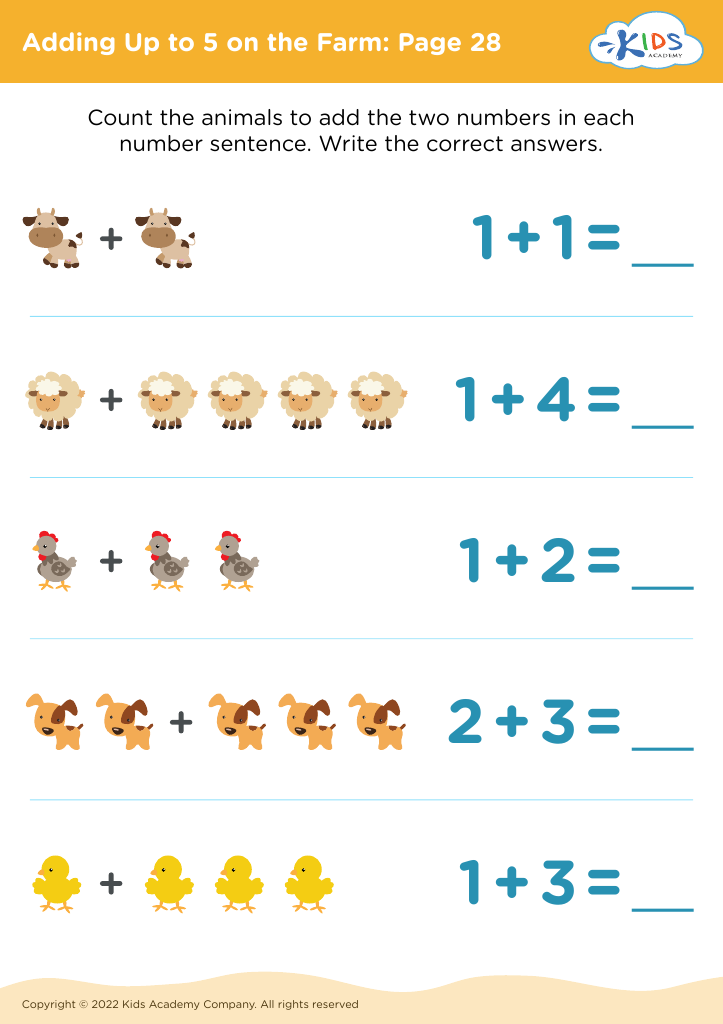
Adding Up to 5 on the Farm: Page 28
Worksheet
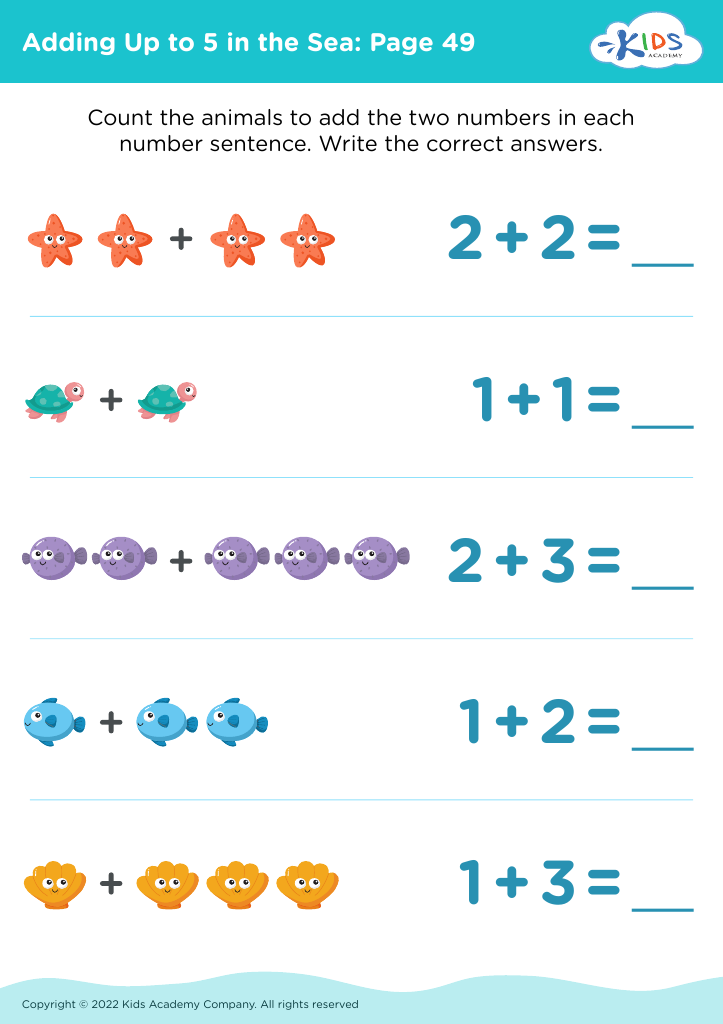
Adding Up to 5 in the Sea: Page 49
Worksheet
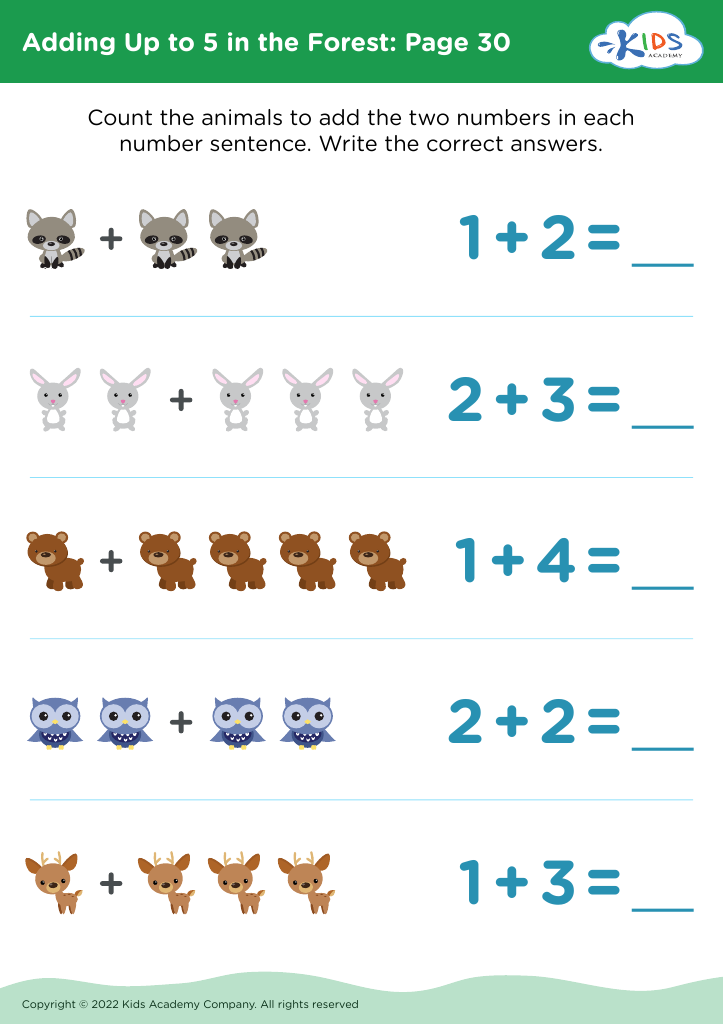
Adding Up to 5 in the Forest: Page 30
Worksheet
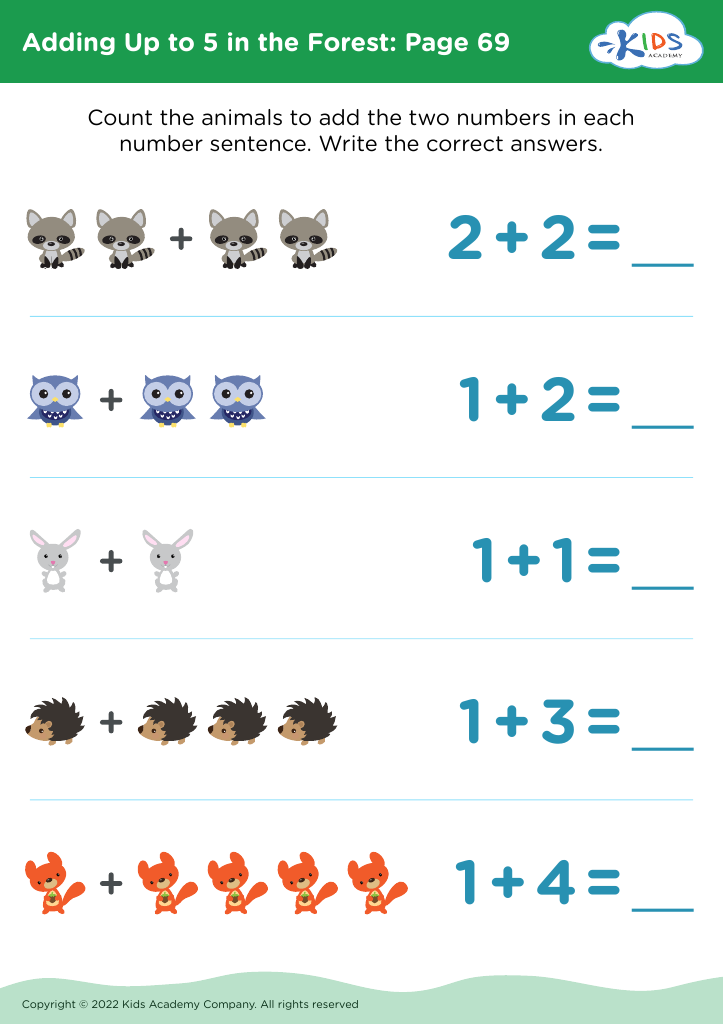
Adding Up to 5 in the Forest: Page 69
Worksheet
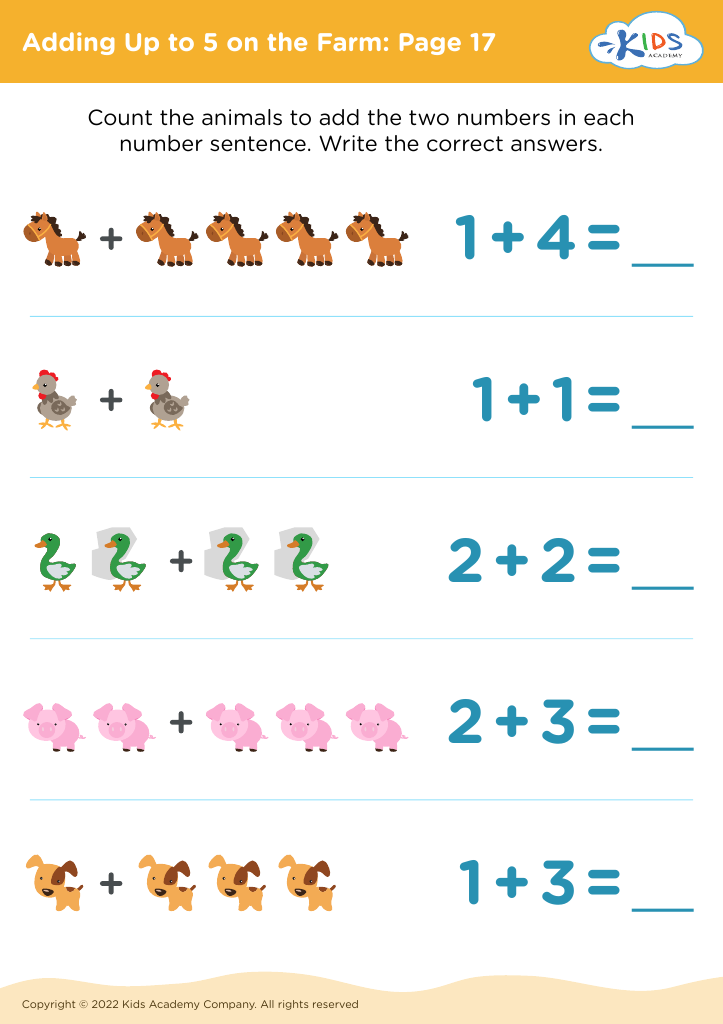
Adding Up to 5 on the Farm: Page 17
Worksheet
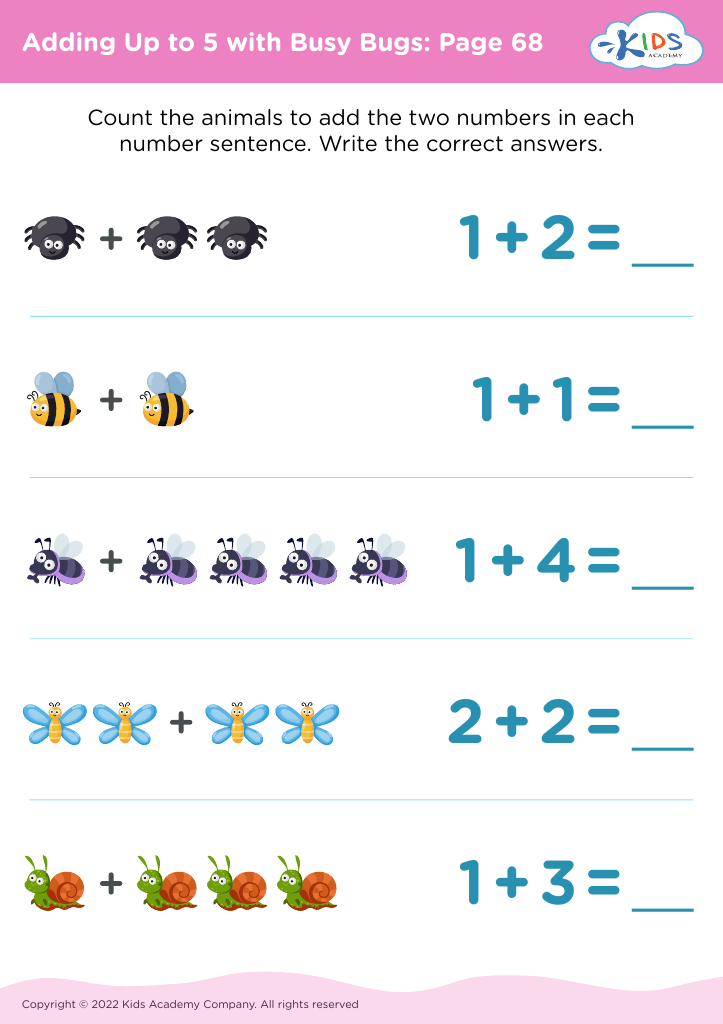
Adding Up to 5 with Busy Bugs: Page 68
Worksheet
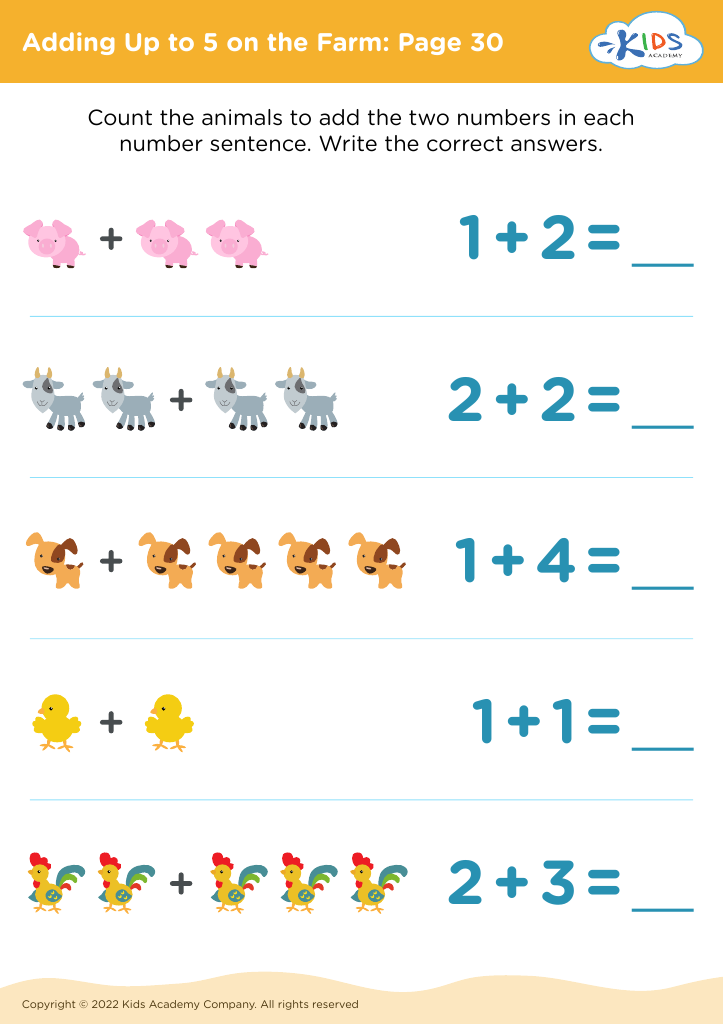
Adding Up to 5 on the Farm: Page 30
Worksheet
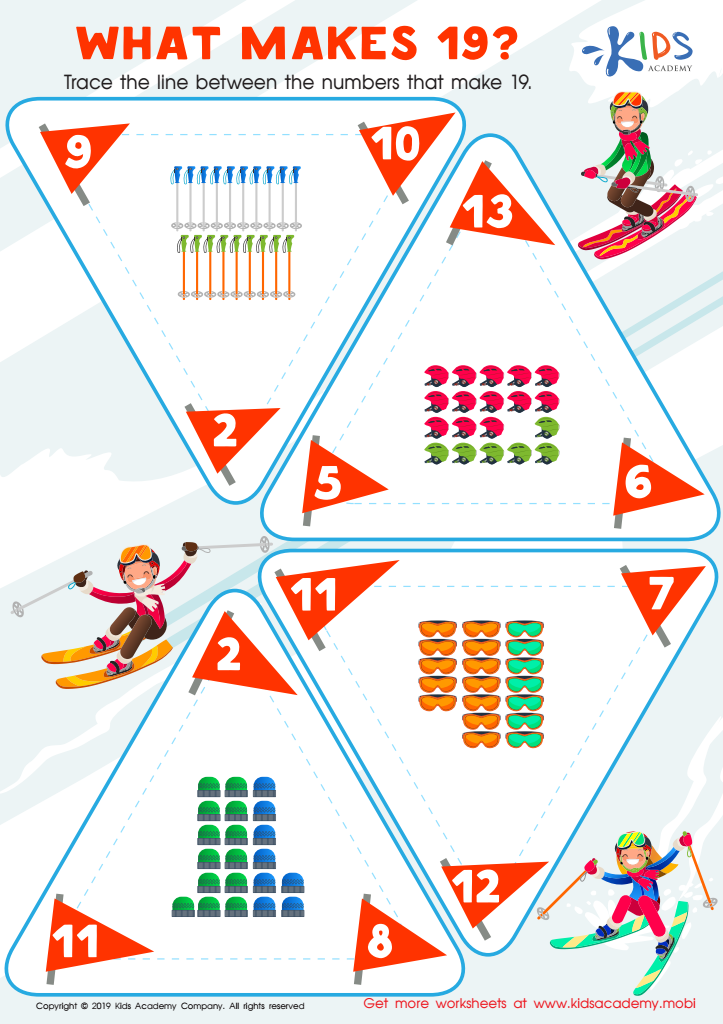
What Makes 19? Worksheet
What Makes 19? Worksheet

As a parent, it's your responsibility to help your kids learn. Put on the teacher hat and use this worksheet to teach them addition tricks. Help them count and add the objects, trace a line between the numbers that make 19, and take their learning a step further.
What Makes 19? Worksheet
Worksheet
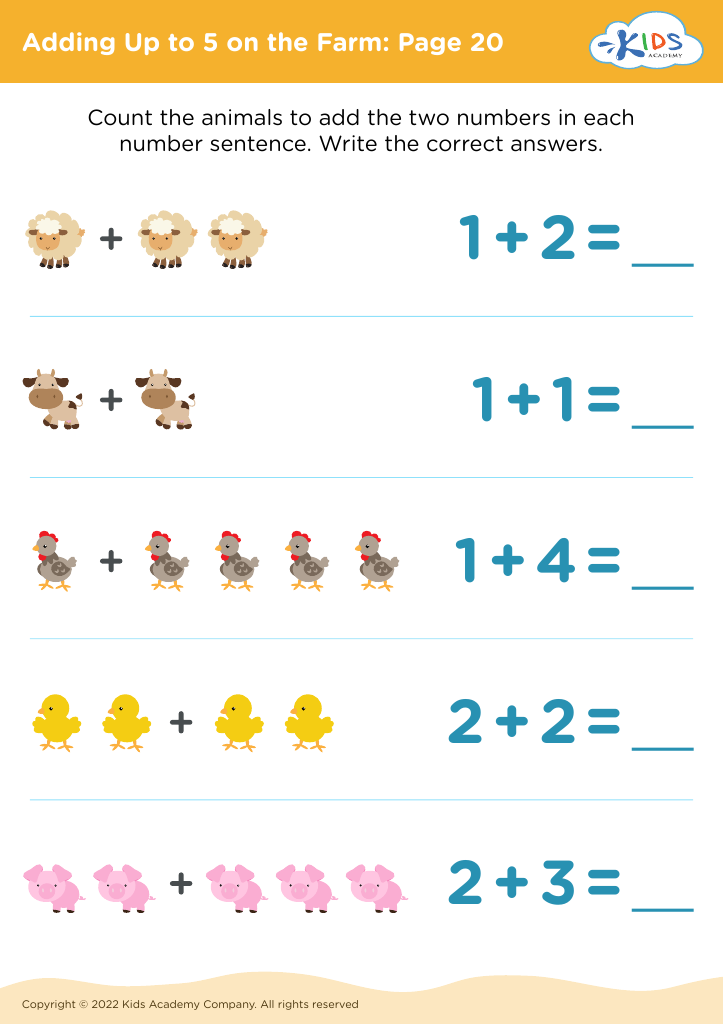
Adding Up to 5 on the Farm: Page 20
Worksheet
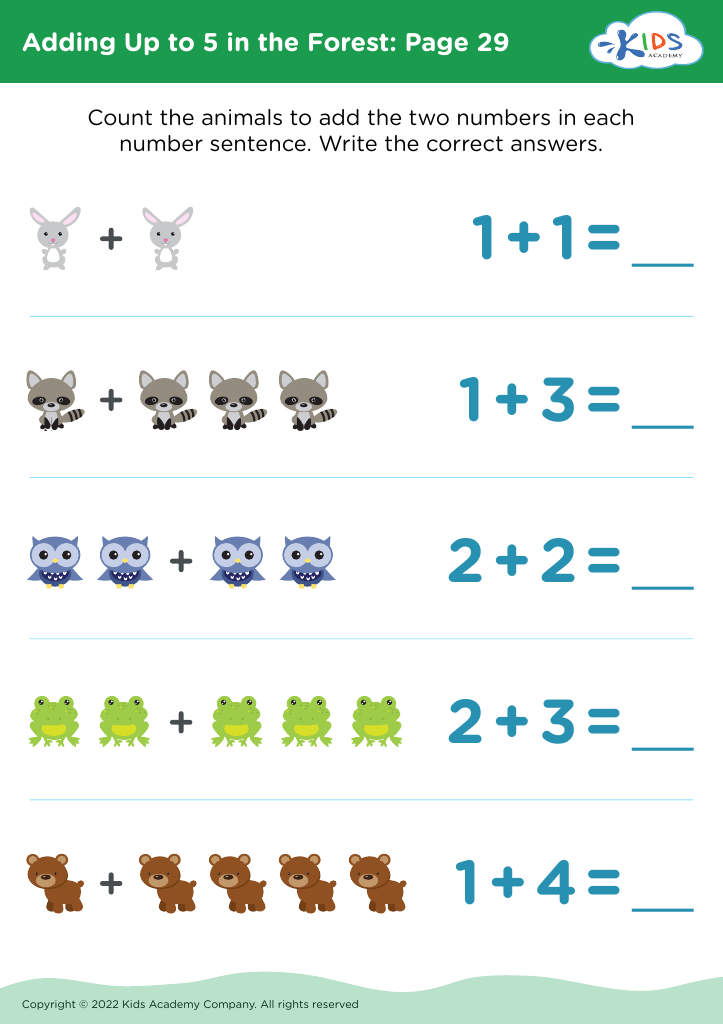
Adding Up to 5 in the Forest: Page 29
Worksheet
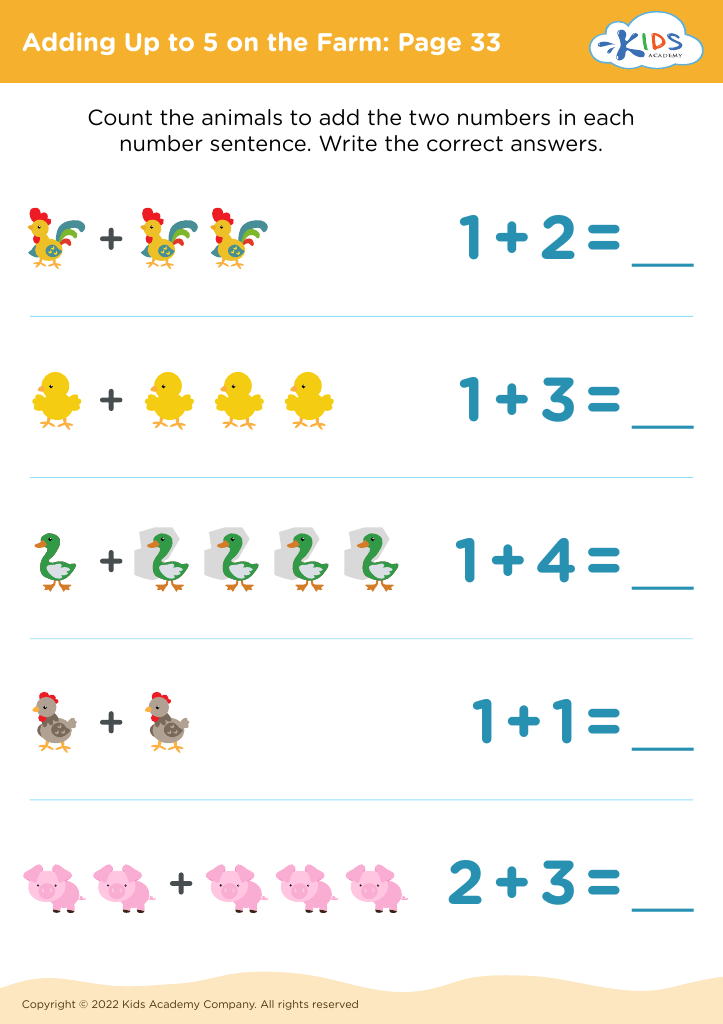
Adding Up to 5 on the Farm: Page 33
Worksheet
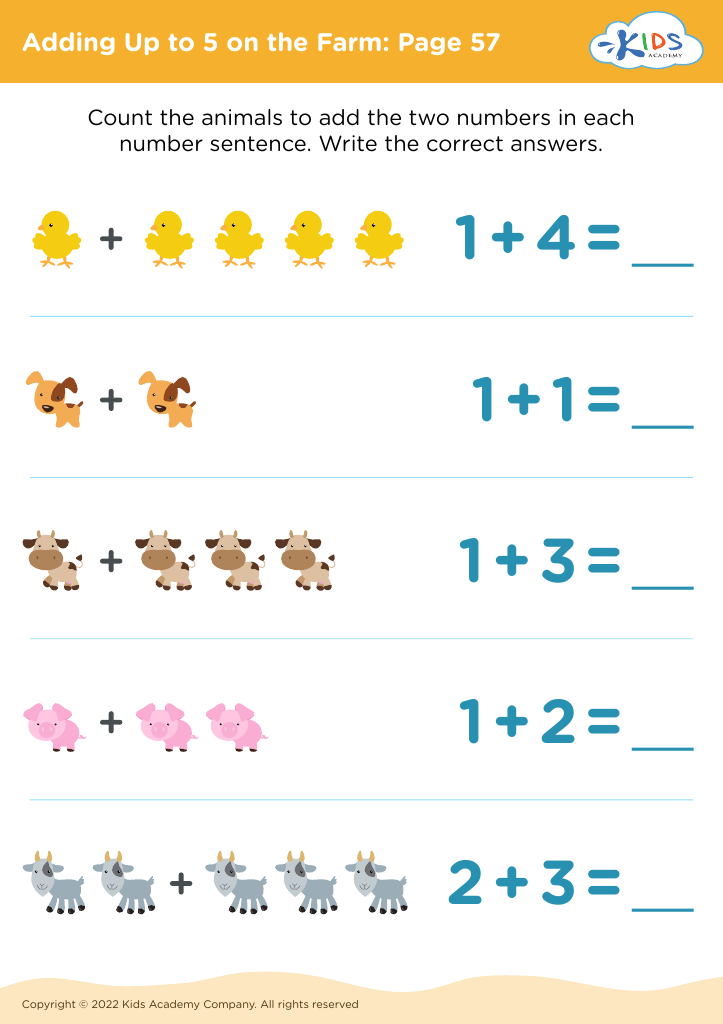
Adding Up to 5 on the Farm: Page 57
Worksheet
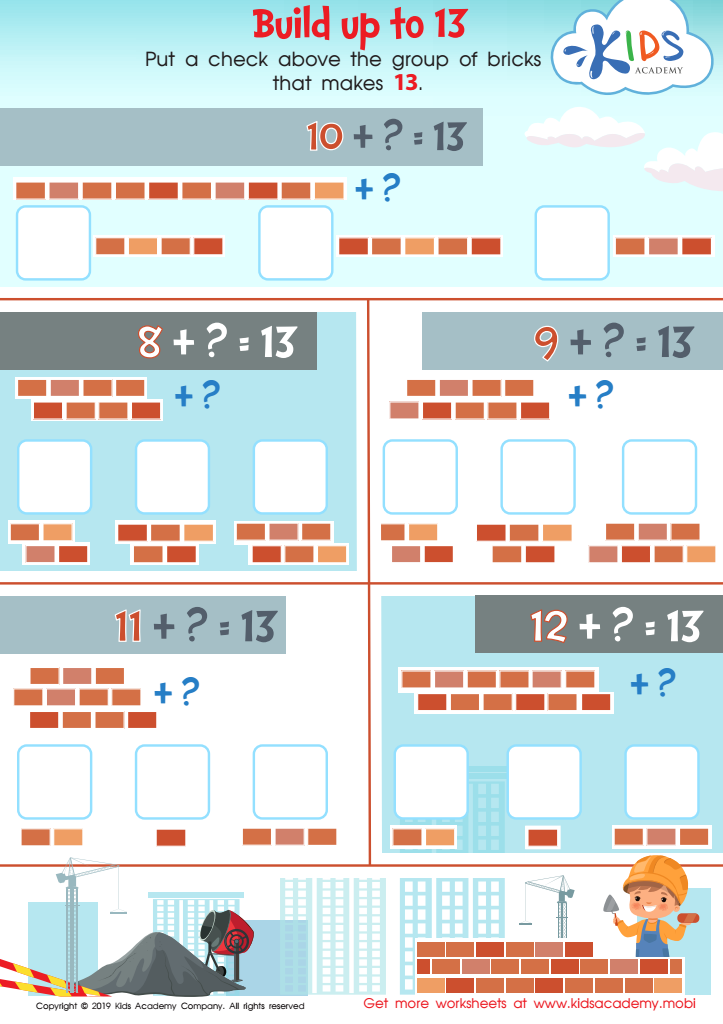
Build up to 13 Worksheet
Build up to 13 Worksheet
Help your kids master addition and subtraction with this worksheet! It'll help clear up any confusion they may have with adding different numbers. Have them add up the simple equations and mark the group of bricks that makes 13. It's a great way for them to get familiar with the basics.
Build up to 13 Worksheet
Worksheet
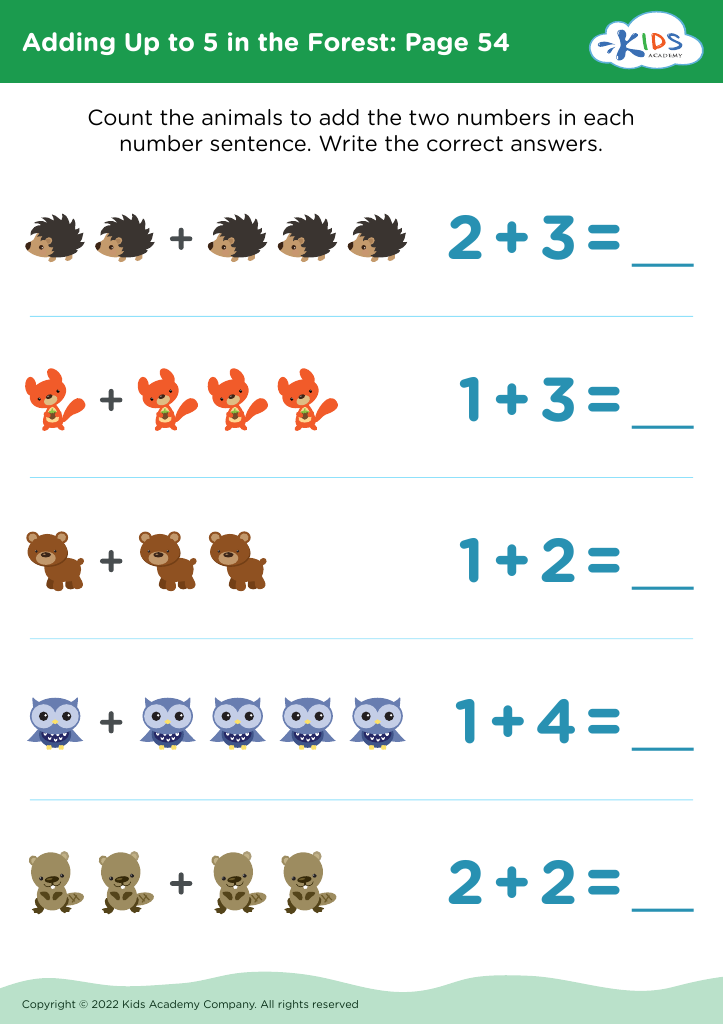
Adding Up to 5 in the Forest: Page 54
Worksheet
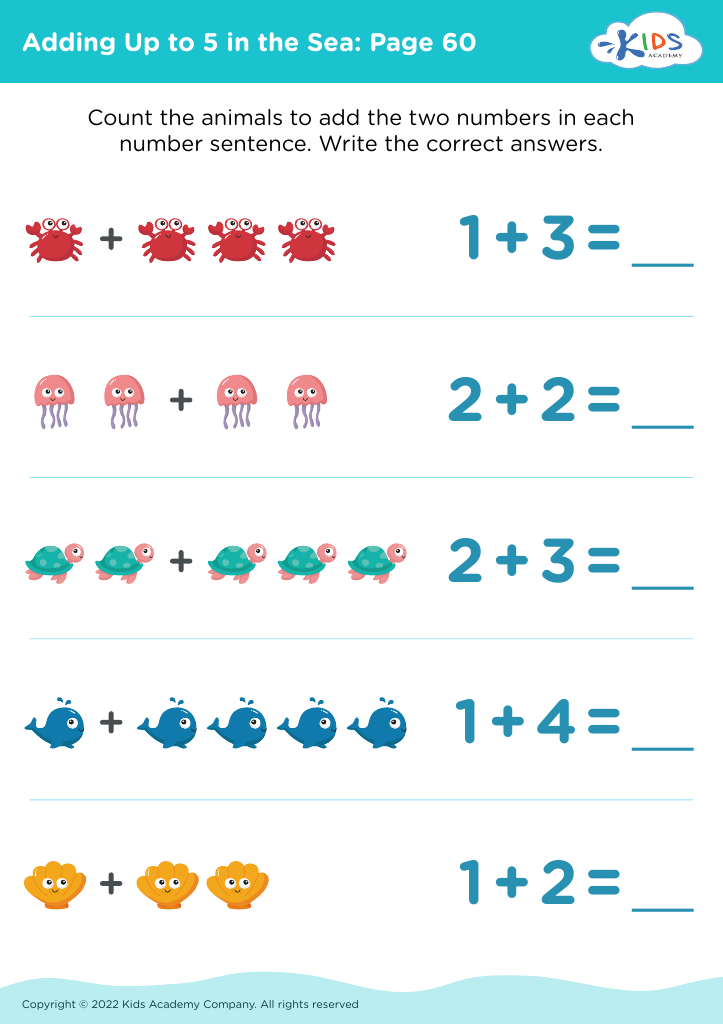
Adding Up to 5 in the Sea: Page 60
Worksheet
Adding Up to 5 at the Zoo: Page 67
Worksheet
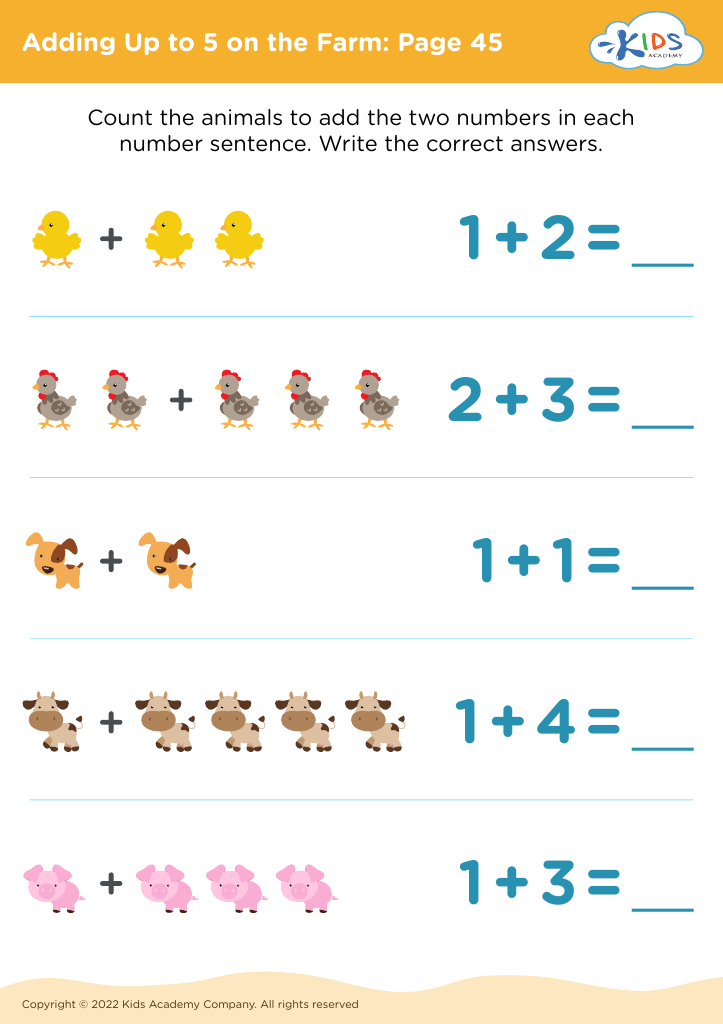
Adding Up to 5 on the Farm: Page 45
Worksheet
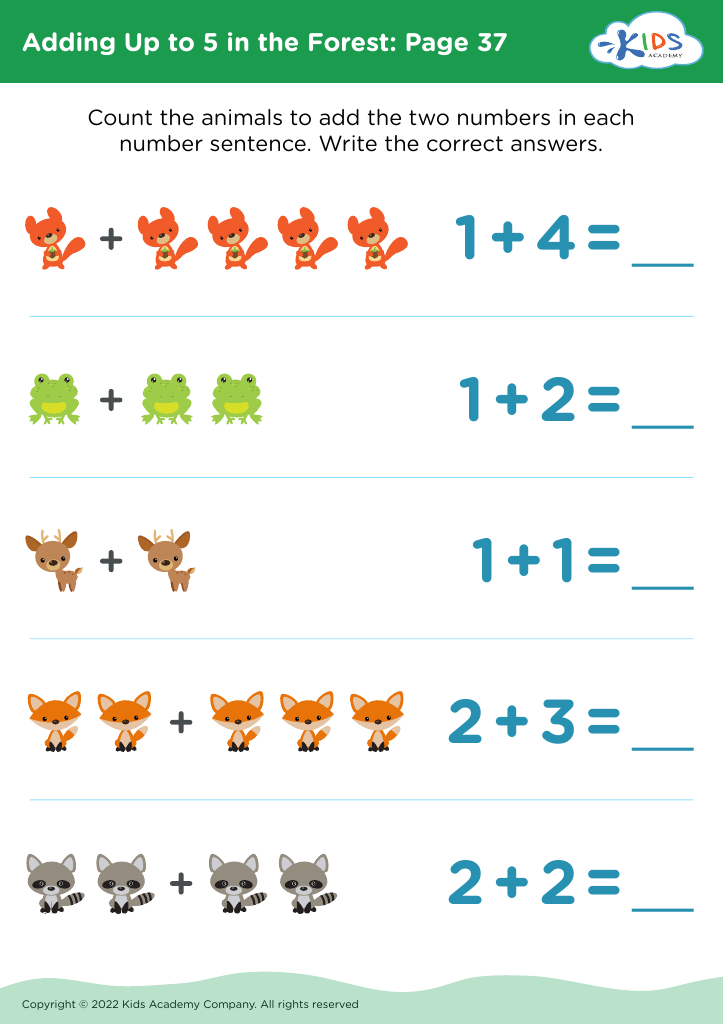
Adding Up to 5 in the Forest: Page 37
Worksheet
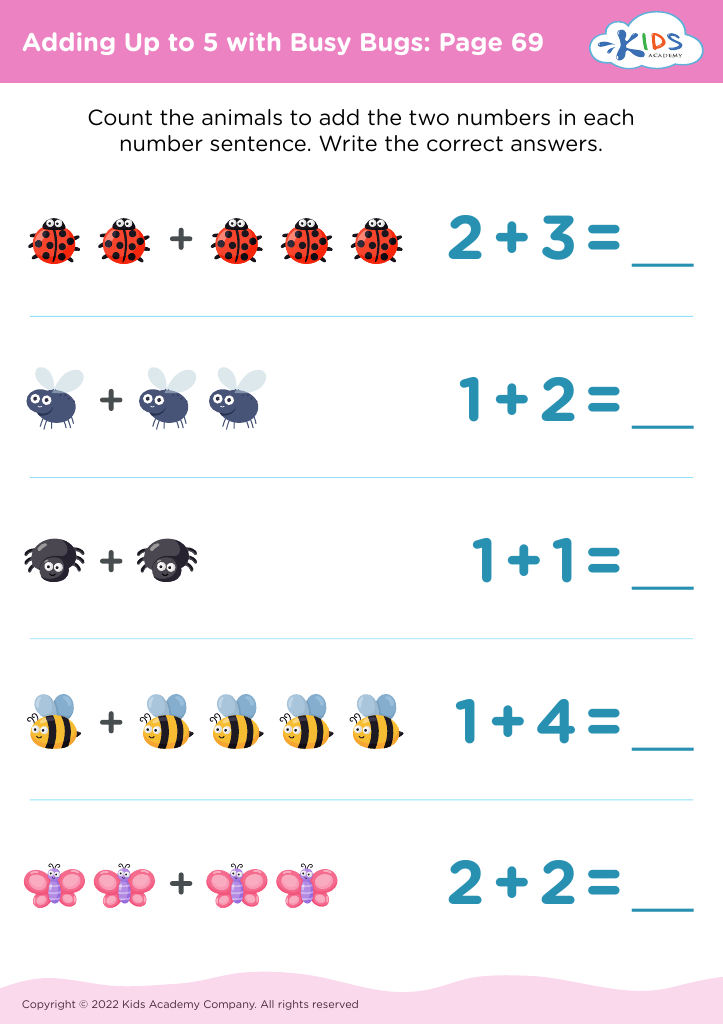
Adding Up to 5 with Busy Bugs: Page 69
Worksheet


Basic addition skills are crucial for young children because they lay the foundation for future mathematical understanding and cognitive development. At the ages of 3-4, children's brains are particularly receptive to new information, and introducing basic addition during this period can enhance their numerical awareness and problem-solving abilities.

Early exposure to addition helps children develop number sense, which is the ability to recognize, relate, and understand numbers and their relationships. This foundational skill supports more complex mathematical concepts they will encounter in later years. Moreover, mastering basic addition boosts children's confidence in their abilities, encouraging a positive attitude towards learning math.

Parents and teachers also benefit by providing children opportunities to engage with basic addition through playful and interactive activities. This engagement fosters a learning environment where children can explore, ask questions, and develop critical thinking skills. Additionally, strong early math skills are linked to future academic success, not just in mathematics but across various subjects. By prioritizing basic addition skills at an early age, parents and teachers give children a significant head start in their educational journeys, ensuring they have the tools needed for lifelong learning and problem-solving in everyday life. Ultimately, investing time and effort into teaching basic addition can have long-lasting, positive effects on a child’s development and future academic achievements.