Filters

197 filtered results

Clear all filters
Favorites
With answer key
Interactive

197 filtered results

Difficulty Level

Grade


Discover an engaging collection of cognitive development worksheets tailored for children ages 3-4 on our Kids Academy platform! Our expertly designed worksheets promote critical thinking, problem-solving, and logical reasoning through fun activities. These resources help young learners strengthen their cognitive skills with interactive puzzles, matching games, and shape identification tasks, all aimed at fostering curiosity and creativity. Ideal for parents and educators, these worksheets cater to early learners and support their developmental milestones. Download and print them to provide enriching and stimulating learning experiences that will set the foundation for lifelong learning. Explore cognitive growth with our versatile worksheets today!

Check out this FREE "Cognitive Development" Trial Lesson for age 3-4!

The Long I Sound

Favorites
With answer key
Interactive
  • 3-4
  • Cognitive Development
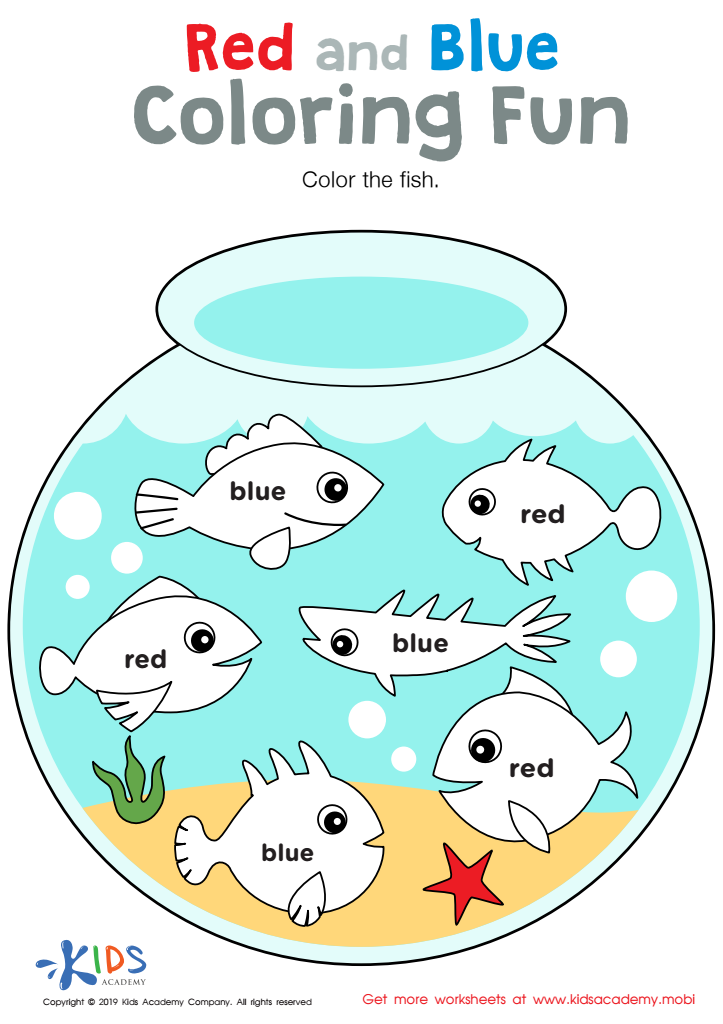
Red and Blue Coloring Fun Worksheet

Red and Blue Coloring Fun Worksheet

Kids know colors like red and blue. But can they read these words? Give them practice with this fun fish bowl coloring sheet. They'll look at the fish, then color them the corresponding hue. Home or classroom, they'll be sure to get a kick out of learning colors in this creative way!
Download (PDF)
Assign to My Students
Red and Blue Coloring Fun Worksheet
Worksheet
Addition worksheet for kindergarten pdf

Addition Worksheet for Kindergarten

Addition Worksheet for Kindergarten
Worksheet
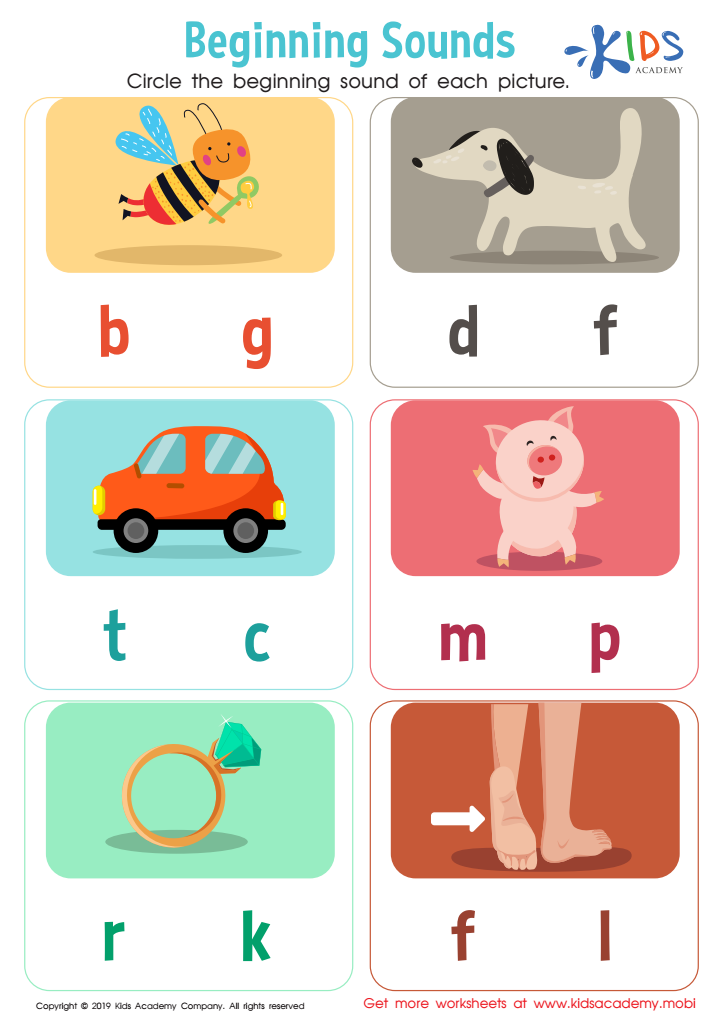
Beginning Sounds Worksheet

Beginning Sounds Worksheet

Test your child's knowledge with this colorful worksheet! Before beginning, have your kids recite the alphabet and sound them off. Give examples and ask them to do the same, then help them circle the beginning sound of each picture to complete the exercise.
Beginning Sounds Worksheet
Worksheet
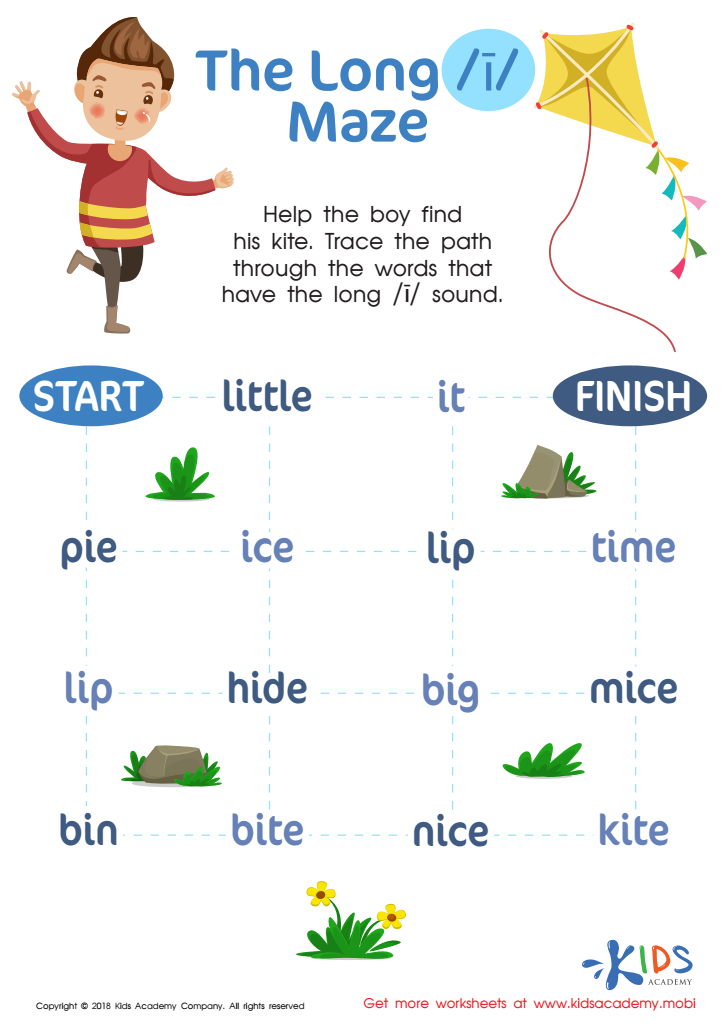
The Long I Maze Reading Worksheet

The Long I Maze Reading Worksheet

Help your child learn phonics to help them read. Show them the difference between long and short "i" sounds. Guide them as they use a pencil to trace words with the long "i:" sound in the "Help the Boy in the Picture" worksheet exercise. This will help them find the kite in the picture.
The Long I Maze Reading Worksheet
Worksheet
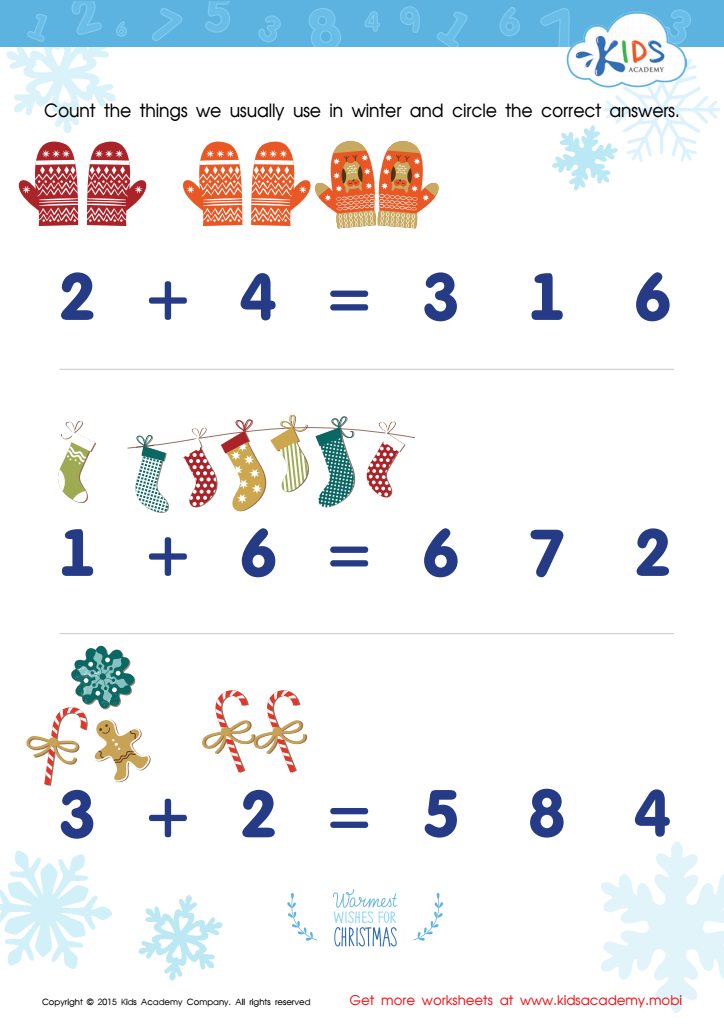
Math PDF Worksheet: Count Winter Things

Count Winter Things Worksheet

This chilly winter afternoon, help your kid warm up with Kids Academy's free math worksheet - full of bright pictures and addition practice. Let them count the things and write in the numbers for a great brain training and math head start. Get more free math worksheets here. (80 words)
Count Winter Things Worksheet
Worksheet
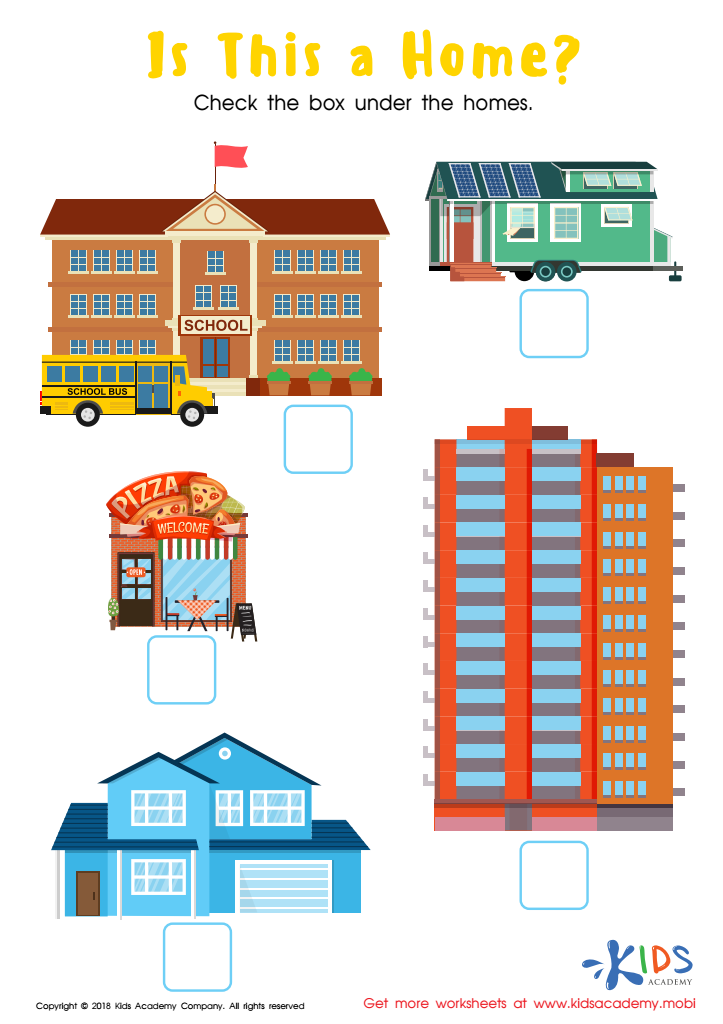
Is this a Home? Worksheet

Is this a Home? Worksheet

Ask your child what the building you live in is called. Is it a home, restaurant or hospital? Then look at the pictures in the worksheet and ask them to identify which are homes - even if they don't look like yours. Check the box next to the homes in the pictures.
Is this a Home? Worksheet
Worksheet
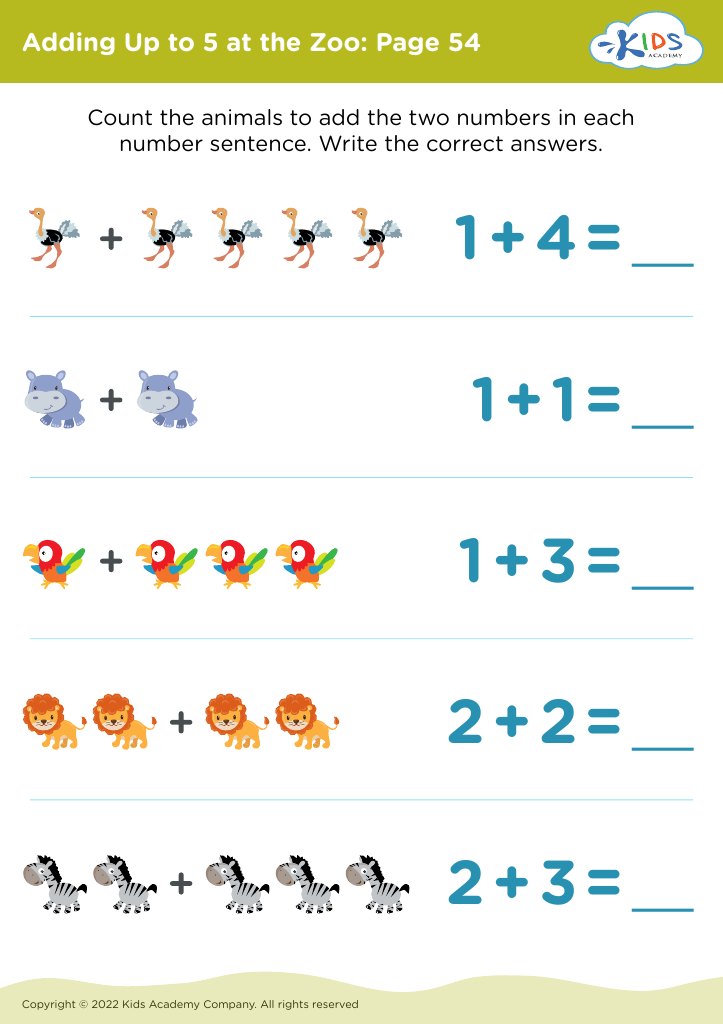
Adding Up to 5 at the Zoo: Page 54
Worksheet
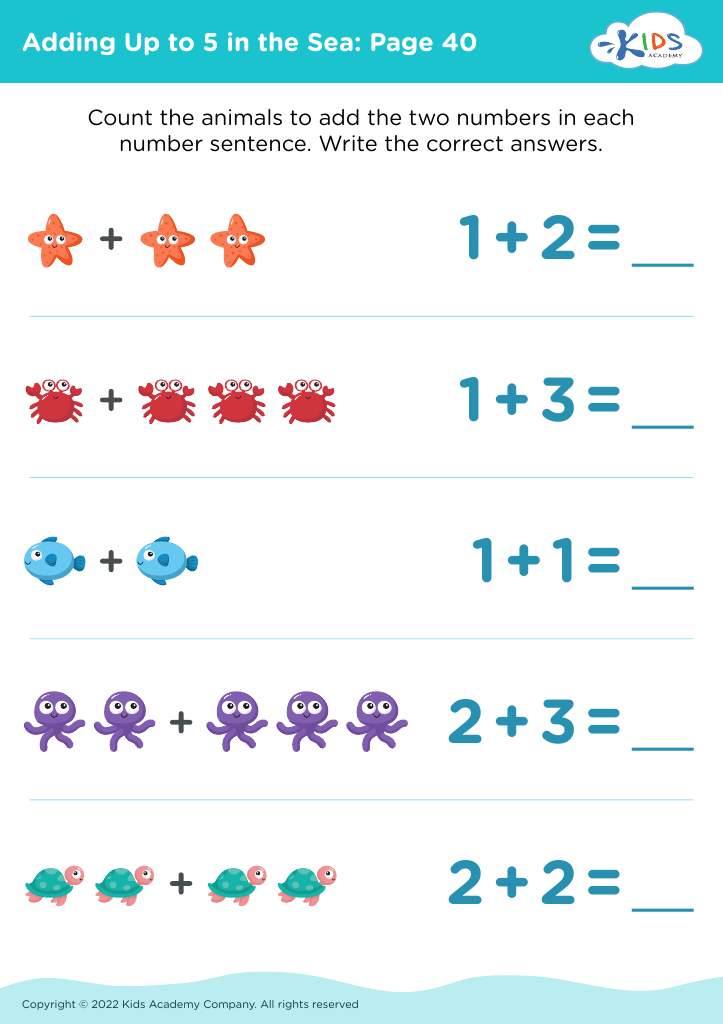
Adding Up to 5 in the Sea: Page 40
Worksheet
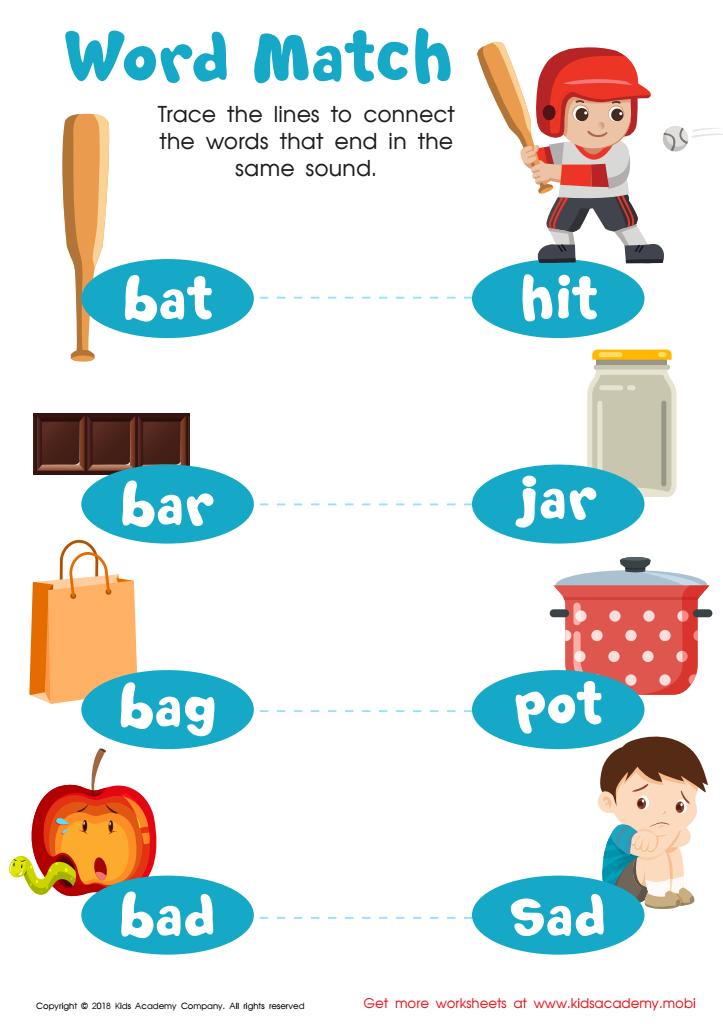
Word Match Reading Worksheet
Word Match Reading Worksheet

This printout helps children learn to read fluently by connecting words with the same sound. Colorful pictures aid understanding and context for kindergarten-level students. Tracing lines, they learn to identify the sounds made by letters of the alphabet and deepen their knowledge of phonics.
Word Match Reading Worksheet
Worksheet
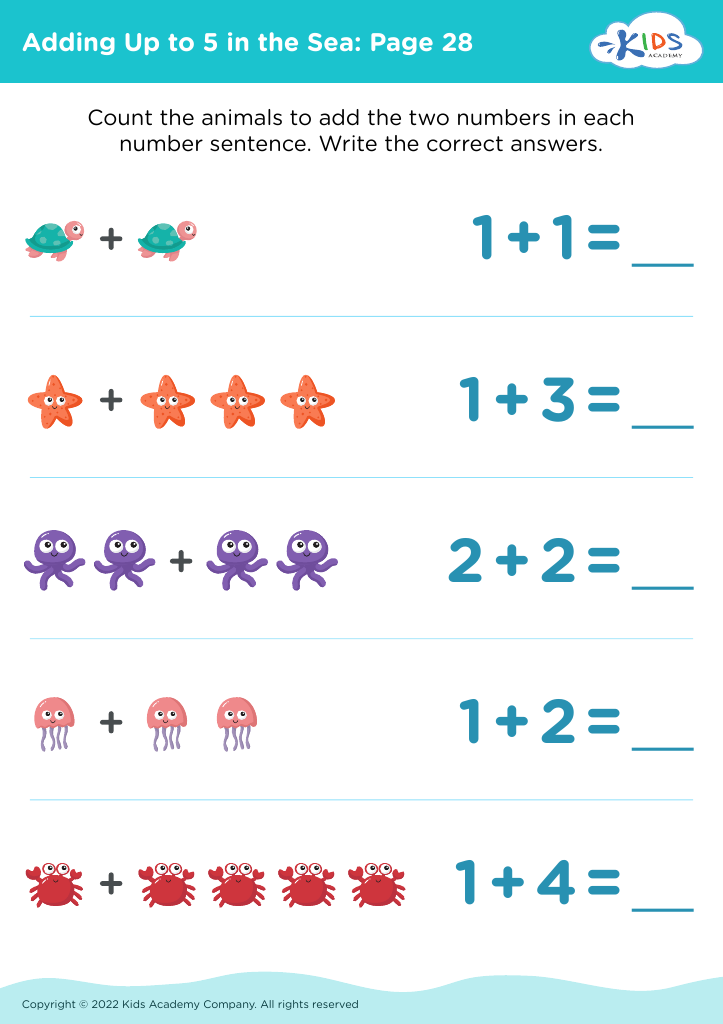
Adding Up to 5 in the Sea: Page 28
Worksheet
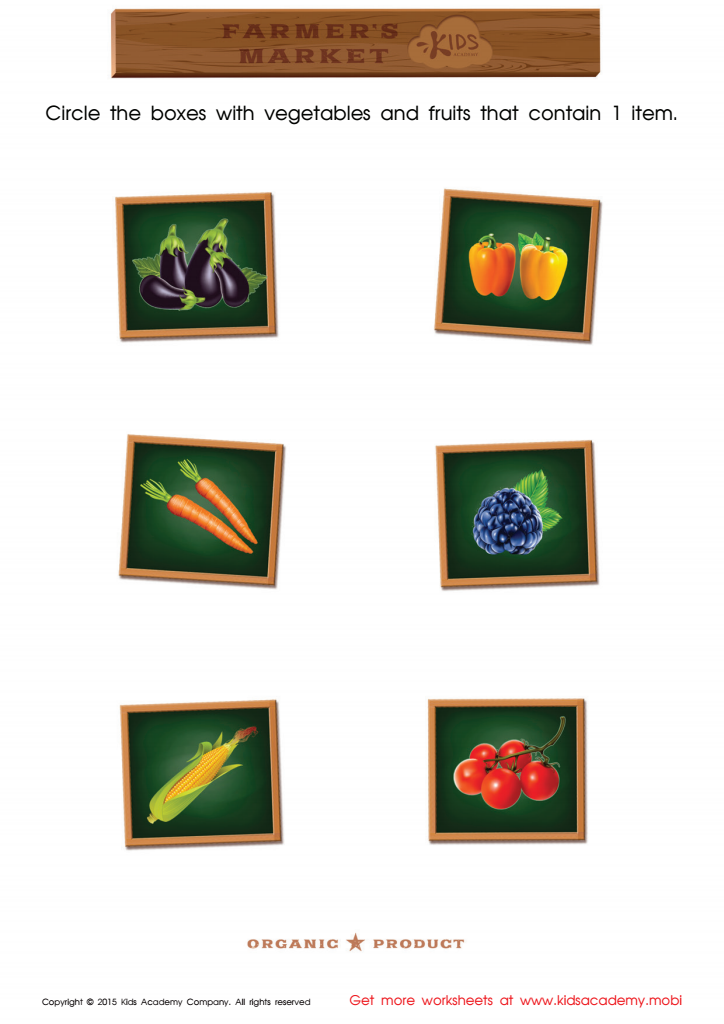
Math PDF Worksheets - Count and Match Boxes with Vegetables
Count and Match Boxes with Vegetables
Print one and help your kid sharp his counting skills. With a variety of veggies to count, such as raspberries and eggplants, your little mathematician will have lots of fun.
Count and Match Boxes with Vegetables
Worksheet
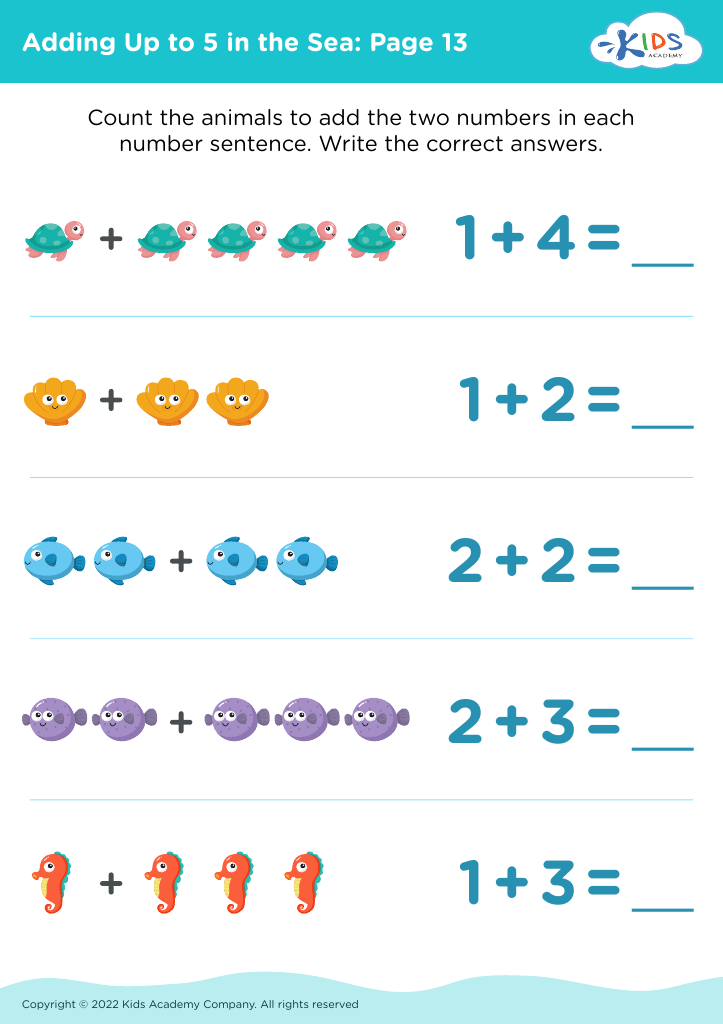
Adding Up to 5 in the Sea: Page 13
Worksheet
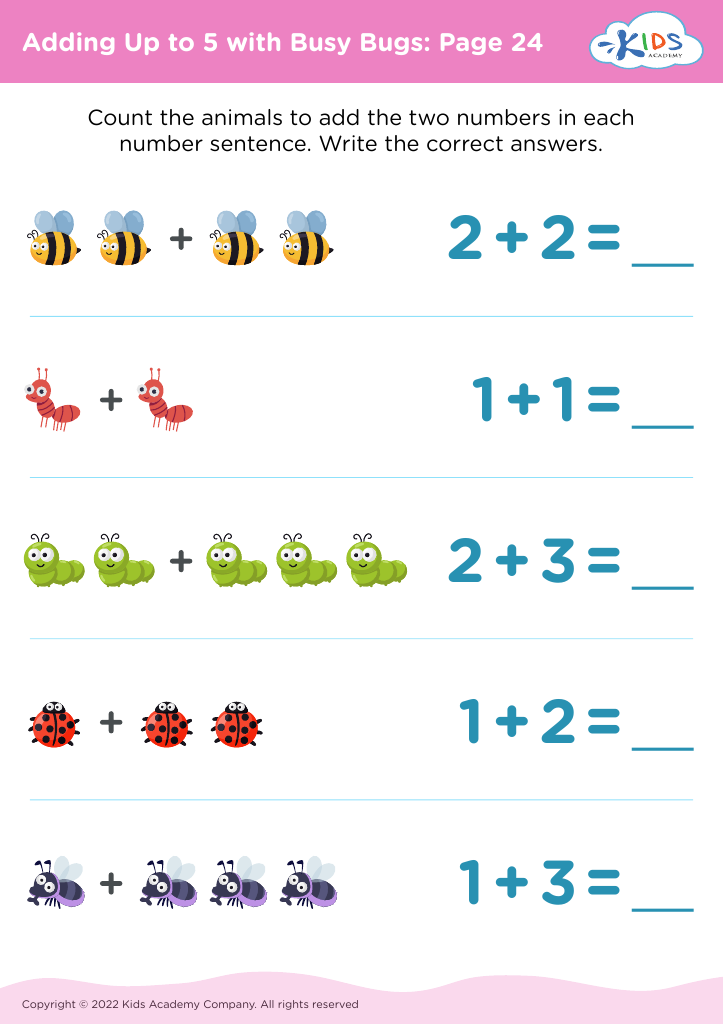
Adding Up to 5 with Busy Bugs: Page 24
Worksheet
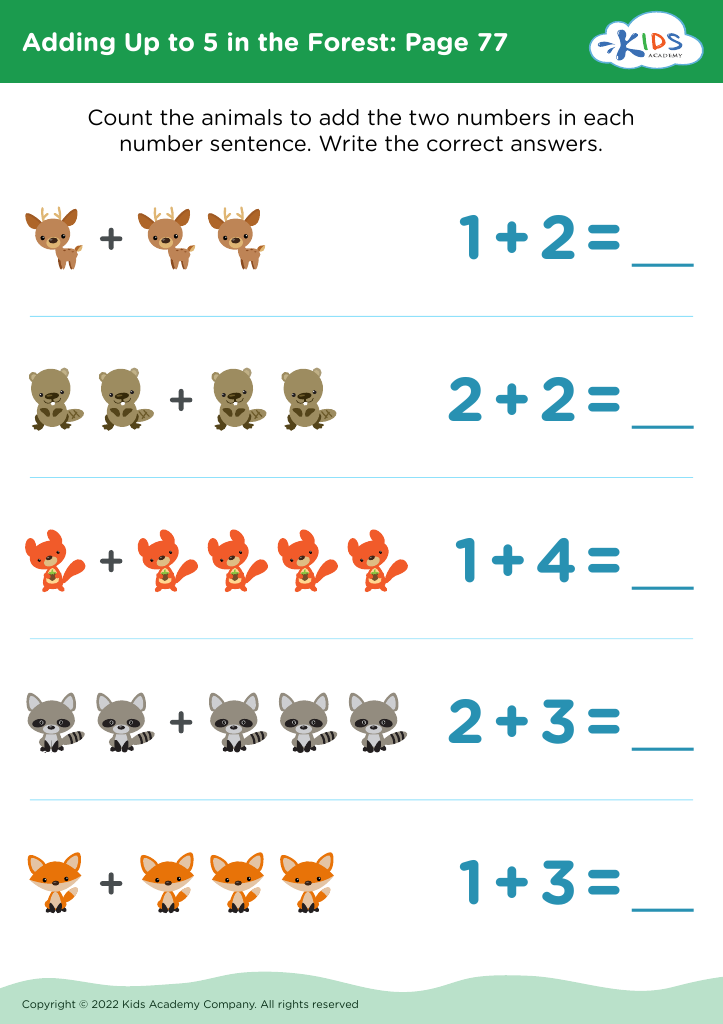
Adding Up to 5 in the Forest: Page 77
Worksheet
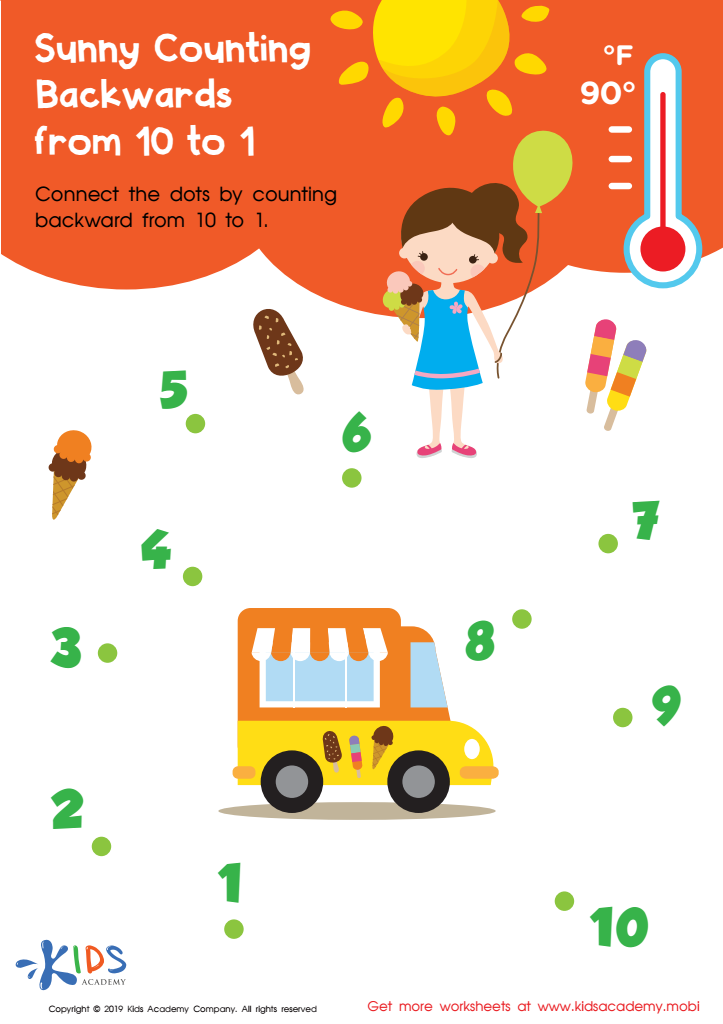
Sunny Counting Backwards from 10 to 1 Worksheet

Sunny Counting Backwards from 10 to 1 Worksheet

Ask your kids what they like to do in summer heat. Look at the worksheet and ask them to identify the items in the picture. Count the numbers together then help them with connecting the dots from 10 to 1. It's a fun activity for the little girl, just like your kids.
Sunny Counting Backwards from 10 to 1 Worksheet
Worksheet
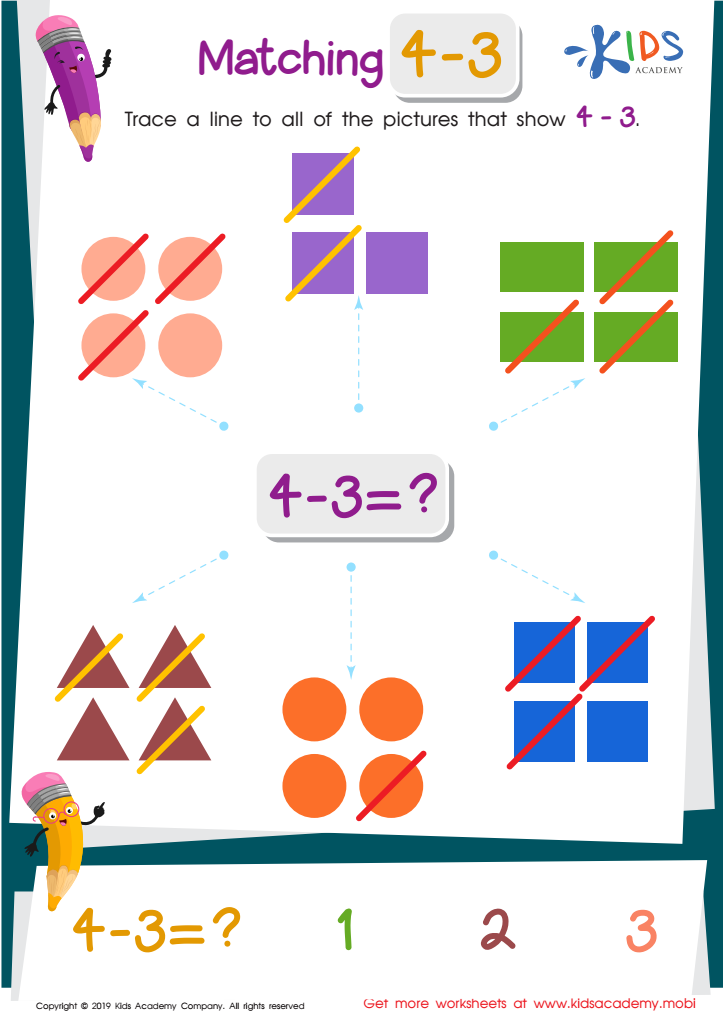
Matching 4 – 3 Worksheet
Matching 4 – 3 Worksheet
Help your kids master basic math concepts like addition and subtraction with fun exercises. Test their understanding with simple problems. For example, in this worksheet, ask them to count the objects in each picture and draw a line to the pictures that show 4 - 3 = 1. This will help them get better at solving equations.
Matching 4 – 3 Worksheet
Worksheet
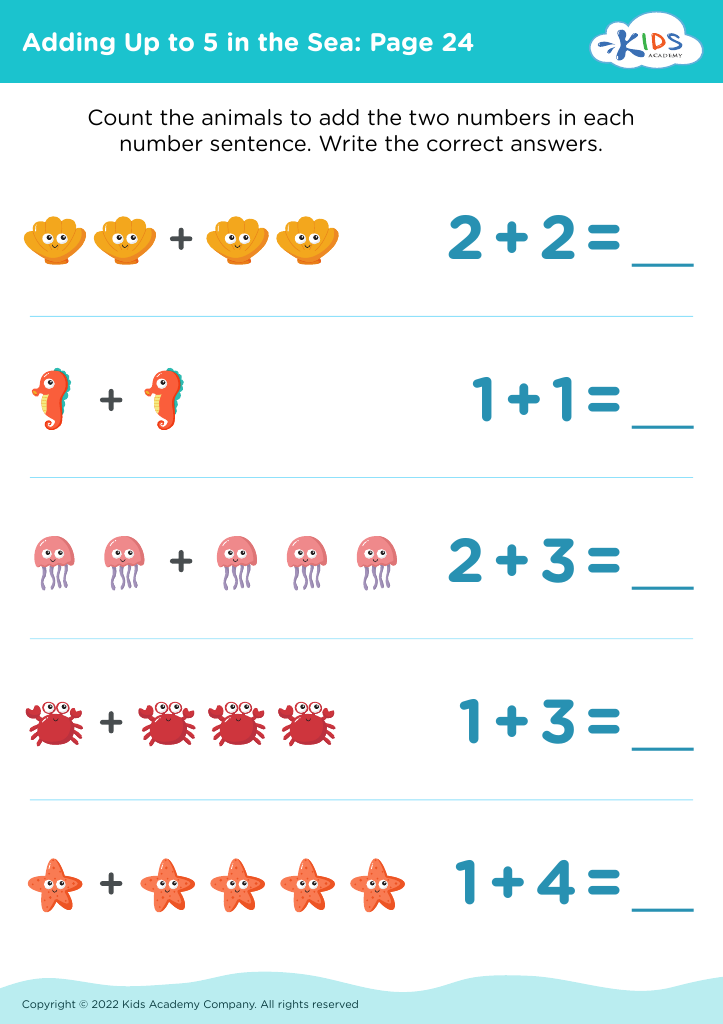
Adding Up to 5 in the Sea: Page 24
Worksheet
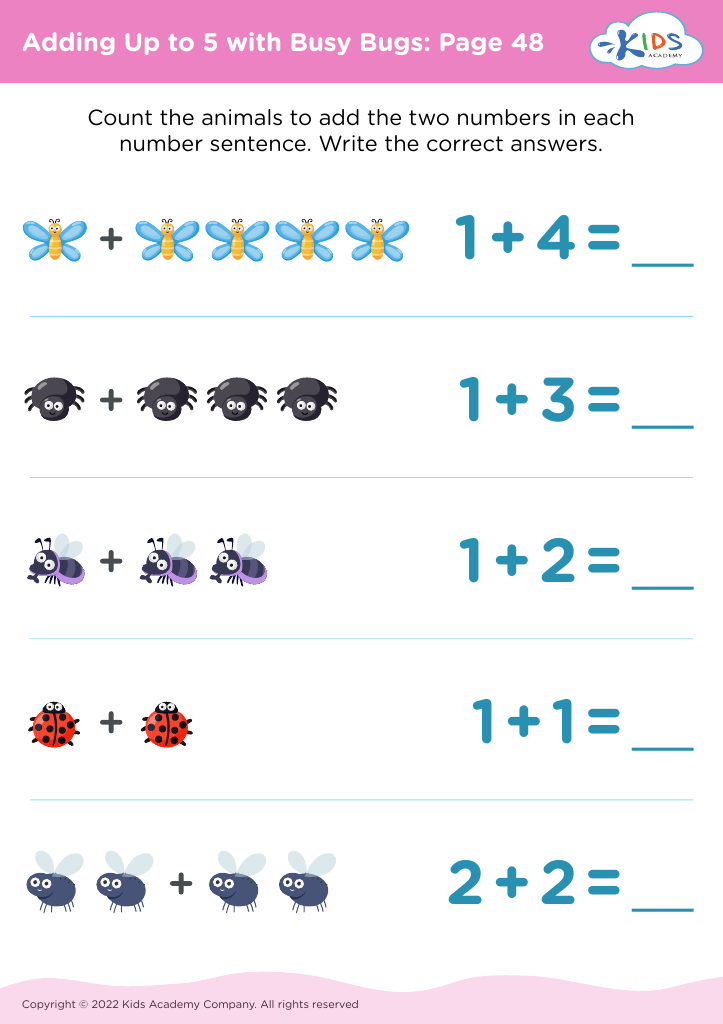
Adding Up to 5 with Busy Bugs: Page 48
Worksheet
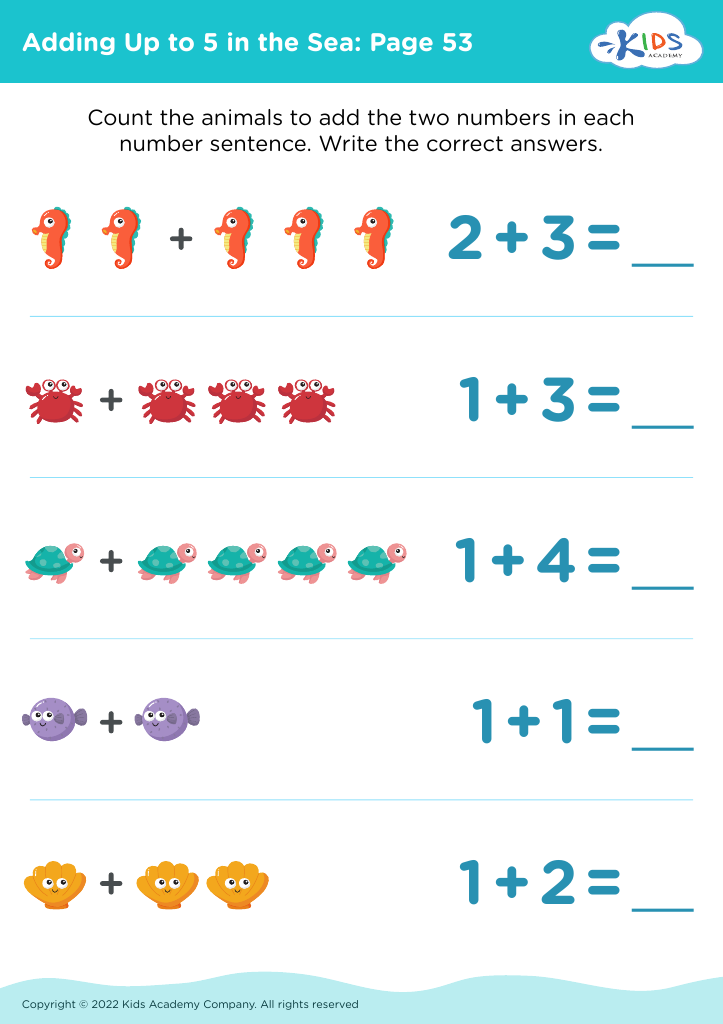
Adding Up to 5 in the Sea: Page 53
Worksheet
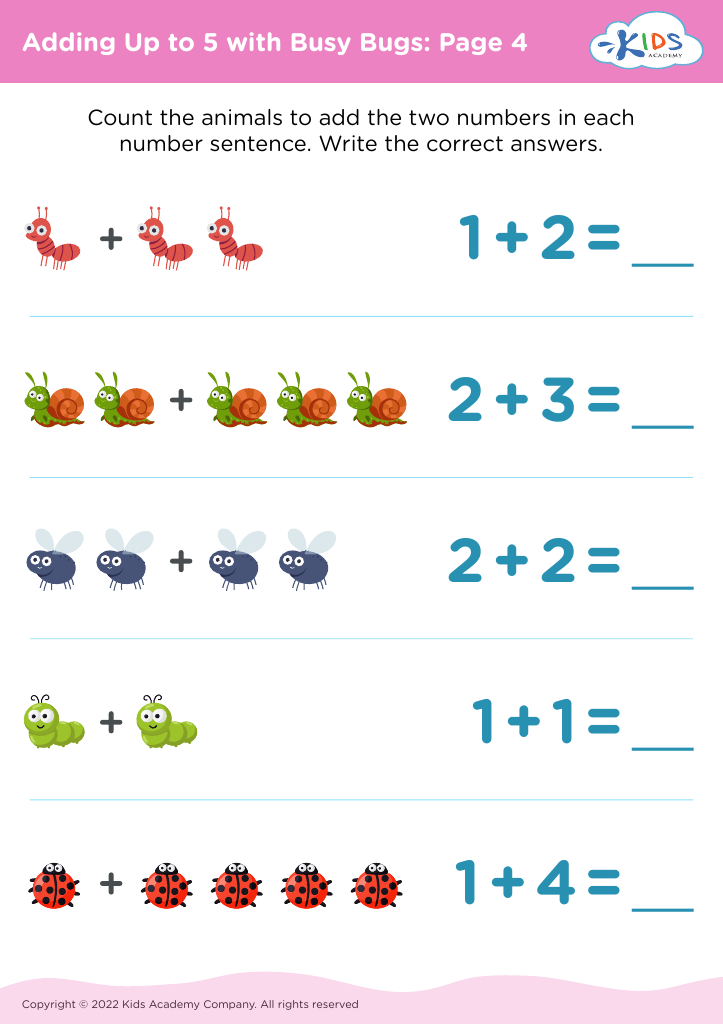
Adding Up to 5 with Busy Bugs: Page 4
Worksheet
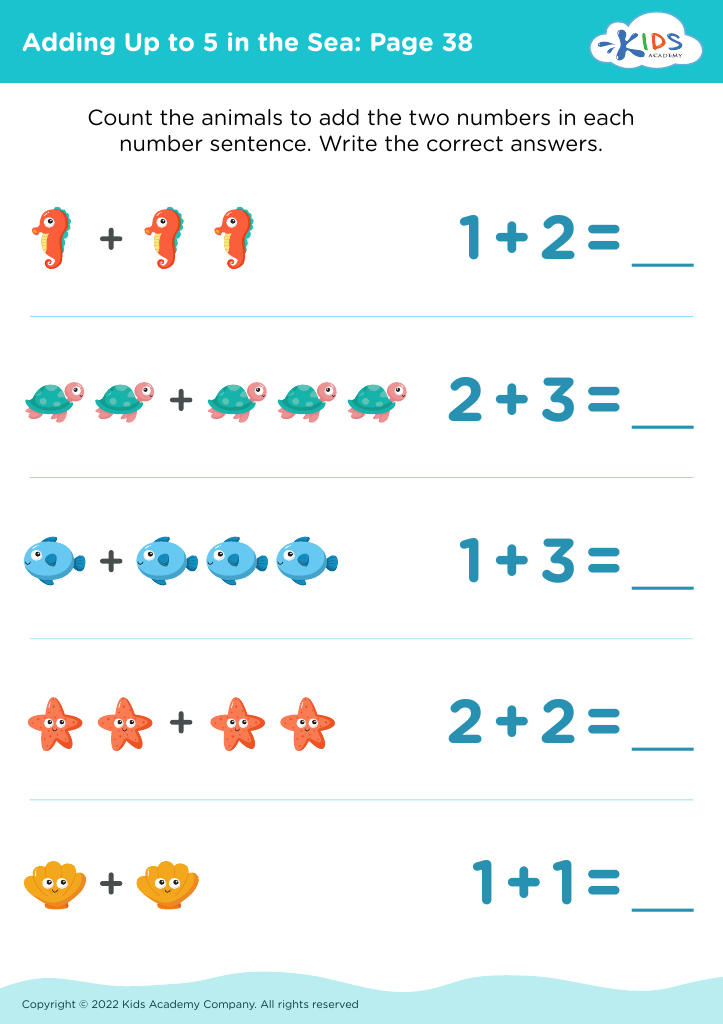
Adding Up to 5 in the Sea: Page 38
Worksheet
Feelings and emotions worksheet

Feelings and Emotions Worksheet
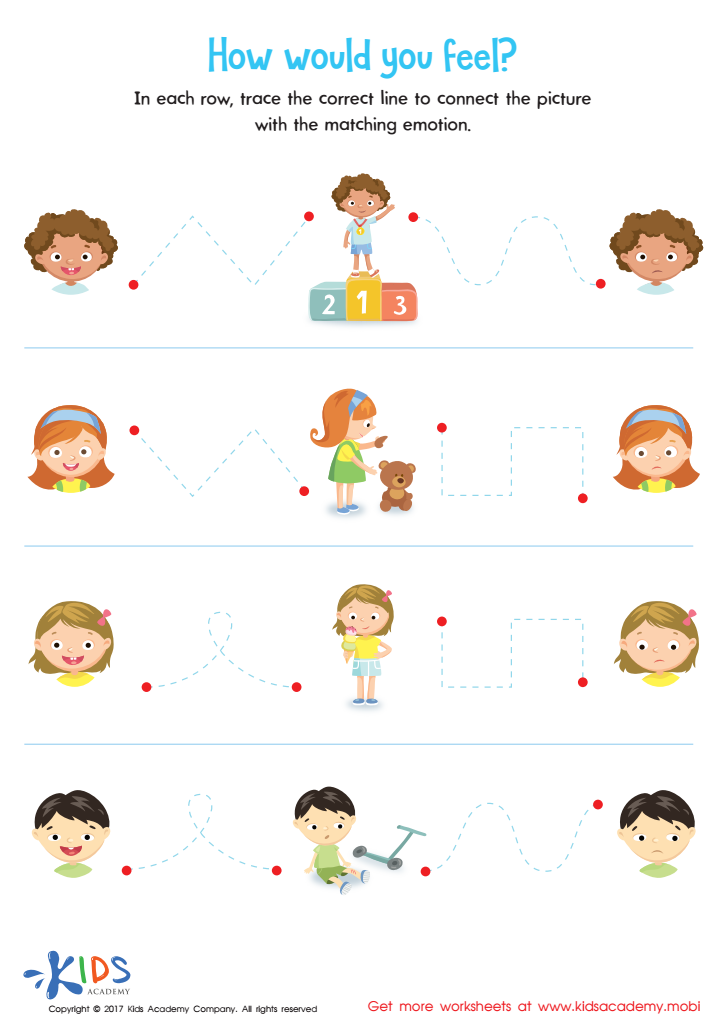
Kids must learn how to deal with situations and handle their own emotions. This worksheet helps them practice empathy and resilience, making them more self-aware and confident. It also helps them to relate their life experiences to common disappointments and develop coping mechanisms.
Feelings and Emotions Worksheet
Worksheet
Adding Up to 5 at the Zoo: Page 22
Worksheet
Opposites Worksheet
Opposites Worksheet

Opposites Worksheet

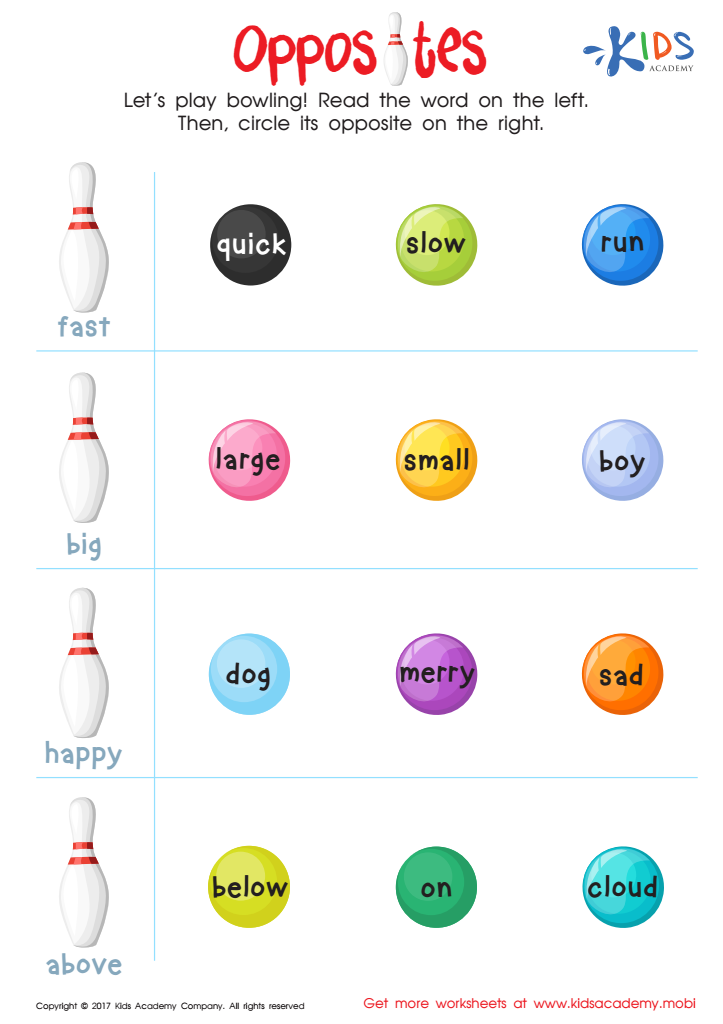
Have your students identify and circle the opposites of the words on the left. As a fun bowling-themed exercise, read the words and ask your kids if they know the opposites. Look through the options on the right and see if the answer is there; then, circle the correct answers.
Opposites Worksheet
Worksheet


Cognitive development during ages 3-4 is critical as it forms the foundation for lifelong learning and problem-solving skills. At this stage, children's brains are rapidly growing, making it vital for parents and teachers to engage in activities that stimulate thinking, understanding, and decision-making. Positive cognitive experiences lead to enhanced language skills, improved memory, and better focus—essential components necessary for academic success and social interactions.

Children are naturally curious at this age, exploring their environments and making connections between ideas. Supporting their cognitive growth fosters a love of learning and helps them develop critical thinking abilities. Engaging in play-based learning, storytelling, and interactive conversations stimulates their imagination and encourages them to ask questions, communicate their thoughts, and experiment with problem-solving.

Moreover, parents and teachers play a crucial role by providing a nurturing and intellectually rich environment. This helps children develop self-regulation, attention skills, and the ability to think critically—skills they will need throughout their lives. By consciously investing time and resources in cognitive development, they lay a strong foundation that not only shapes children's academic futures but also helps them navigate social situations and emotional challenges. Thus, prioritizing cognitive growth during these formative years is essential for optimal development.