Lowercase identification Worksheets for Ages 3-4
5 filtered results
-
From - To
Introduce your little ones to the magical world of letters with our Lowercase Identification Worksheets designed specifically for ages 3-4! These engaging worksheets help preschoolers recognize, differentiate, and write lowercase letters through fun activities and colorful illustrations. Tailored to strengthen fine motor skills and cognitive development, each worksheet fosters creativity and learning, ensuring an enjoyable experience. Perfect for home or classroom use, these printable resources make early literacy exciting and accessible. Watch your child build a solid foundation for reading and writing as they embark on their educational journey! Discover the joy of learning with our captivating lowercase identification worksheets today!
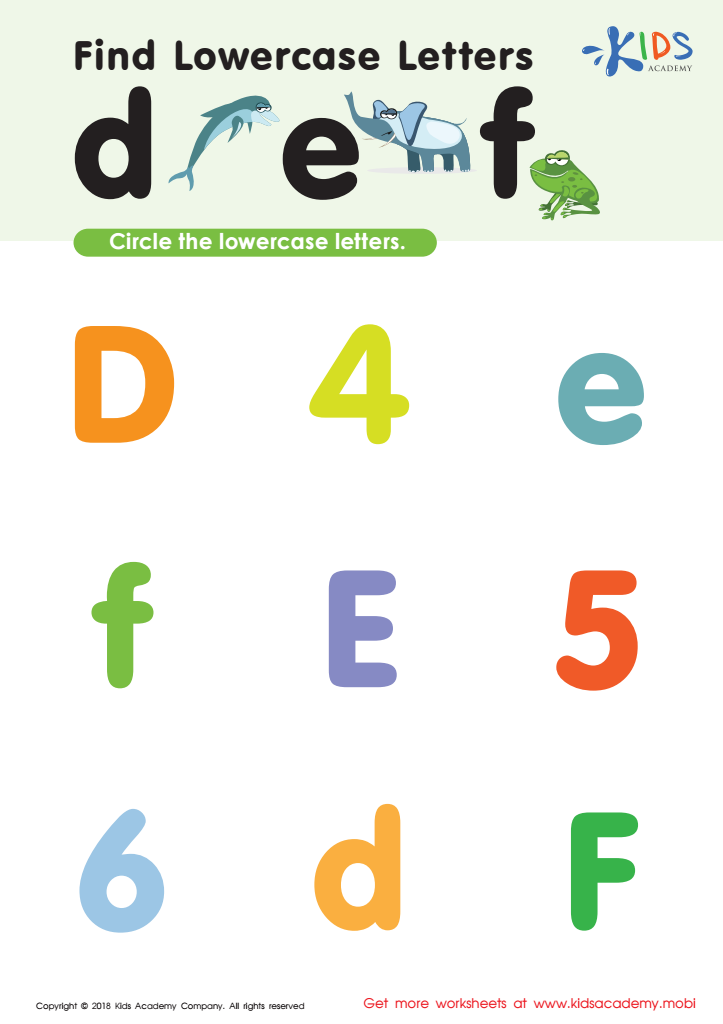
Find Lowercase Letters d e f Worksheet
 Assign to My Students
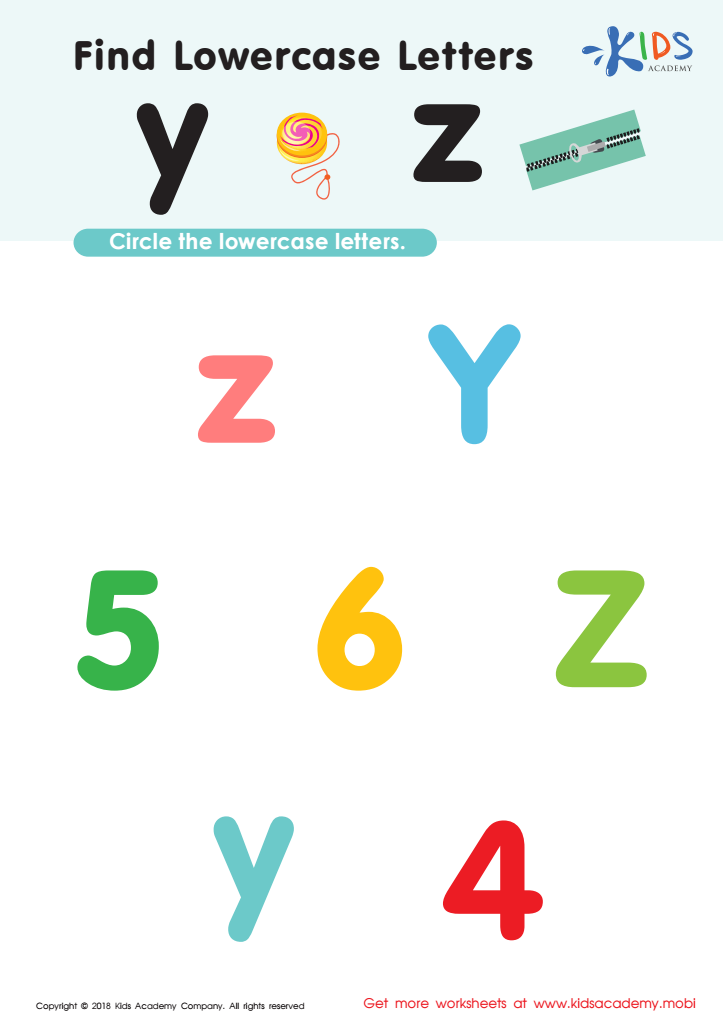
Find Lowercase Letters y z Worksheet
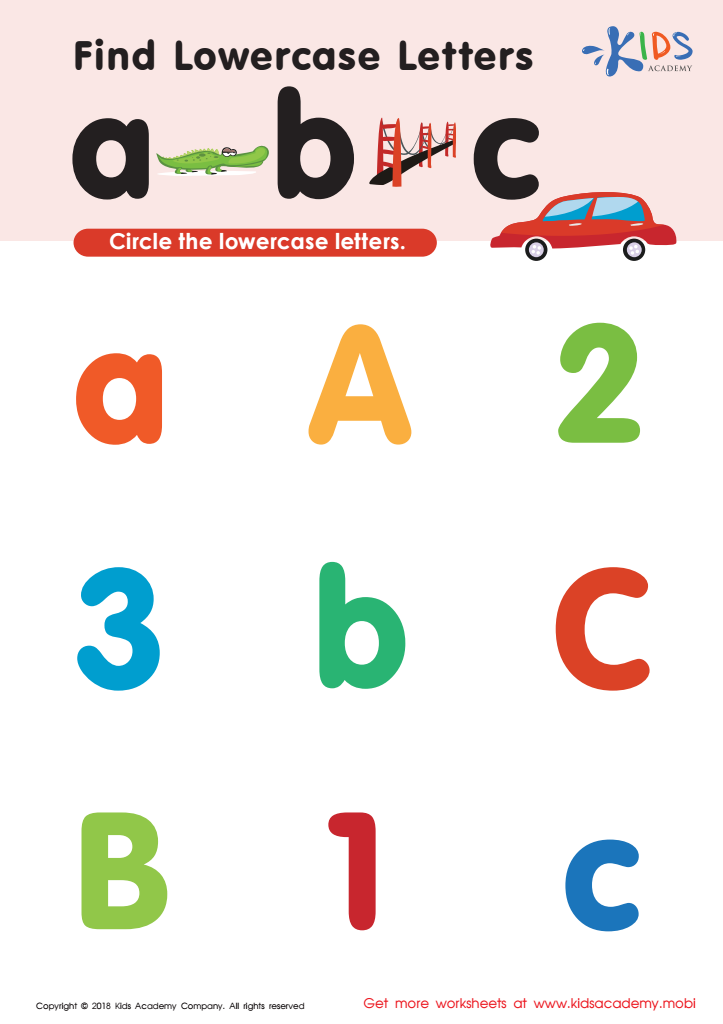
Find lowercase letters a b c Worksheet
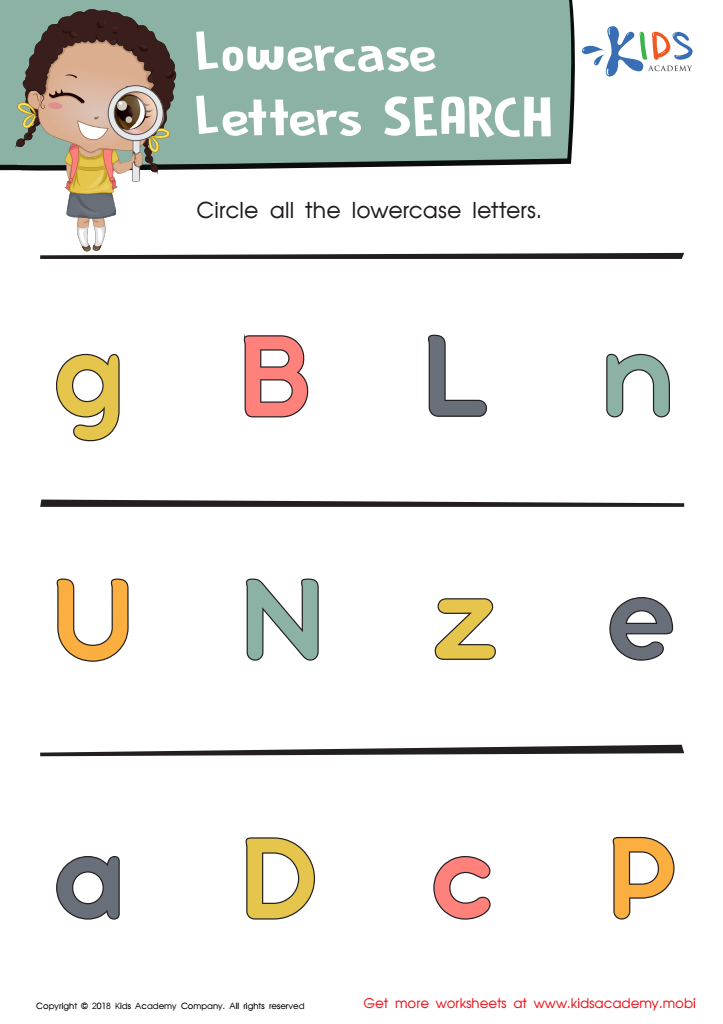
Lowercase Letters Search: Assessment Worksheet
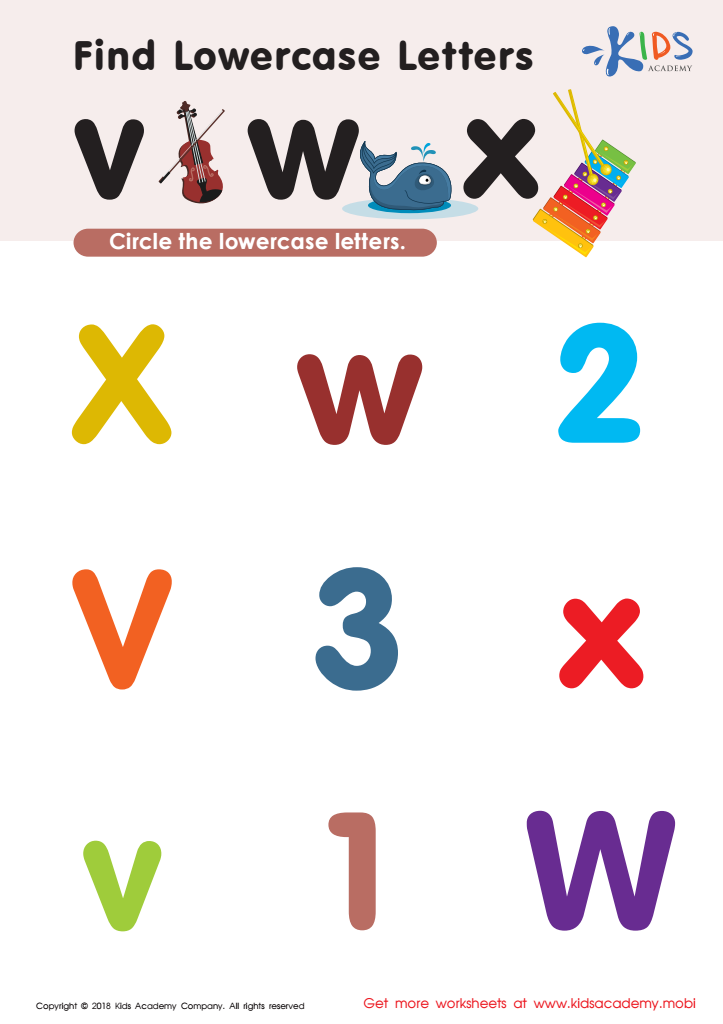
Find Lowercase Letters v w x Worksheet








Lowercase letter identification is a crucial skill for children ages 3-4 as it lays the foundation for literacy development and overall academic success. At this age, children are in a critical phase of language acquisition, and familiarizing them with lowercase letters is vital for several reasons.
Firstly, lowercase letters are more frequently used in everyday reading contexts than their uppercase counterparts. Most printed text, such as storybooks and labels, primarily features lowercase letters, making it essential for children to recognize and understand them early on. This recognition promotes reading fluency and comprehension.
Secondly, identifying lowercase letters helps children develop fine motor skills through writing and drawing. Practicing writing these letters enhances their ability to form words and sentence structures as they progress in their literacy journey.
Additionally, supporting lowercase letter identification encourages phonemic awareness and sound-letter connections, which are crucial for decoding words as they learn to read. Engaging in playful activities like letter games, storytelling, and interactive materials bolsters motivation and makes learning enjoyable.
Overall, fostering lowercase letter recognition in early childhood cultivates a love for reading and sets the stage for future literacy skills, making it a priority for parents and teachers alike.








