Number Matching Worksheets for Ages 3-4
4 filtered results
-
From - To
Explore our engaging Number Matching Worksheets designed for children aged 3-4! These colorful, interactive printables encourage early numeracy skills by helping young learners connect numbers with corresponding quantities. Ideal for playful learning, these worksheets promote number recognition and improve fine motor skills through exciting activities. Each worksheet includes vibrant visuals and easy-to-follow instructions to keep little minds entertained while they learn. Perfect for home or classroom use, our number matching exercises foster a fun learning environment and support your child's journey toward foundational math skills. Start your child’s math adventure today and watch them thrive with confidence in numbers!
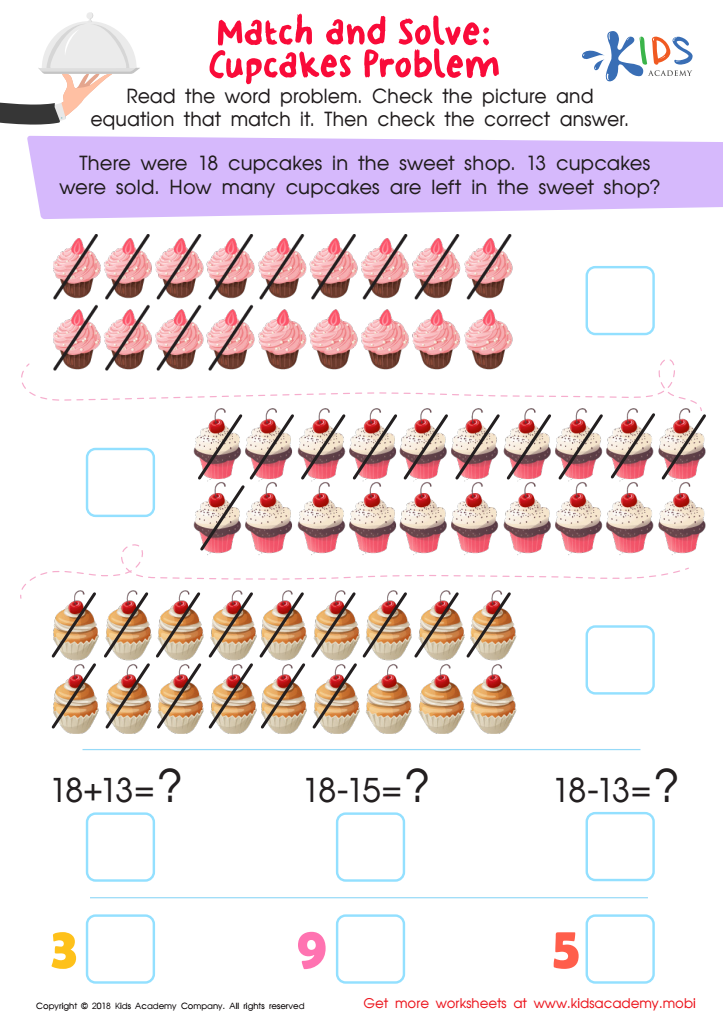
Match and Solve: Cupcakes Problem Worksheet
 Assign to My Students
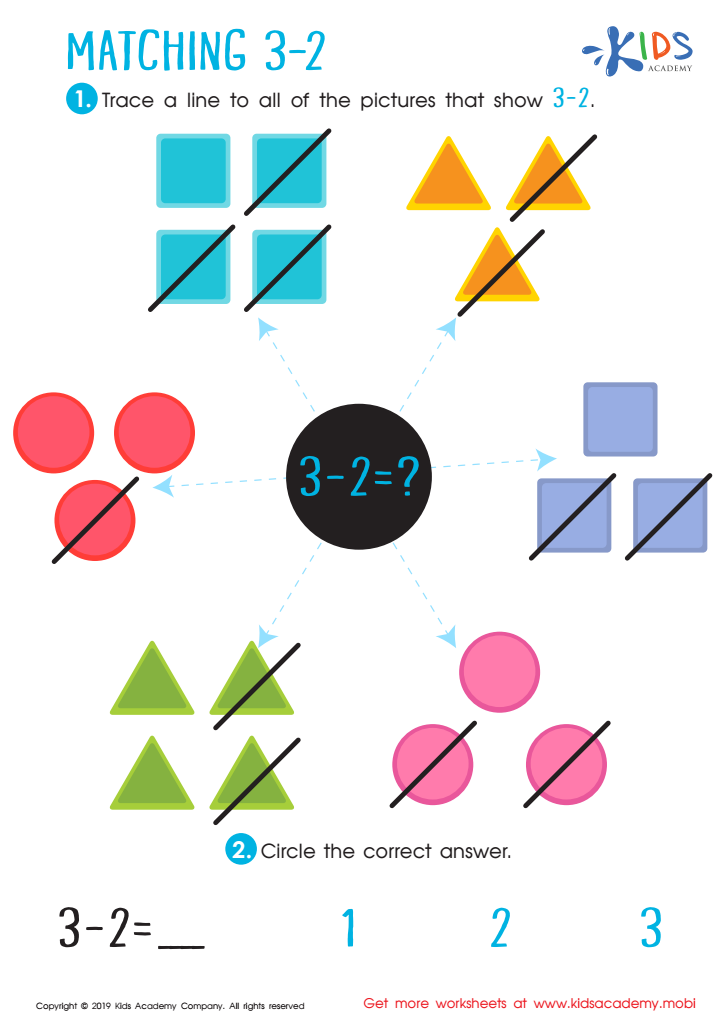
Matching 3-2 Worksheet
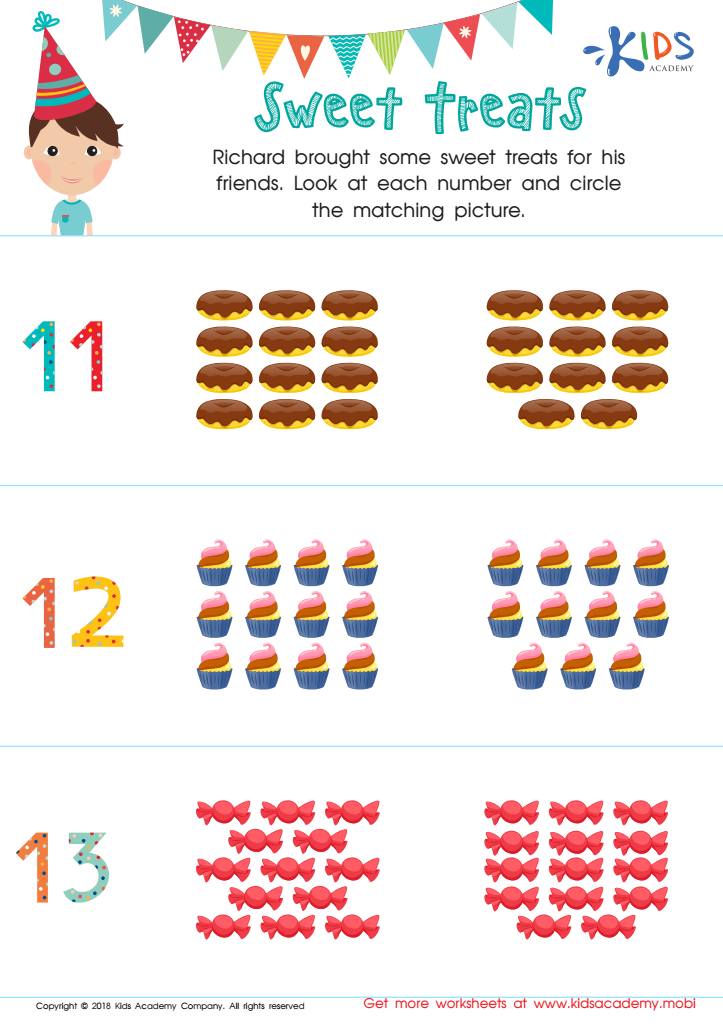
Kindergarten Math Worksheet Matching Numbers
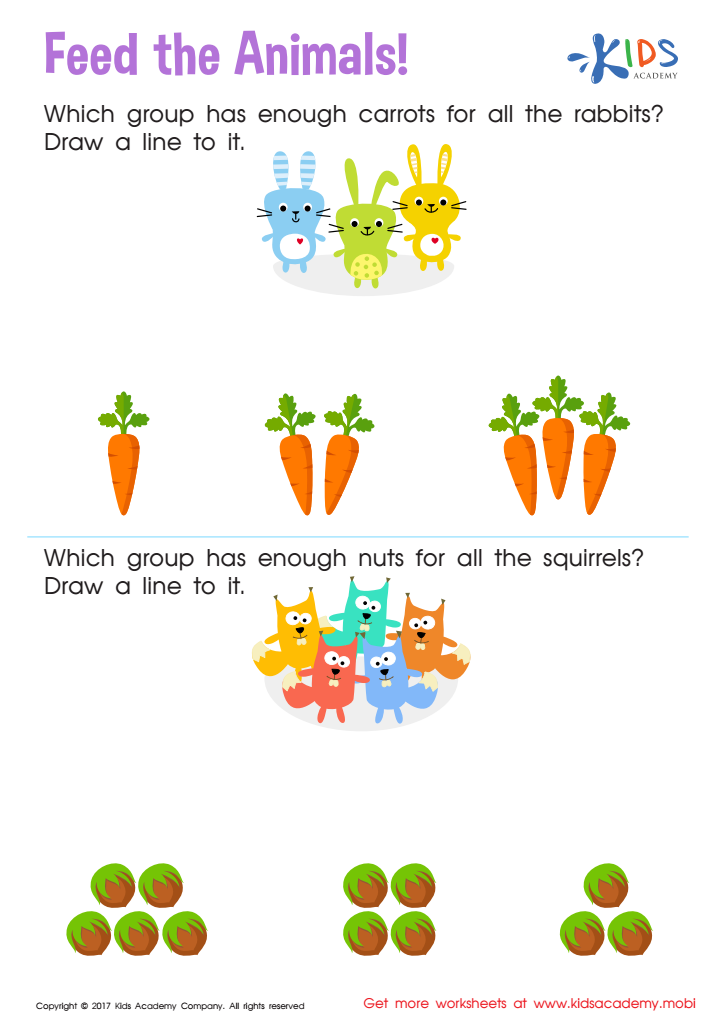
Count and Match: Feed the Animals Worksheet







Number matching for children aged 3-4 is a vital foundational skill that supports early mathematics development and cognitive growth. At this age, children are naturally curious and beginning to understand numbers and their relationships. Engaging in number matching activities helps enhance their number recognition, counting skills, and understanding of one-to-one correspondence. These skills are essential for later math concepts, including addition and subtraction.
Parents and teachers should care about number matching because it promotes critical thinking and problem-solving abilities. Activities that involve matching numbers can foster a child’s focus, memory, and concentration. Moreover, this skill encourages fine motor development as children manipulate physical objects, like blocks or cards, in the matching process.
Additionally, promoting number matching cultivates a positive attitude towards math from an early age. Early exposure to these activities can diminish anxiety or aversion towards mathematics in later years. It also offers parents and teachers an opportunity to engage with children in a fun, interactive way, which enhances the learning experience and strengthens their relationship. Therefore, fostering number matching skills is crucial in building a solid mathematical foundation, ultimately setting the stage for a child's ongoing academic success.








