
Reading readiness Worksheets for Ages 3-4
7 filtered results
Difficulty Level
Grade
Age
-
From - To
Subject
Activity
Standards
Jumpstart your child's reading journey with our specially designed Reading Readiness Worksheets for ages 3-4 at Kids Academy. Our fun and engaging printables are crafted to develop essential early literacy skills, including letter recognition, phonemic awareness, and basic vocabulary. Each worksheet is expertly created to make learning a delightful experience, featuring vibrant images and interactive activities tailored for preschoolers. Foster a love for reading from a young age with Kids Academy's high-quality resources that support your child's educational growth and set the foundation for future reading success. Help your child thrive with our premier learning materials!
Favorites
With answer key
Interactive
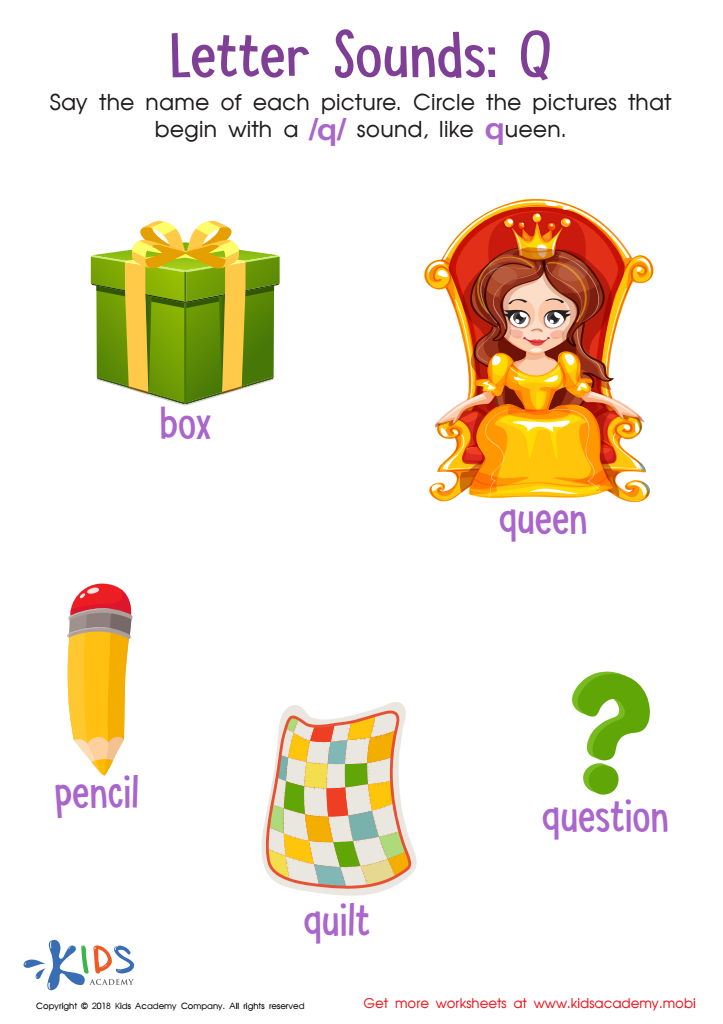
Letter Q Sounds Worksheet
Kids can get confused between "K" and "Q" sounds. Help them learn with this phonics worksheet. They'll name each image and read the word underneath. Point out that words with "Q" also have a "U" which affects how it sounds. Have them circle the matching pictures and watch as they learn this unique letter sound.
 Assign to My Students
Letter Q Sounds Worksheet
Worksheet
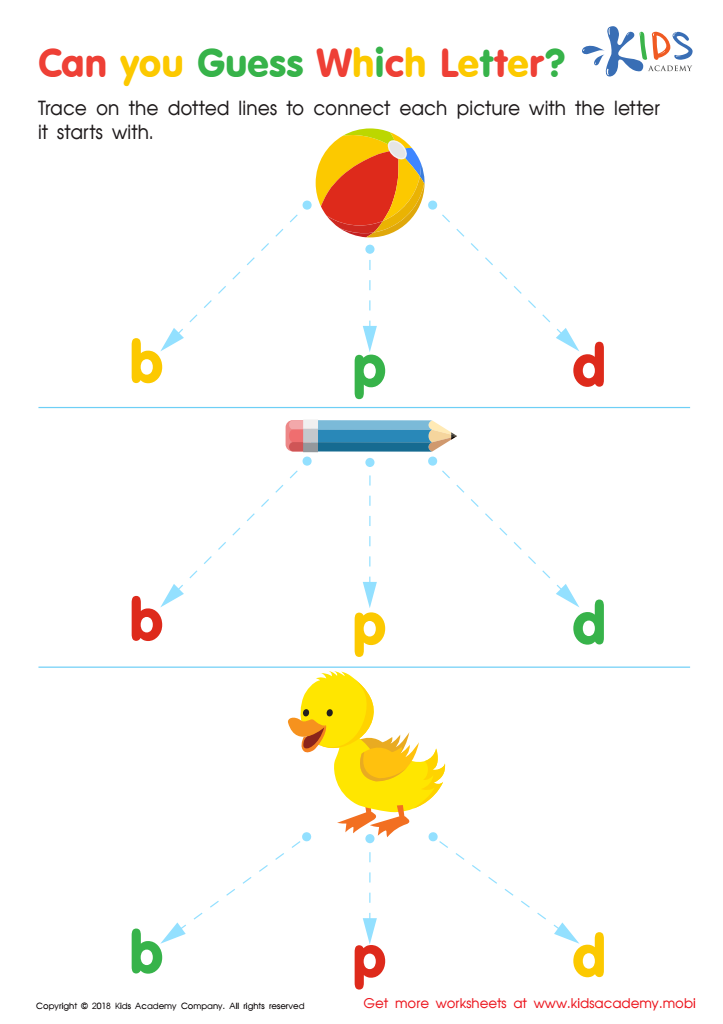
Can you Guess Which Letter? Worksheet
Connect the pictures with their corresponding letters with this fun worksheet! Ask your child what each picture is, then what letter it begins with. Download the PDF for colorful images and engaging texts to hold their attention, making learning an enjoyable activity.
Can you Guess Which Letter? Worksheet
Worksheet
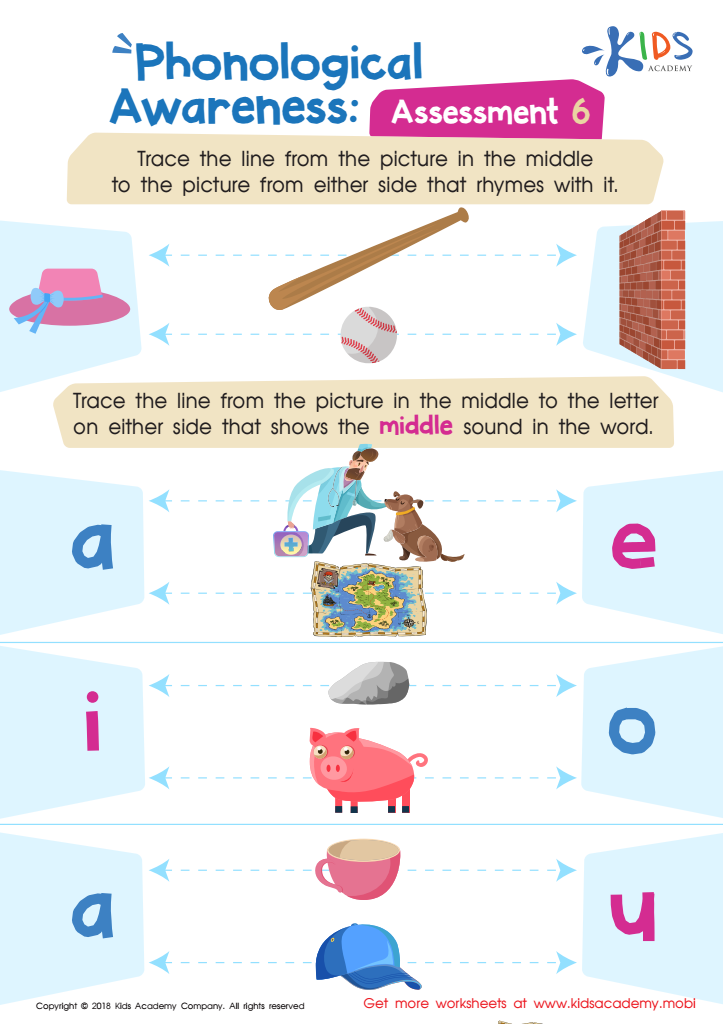
Phonological Awareness: Assessment 6 Worksheet
Check your child's ability to recognize middle word sounds using this free worksheet. Help them learn phonics by practicing with rhyming. Trace the line from the image to its rhyming match then encourage them to name each image aloud to identify which letter matches the sound. It's a great way to assess letter and sound recognition.
Phonological Awareness: Assessment 6 Worksheet
Worksheet
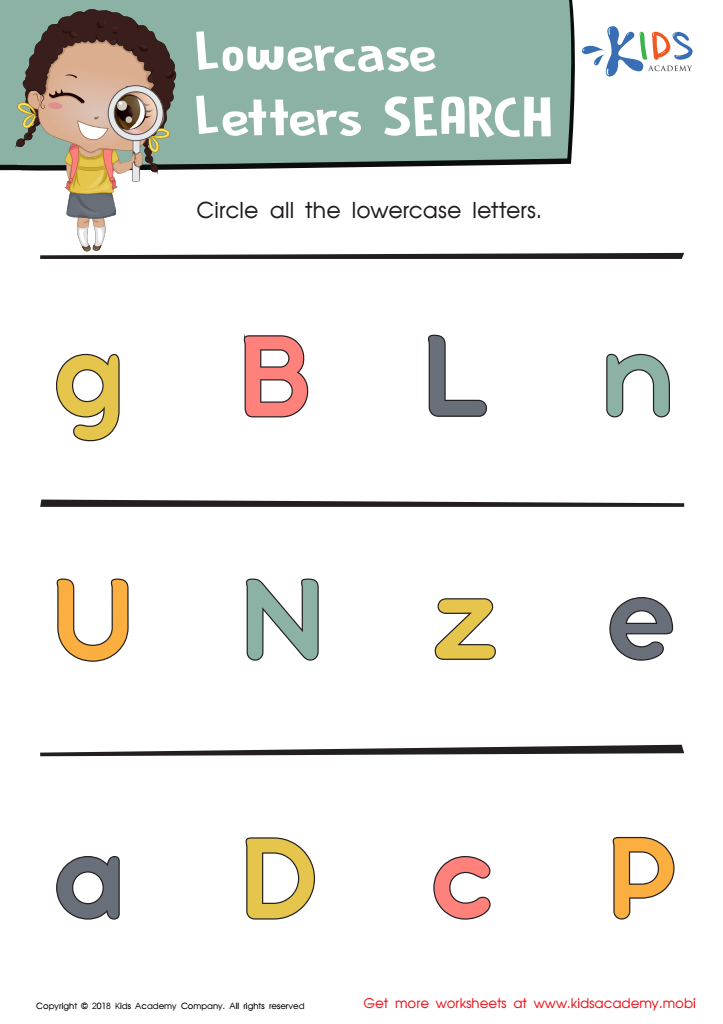
Lowercase Letters Search: Assessment Worksheet
Circle all the lowercase letters in this worksheet. Identify them among a mix of uppercase and lowercase letters. Your child will have fun with this exercise thanks to its bright primary colors. Enjoyment and learning go hand-in-hand!
Lowercase Letters Search: Assessment Worksheet
Worksheet
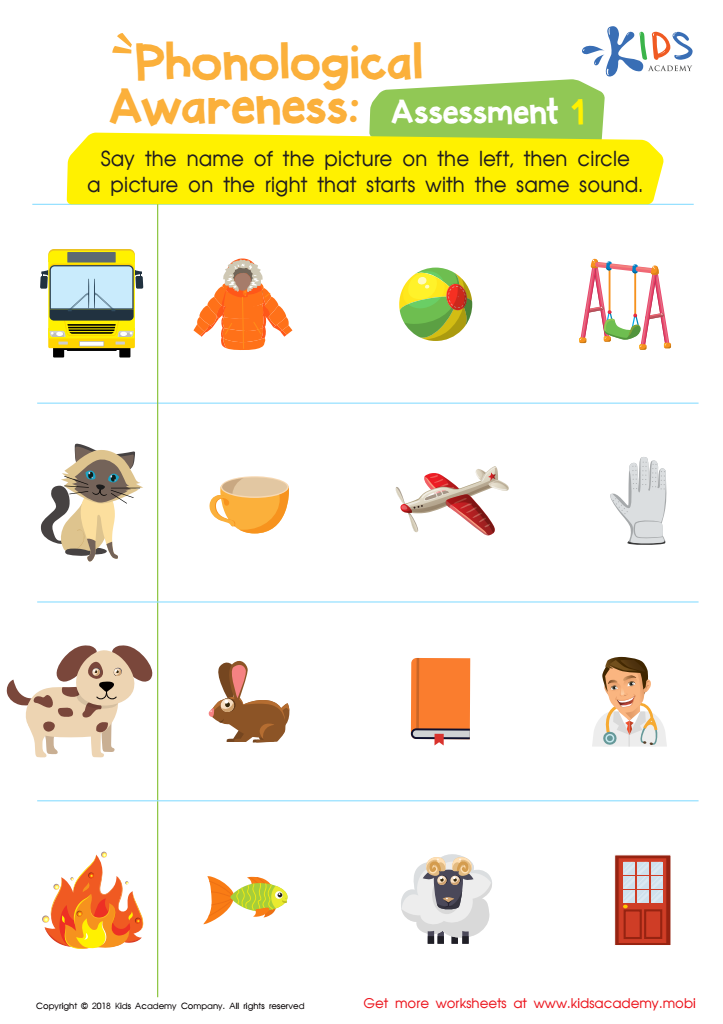
Phonological Awareness: Assessment 1 Worksheet
This worksheet helps kids build key phonics skills for pre-reading. They say each picture name aloud, focusing on the starting sound. Then, they match the sound with an image in the same row. Use as a checkpoint for kindergarten or grade 1 phonics readiness.
Phonological Awareness: Assessment 1 Worksheet
Worksheet
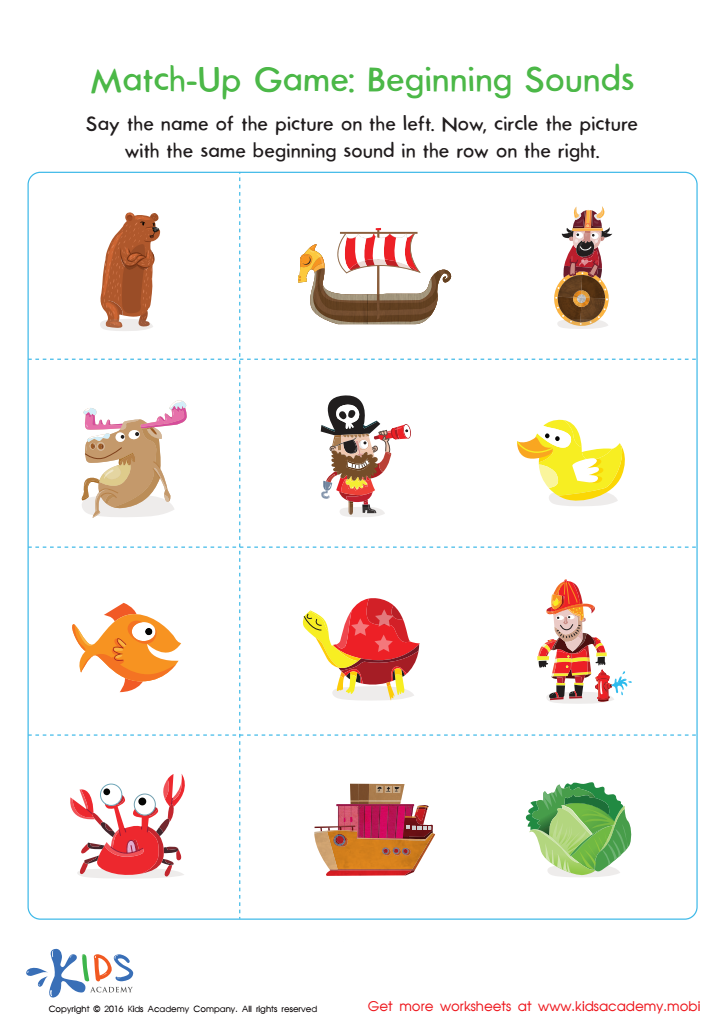
Match–Up Game: Beginning Sounds Worksheet
Start today with this beginning sounds match-up printable!
Teach your child to solve problems mentally with this beginning sounds match-up printable. They'll learn to categorize pictures based on phonics rules, developing mental stamina and focus. It's an important step for recognizing sounds and letters in print, building a foundation for reading and spelling. Start today and take your child's skills to the next level!
Match–Up Game: Beginning Sounds Worksheet
Worksheet
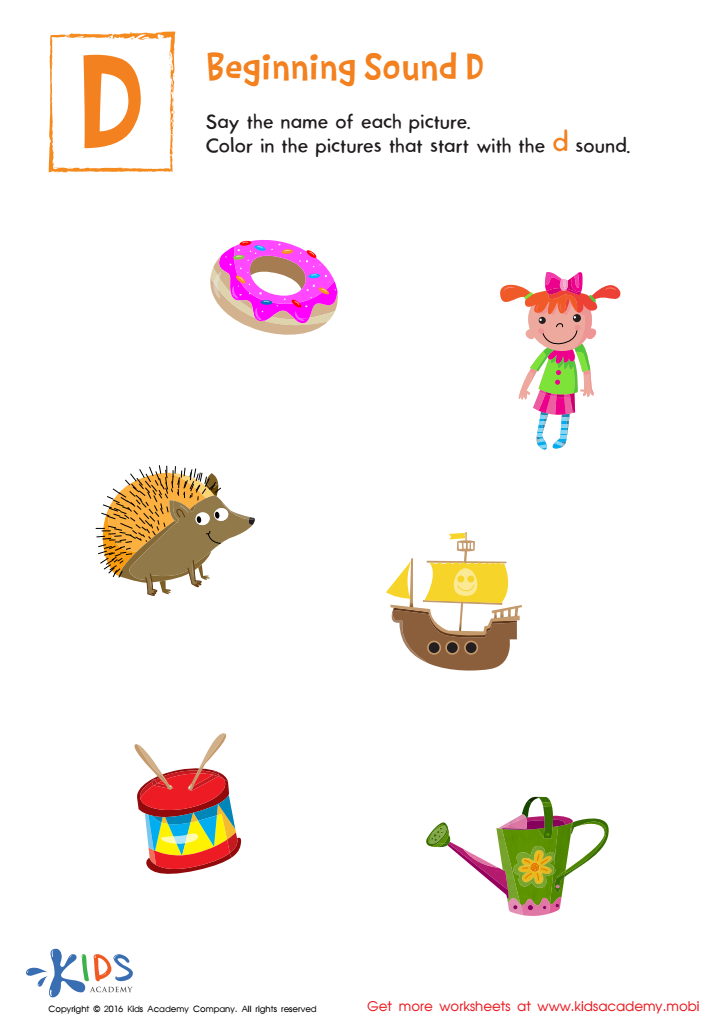
Beginning Sound D Worksheet
Reinforce phonics with this vibrant beginning sound d worksheet! Pictures help kids identify words beginning with 'd' and develop early reading skills. Sounding out each word increases literacy!
Beginning Sound D Worksheet
Worksheet
Join Kids Academy for Free
Who is primarily going to use this learning content?








Reading readiness for children aged 3-4 is a cornerstone of early childhood development that parents and teachers should prioritize. At this formative age, children’s brains are rapidly developing, making it the ideal time to introduce them to the basics of language and literacy. Fostering reading readiness lays the foundation for future academic success by developing essential skills such as phonemic awareness, vocabulary, and comprehension.
When parents and teachers engage children in activities that promote reading readiness—such as reading aloud, playing with alphabet toys, and singing nursery rhymes—they stimulate cognitive growth and enhance language abilities. These interactions not only prepare children for the structured learning environments ahead but also spark a lifelong love of reading. Moreover, reading readiness connects with social-emotional development; as children listen to stories, they learn about different emotions, develop empathy, and improve their attention spans.
By cultivating reading readiness, parents and teachers are equipping children with tools that promote confidence and curiosity. Children who enter kindergarten with strong pre-literacy skills often experience less frustration and are more re








