Rhyming skills development Worksheets for Ages 3-4
4 filtered results
-
From - To
Enhance your child's language skills with our engaging Rhyming Skills Development Worksheets for Ages 3-4! Designed specifically for preschoolers, these worksheets offer a fun and interactive way for young learners to explore and identify rhyming words. Through delightful illustrations and easy-to-understand activities, children will strengthen their phonemic awareness, vocabulary, and early reading skills. Each worksheet encourages creative thinking and helps spark an interest in language through playful learning. Whether at home or in the classroom, our worksheets provide the perfect foundation for developing essential literacy skills. Join us in making learning enjoyable and effective for your little ones!
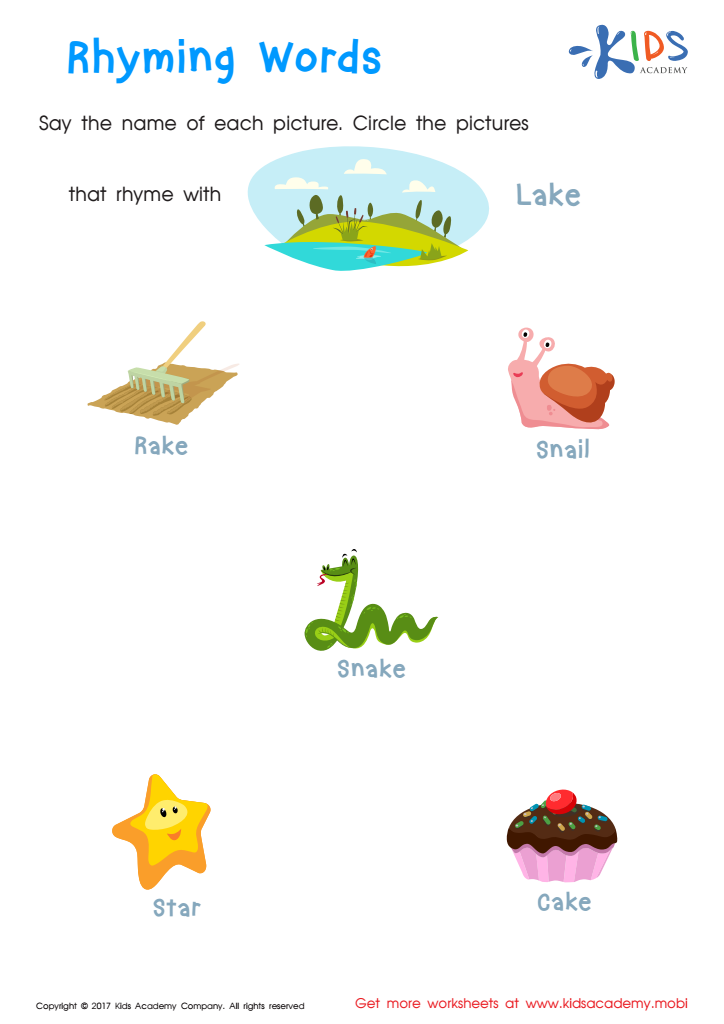
Rhyming Words Rhyming Worksheet
 Assign to My Students
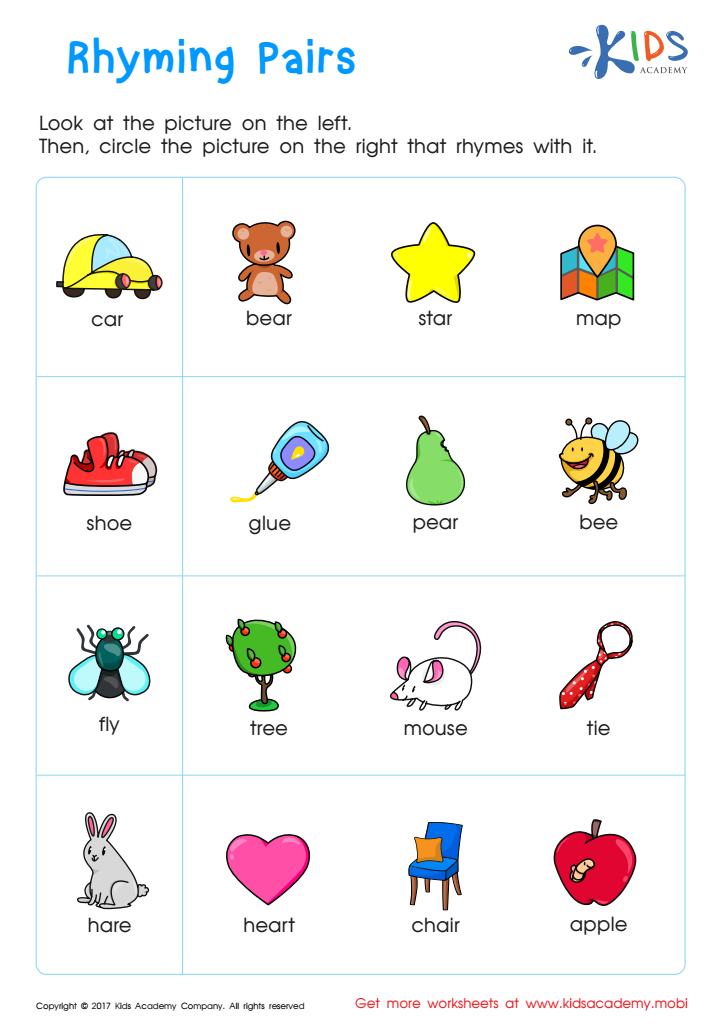
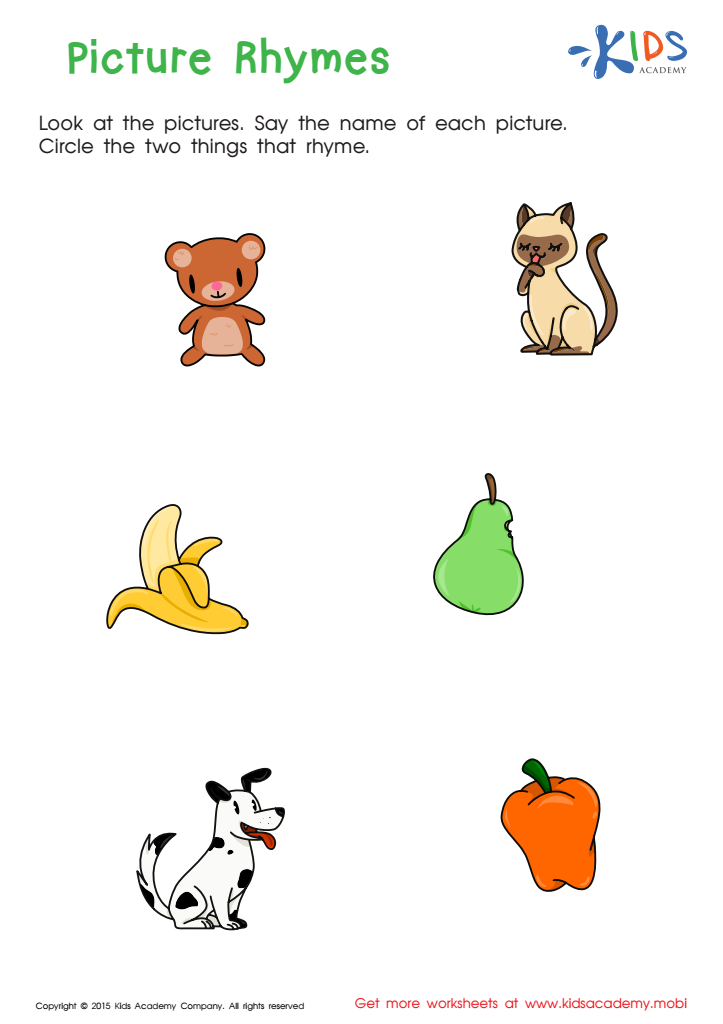
First Words: Picture Rhymes Worksheet
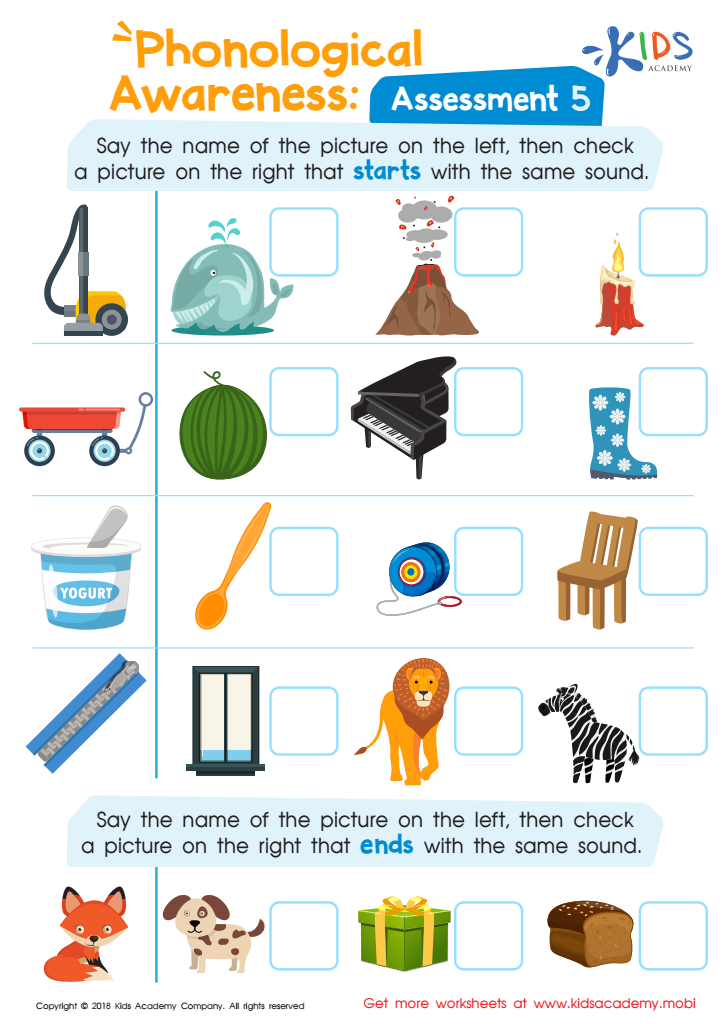
Phonological Awareness: Assessment 5 Worksheet







Rhyming skills development in children aged 3-4 is crucial for several compelling reasons. Firstly, rhyming helps to develop phonemic awareness, a foundational skill for reading. When children listen to and produce rhymes, they begin to hear and understand the sounds within words, which forms the basis for early reading skills. This auditory discrimination is essential for decoding words as they start learning to read.
Additionally, engaging with rhymes enhances vocabulary acquisition and language development. Children are exposed to new words and phrases in playful and memorable contexts, making it easier for them to retain and use new language. This supports not only literacy but also communication skills, which are essential for classroom interactions and socialization.
Moreover, rhyming activities often involve music and rhythm, making them enjoyable and engaging for young children. This playful approach fosters a love for language and learning, encouraging a positive attitude toward reading and education.
Lastly, parents and teachers serve as role models, demonstrating the joy of participating in rhyming games and songs. By prioritizing rhyming skills, they can nurture early literacy development, enhance language abilities, and inspire a lifelong passion for reading in their children.








