Weather identification Worksheets for Ages 3-4
6 filtered results
-
From - To
Discover our engaging Weather Identification Worksheets designed specifically for children ages 3-4! These interactive resources help young learners recognize and understand different weather types, including sunny, rainy, snowy, and cloudy days. Our worksheets feature colorful illustrations and simple activities to captivate young minds while enhancing their vocabulary and observational skills. Perfect for home or classroom use, these worksheets promote early learning in a fun and playful way. Encourage your little ones to explore the wonders of nature and develop a foundational understanding of the weather around them. Download now and start your weather adventure today!
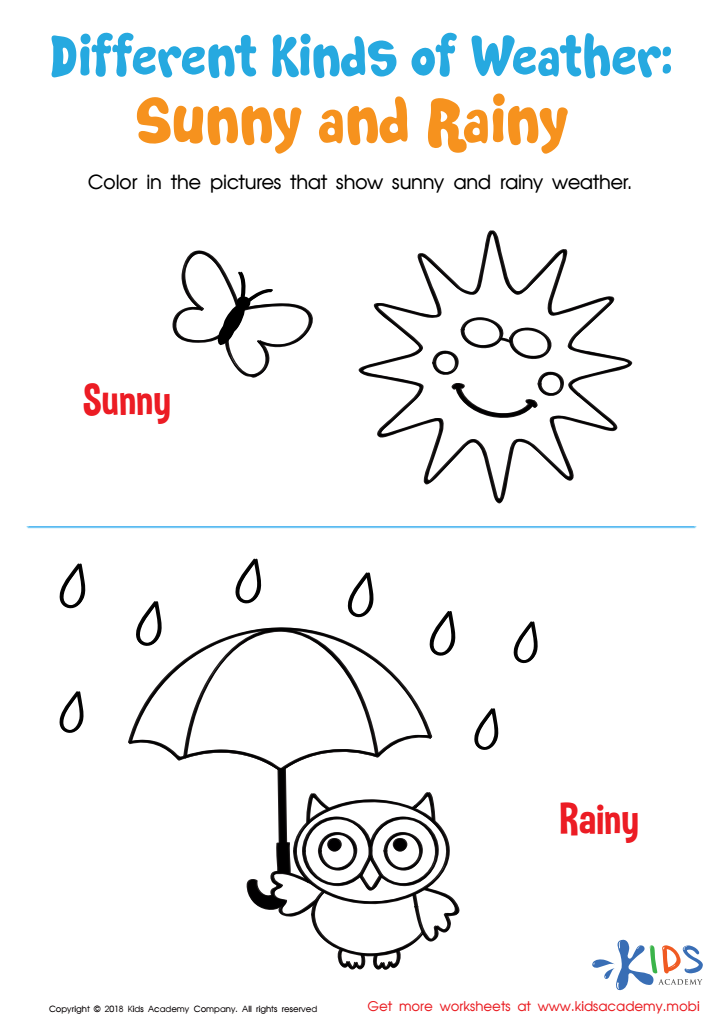
Different Kinds of Weather: Sunny and Rainy Worksheet
 Assign to My Students
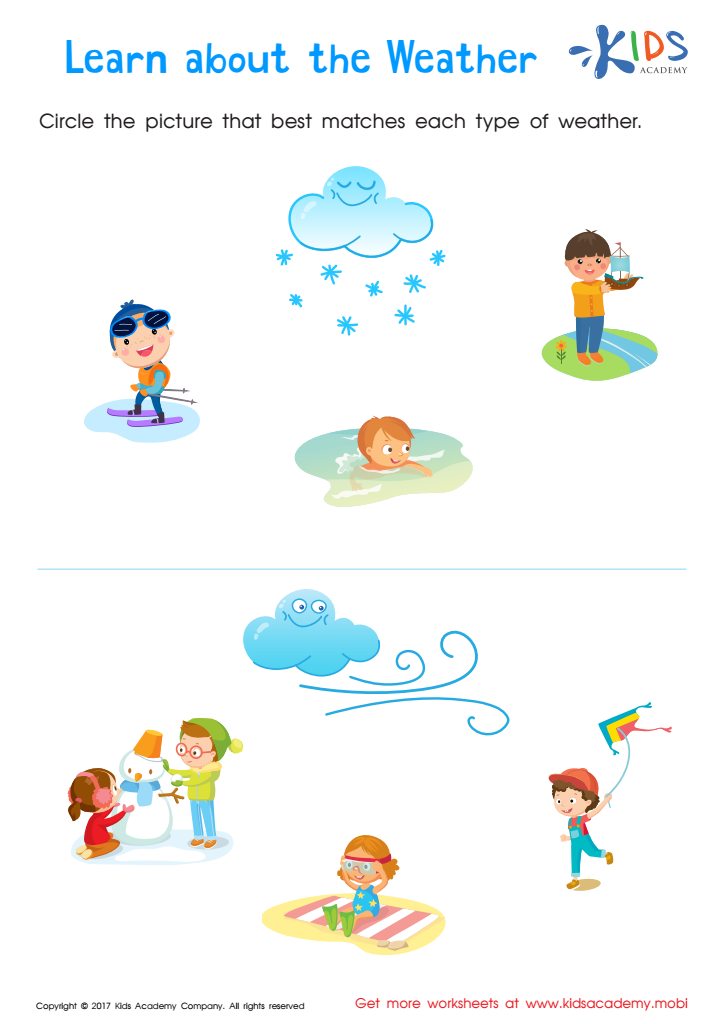
About the Weather Printable
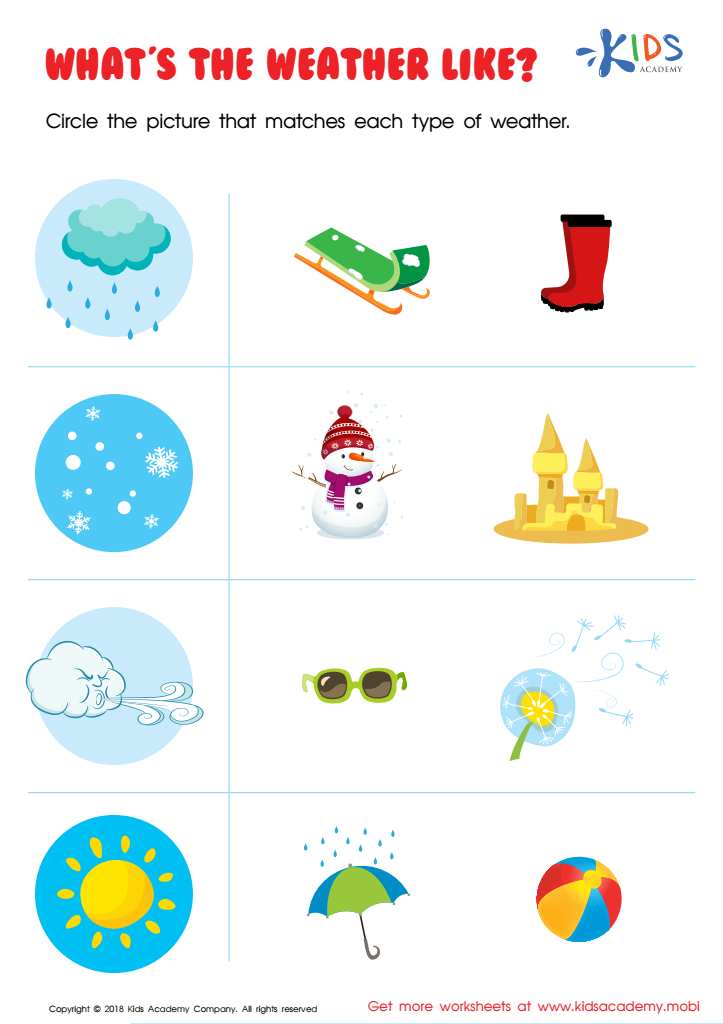
What's the Weather Like? Worksheet
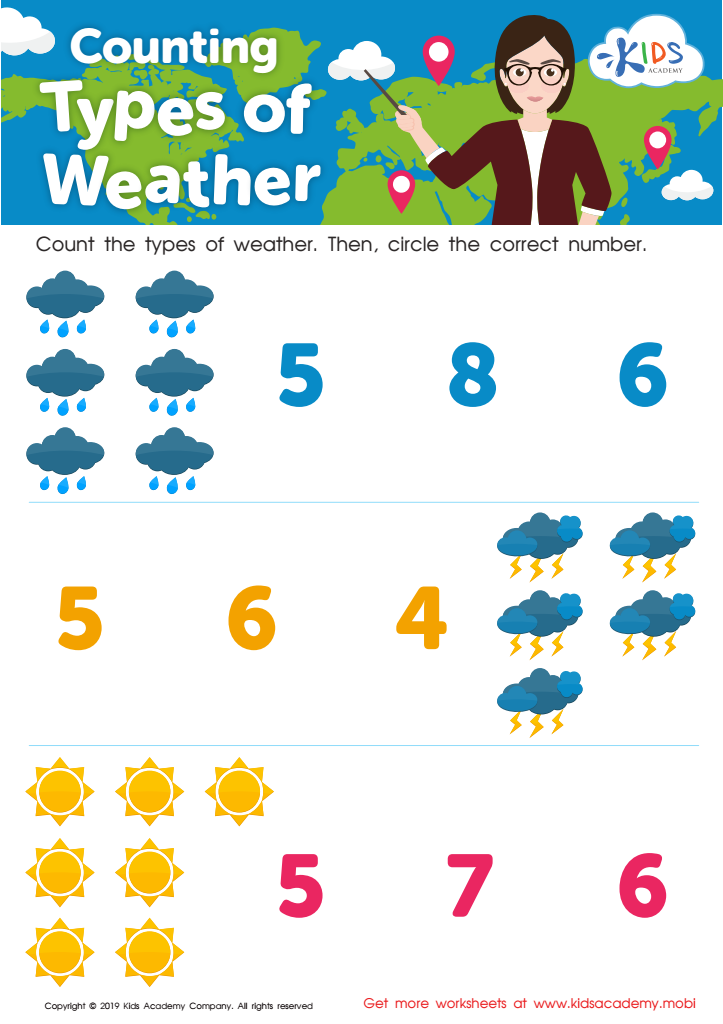
Counting Types of Weather Worksheet
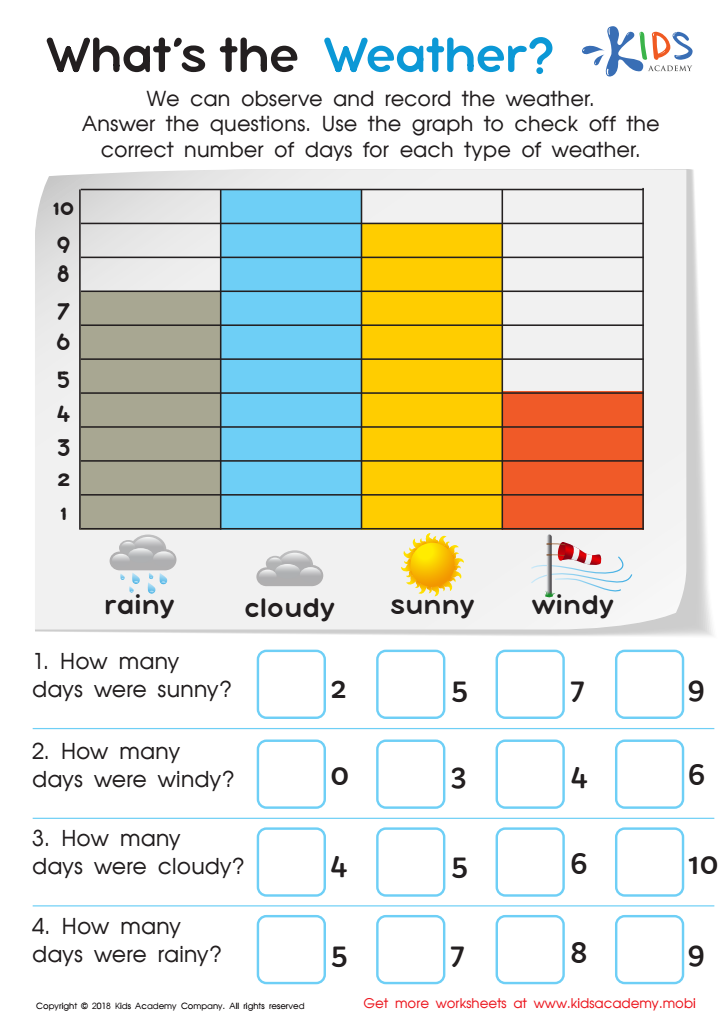
What's the Weather? Worksheet
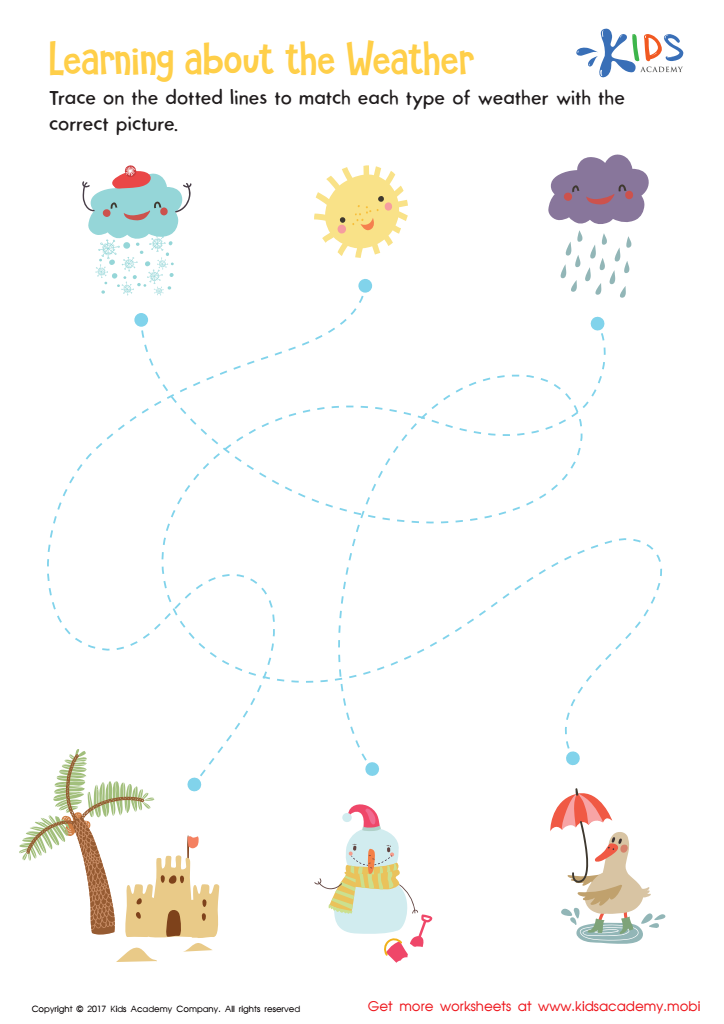






Weather identification is crucial for young children aged 3-4 as it lays the foundation for their understanding of the world around them. At this early age, children are naturally curious, and introducing them to different types of weather enriches their vocabulary and comprehension skills. It helps them categorize their environment and fosters critical thinking as they relate weather patterns to their daily activities—like choosing appropriate clothing or understanding the impact of weather on playtime.
Additionally, weather identification enhances observational skills. By encouraging children to look for signs of rain, wind, or sunshine, they engage their sense of sight and learn to make connections between what they see and the weather conditions outside. This not only nurtures their cognitive development, but also promotes a sense of independence as they start making informed choices regarding clothing and activities.
From a safety perspective, knowledge about severe weather is vital. Teaching children how to recognize storms or extreme heat equips them with the basics for staying safe. Overall, educating young children about weather fosters a sense of wonder, empowers them about their environment, supports language development, and encourages both independence and safety awareness. These skills together form a critical component of a well-rounded early education.








