Basic geometry understanding 2D Shapes Worksheets for Ages 3-4
3 filtered results
Difficulty Level
Grade
Age
-
From - To
Subject
Activity
Standards
Introducing "Basic Geometry Understanding: 2D Shapes Worksheets for Ages 3-4"! Each fun, engaging worksheet is designed specifically to help your little one recognize and understand fundamental 2D shapes. Our expertly crafted activities simplify complex geometric concepts through hands-on exercises, promoting essential skills like shape recognition, color identification, and fine motor development. Perfect for early learners, these worksheets encourage a love for math while laying the foundation for future learning. Download today and watch your child's confidence soar as they explore the magical world of geometry in a playful and interactive way!
Favorites
With answer key
Interactive
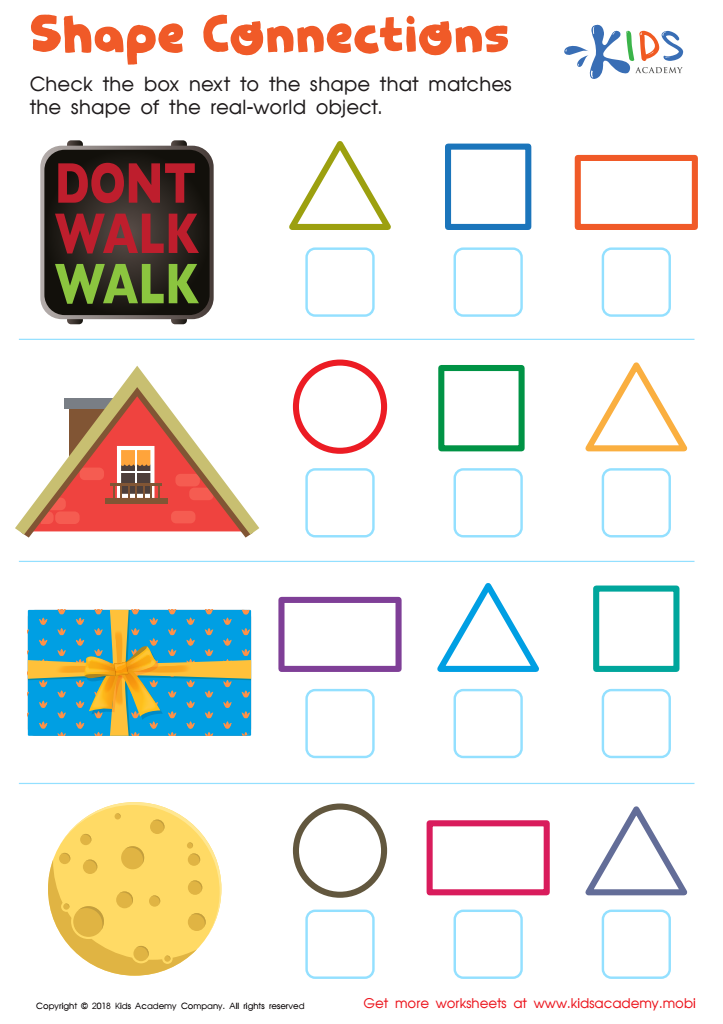
Shape Connections Worksheet
Geometric shapes are all around us and this fun worksheet brings it to life. Kids will match real-world pictures with the corresponding basic shapes, connecting how math is used in various aspects of daily life. A great way to reinforce these concepts!
 Assign to My Students
Shape Connections Worksheet
Worksheet


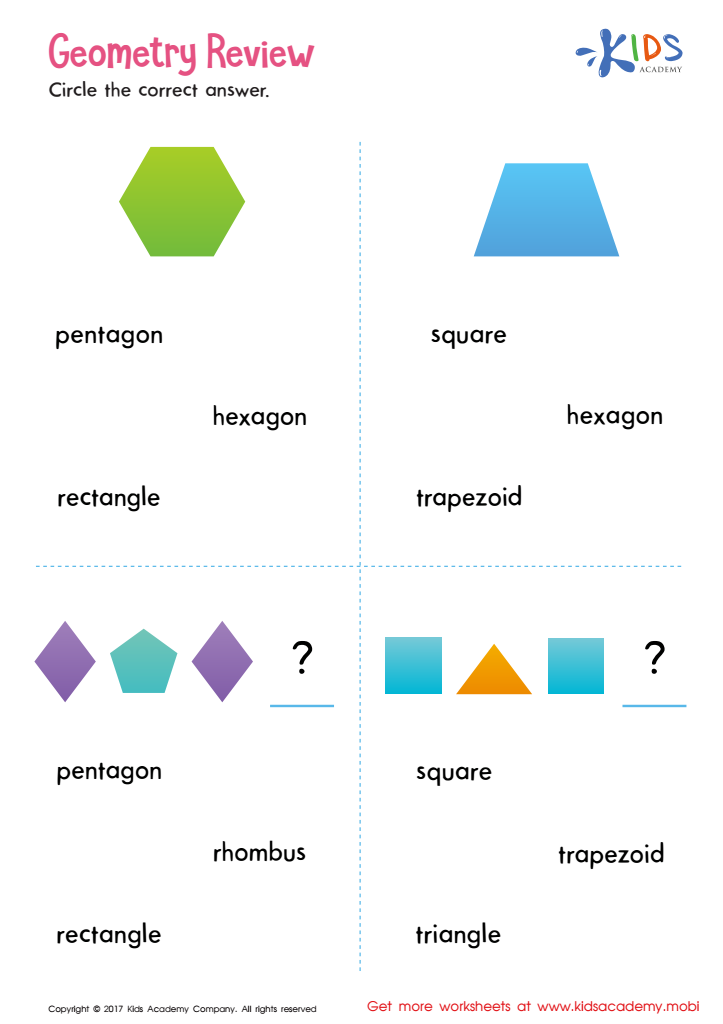
Geometry Review Printable
Repetition is key to success; give your child the practice they need with this geometry worksheet.
Geometry Review Printable
Worksheet
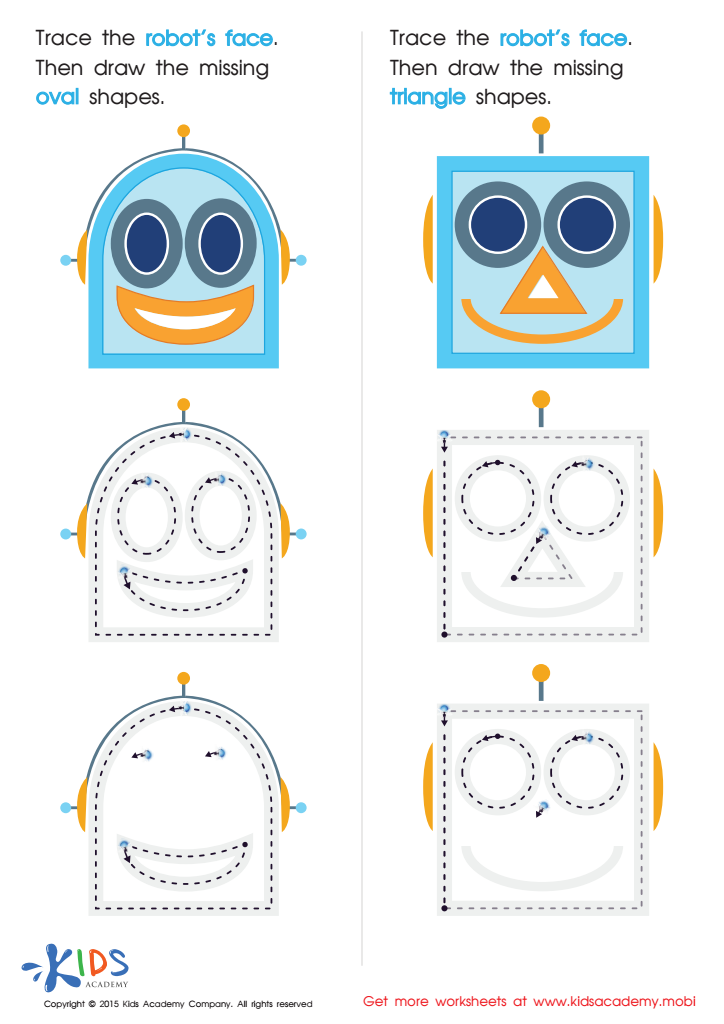
Drawing Ovals And Triangles with Fun Printable
Trace the face and draw missing ovals and triangles. Test your memory and recall shapes' names. Check if you remember how to draw them!
Drawing Ovals And Triangles with Fun Printable
Worksheet
Join Kids Academy for Free
Who is primarily going to use this learning content?








Understanding basic geometry, particularly 2D shapes, is essential for children aged 3-4 as it lays a critical foundation for cognitive development and later academic success. At this early stage, exposure to shapes fosters recognition, vocabulary, and spatial awareness. Learning to identify and differentiate between circles, squares, triangles, and other shapes builds visual discrimination skills, which are vital for reading and writing.
Moreover, grasping these concepts enhances problem-solving abilities. Young children frequently encounter shapes in their environment, from playing with blocks to interpreting signs, and by recognizing and naming them, they can better understand and interact with the world around them. This understanding also encourages logical thinking by helping kids categorize and organize information, thus promoting an overall sense of order and analytical thinking.
Engaging with shapes can also make math enjoyable, nurturing a positive attitude toward the subject from a young age. Activities involving sorting, matching, and creating patterns with shapes can be fun and interactive, fostering a love for learning.
In sum, basic geometry is more than just a mathematical skill; it's a tool that supports language development, cognitive growth, and a child's ability to engage and learn effectively. Therefore, parents and teachers should prioritize these foundational skills to build a well-rounded early education.