Critical Thinking 2D Shapes Worksheets for Ages 3-4
5 filtered results
-
From - To
Nurture young minds with our engaging Critical Thinking 2D Shapes Worksheets designed for ages 3-4. These interactive worksheets introduce preschoolers to essential math concepts through fun, hands-on activities. Children will discover circles, squares, triangles, and more while strengthening their analytical skills. Perfect for early learners, our resources foster cognitive development by encouraging shape recognition, pattern identification, and spatial reasoning. Ideal for both classroom and at-home learning, these printable pages provide a solid foundation for future math success. Give your child a head start with Kids Academy’s expertly crafted critical thinking and 2D shapes worksheets today!
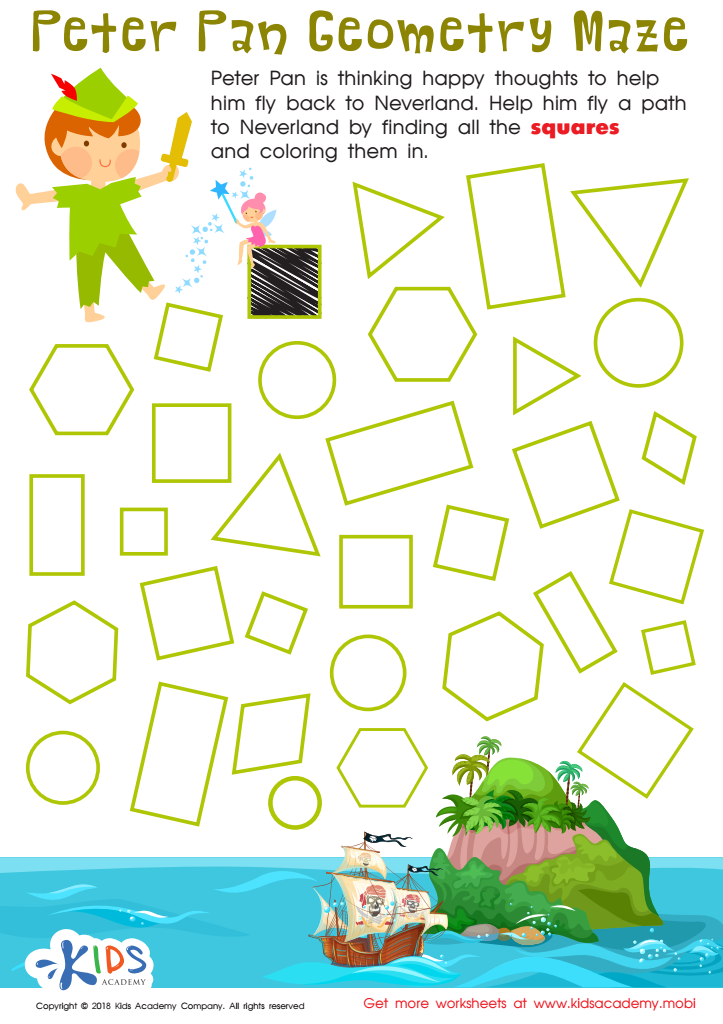
Peter Pan Worksheet
 Assign to My Students


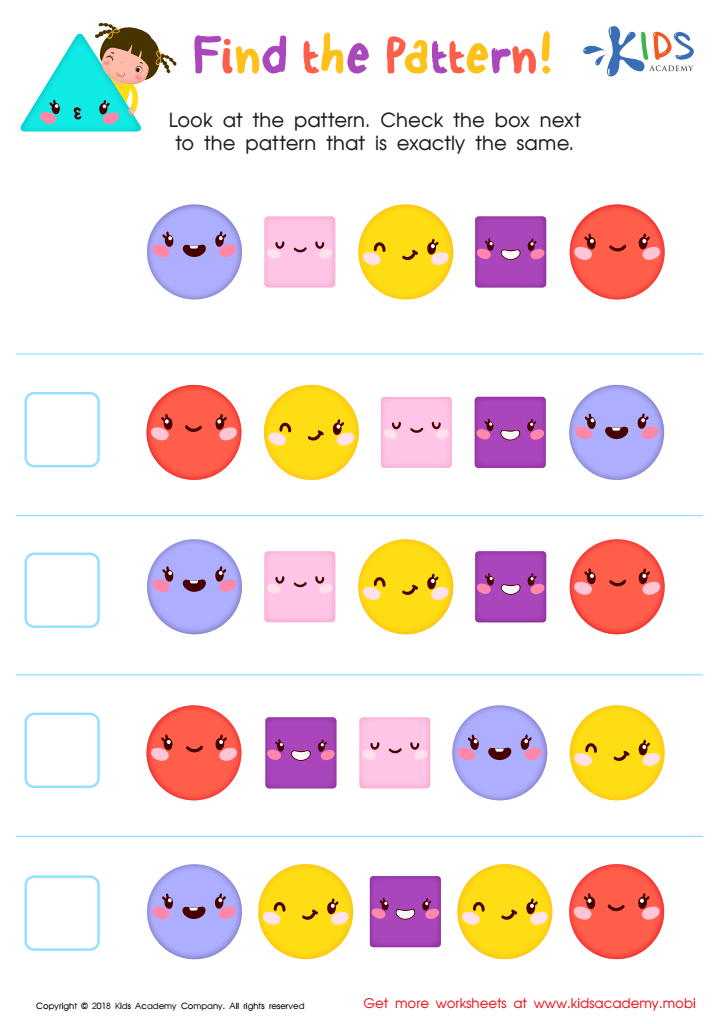
Find the Pattern Worksheet
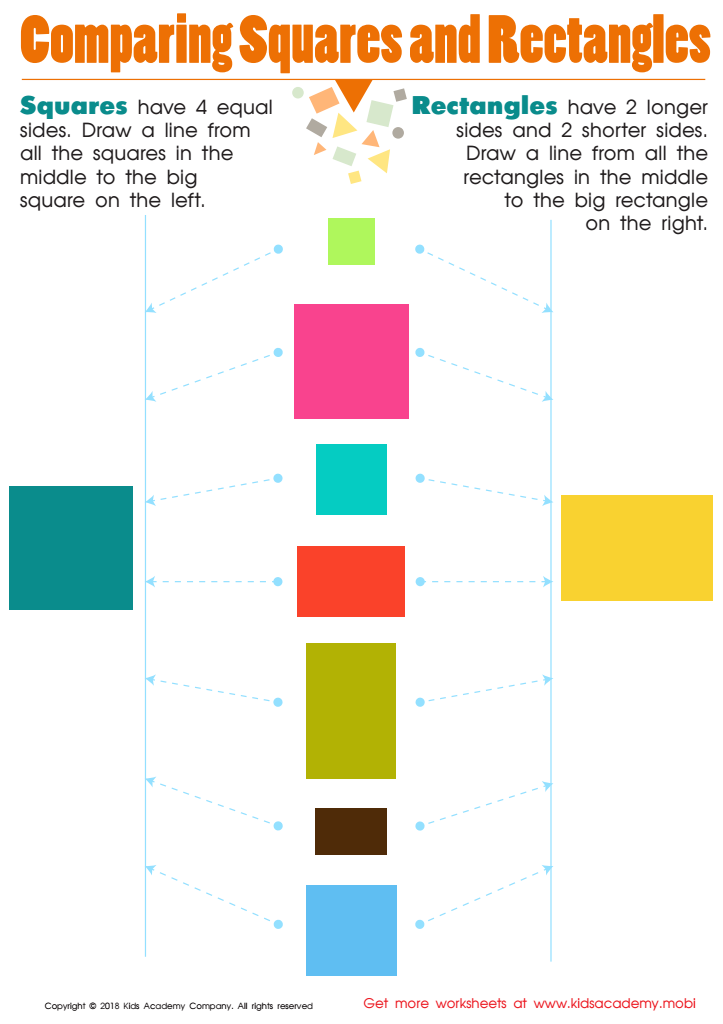
Comparing Squares Rectangles Worksheet
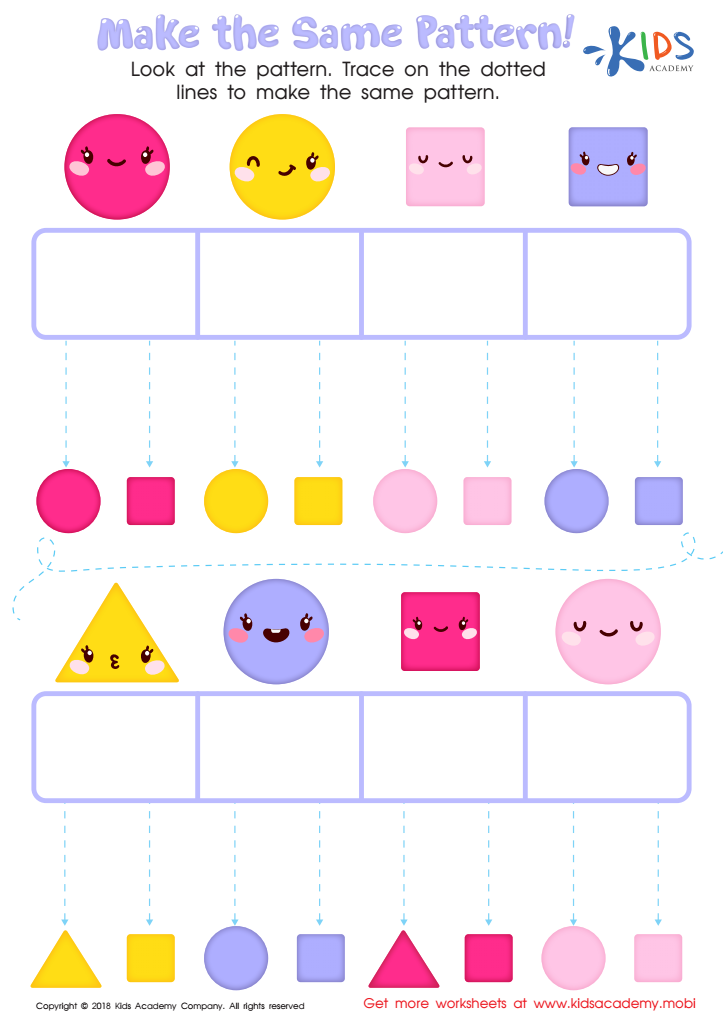
Make the Same Pattern Worksheet
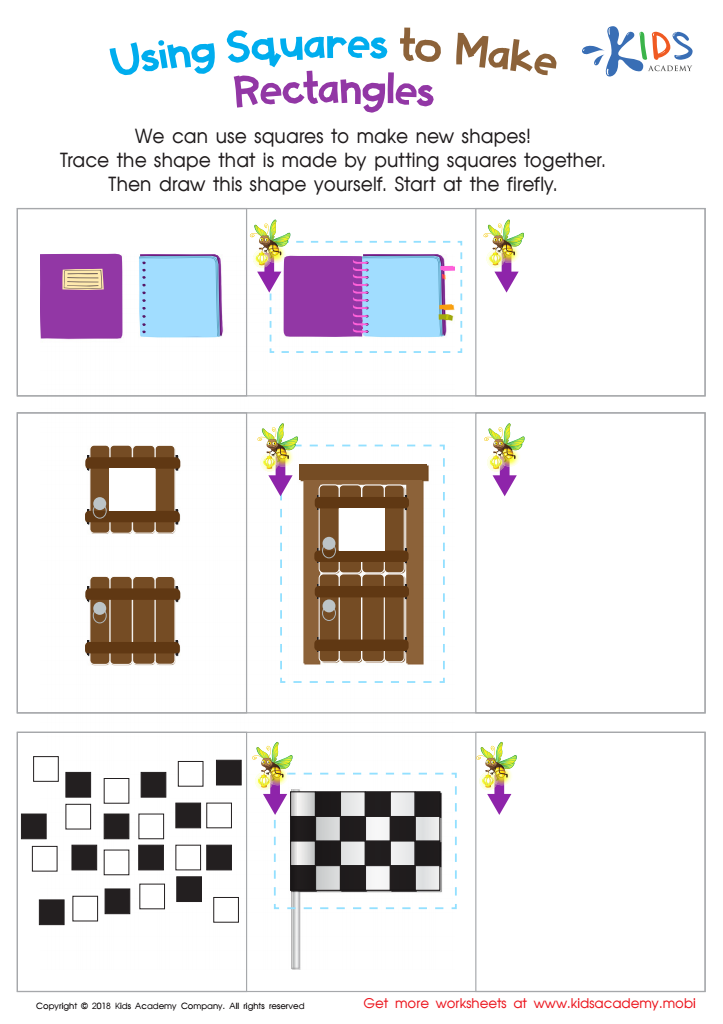
Using Squares to Make Rectangles Worksheet








Introducing critical thinking with 2D shapes to children aged 3-4 is crucial for several developmental reasons. Early exposure to critical thinking fosters cognitive skills that form the foundation for future learning. At this tender age, children are naturally curious and eager to explore the world around them. Learning about 2D shapes helps them recognize patterns, categorize objects, and make connections—all critical thinking skills that play a role in problem-solving.
Understanding shapes also supports foundational math abilities, such as geometry and spatial reasoning. When children manipulate shapes, match them, or sort them based on attributes, they sharpen their ability to observe and differentiate, key components of logical reasoning.
Shapes are ubiquitous in a child’s environment, from toys to books to everyday objects. Familiarity with shapes enhances their vocabulary and descriptive language, aiding in effective communication. By asking probing questions about shapes and encouraging children to describe what they see, parents and teachers can stimulate their critical thinking and verbal skills simultaneously.
Moreover, recognizing and distinguishing shapes improves fine motor skills as children draw, trace, or construct figures. This hands-on engagement promotes a tactile learning experience that supports early writing and art.
In essence, integrating critical thinking with 2D shapes for young children sets up a holistic view of learning, fostering curiosity, enhancing cognitive skills, and building a solid groundwork for academic success.