Basic Arithmetic Adding in the Sea Worksheets for Ages 3-4
9 filtered results
-
From - To
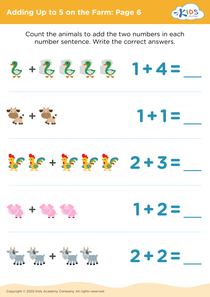
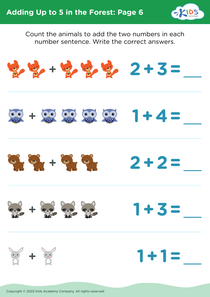
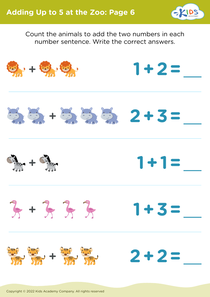
Welcome to our "Basic Arithmetic Adding in the Sea Worksheets for Ages 3-4"! Dive into a fun and engaging learning experience with our colorful worksheets designed to introduce your little ones to basic addition concepts. These ocean-themed activities encourage early math skills through counting sea creatures, visual aids, and simple addition scenarios. Perfect for preschoolers, each worksheet supports the development of essential cognitive skills while promoting interactive learning. Watch your child's confidence grow as they explore numbers in a delightful underwater adventure. Join us in making math enjoyable early on with our specially designed resources for young learners!
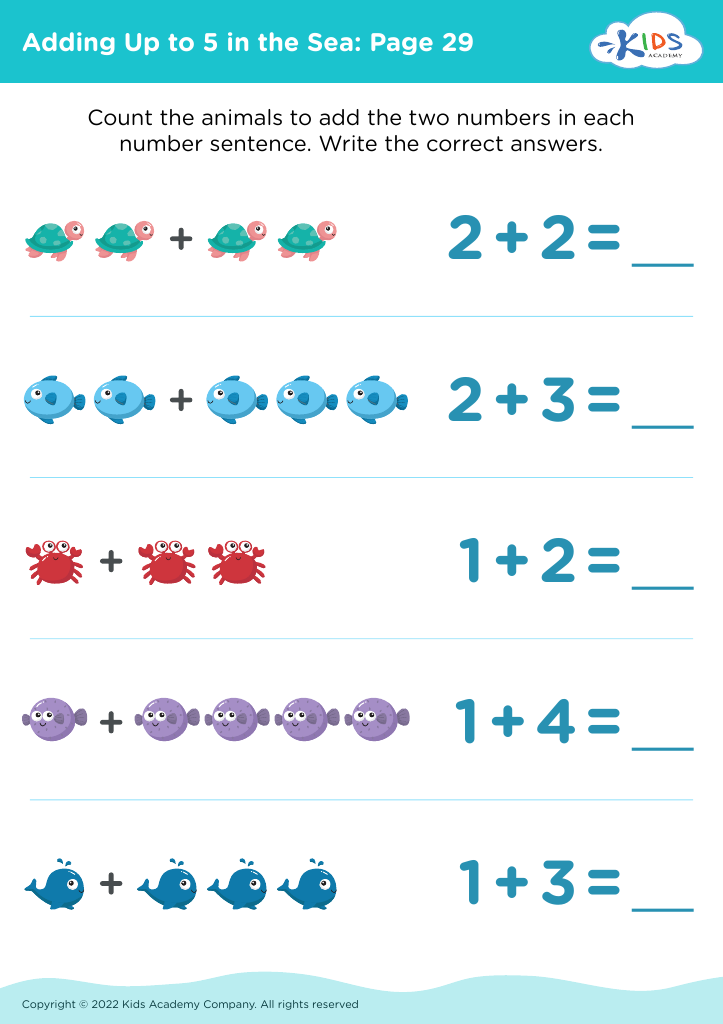
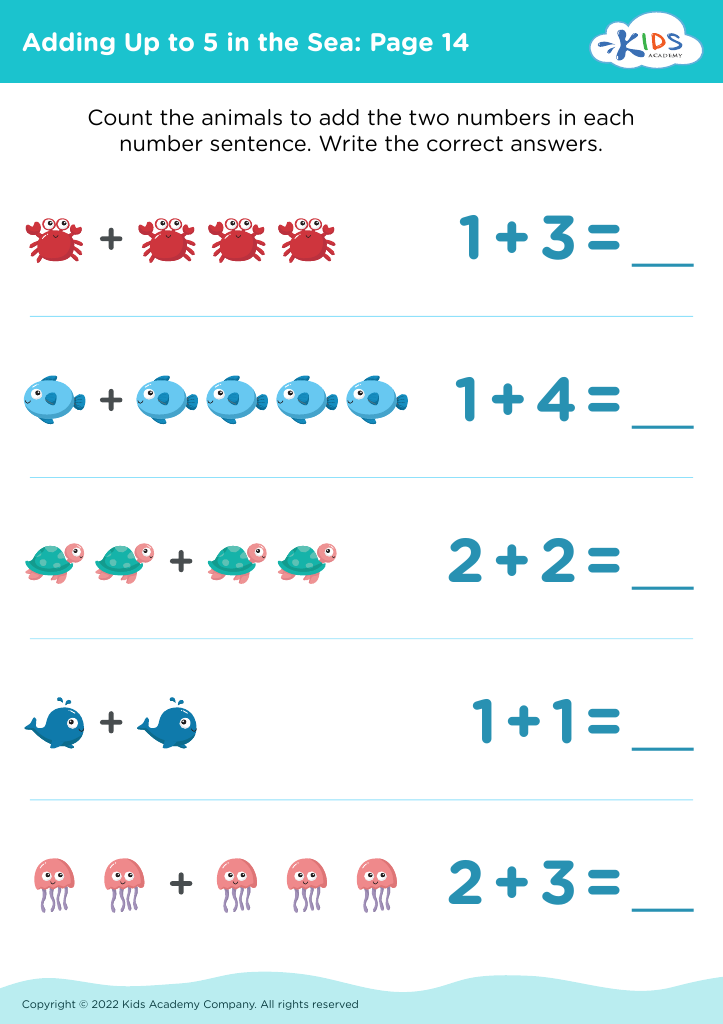
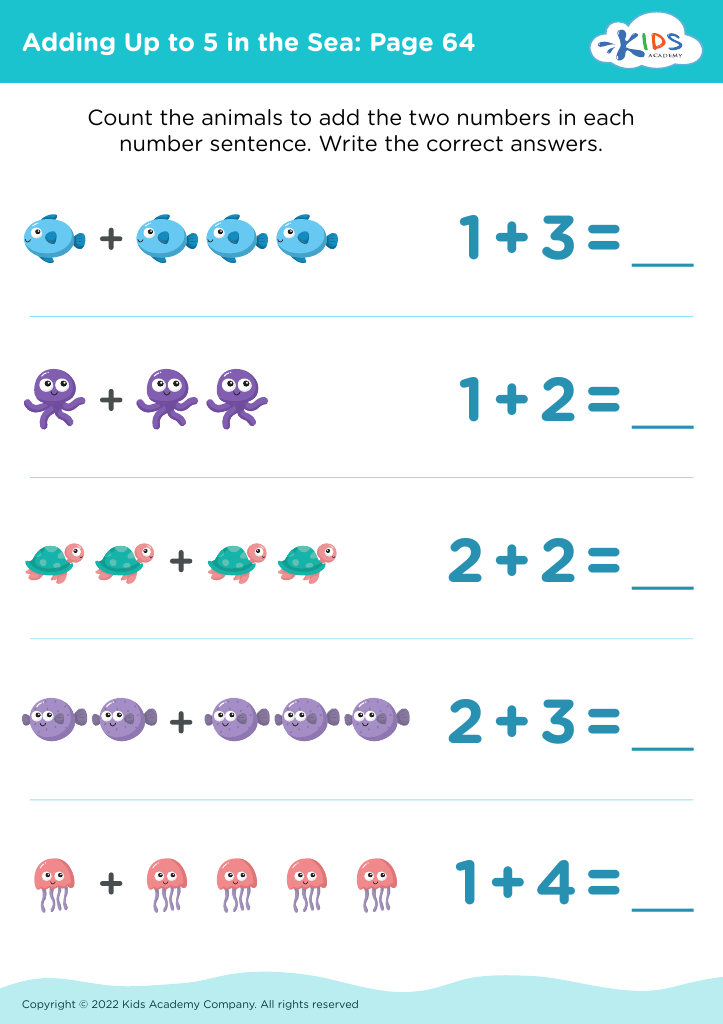
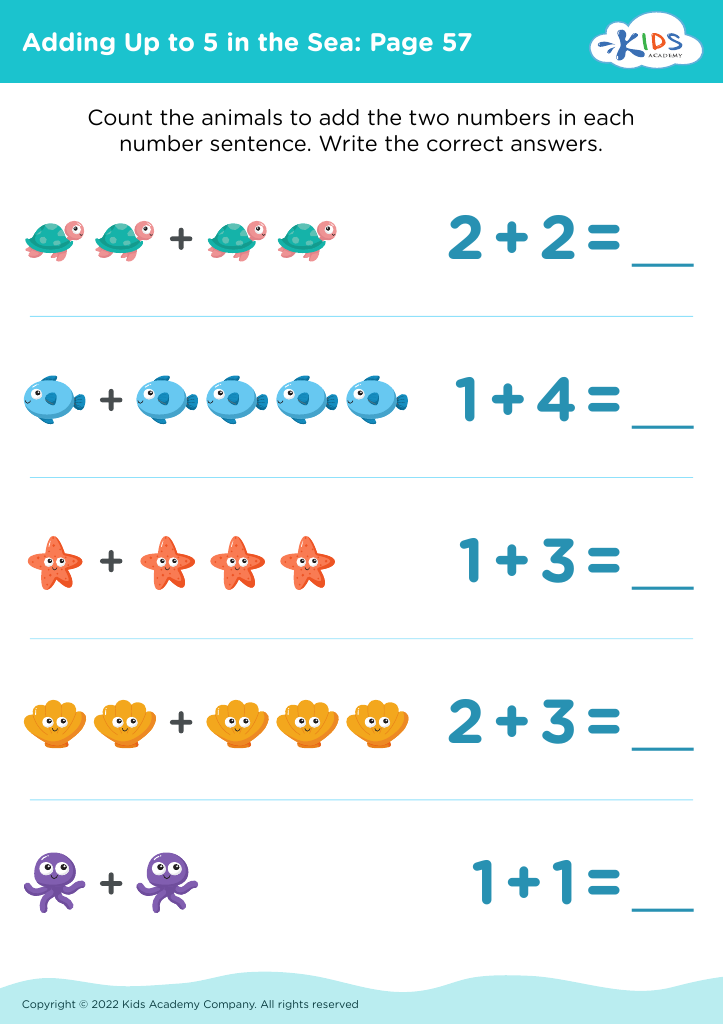
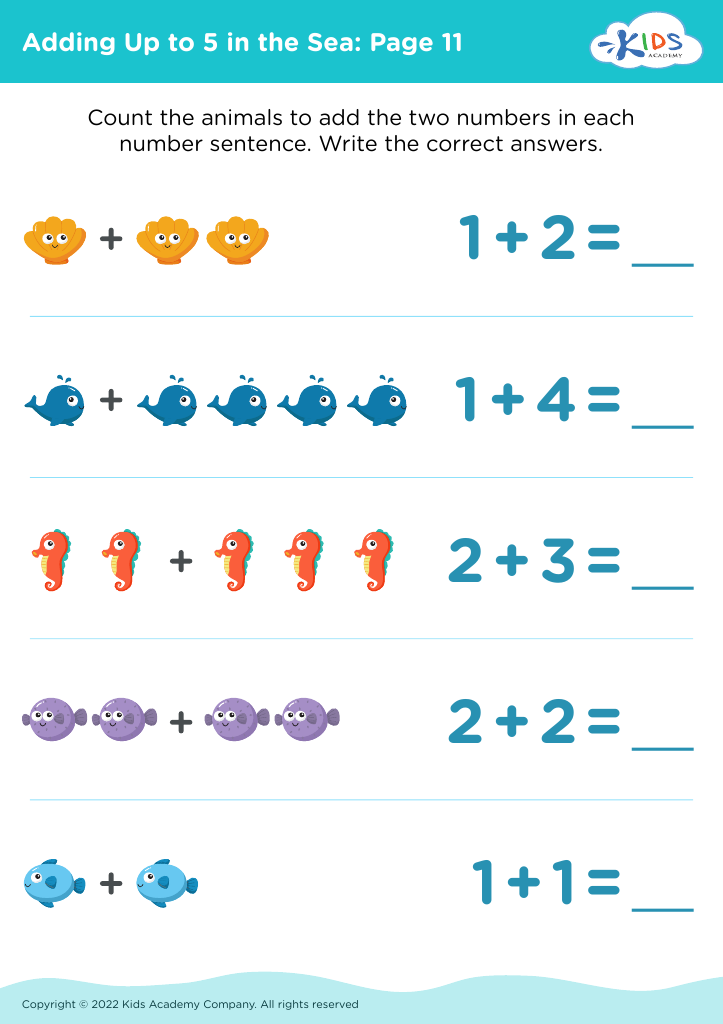
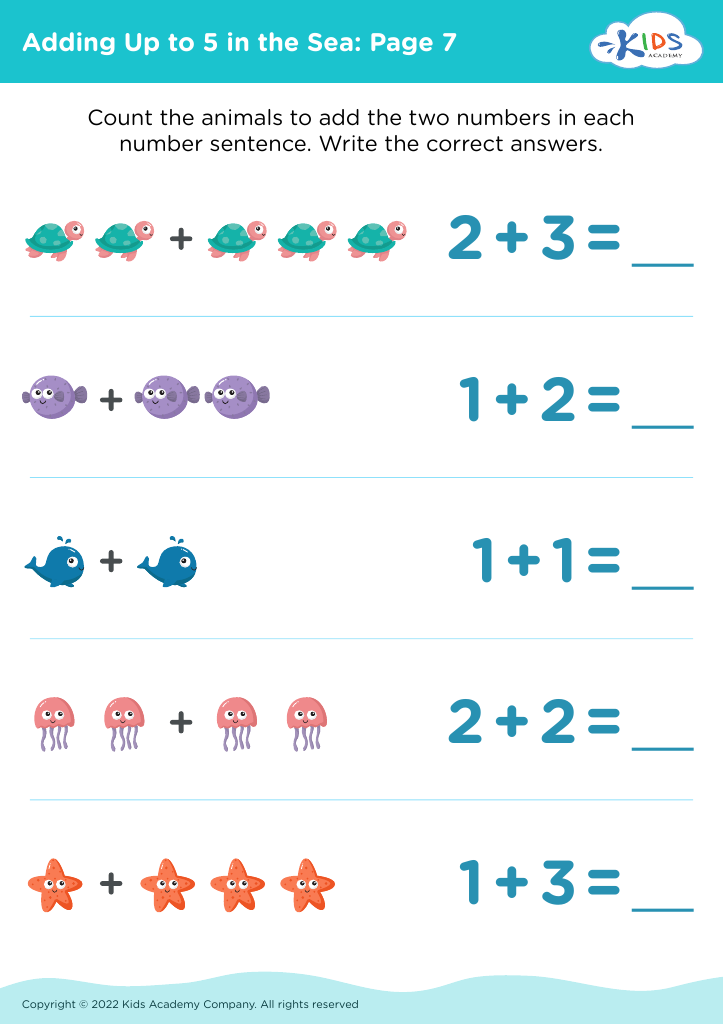
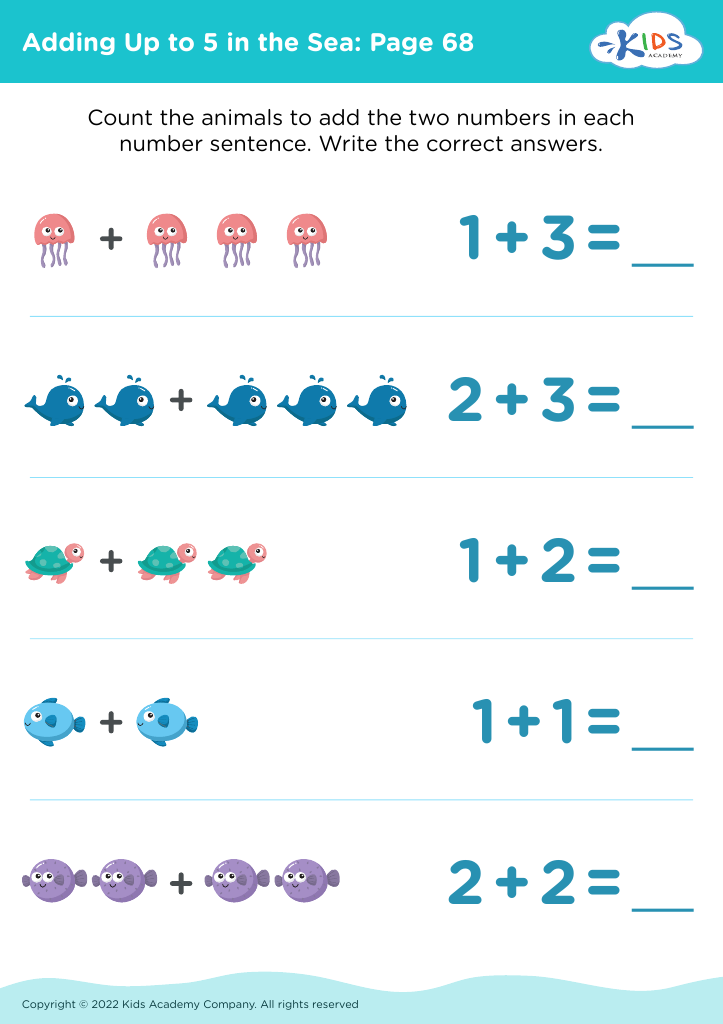
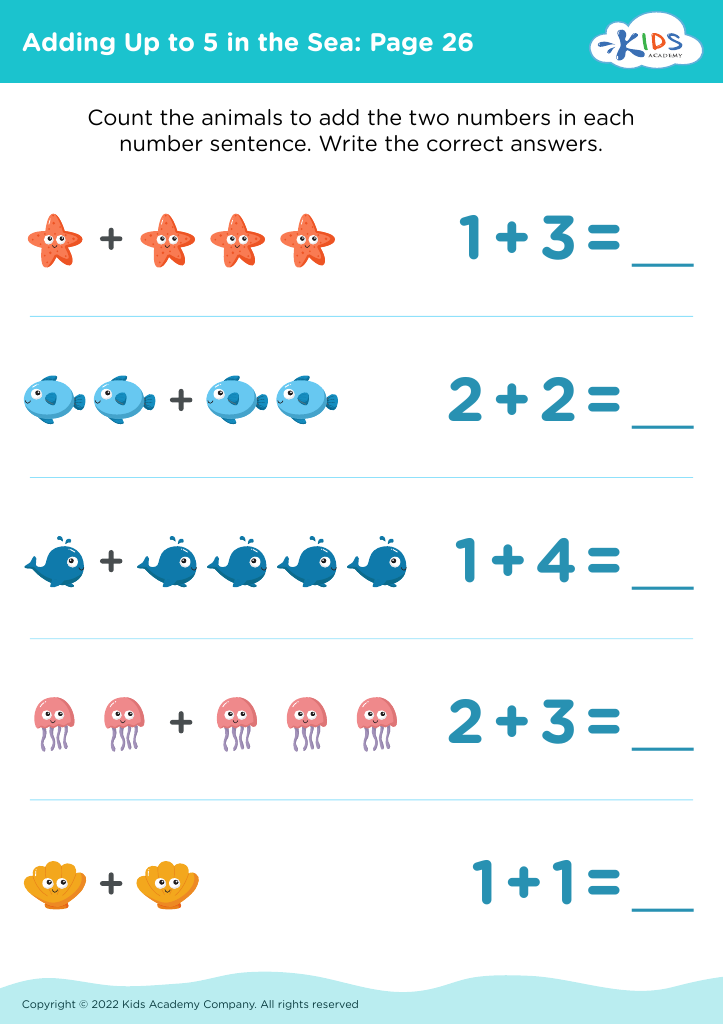
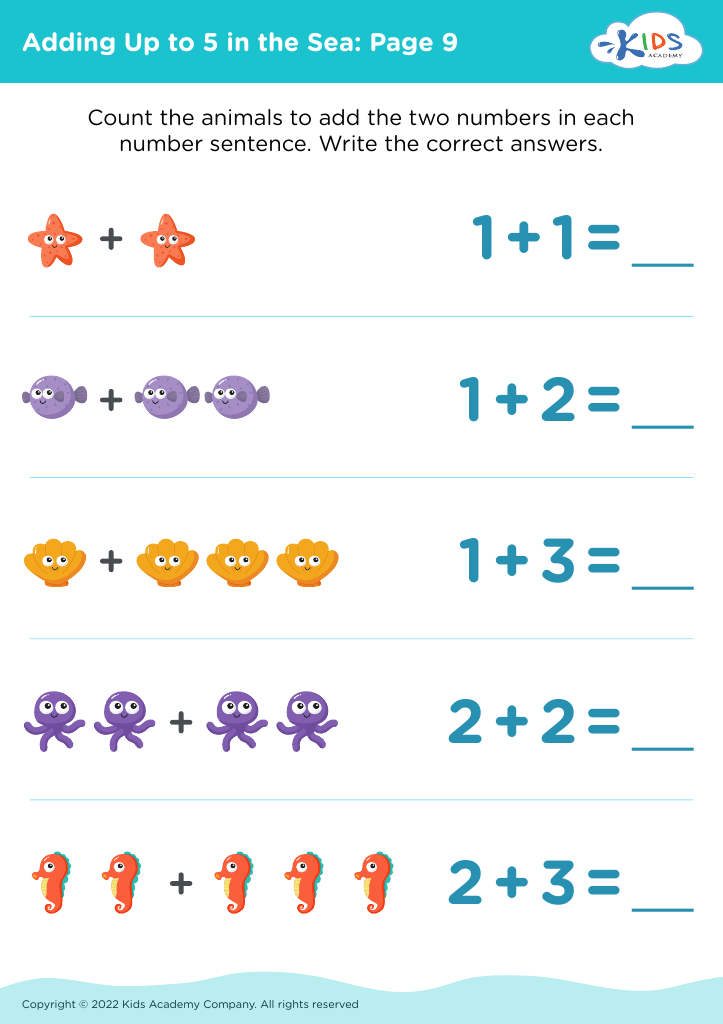



Teaching basic arithmetic, such as adding, to children ages 3-4, especially in engaging contexts like "Adding in the Sea," is crucial for their cognitive and social development. At this stage, children are naturally curious and eager to explore new concepts; introducing basic arithmetic through playful themes stimulates their interest and lays a solid foundation for future learning.
Engaging with themes like the sea allows children to visualize and understand numbers in a relatable context. Counting seashells, for example, transforms abstract numbers into tangible experiences, encouraging critical thinking and problem-solving skills. This hands-on approach promotes active learning, as children often learn best through play and exploration.
Moreover, early exposure to math boosts confidence and creates a positive attitude toward learning. It prepares children for more complex mathematical concepts in kindergarten and beyond. Additionally, when parents and teachers prioritize such activities, they foster a collaborative learning environment that highlights the importance of numeracy skills. Instilling a love for numbers early on not only boosts educational outcomes but helps children develop persistence and adaptability—key skills in both academic and everyday life. Overall, investing time in teaching arithmetic through fun themes benefits the child's holistic development.