Visual Learning Adding in the Sea Worksheets for Ages 3-4
18 filtered results
-
From - To
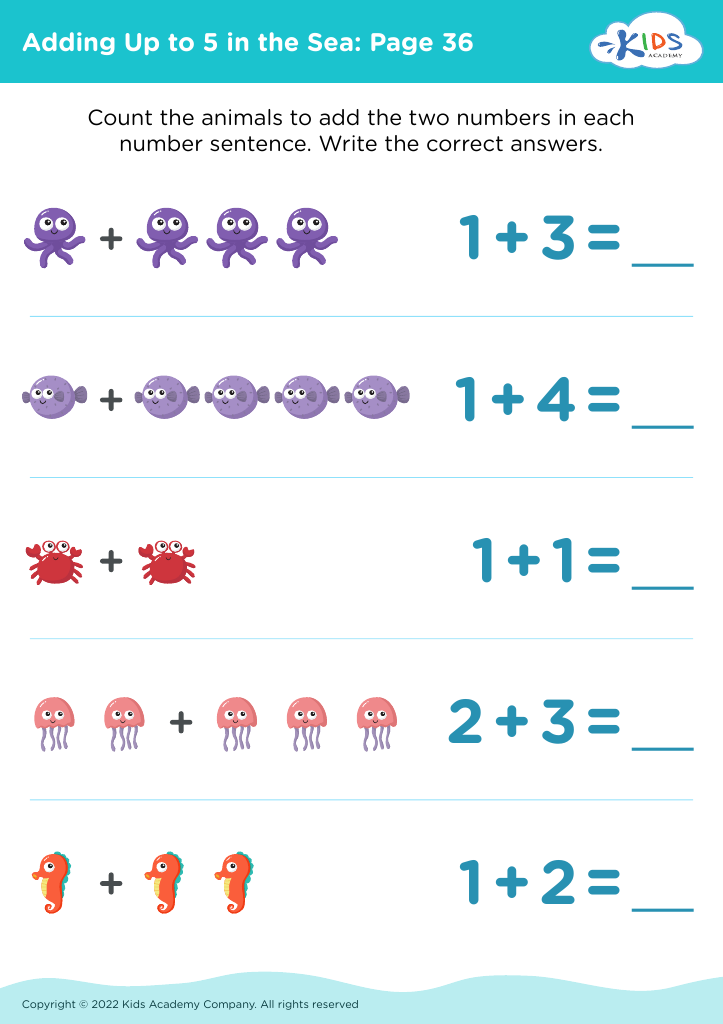
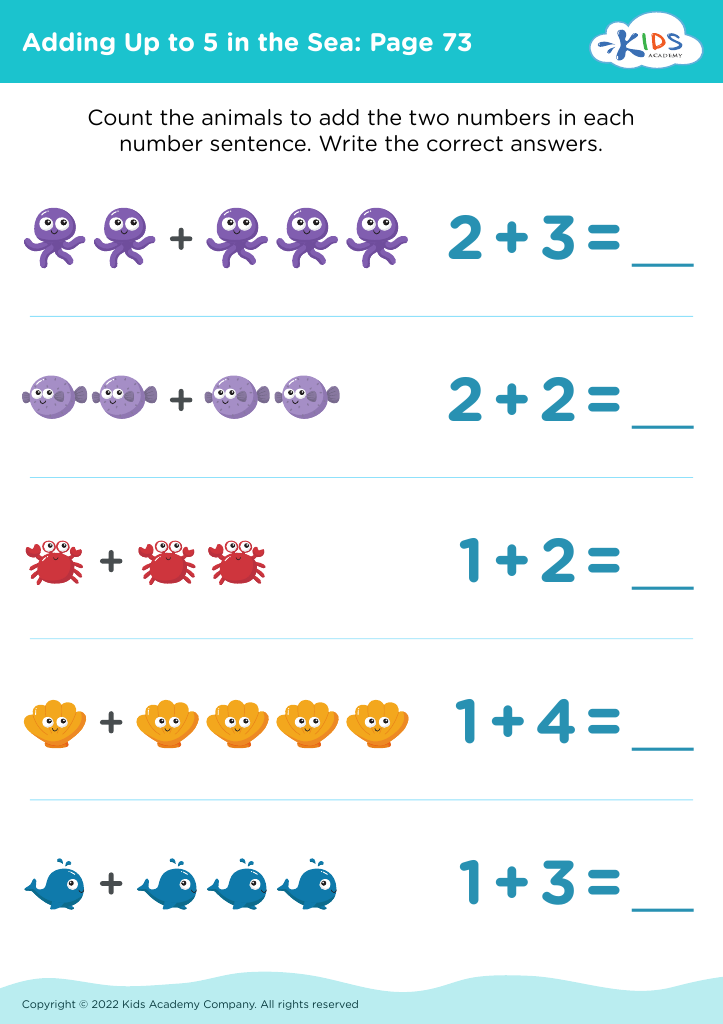
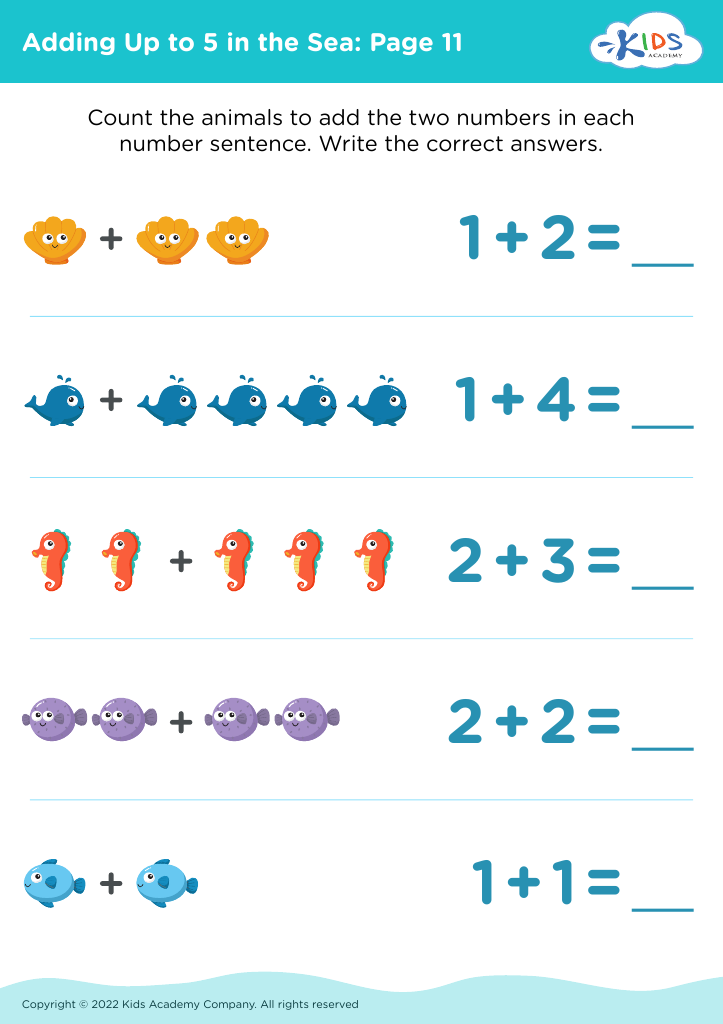
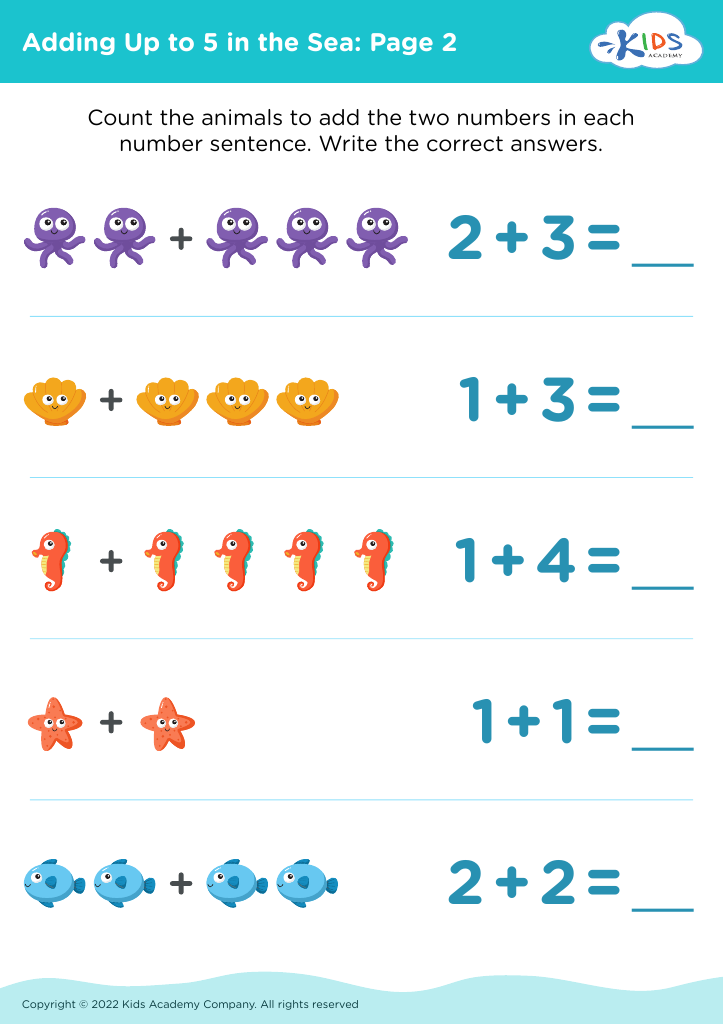
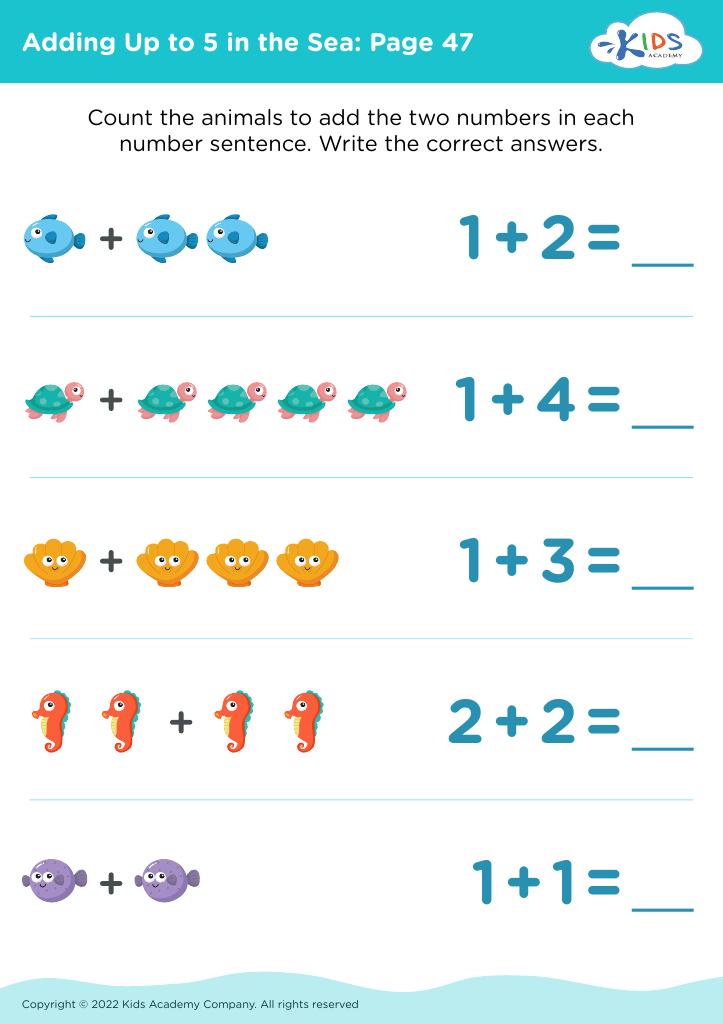
Welcome to our "Visual Learning Adding in the Sea Worksheets" designed specifically for children ages 3-4! These engaging, colorful worksheets introduce little learners to the concept of addition through captivating sea-themed visuals. Children will explore counting and basic addition skills as they interact with playful ocean creatures, promoting both learning and imagination. Our visual learning approach helps enhance comprehension and retention, making maths fun and accessible. With varied activities tailored to suit young minds, your child will develop essential early math skills while diving into an underwater adventure. Discover the joy of learning with our resources designed for the explorers of tomorrow!
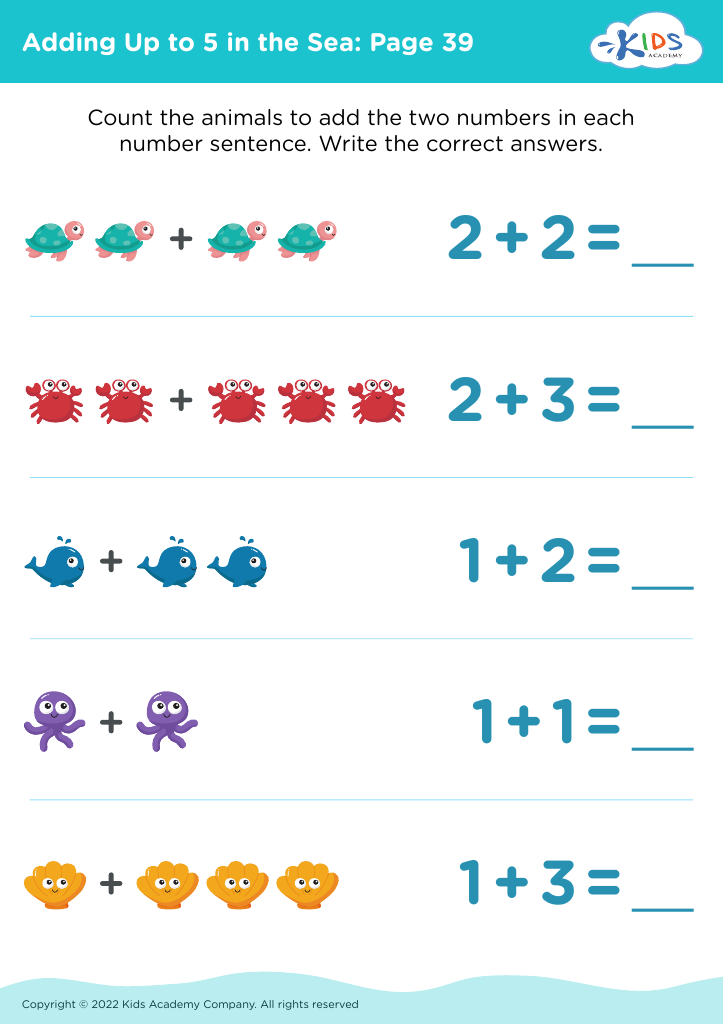
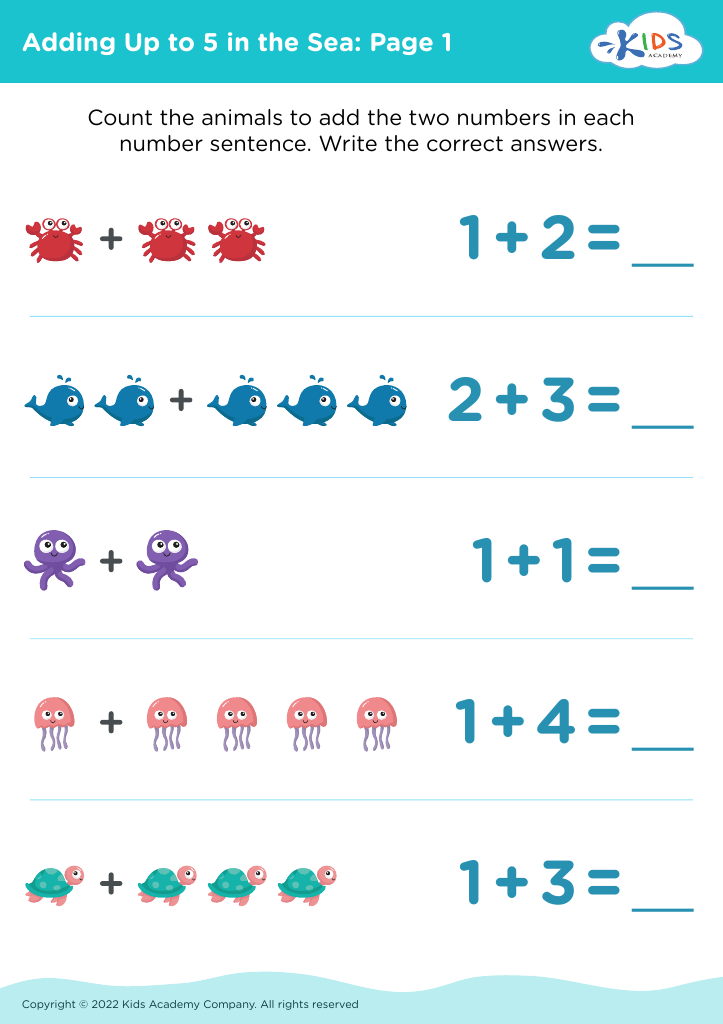
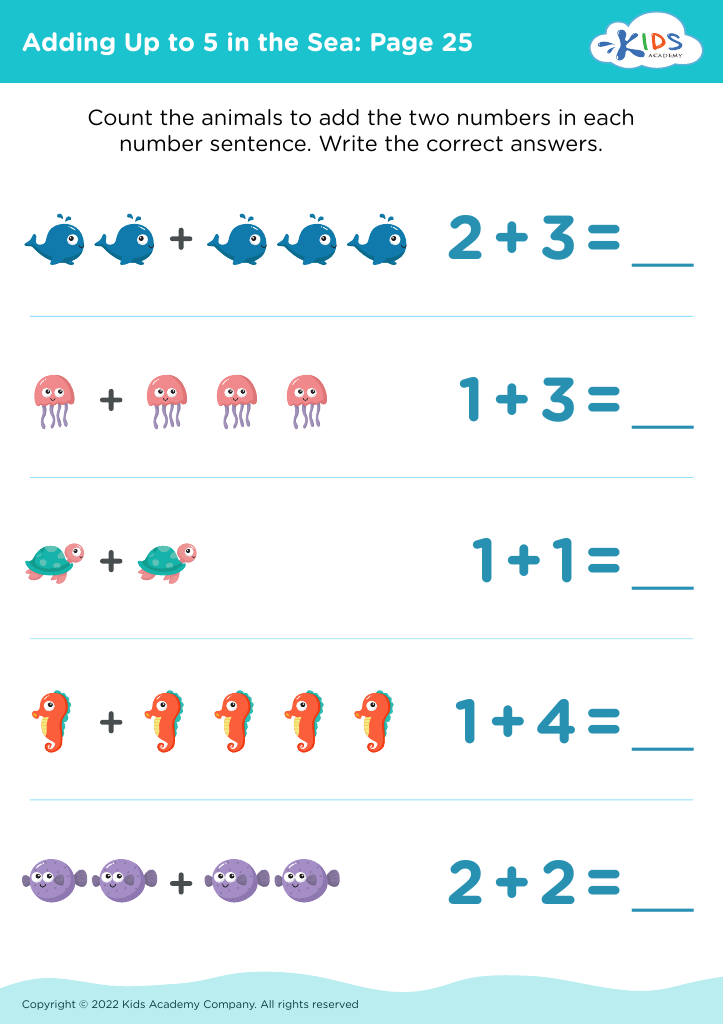
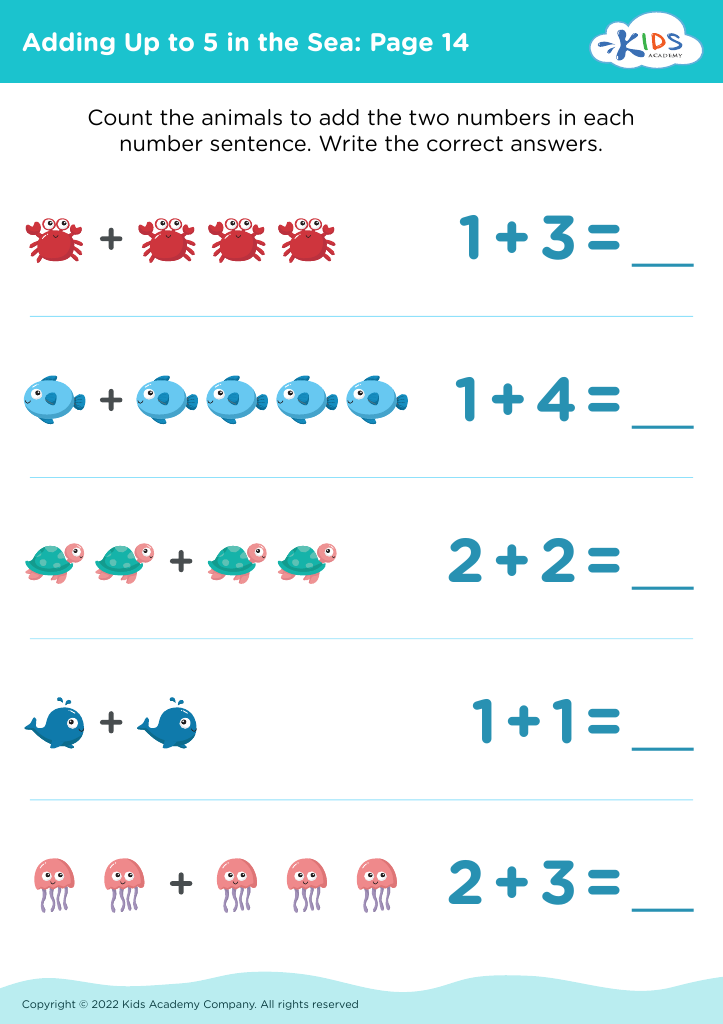
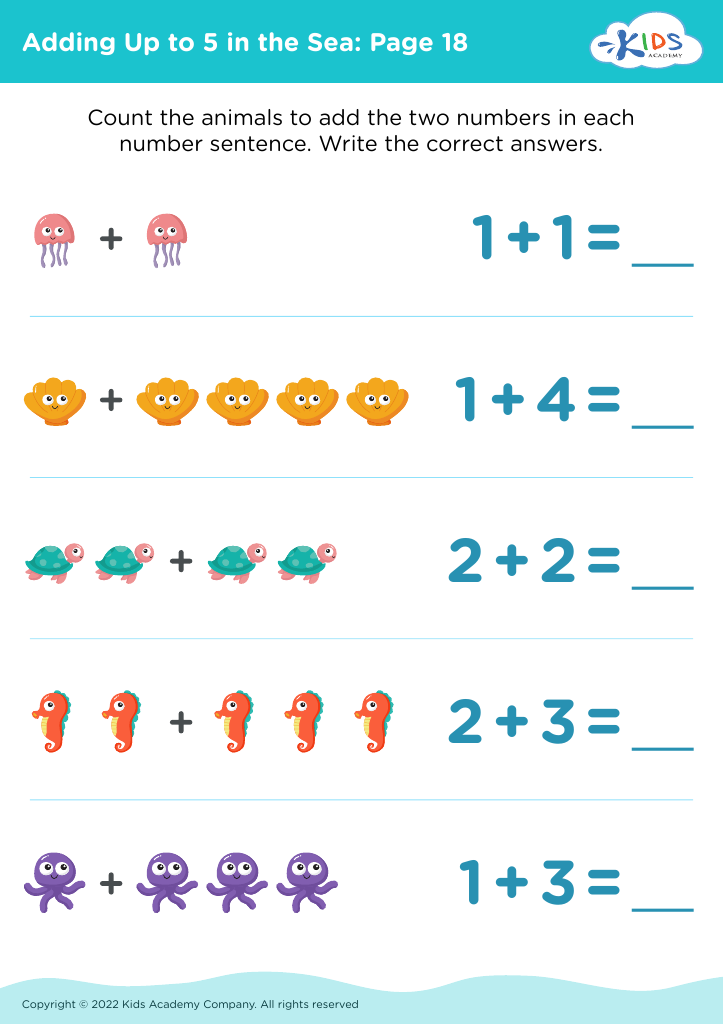
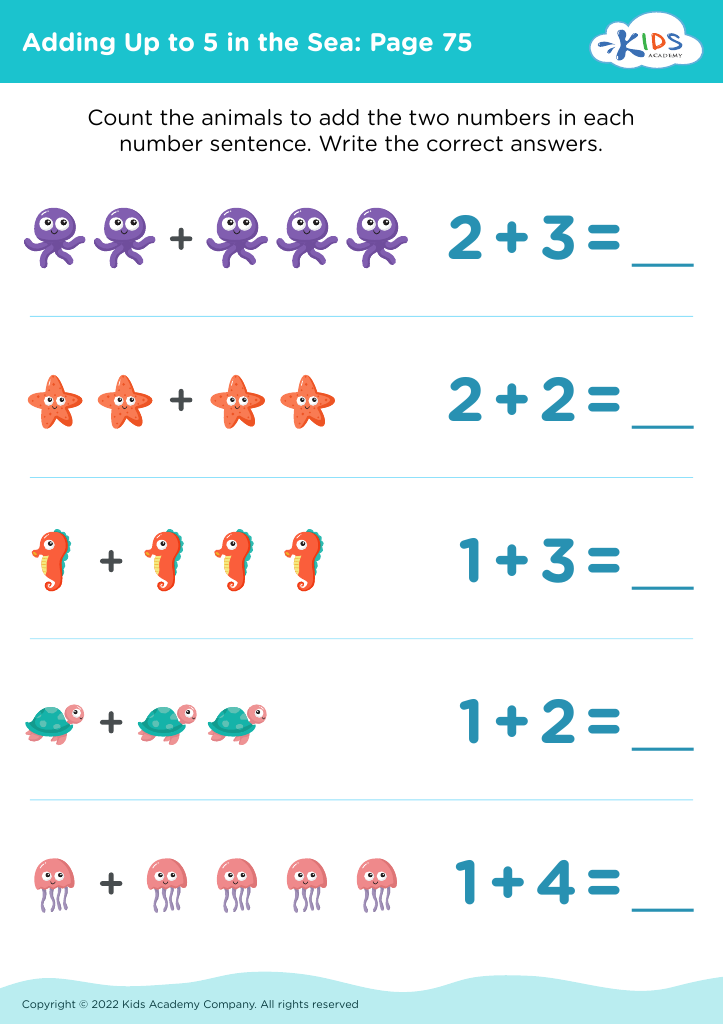
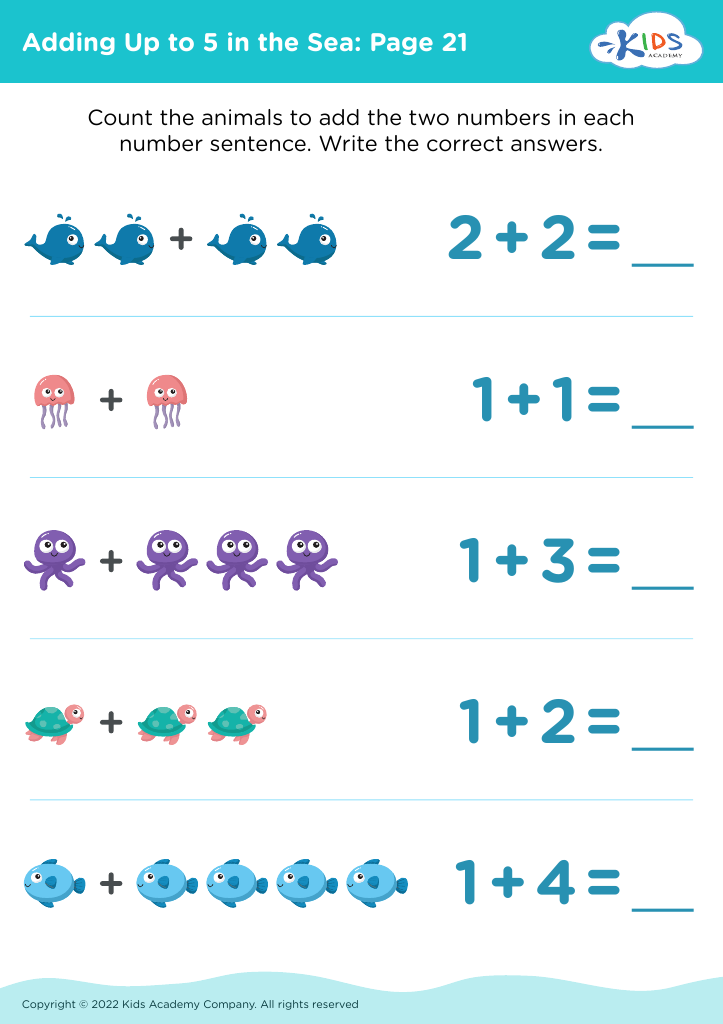
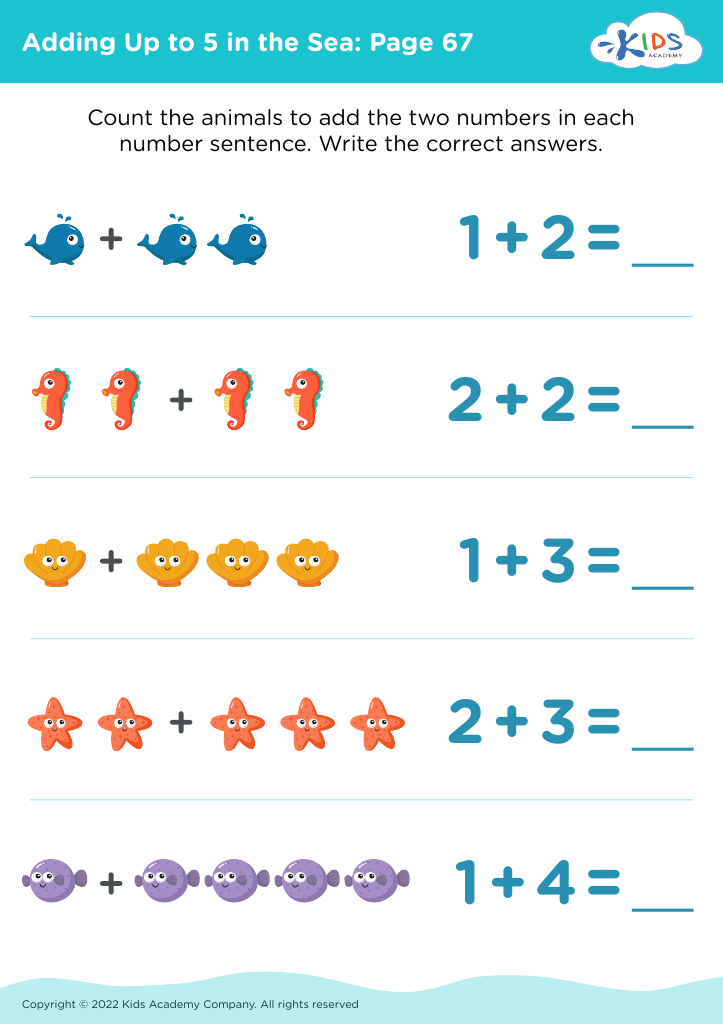
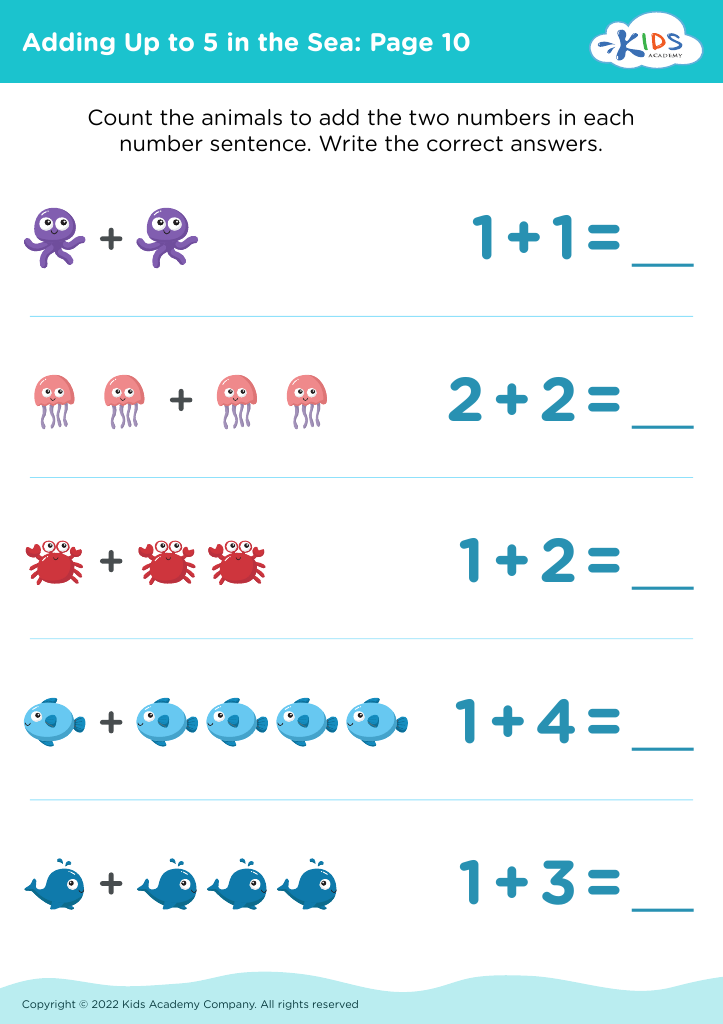
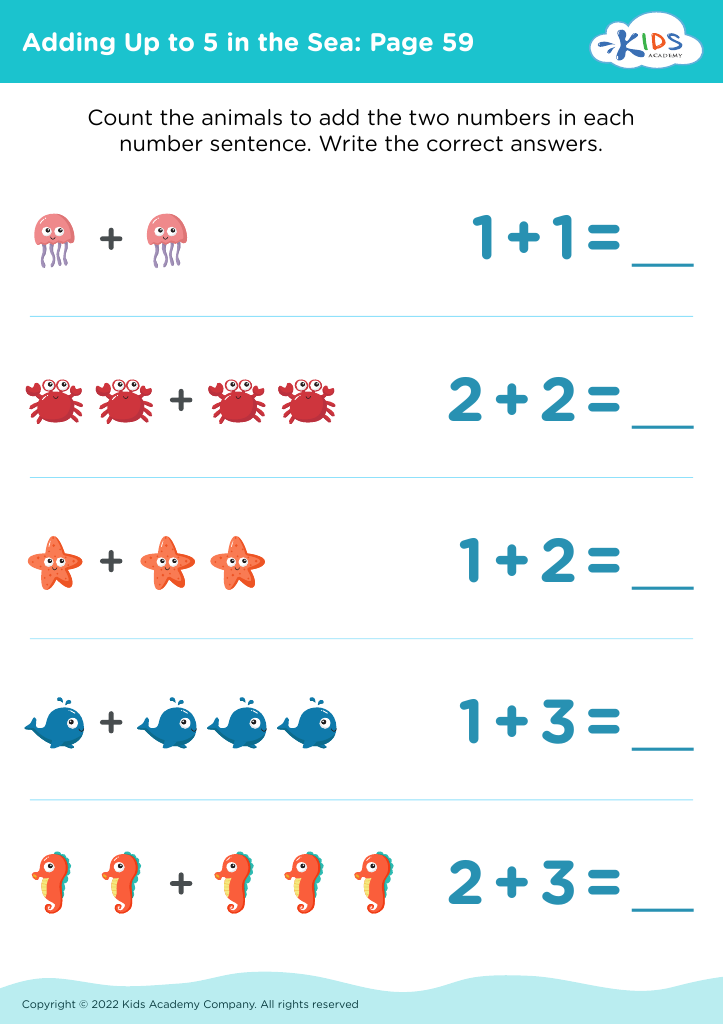
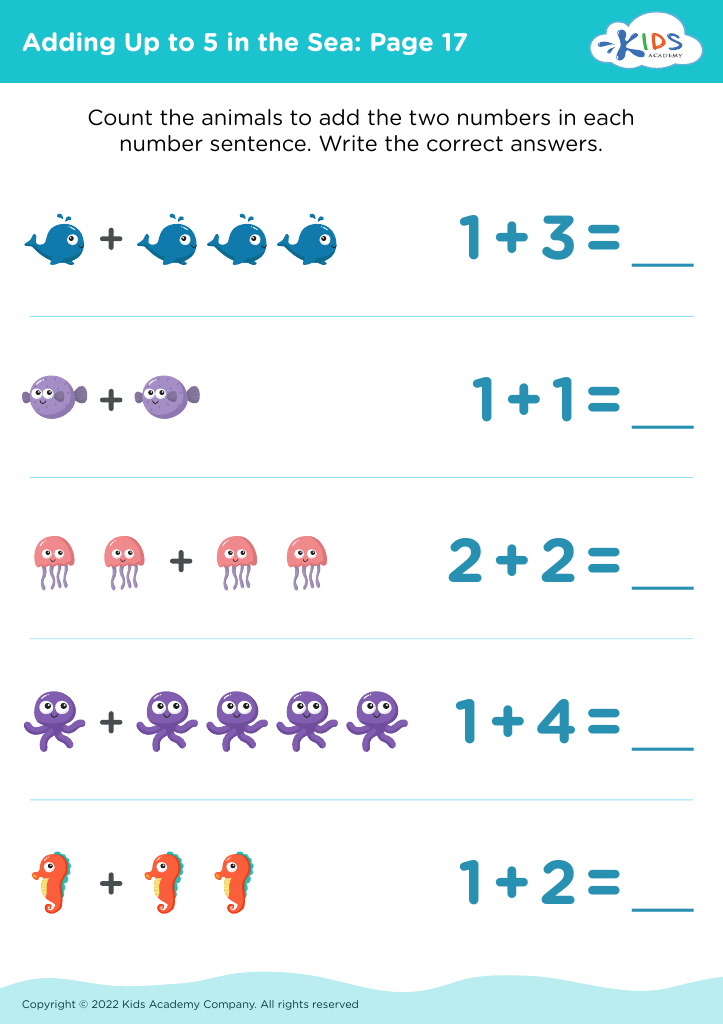
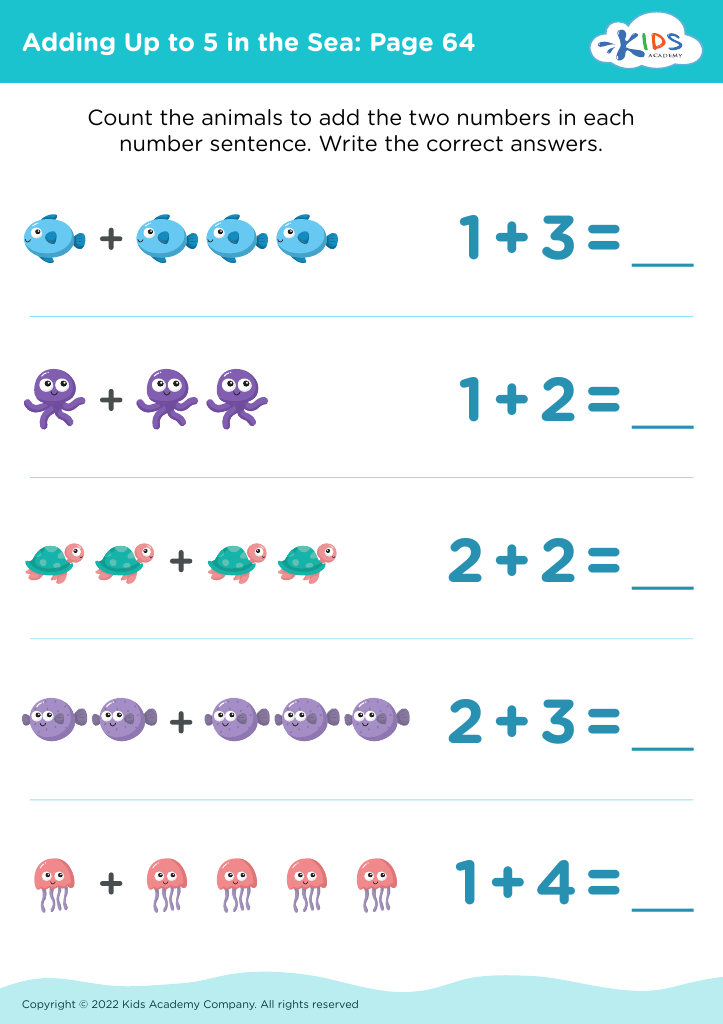
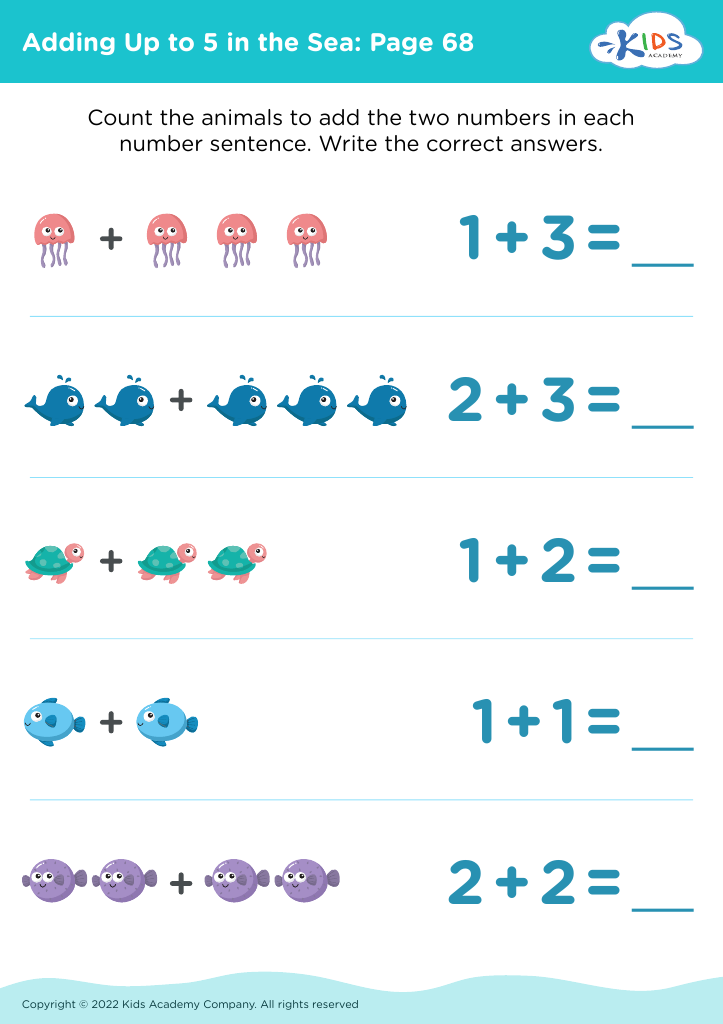



Visual learning is a crucial aspect of education, especially for young children aged 3-4. At this tender age, children are naturally drawn to visuals—colors, shapes, and images—making it a powerful tool for understanding concepts and engaging their creativity. The use of visual learning, particularly when incorporating themes like "the sea," can stimulate young imaginations and enhance their cognitive development.
When parents and teachers emphasize visual learning, they help children establish strong connections between concrete images and abstract ideas. For instance, teaching about the sea can involve vibrant images of marine life, the ocean's waves, or beach scenes, allowing children to explore and learn about the world around them more effectively. This sensory experience can also reinforce vocabulary and comprehension as children associate pictures with names and meanings.
Additionally, visual learning caters to various learning styles and can be used to develop critical thinking and problem-solving skills. Creating a rich, visually stimulating environment encourages curiosity and motivates children to ask questions, fostering a love for learning. Ultimately, by integrating visual learning with themes like the sea, caregivers and educators can lay a strong foundation for literacy, creativity, and emotional development in young learners.