Visual Learning Addition and Subtraction Word Problems Worksheets for Ages 3-4
5 filtered results
-
From - To
Discover engaging "Visual Learning Addition and Subtraction Word Problems Worksheets for Ages 3-4" by Kids Academy! Our thoughtfully designed printable worksheets leverage vibrant visuals and simple word problems to make early math concepts enjoyable and accessible. Young learners develop essential skills, such as problem-solving, comprehension, and basic arithmetic, through engaging activity pages. Tailored for ages 3-4, these worksheets foster a love for math by connecting everyday situations to learning, making abstract concepts concrete. Perfect for use at home or in the classroom, they provide a solid foundation in addition and subtraction, ensuring your child is ready for future math success.
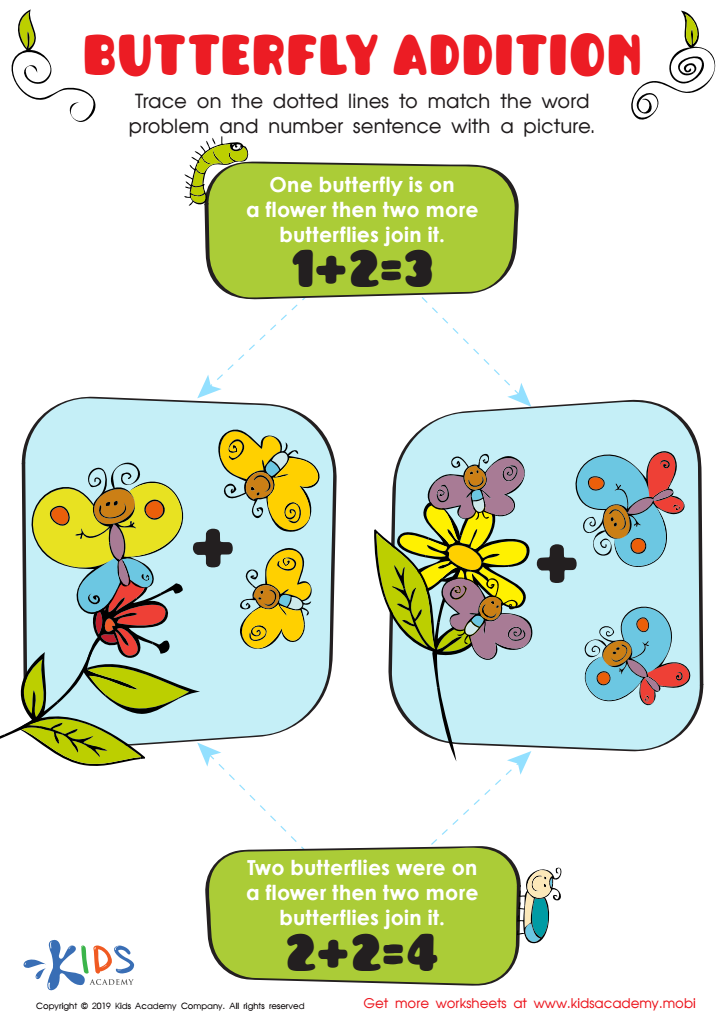
Butterfly Addition Worksheet
 Assign to My Students
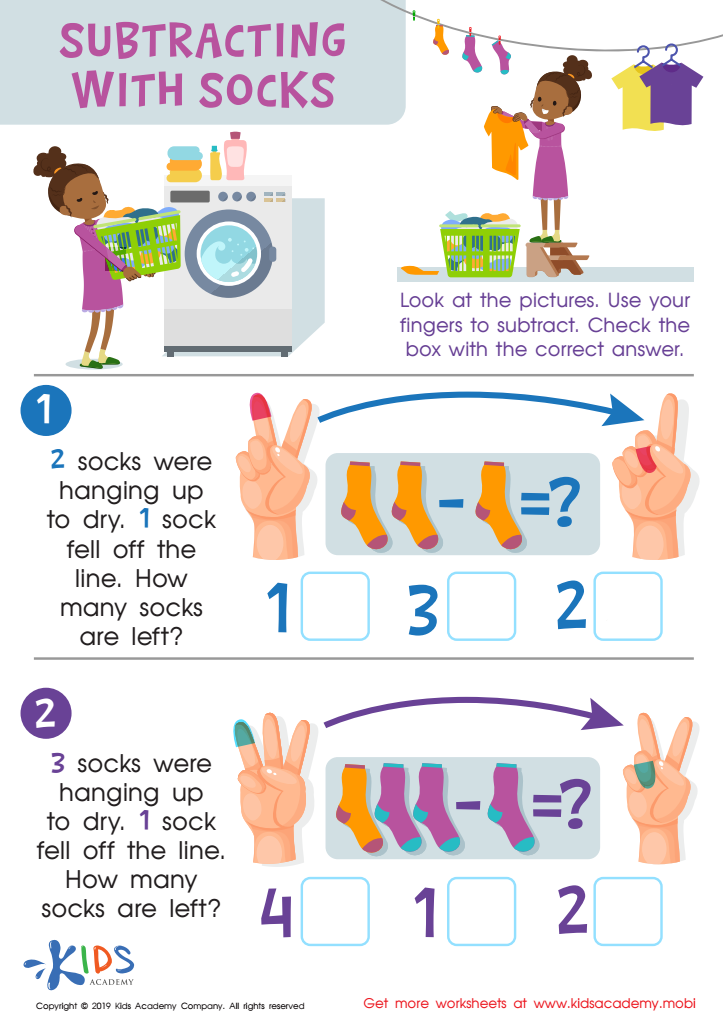
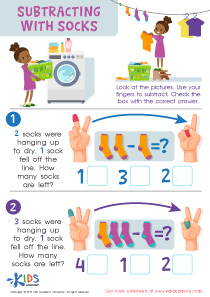
Subtracting Socks Worksheet
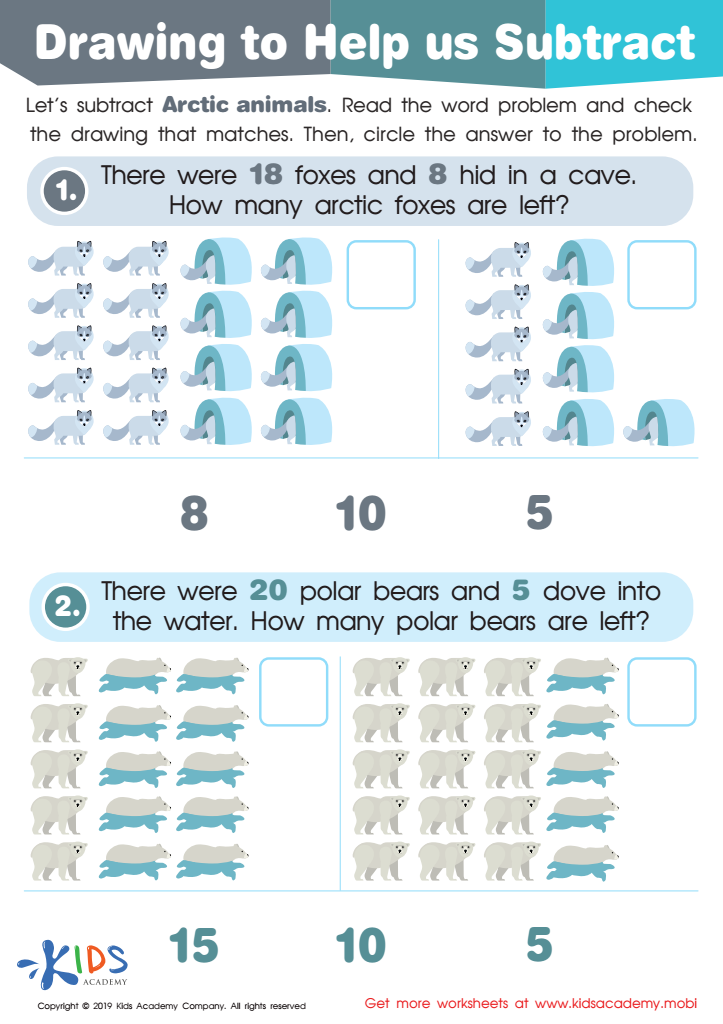
Drawing to Help Us Subtract Worksheet
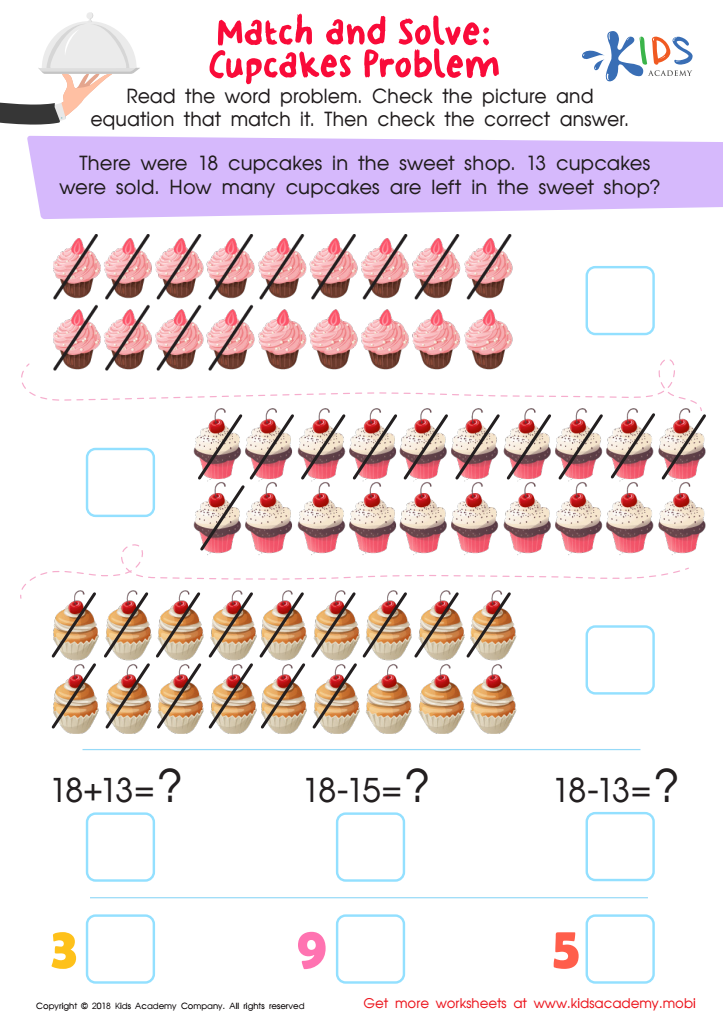
Match and Solve: Cupcakes Problem Worksheet
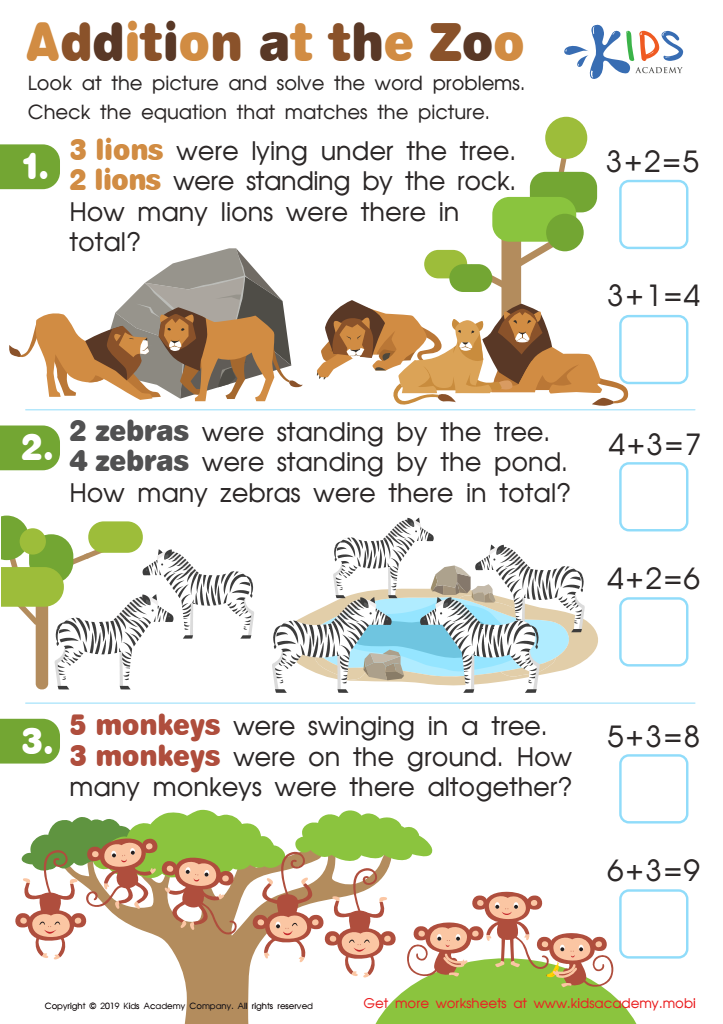
Addition at the Zoo Worksheet








In early childhood education, visual learning tools and activities are crucial for nurturing foundational math skills. Visual learning addition and subtraction word problems specifically designed for ages 3-4 combine visual stimuli with basic arithmetic operations to facilitate young learners' understanding in a compelling manner.
For one, visual aids clarify abstract concepts. At this developmental stage, children typically thrive on tangible and observable inputs. Using images or physical objects (like toys or drawings) to convey addition and subtraction not only keeps their attention but aids in comprehension by linking numbers to real-world items they recognize.
Secondly, engaging with these visual word problems promotes critical thinking and problem-solving skills. When children visualize a scenario, such as adding apples to a basket or removing toys from a box, they aren’t just computing numbers but are also understanding the reason behind the operations—elements key to cognitive development.
Moreover, nurturing these skills at an early age builds a strong mathematical foundation and boosts confidence. Success with these basics encourages enthusiasm for learning more complex math later.
Ultimately, caring about visual learning for addition and subtraction for this age group supports their cognitive development, making math both accessible and enjoyable. Both parents and teachers play a critical role in employing these vital instructional strategies to ensure children have a solid start in mathematics.