Filters

248 filtered results

Clear all filters
Favorites
With answer key
Interactive

248 filtered results

Difficulty Level

Grade


Check out this FREE Trial Lesson on Addition & Subtraction for age 3-4!

D

Favorites
With answer key
Interactive
  • 3-4
  • Counting practice
  • Addition & Subtraction
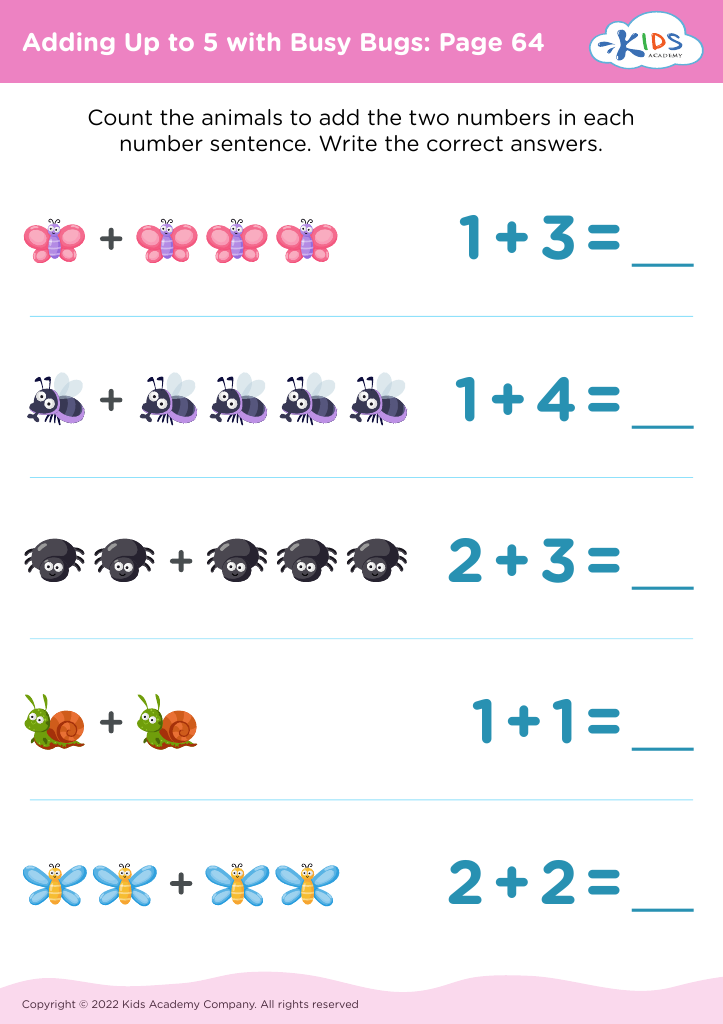
Adding Up to 5 with Busy Bugs: Page 64
Worksheet
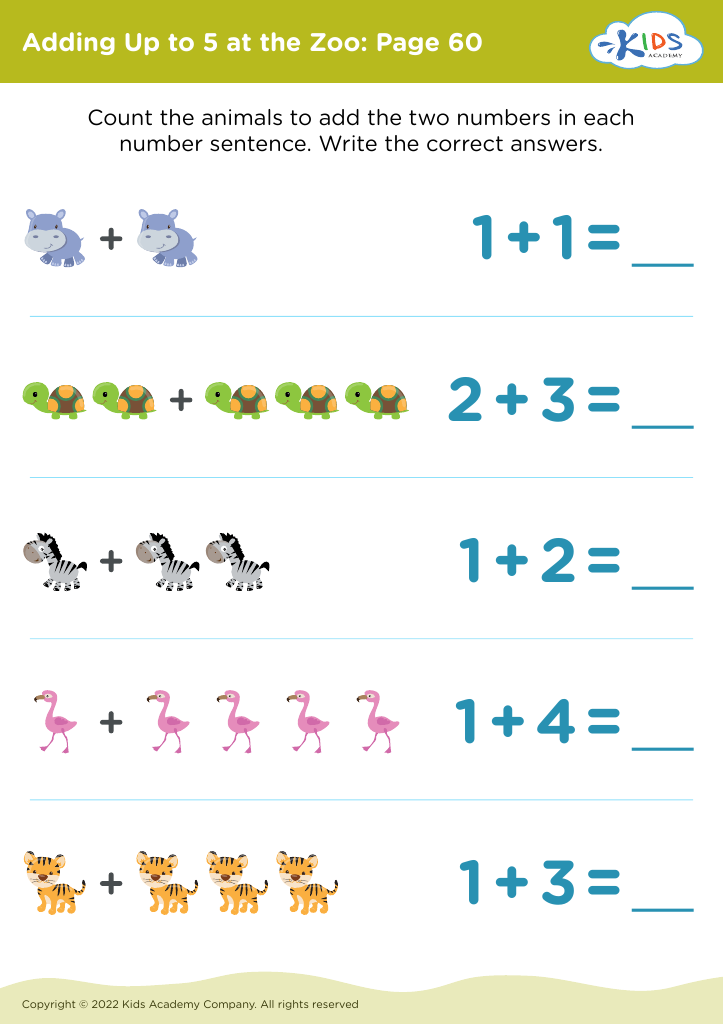
Adding Up to 5 at the Zoo: Page 60
Worksheet
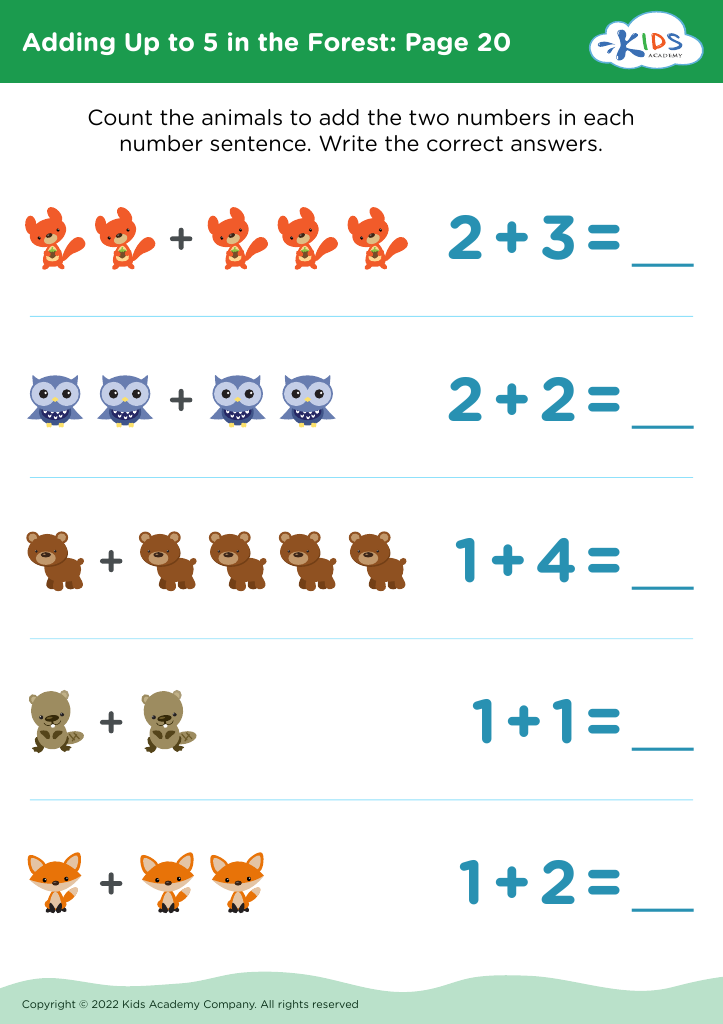
Adding Up to 5 in the Forest: Page 20
Worksheet
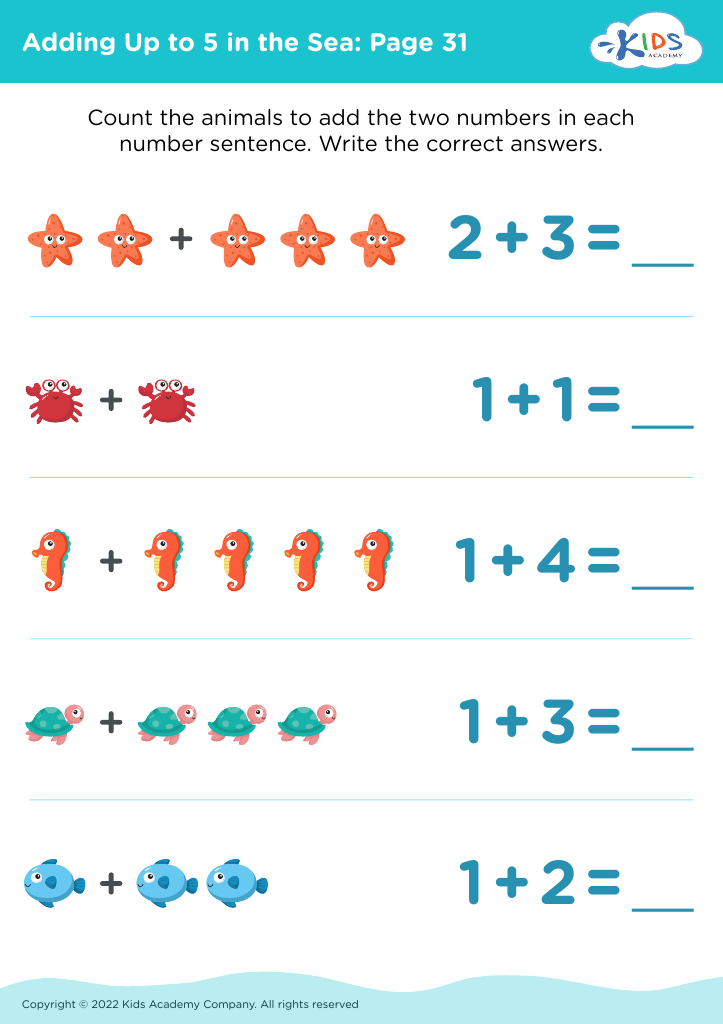
Adding Up to 5 in the Sea: Page 31
Worksheet
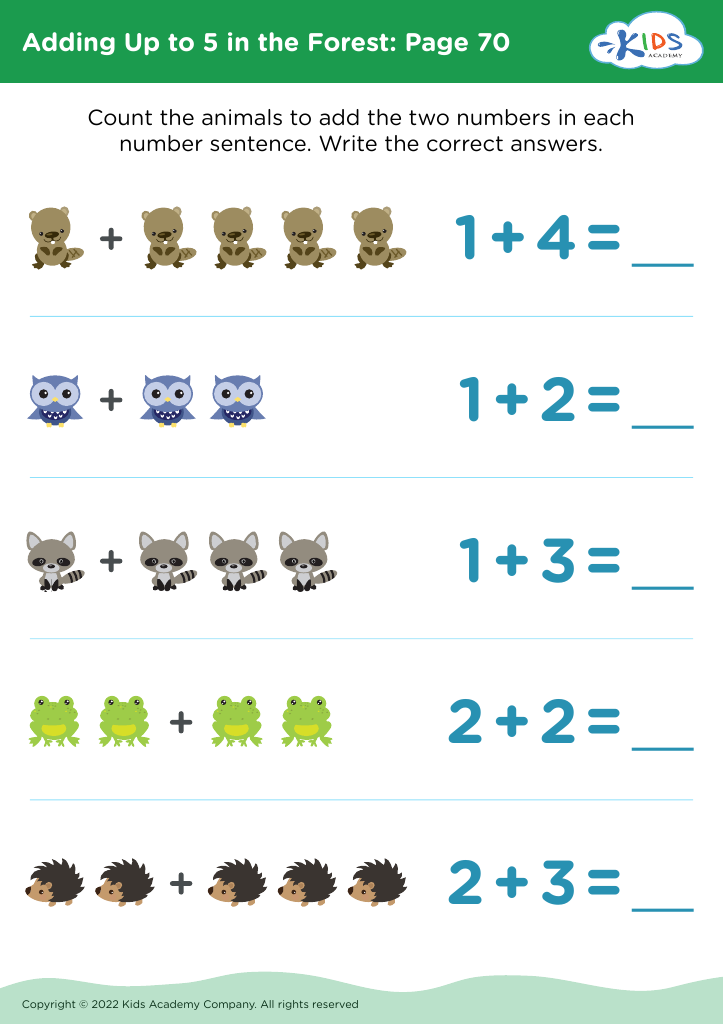
Adding Up to 5 in the Forest: Page 70
Worksheet
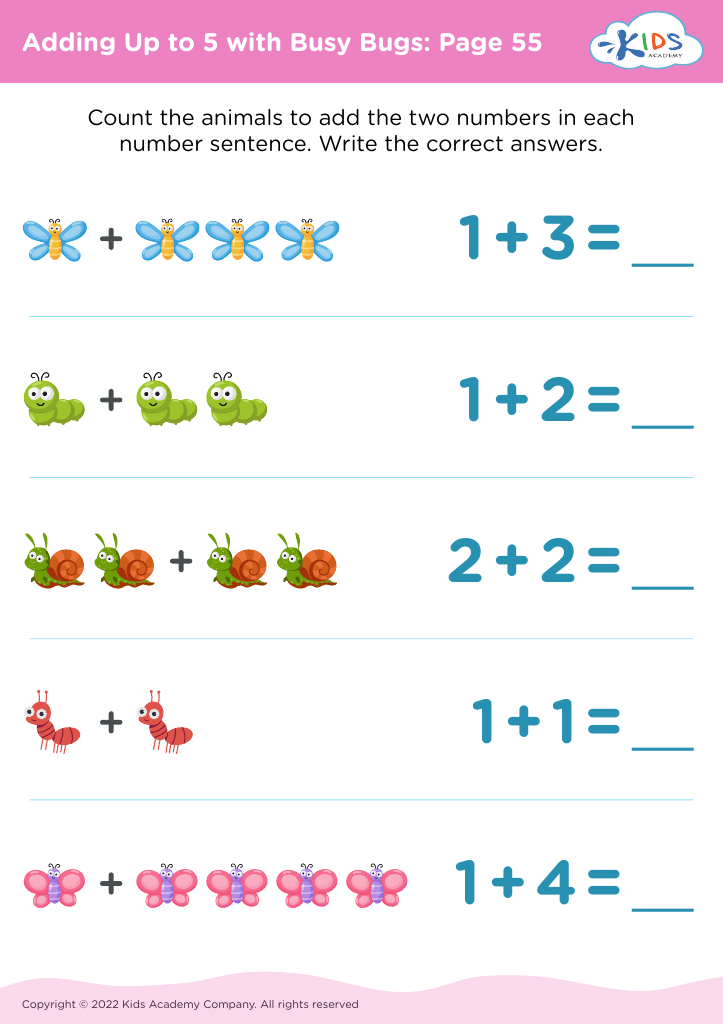
Adding Up to 5 with Busy Bugs: Page 55
Worksheet
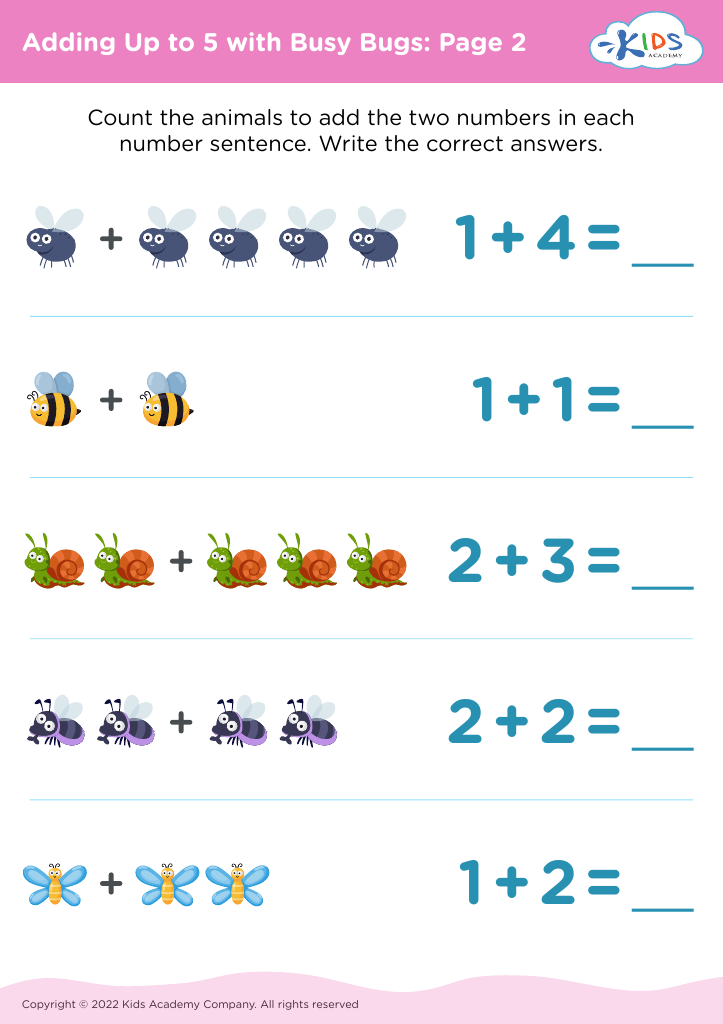
Adding Up to 5 with Busy Bugs: Page 2
Worksheet
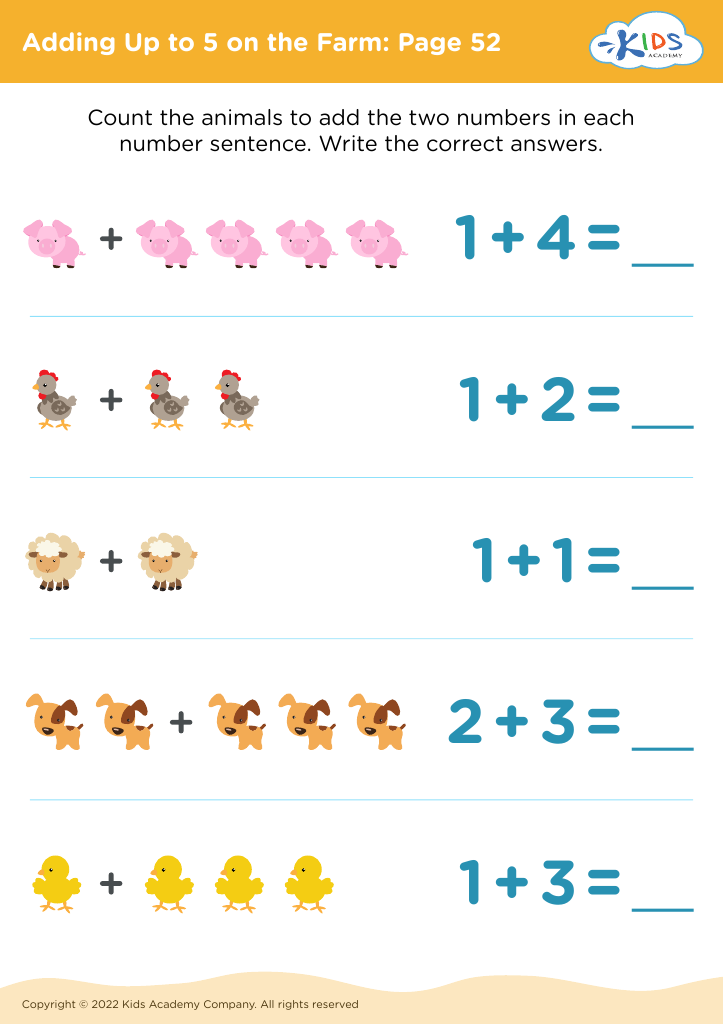
Adding Up to 5 on the Farm: Page 52
Worksheet
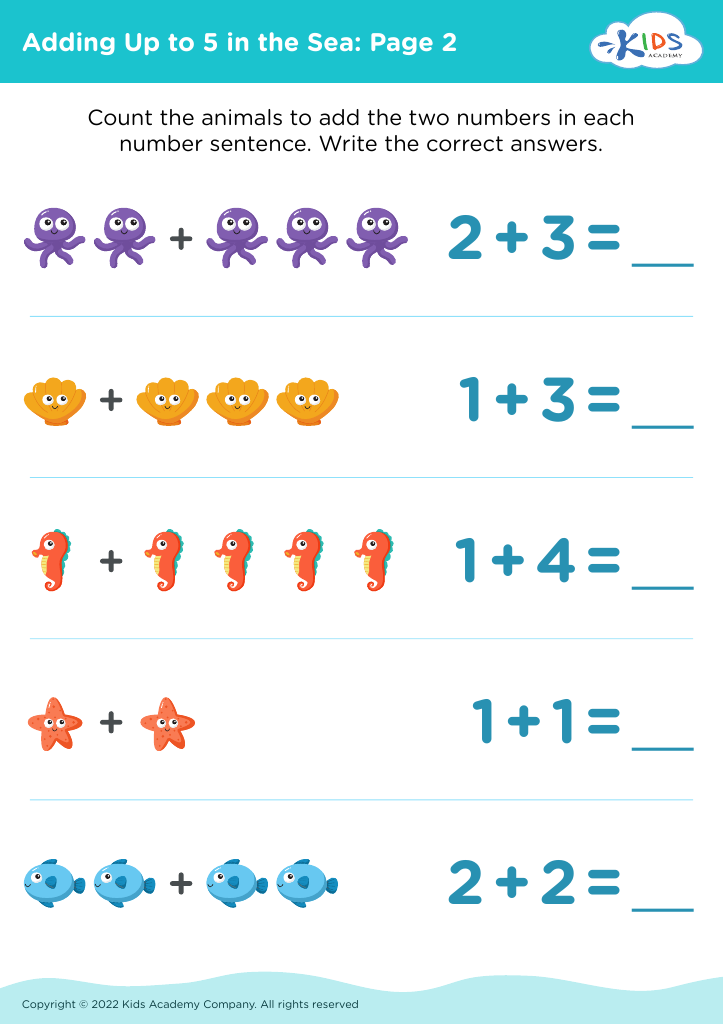
Adding Up to 5 in the Sea: Page 2

Adding Up to 5 in the Sea: Page 2

Adding Up to 5 in the Sea: Page 2
Worksheet
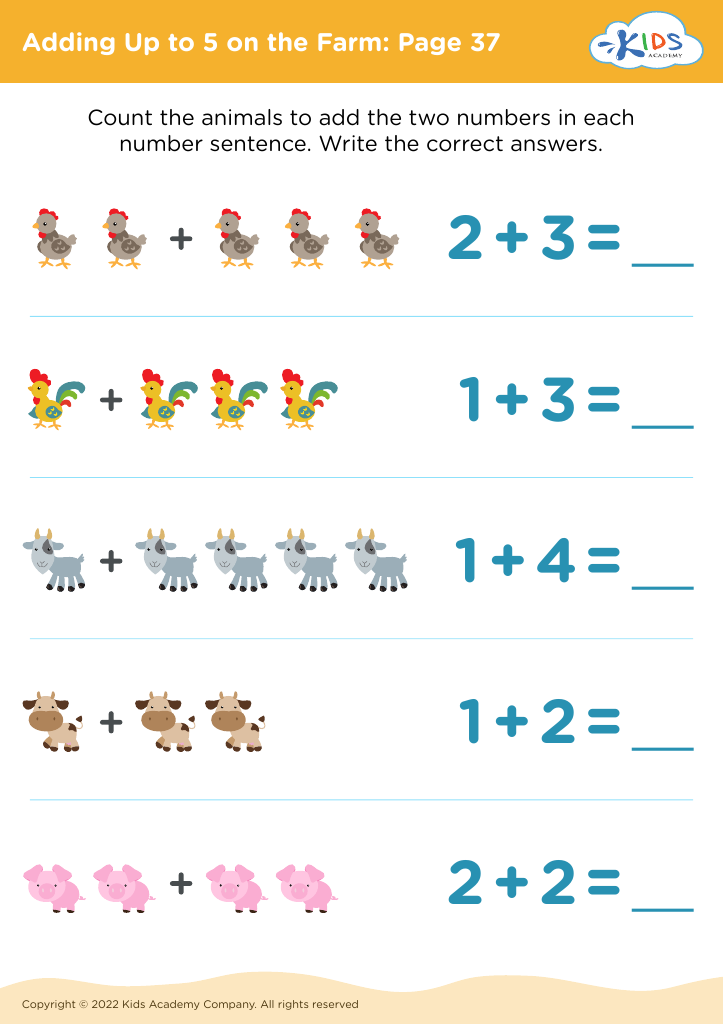
Adding Up to 5 on the Farm: Page 37
Worksheet
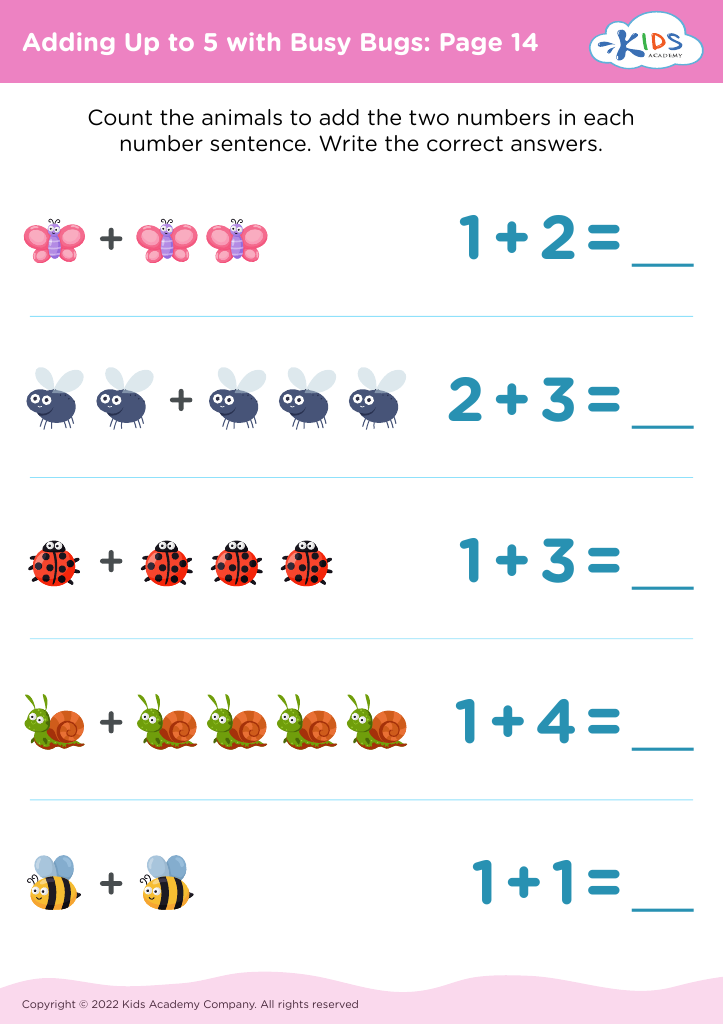
Adding Up to 5 with Busy Bugs: Page 14
Worksheet
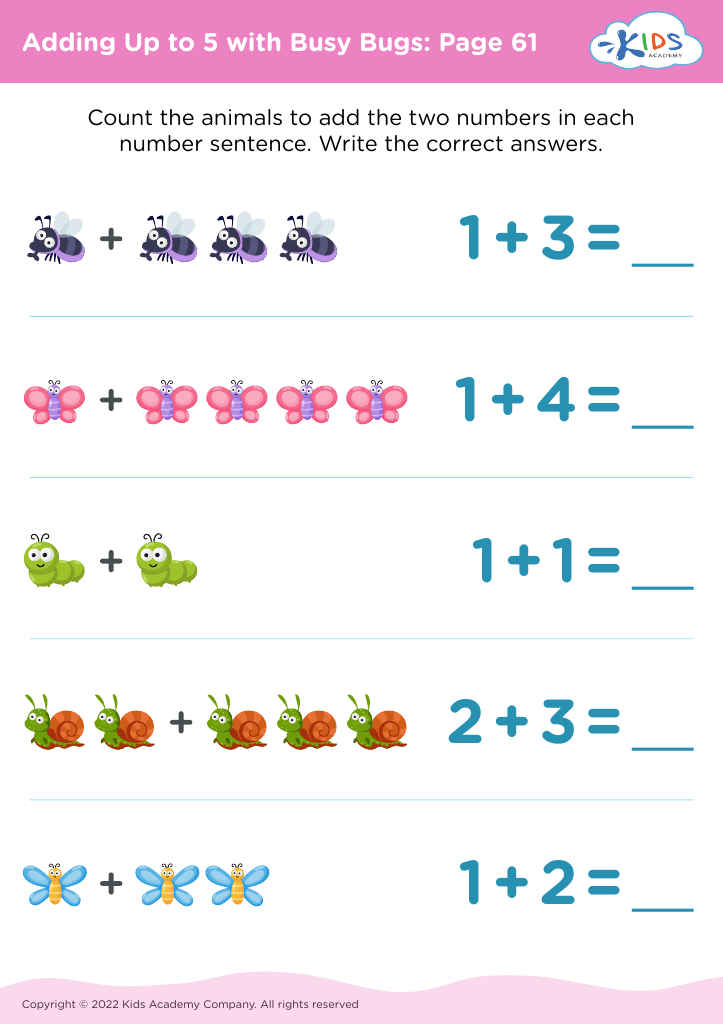
Adding Up to 5 with Busy Bugs: Page 61
Worksheet
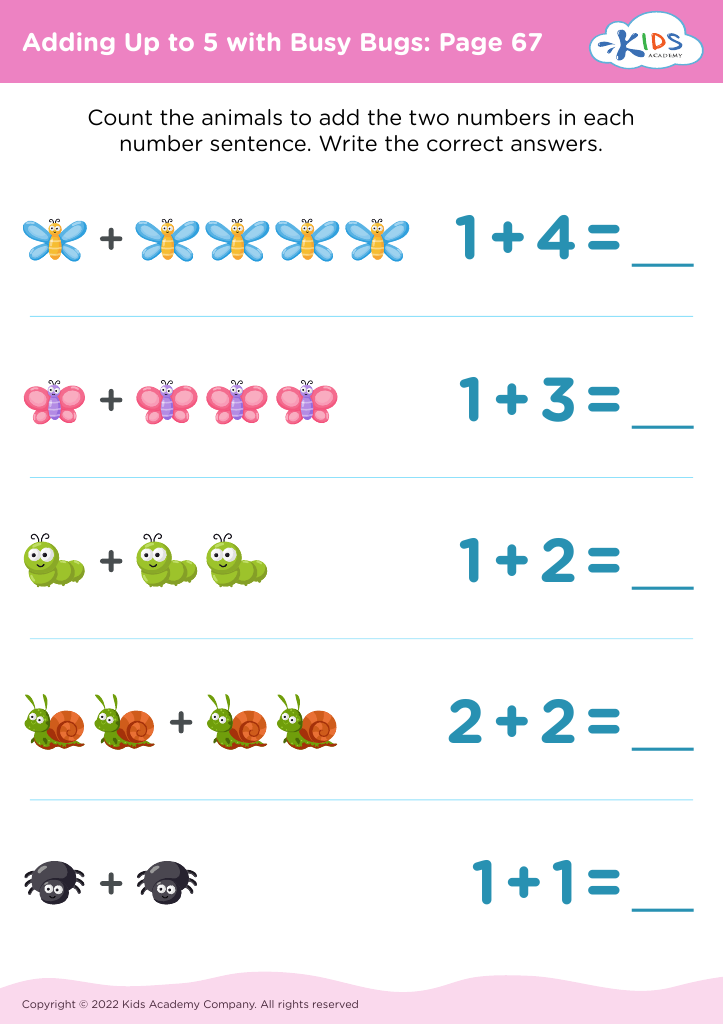
Adding Up to 5 with Busy Bugs: Page 67
Worksheet
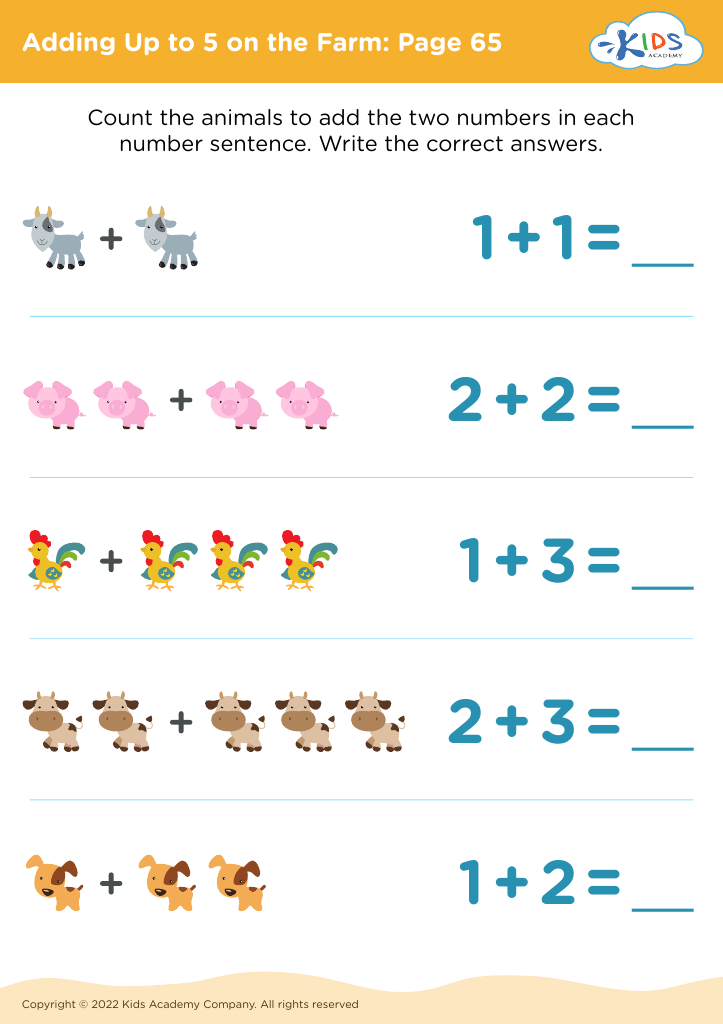
Adding Up to 5 on the Farm: Page 65
Worksheet
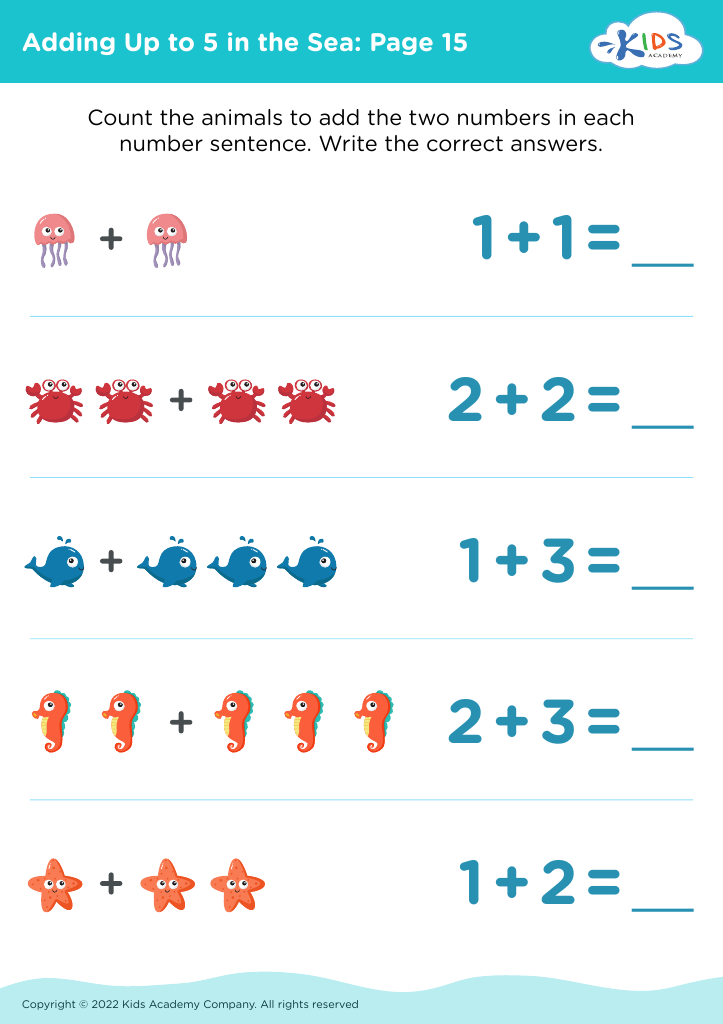
Adding Up to 5 in the Sea: Page 15
Worksheet
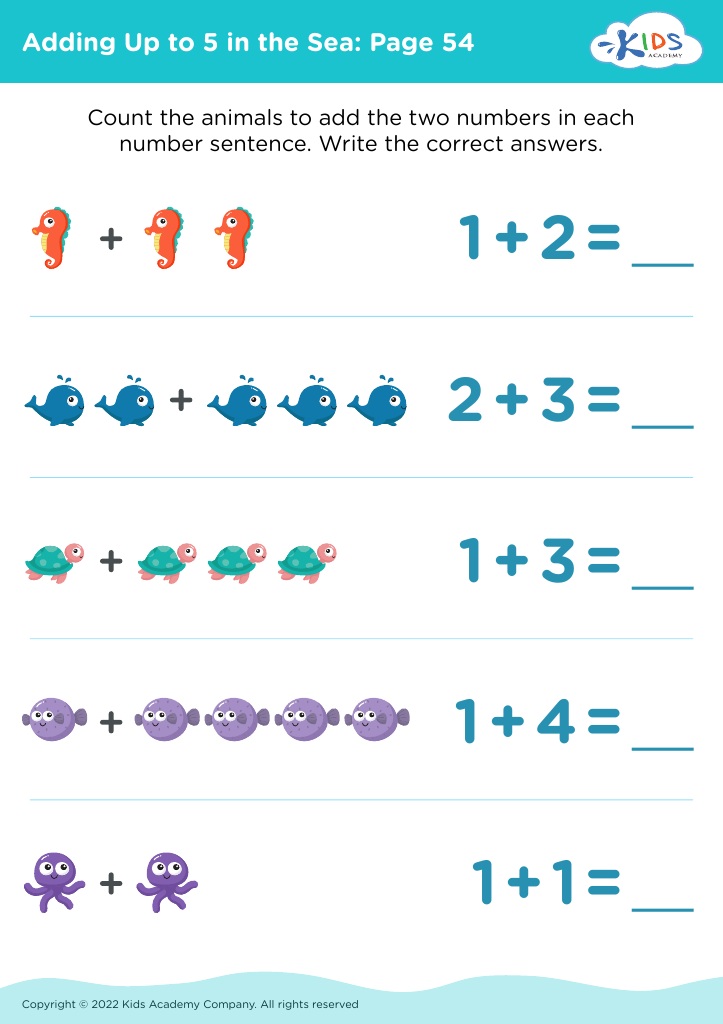
Adding Up to 5 in the Sea: Page 54
Worksheet
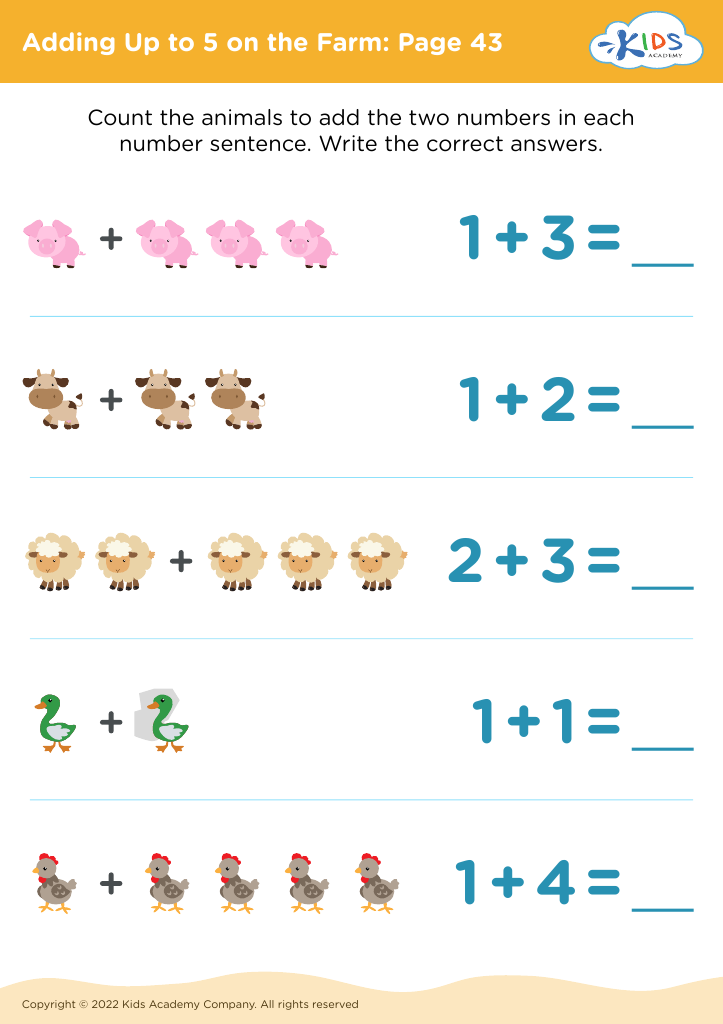
Adding Up to 5 on the Farm: Page 43
Worksheet
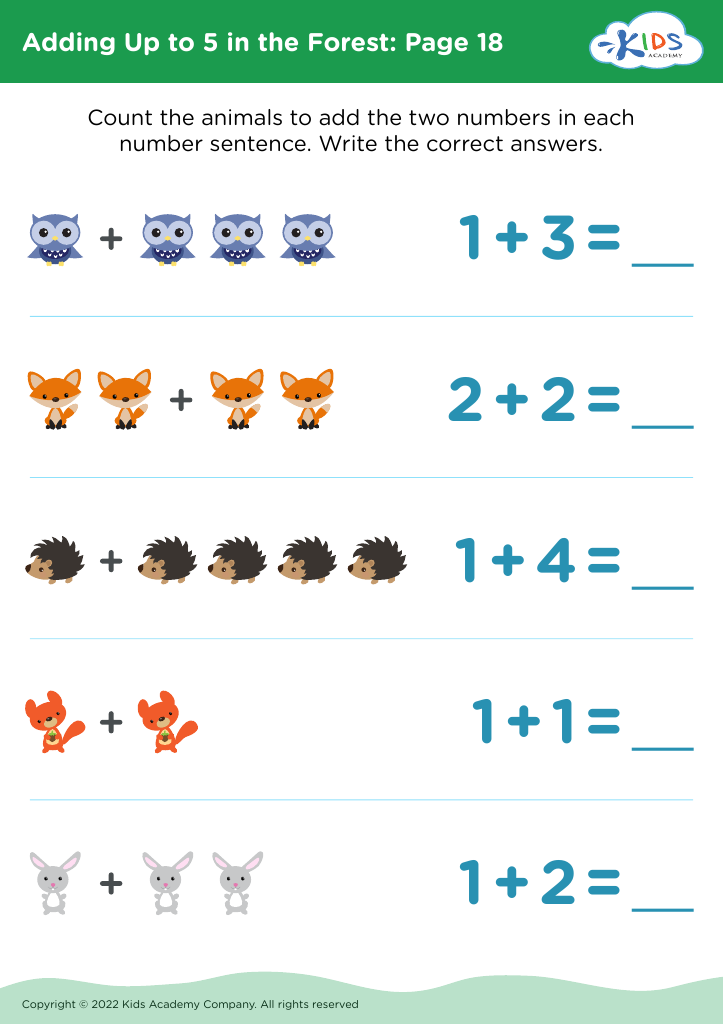
Adding Up to 5 in the Forest: Page 18
Worksheet
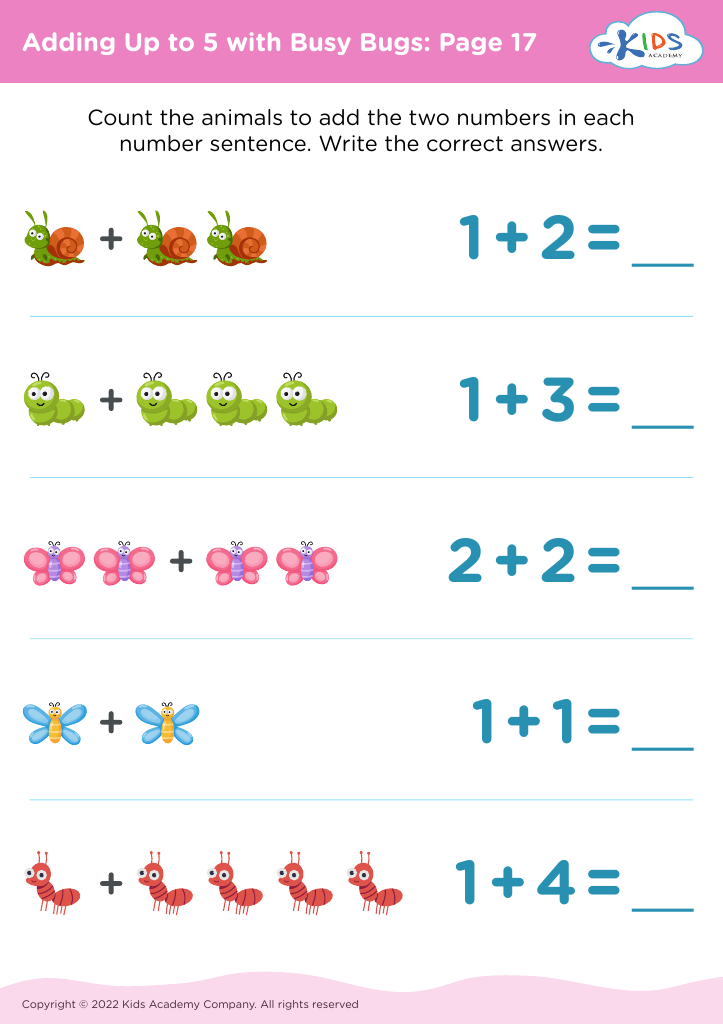
Adding Up to 5 with Busy Bugs: Page 17
Worksheet
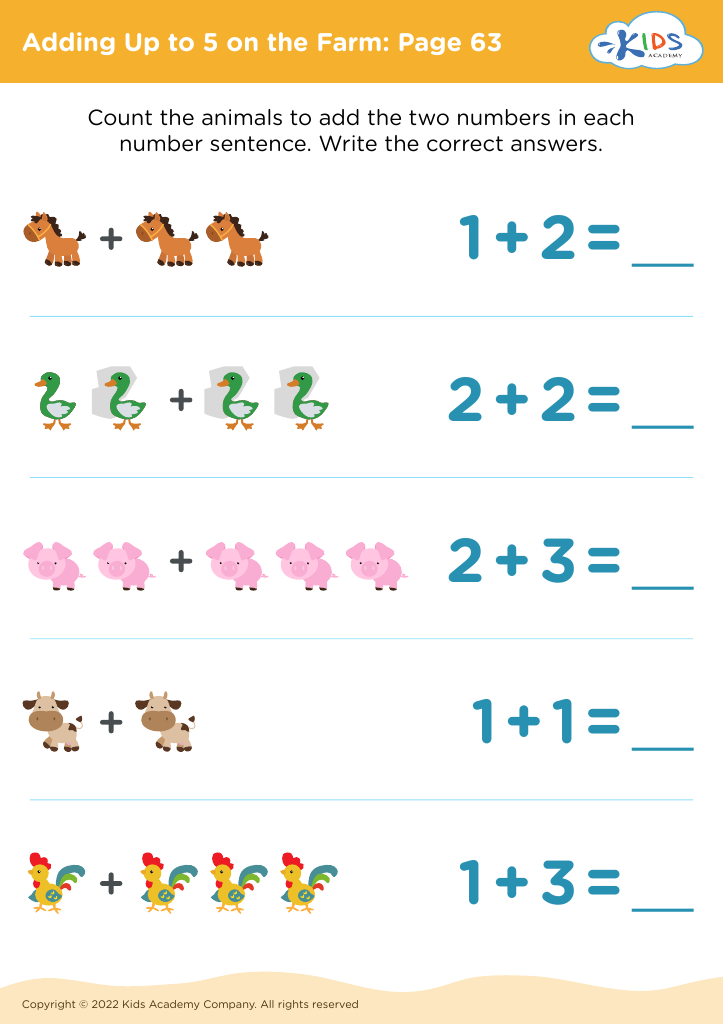
Adding Up to 5 on the Farm: Page 63
Worksheet
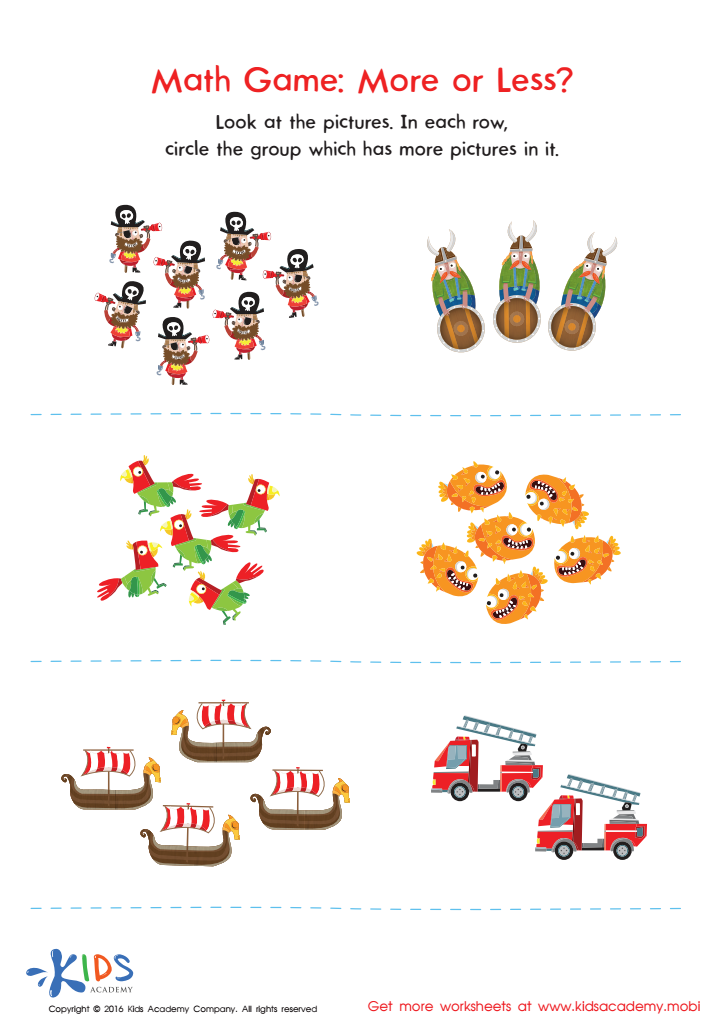
Free Printable More or Less Worksheets for Kindergarten

More or Less Worksheet

Counting and understanding quantity are essential skills for kindergarteners. Get your free printable more or less worksheet now!
More or Less Worksheet
Worksheet
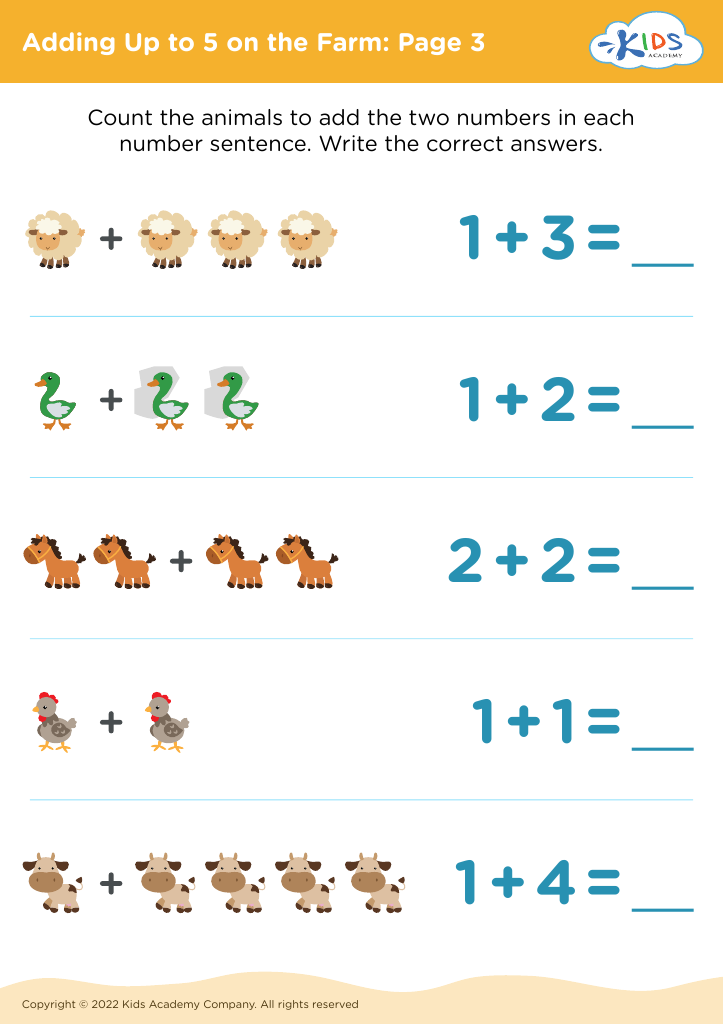
Adding Up to 5 on the Farm: Page 3
Worksheet
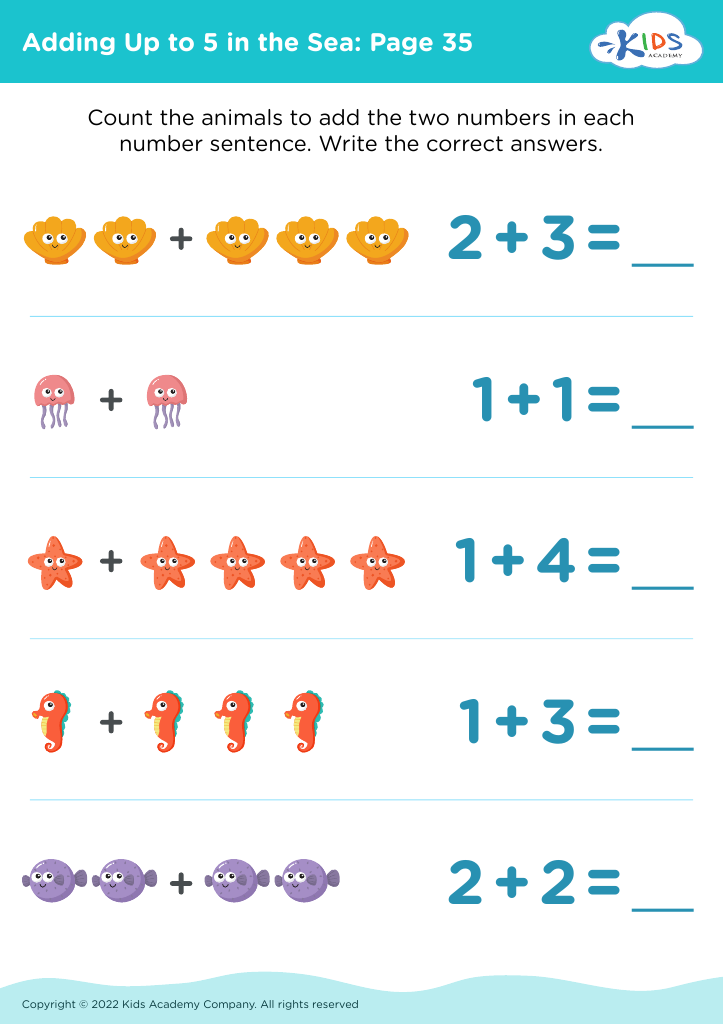
Adding Up to 5 in the Sea: Page 35
Worksheet
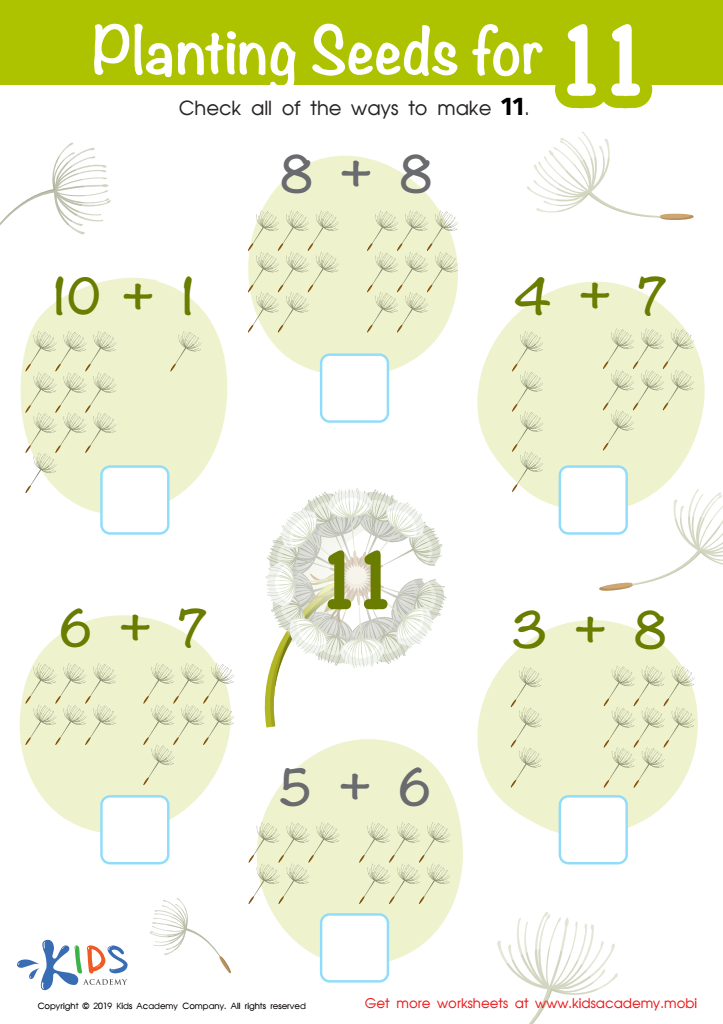
Planting Seeds for 11 Worksheet


Planting Seeds for 11 Worksheet

Before starting, ask your students to count as high as they can. Explain that different numbers can add up to the same total. Give examples like 2+2 =4 and 3+1 =4. Ask if they can think of other examples. Then have them work through the equations in the printout and circle all that add up to 11.
Planting Seeds for 11 Worksheet

Worksheet


Counting practice, along with addition and subtraction for children ages 3-4, is crucial for early mathematical development and foundational cognitive skills. At this age, children are naturally curious and eager to explore numbers and their relationships. Engaging in counting activities sharpens their ability to recognize numerals, understand quantities, and build a robust number sense.

Parents and teachers should care about these practices because they instill essential problem-solving skills. Early exposure to math concepts enhances critical thinking, encourages logical reasoning, and helps develop persistence when facing challenges. Engaging children in playful counting games, simple addition and subtraction activities, or even using everyday scenarios (like sharing snacks) makes learning interactive and fun.

Additionally, mastering counting, addition, and subtraction lays the groundwork for more advanced math concepts later in primary school. Children who grasp these fundamentals early tend to feel more confident in their math abilities as they progress through schooling. Moreover, such practices can foster a positive attitude towards math, reducing anxiety and fear associated with the subject later on. By prioritizing counting and basic arithmetic, we help pave the way for lifelong learning and a love for mathematics.