Number Sequencing Addition & Subtraction Worksheets for Ages 3-4
3 filtered results
-
From - To
Welcome to our engaging Number Sequencing Addition & Subtraction Worksheets designed specifically for children ages 3-4! These worksheets provide a fun and interactive way for young learners to enhance their numerical skills. Through exciting activities, children will practice number recognition while developing essential addition and subtraction abilities. Our carefully crafted exercises not only promote mathematical understanding but also foster critical thinking and problem-solving skills. Perfect for home or classroom use, these worksheets serve as an excellent foundation for early math learning. Explore our collection today and watch your little ones confidently navigate the world of numbers!
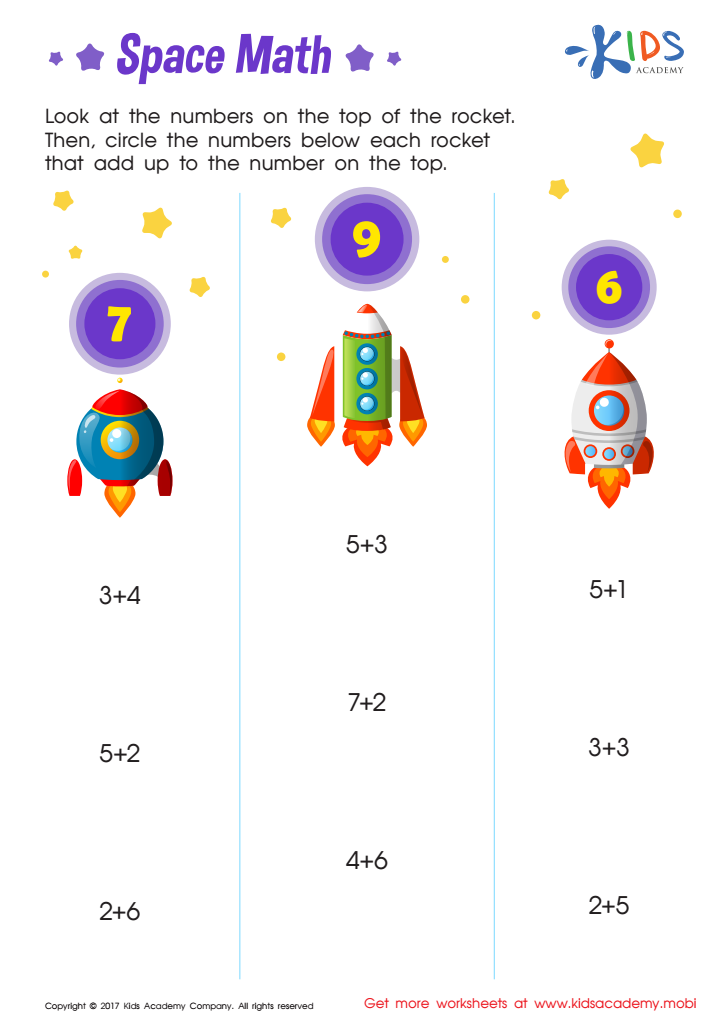
Addition: Space Math Worksheet
 Assign to My Students
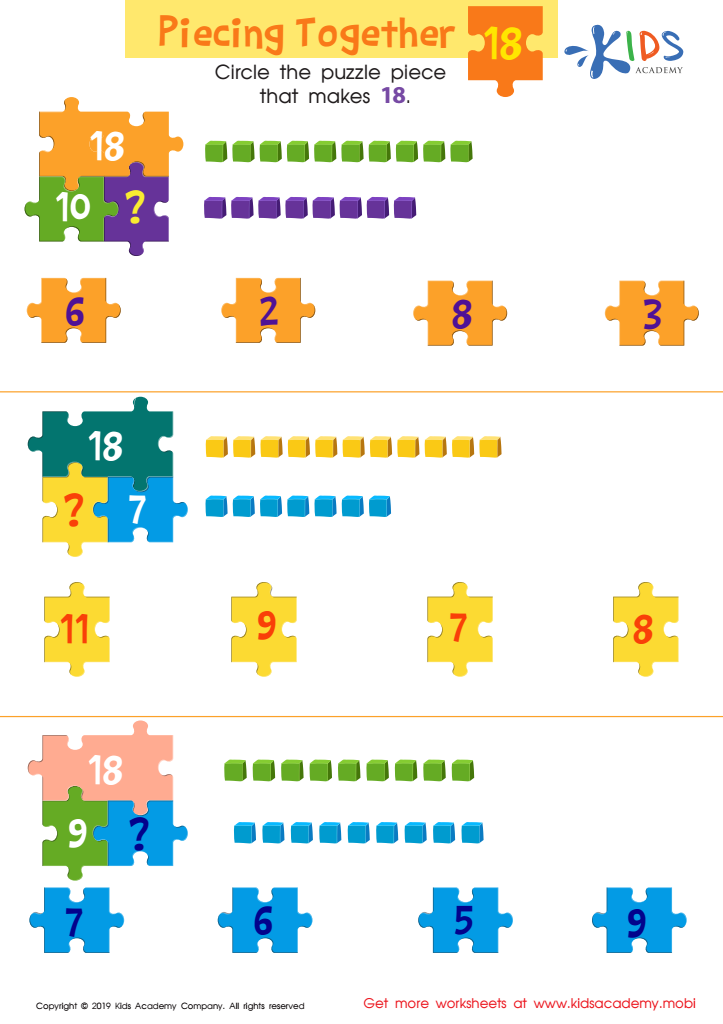
Piecing Together 18 Worksheet
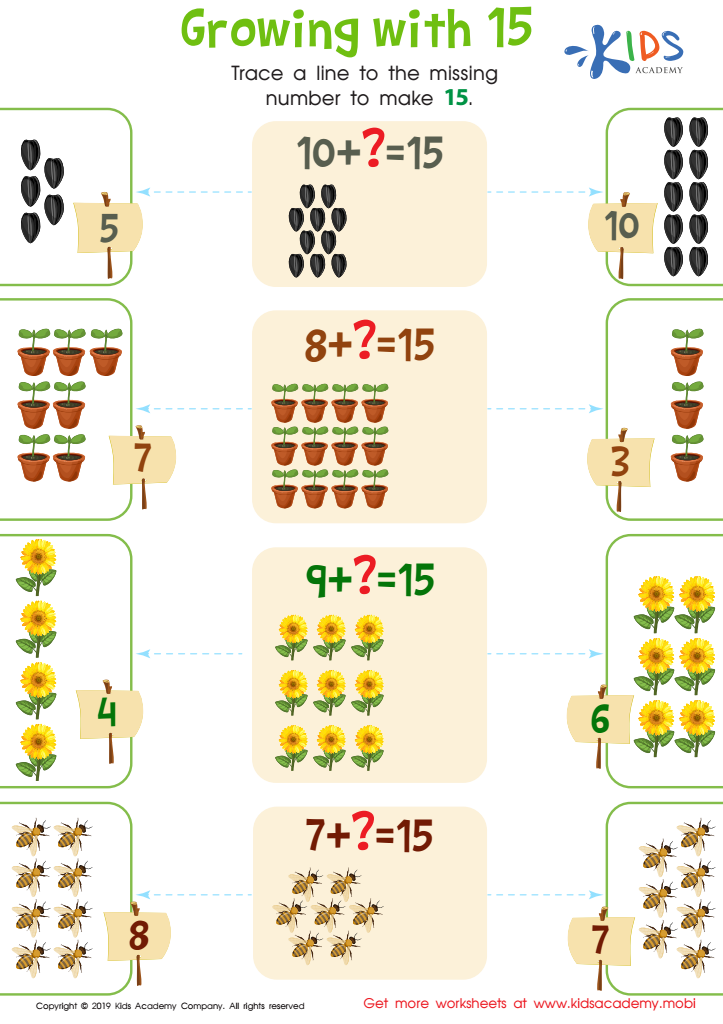
Growing with 15 Worksheet








Number sequencing, addition, and subtraction are foundational skills in early childhood education that significantly impact a child's future learning. For children aged 3-4, engaging with these concepts nurtures their cognitive development and lays the groundwork for mathematical understanding.
At this young age, children are naturally curious and harness an innate ability to recognize patterns, which number sequencing reinforces. By helping them to sequence numbers, parents and teachers promote counting, number recognition, and an understanding of numerical order. These skills are critical as they prepare children for more complex mathematical concepts in later years.
Moreover, introducing basic addition and subtraction fosters problem-solving skills. Through hands-on activities like counting objects, children learn to manipulate numbers, which enhances their critical thinking abilities. Such informal learning environments ignite their interest and make math enjoyable.
Ultimately, nurturing these early mathematical skills empowers children to gain confidence in their abilities, helping to reduce math anxiety as they grow older. Therefore, it is essential for parents and teachers to actively engage children in number sequencing and basic operations to cultivate positive attitudes toward math that will benefit them throughout their academic journey.








