Filters

18 filtered results

Clear all filters
Favorites
With answer key
Interactive

18 filtered results

Difficulty Level

Grade


Enhance your child's early math skills with our Hand-eye Coordination Addition Worksheets for Ages 3-4. These engaging and educational worksheets are designed to promote fine motor skills while introducing basic addition concepts. Each worksheet features fun activities, like tracing numbers and counting objects, to help children develop hand-eye coordination and early arithmetic confidence. Perfect for preschool-aged kids, these printables make learning enjoyable and interactive. Provide your little learner with the perfect blend of education and play, enabling a strong foundation in math and motor skills. Start their journey to math success today!
Check out this FREE Trial Lesson on Addition for age 3-4!

2 Step Addition Word Problems Using Drawings

Favorites
With answer key
Interactive
  • 3-4
  • Hand-eye Coordination
  • Addition
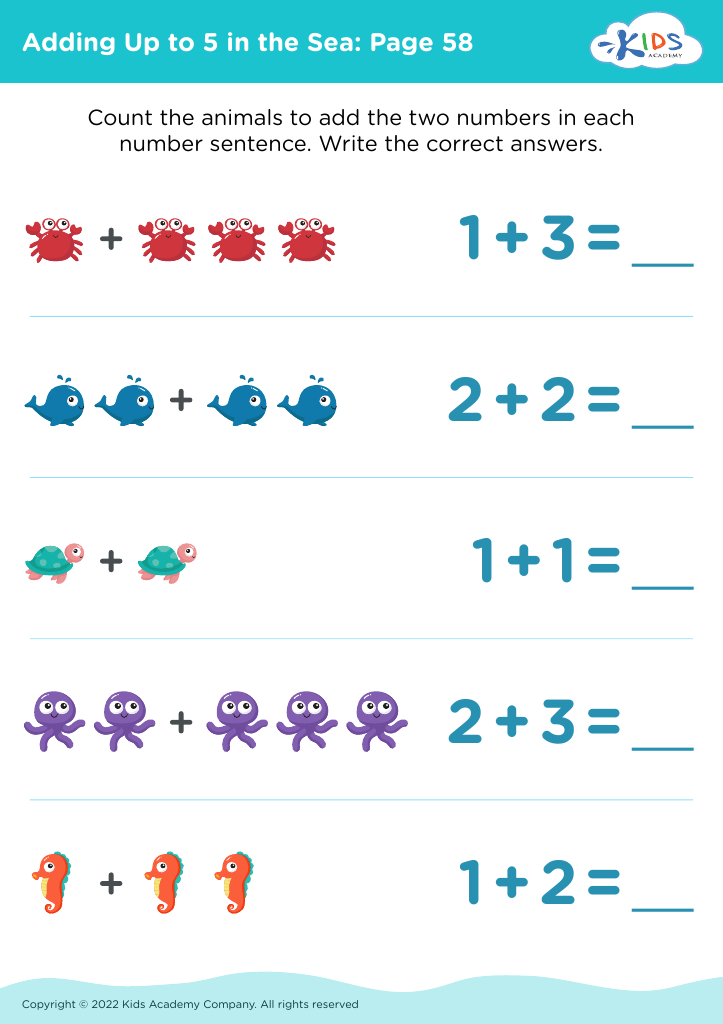
Adding Up to 5 in the Sea: Page 58
Worksheet
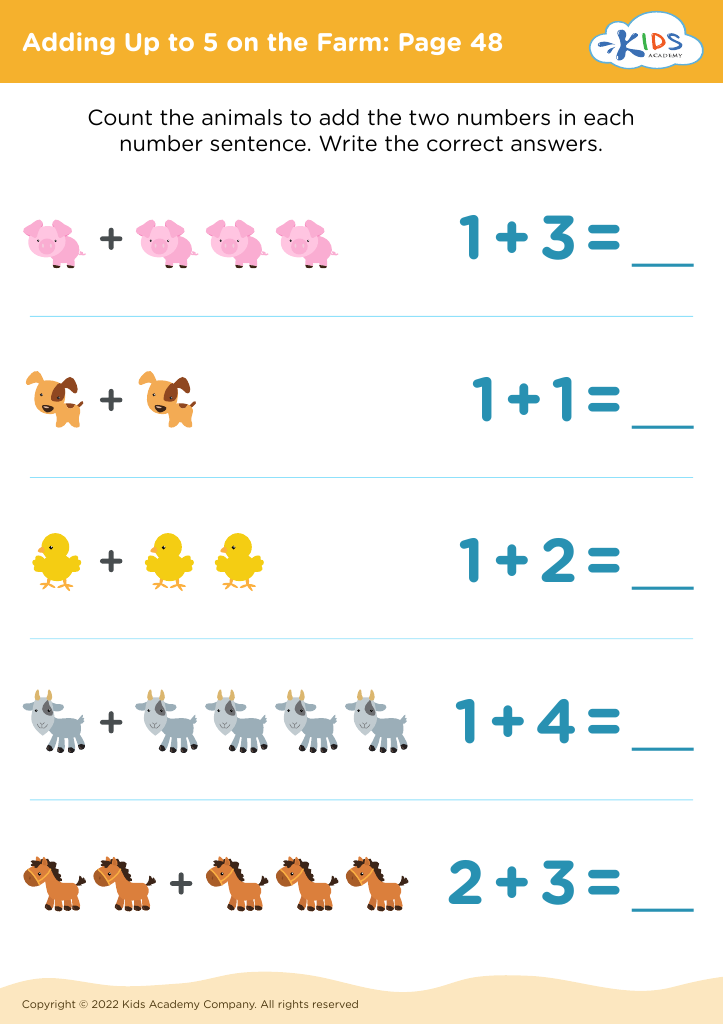
Adding Up to 5 on the Farm: Page 48
Worksheet
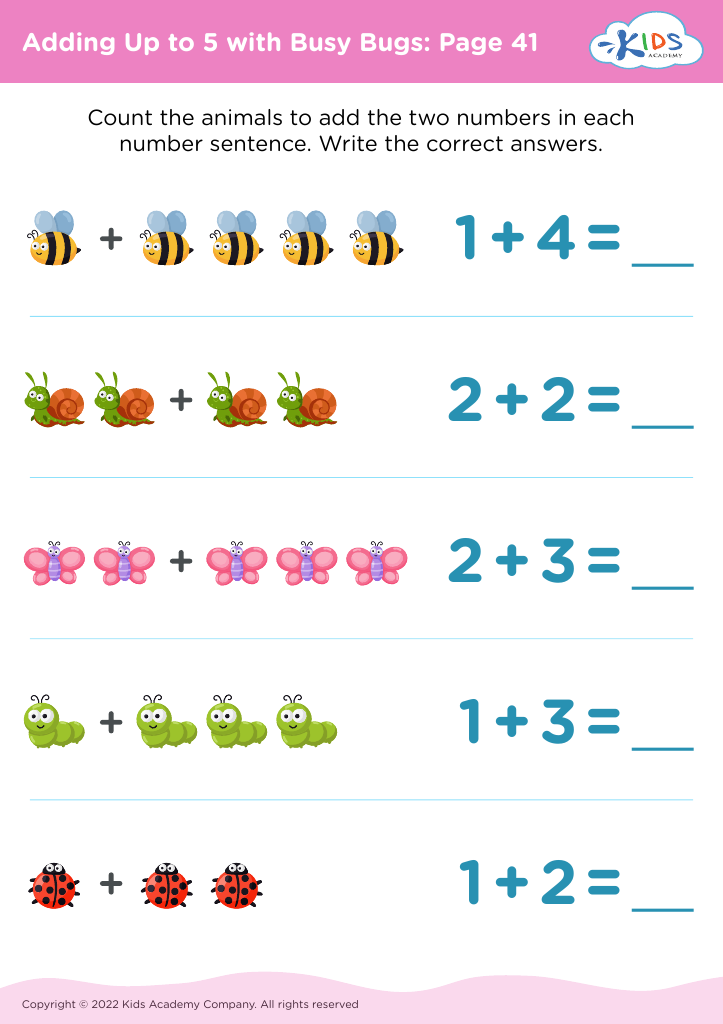
Adding Up to 5 with Busy Bugs: Page 41
Worksheet
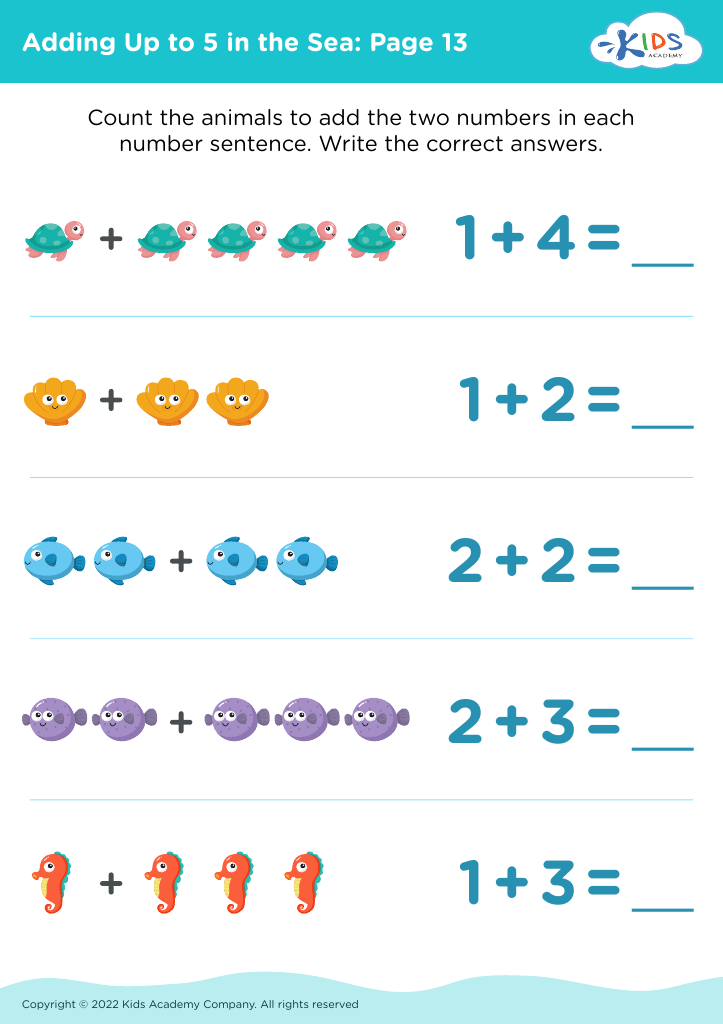
Adding Up to 5 in the Sea: Page 13
Worksheet
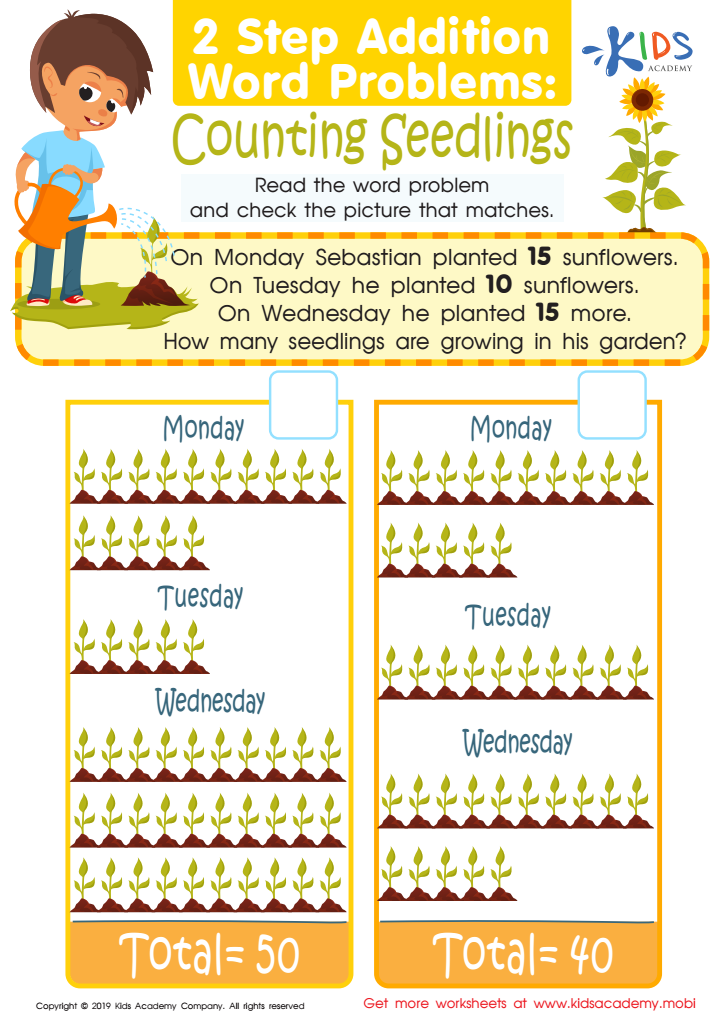
Counting Seedlings Worksheet

Counting Seedlings Worksheet

Understanding math word problems is key. Multiple steps can prove challenging - this free worksheet provides one-to-one picture representation to help kids solve multi-step addition word problems. Strengthen addition skills by choosing the matching picture to the answer.
Counting Seedlings Worksheet
Worksheet
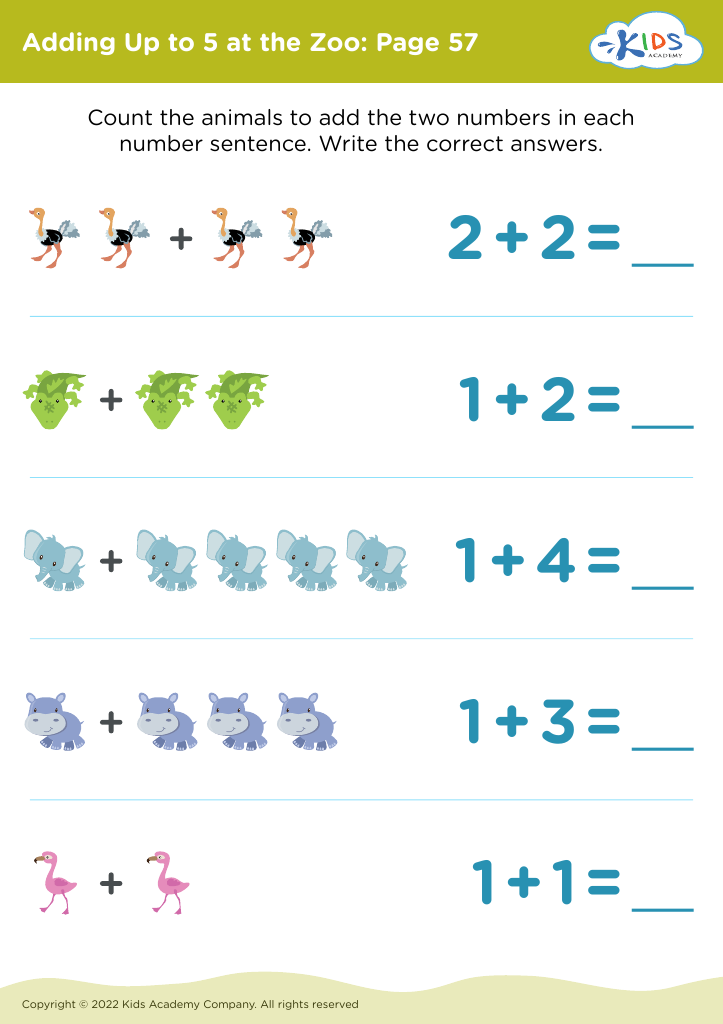
Adding Up to 5 at the Zoo: Page 57
Worksheet
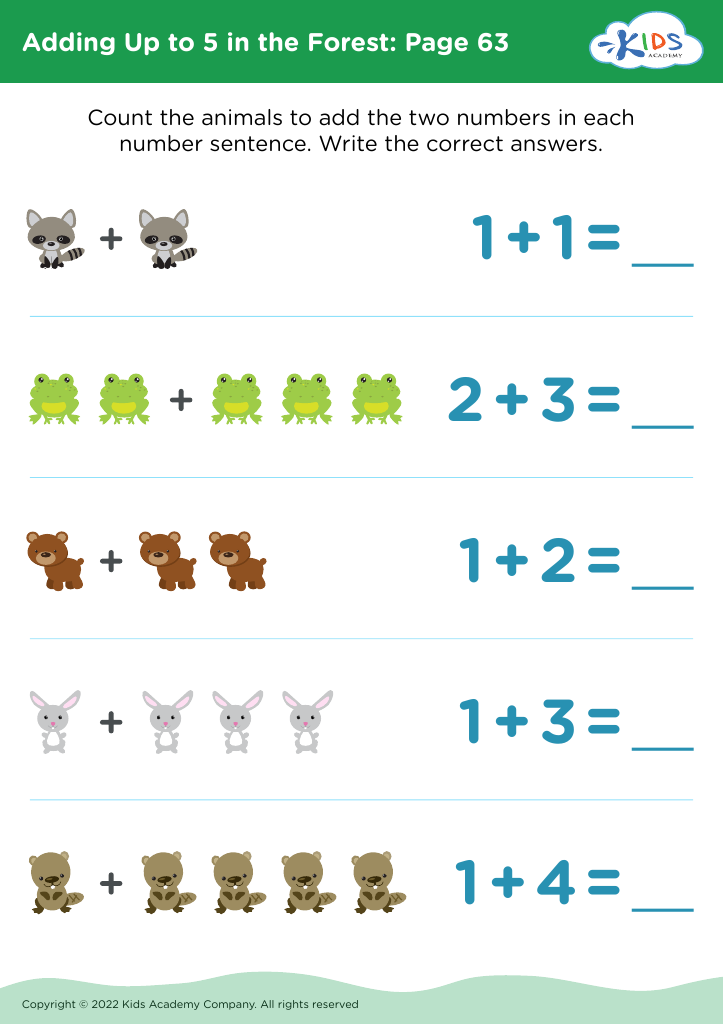
Adding Up to 5 in the Forest: Page 63
Worksheet
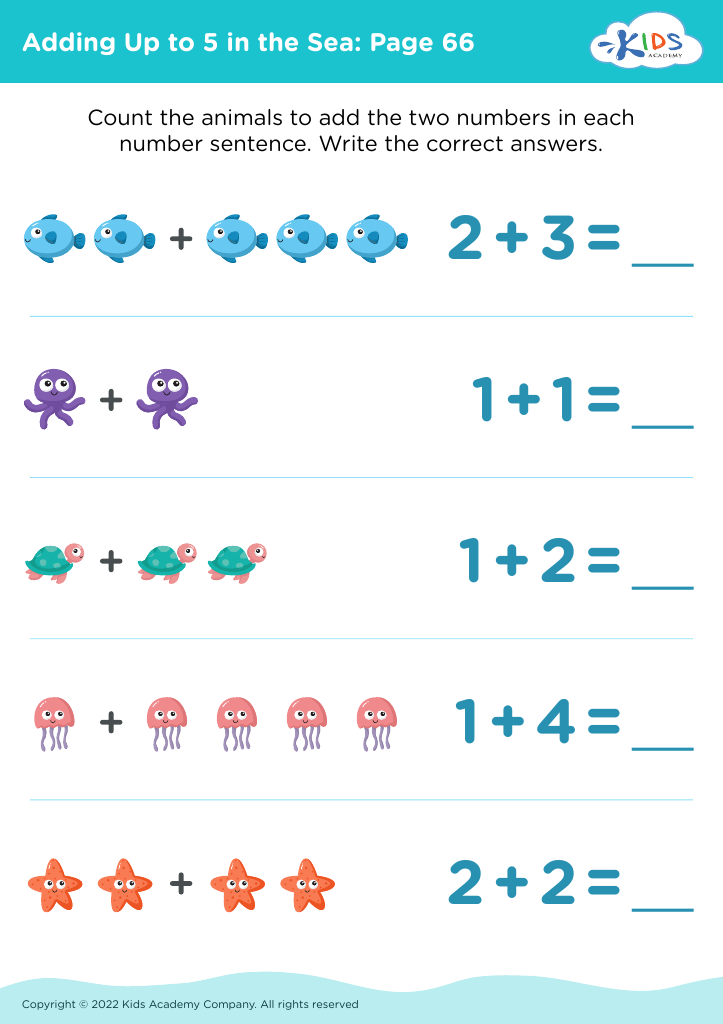
Adding Up to 5 in the Sea: Page 66
Worksheet
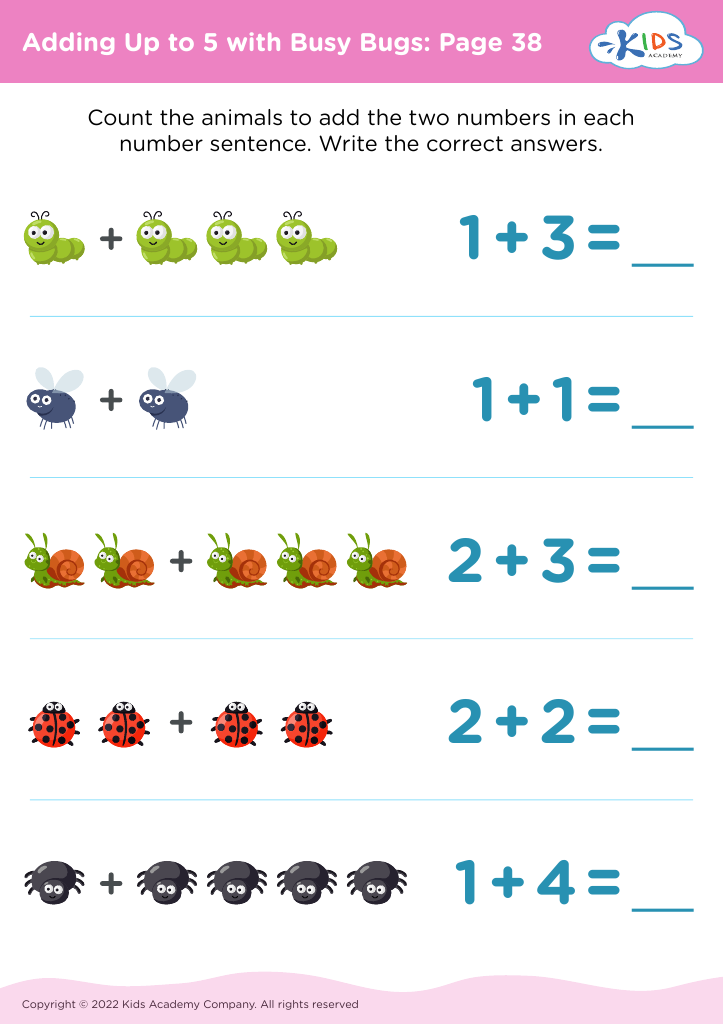
Adding Up to 5 with Busy Bugs: Page 38
Worksheet
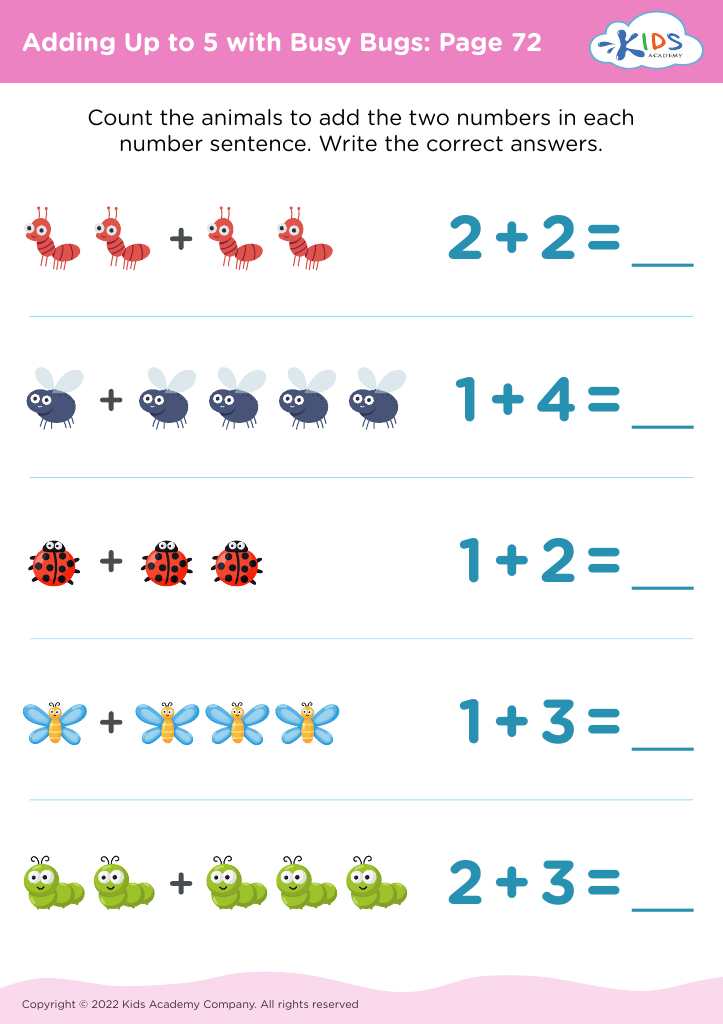
Adding Up to 5 with Busy Bugs: Page 72
Worksheet
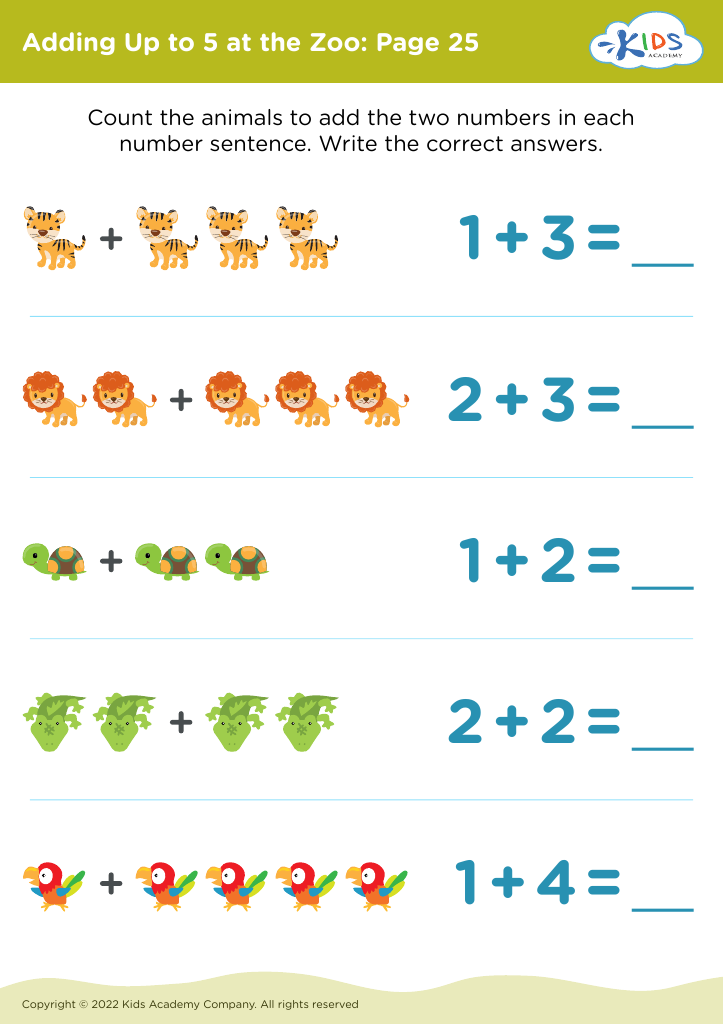
Adding Up to 5 at the Zoo: Page 25
Worksheet
Adding up With Water Worksheet
Adding up With Water Worksheet
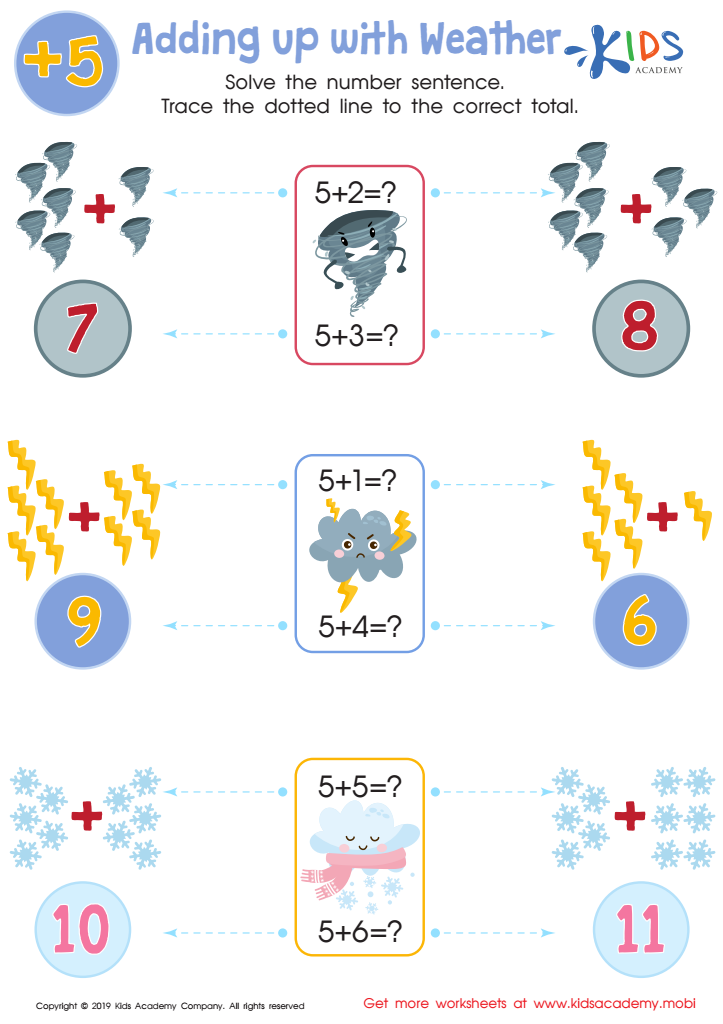
Ask your kids to name different kinds of weather and what it's like outside now. Then, help them solve the number sentences on the worksheet by tracing the dotted line to the correct total.
Adding up With Water Worksheet
Worksheet
Adding Up to 5 with Busy Bugs: Page 13
Worksheet
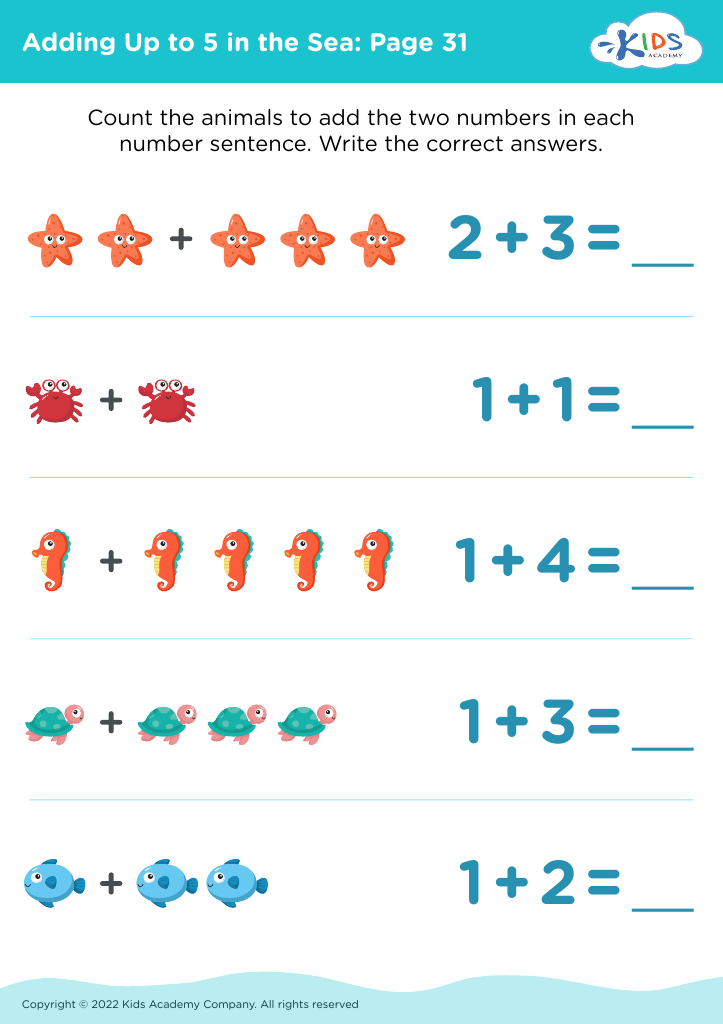
Adding Up to 5 in the Sea: Page 31
Worksheet
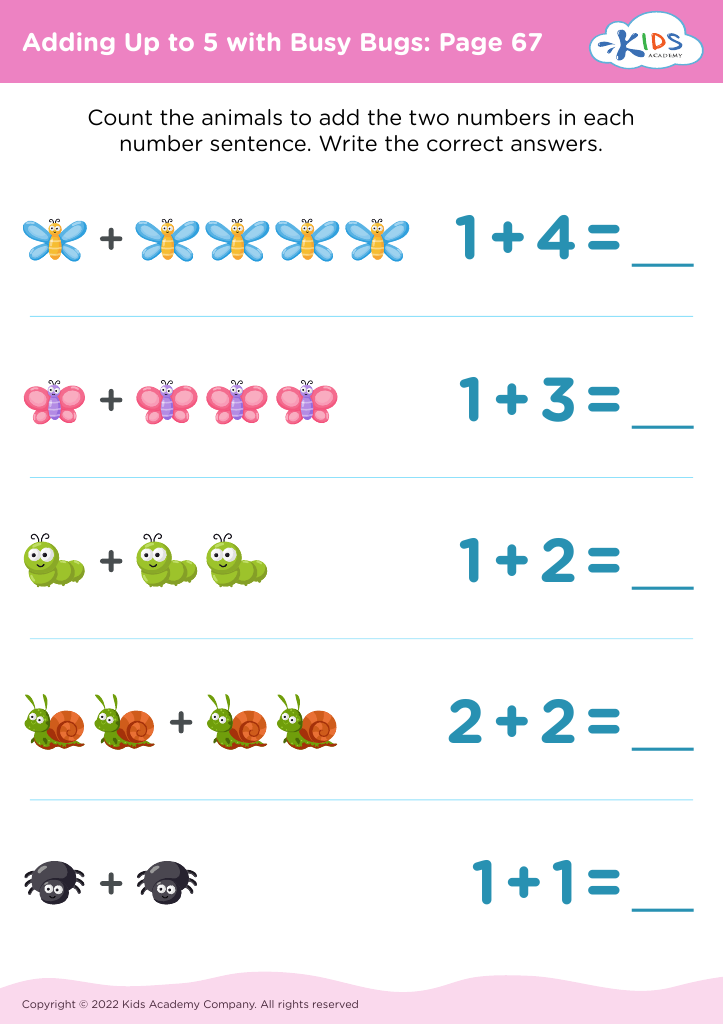
Adding Up to 5 with Busy Bugs: Page 67
Worksheet
14 in School Worksheet


14 in School Worksheet

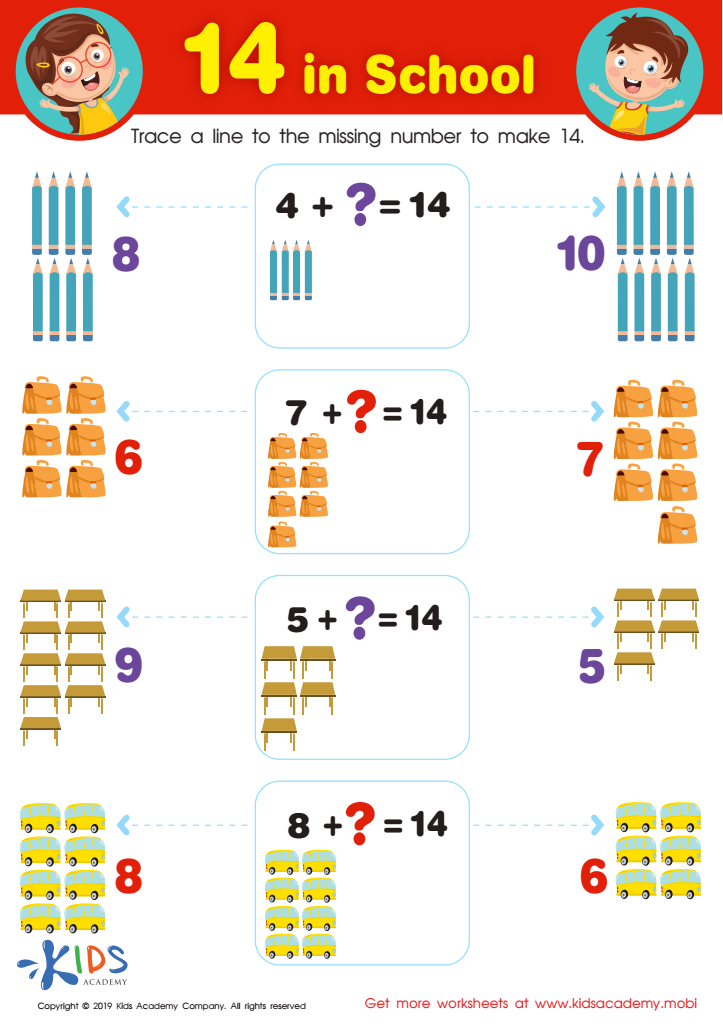
Remind your kids that adding different sets of numbers can give the same total (e.g. 2+3=5, 4+1=5). Ask them for more examples. Afterwards, work through the exercise. Help them count the objects and trace a line to the missing number that makes the total 14.
14 in School Worksheet
Worksheet
Adding Up to 5 in the Forest: Page 68
Worksheet
Adding Up to 5 at the Zoo: Page 50
Worksheet


Hand-eye coordination addition for ages 3-4 is crucial because it forms the foundation for a child's cognitive and physical development. This skill refers to the ability to execute activities that require simultaneous use of the eyes and hands, which is essential for everyday tasks and academic skills later on. Improving hand-eye coordination at an early age aids in developing fine motor skills, which are critical for tasks like writing, drawing, and buttoning clothes.

When children engage in activities that enhance hand-eye coordination, such as building blocks, puzzles, or catching and throwing balls, they also boost their concentration, patience, and problem-solving abilities. This skill is also vital for reading, as it helps in tracking words and sentences on a page, making it easier to learn and progress in literacy.

Moreover, hand-eye coordination activities can foster confidence and independence in young children. When they can successfully complete a task, it builds their self-esteem and motivates them to try more complex tasks. For teachers and parents, supporting the development of this skill can lead to smoother and more enjoyable learning experiences both at home and in the classroom, laying the groundwork for a child's future academic and personal success. Investing time in improving hand-eye coordination offers exponential growth in numerous critical areas of development.