Understanding Quantity Addition Worksheets for Ages 3-4 offers young learners engaging activities to develop their basic math skills. Through colorful and interactive exercises, children explore the concept of quantity, learning to count and combine objects. Each worksheet is designed to enhance cognitive abilities, improve number recognition, and promote fine motor skills. Perfect for preschoolers, these additions in action make math fun and accessible. Help your child build a solid math foundation with these expertly crafted resources, ensuring they are prepared for more advanced concepts in the future.
Check out this FREE Trial Lesson on Addition for age 3-4!

Breaking Down 8

Favorites
With answer key
Interactive
  • 3-4
  • Understanding quantity
  • Addition
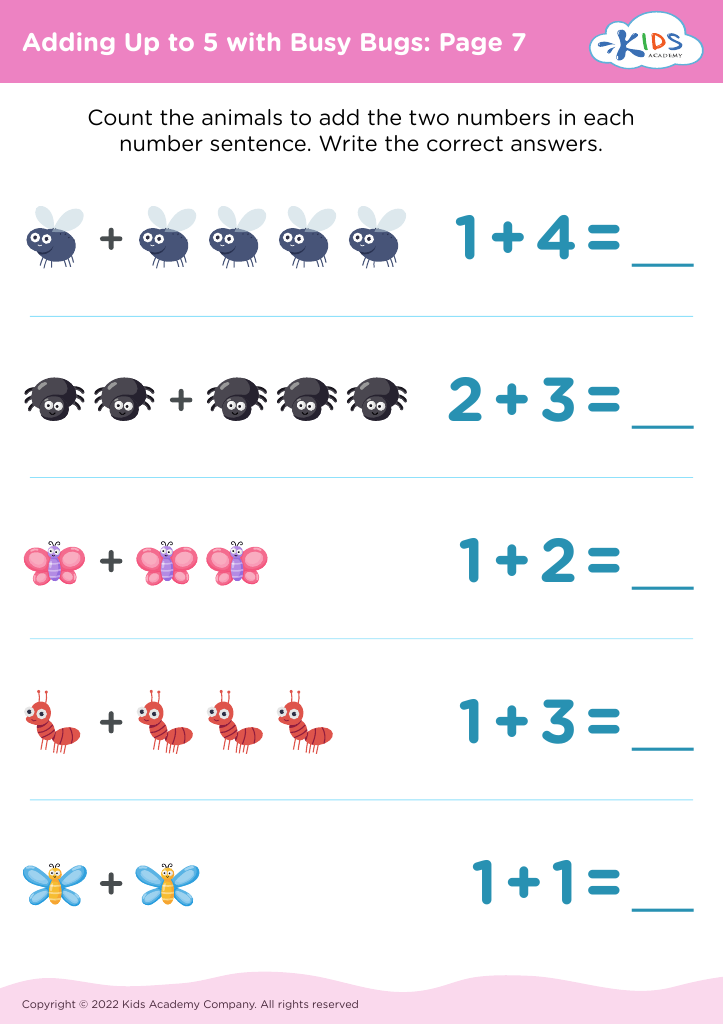
Adding Up to 5 with Busy Bugs: Page 7
Worksheet
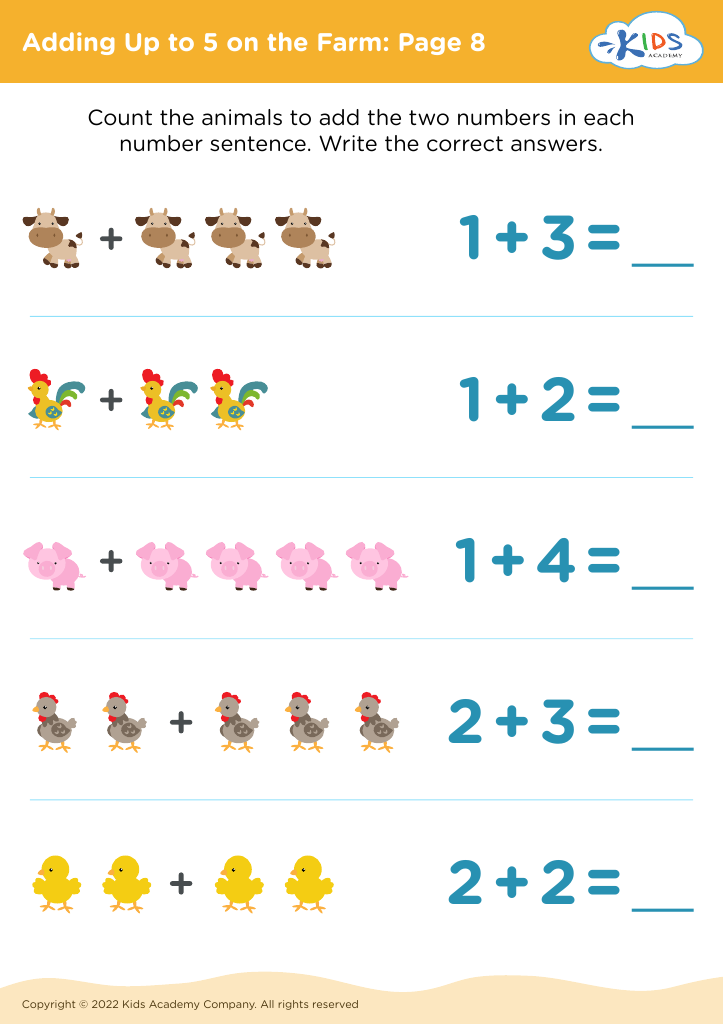
Adding Up to 5 on the Farm: Page 8
Worksheet
Building with 8 Worksheet

Building with 8 Worksheet

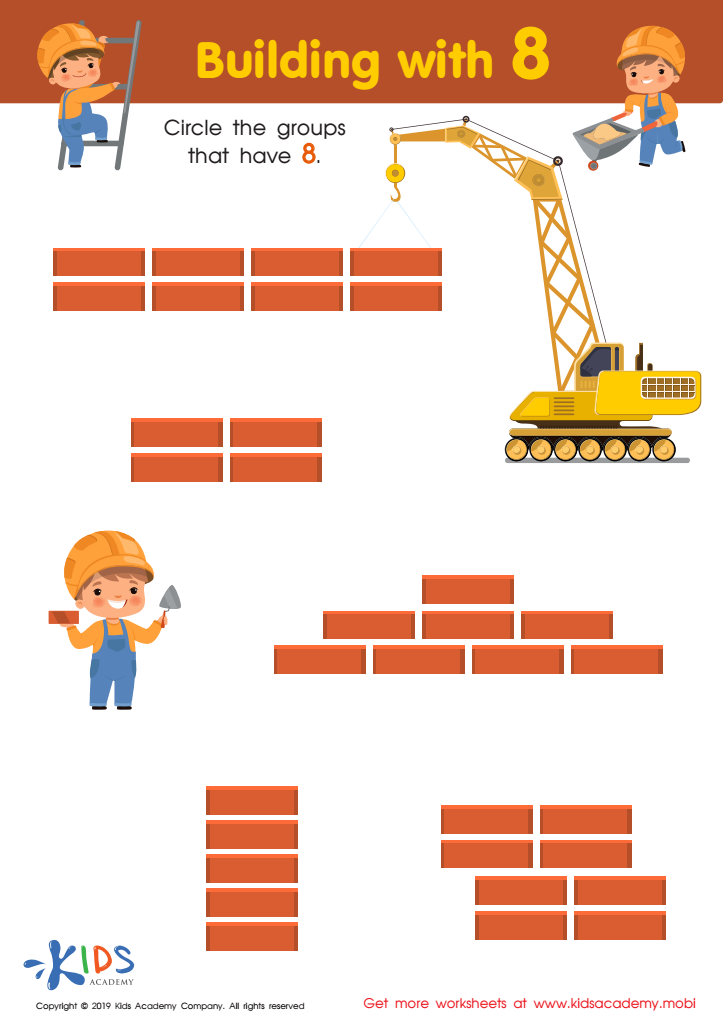
Your child can learn more with this simple exercise! Get them counting and help them circle the groups of 8 bricks. It's a great addition to their post-school lessons, supporting their counting skills. Plus, it's a fun way to learn!
Building with 8 Worksheet
Worksheet
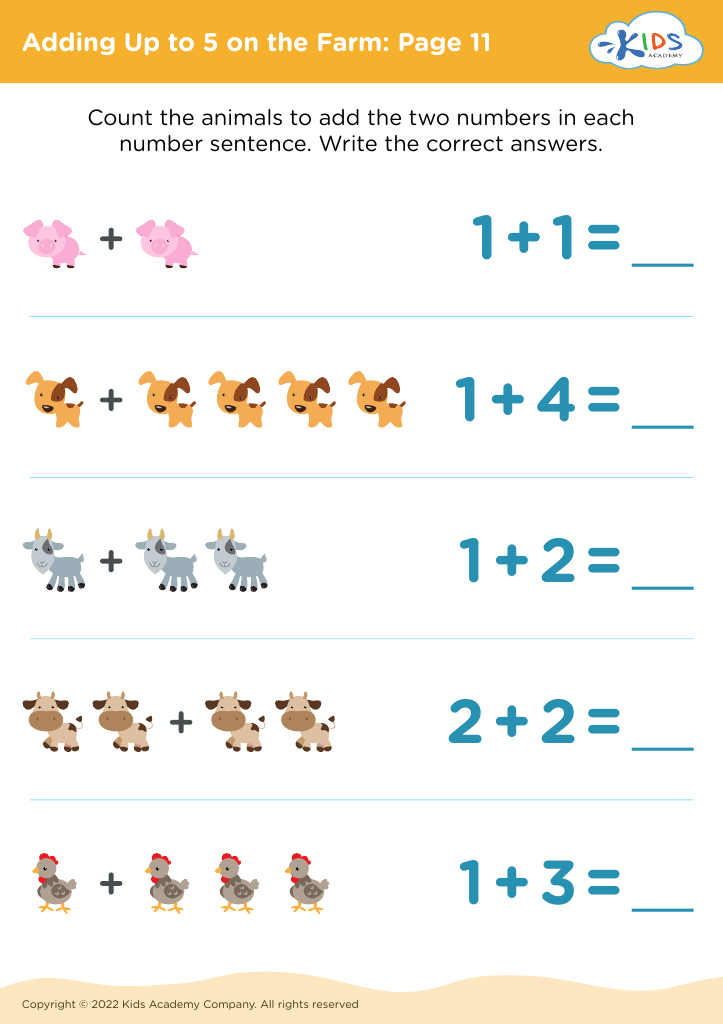
Adding Up to 5 on the Farm: Page 11
Worksheet
Counting Seedlings Worksheet
Counting Seedlings Worksheet
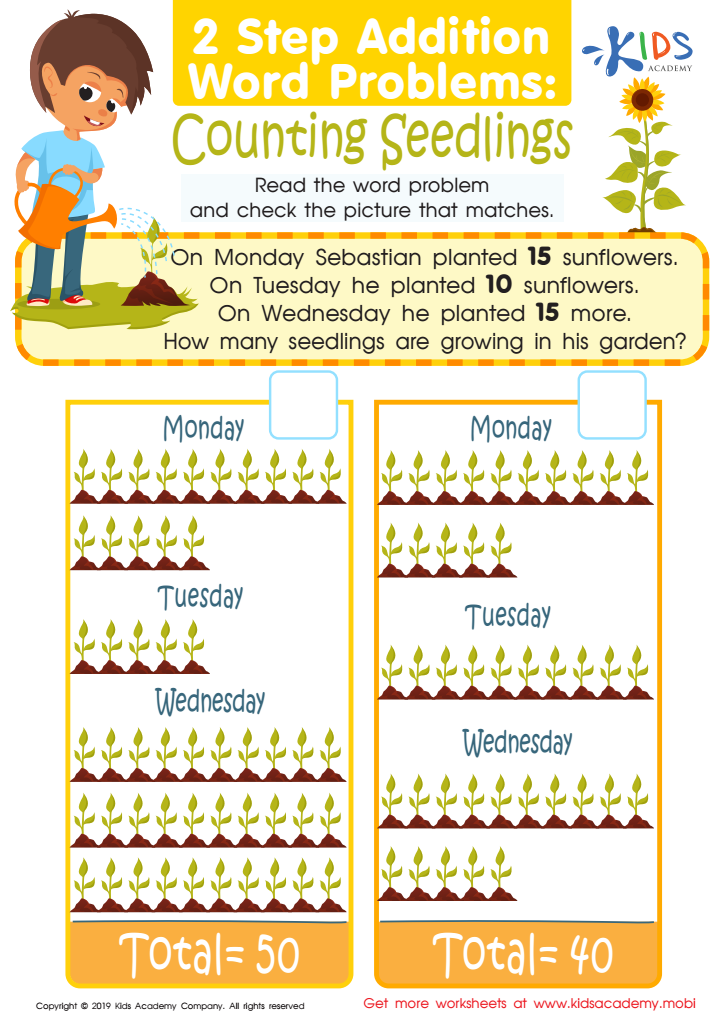
Understanding math word problems is key. Multiple steps can prove challenging - this free worksheet provides one-to-one picture representation to help kids solve multi-step addition word problems. Strengthen addition skills by choosing the matching picture to the answer.
Counting Seedlings Worksheet
Worksheet
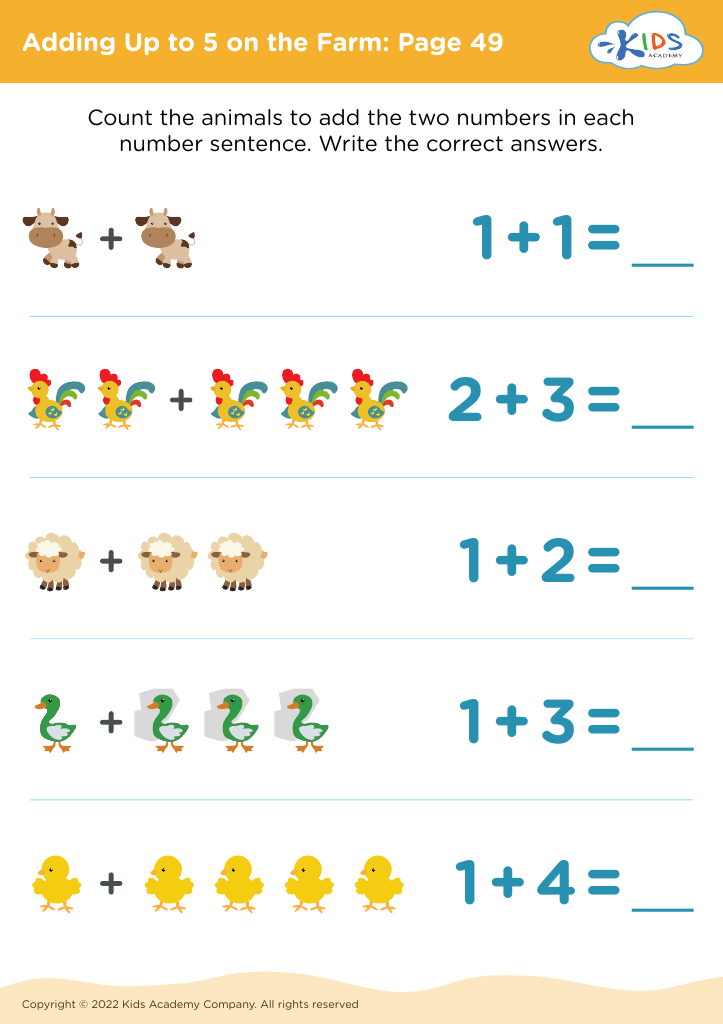
Adding Up to 5 on the Farm: Page 49
Worksheet
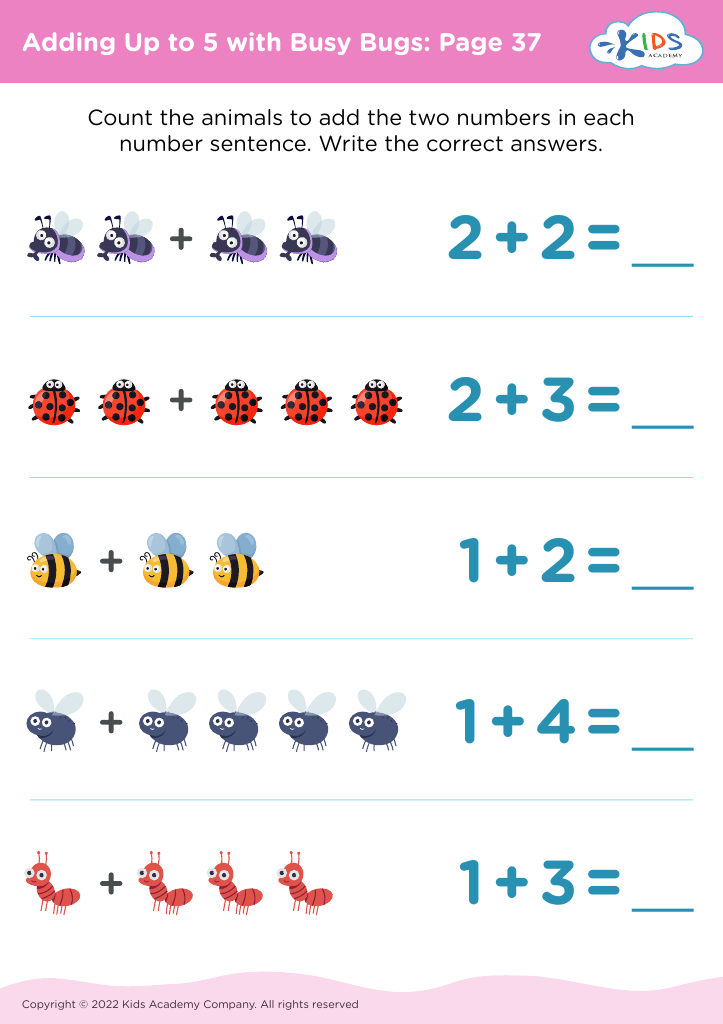
Adding Up to 5 with Busy Bugs: Page 37
Worksheet
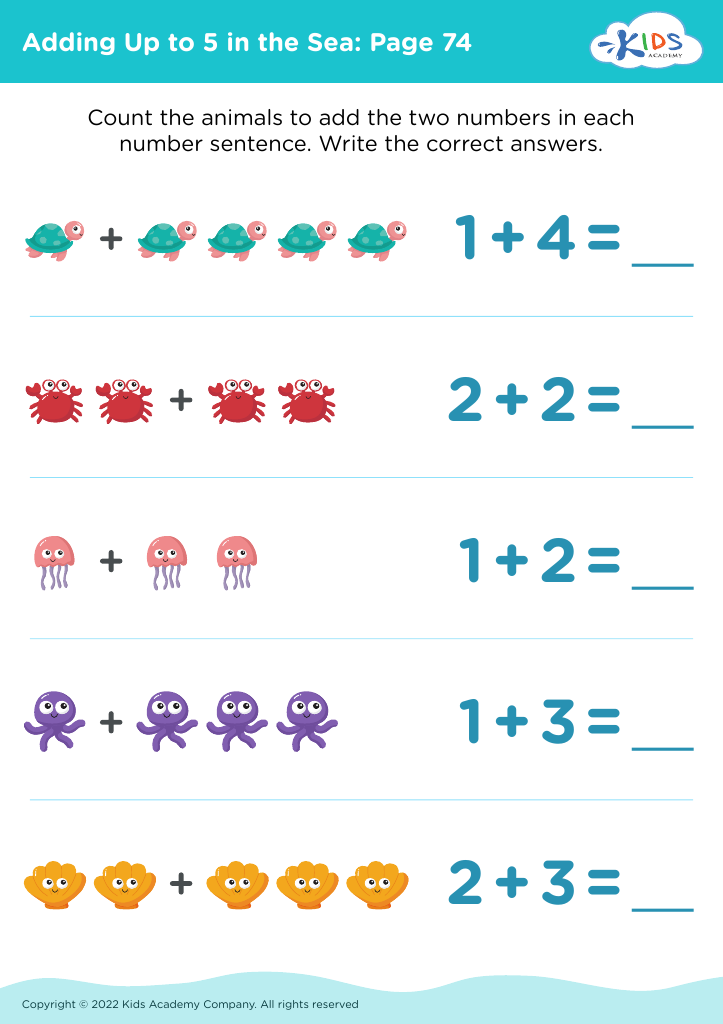
Adding Up to 5 in the Sea: Page 74
Worksheet
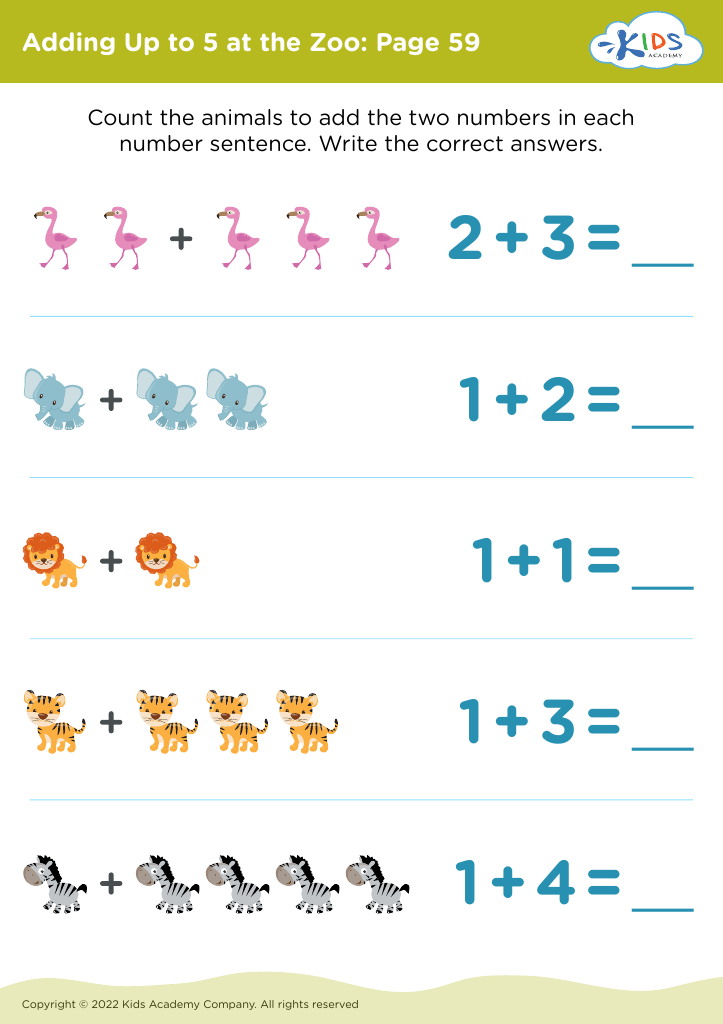
Adding Up to 5 at the Zoo: Page 59
Worksheet
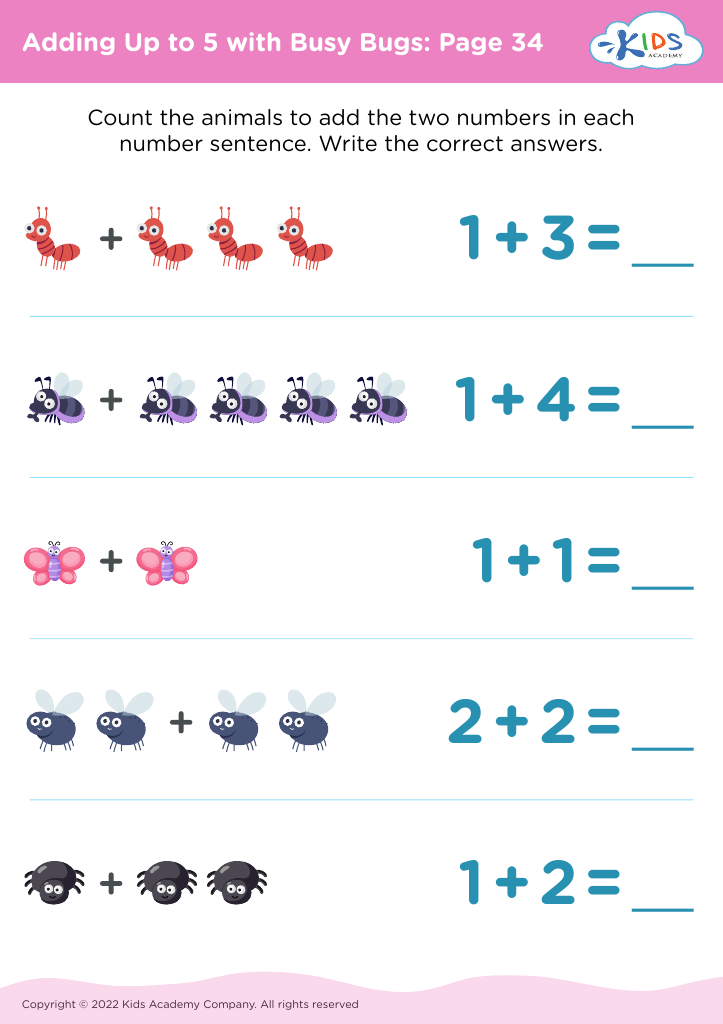
Adding Up to 5 with Busy Bugs: Page 34
Worksheet
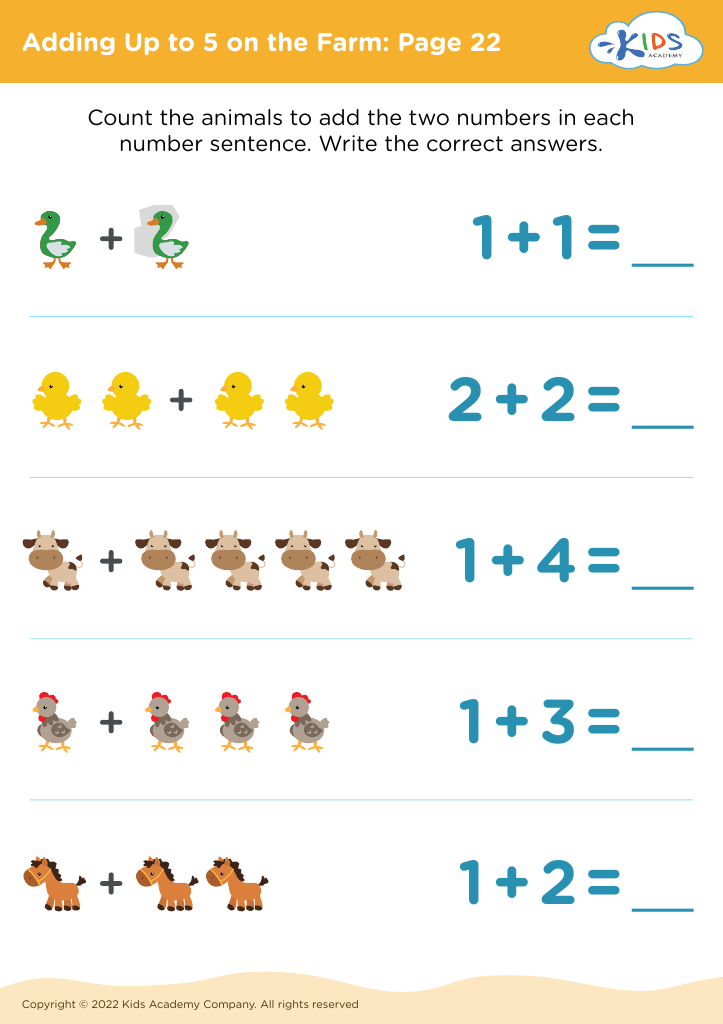
Adding Up to 5 on the Farm: Page 22
Worksheet
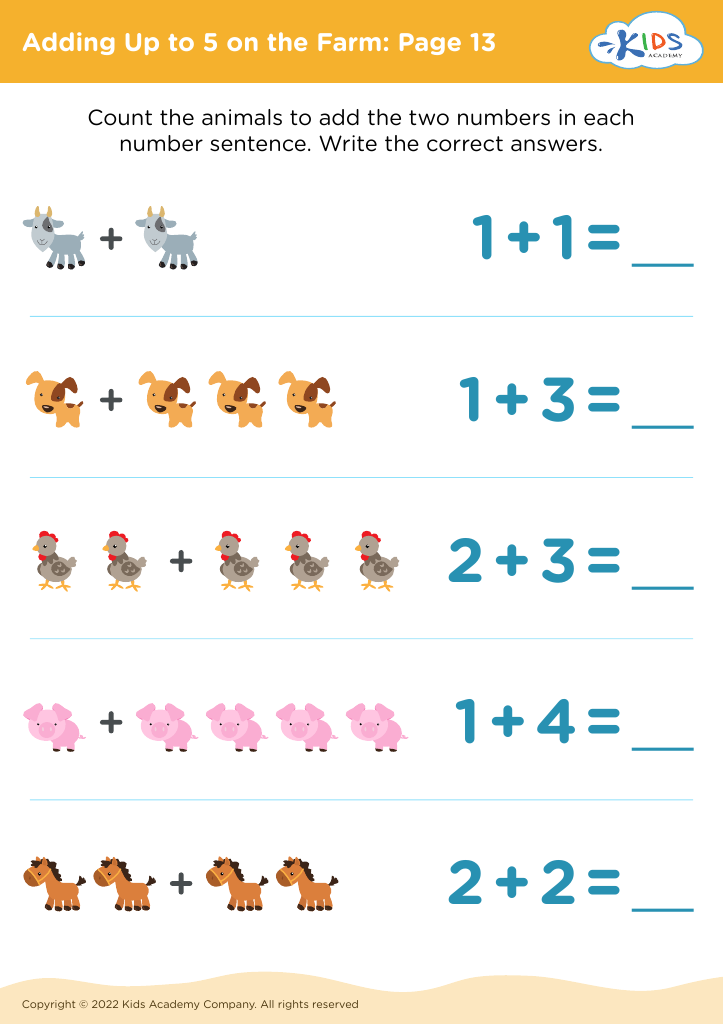
Adding Up to 5 on the Farm: Page 13
Worksheet
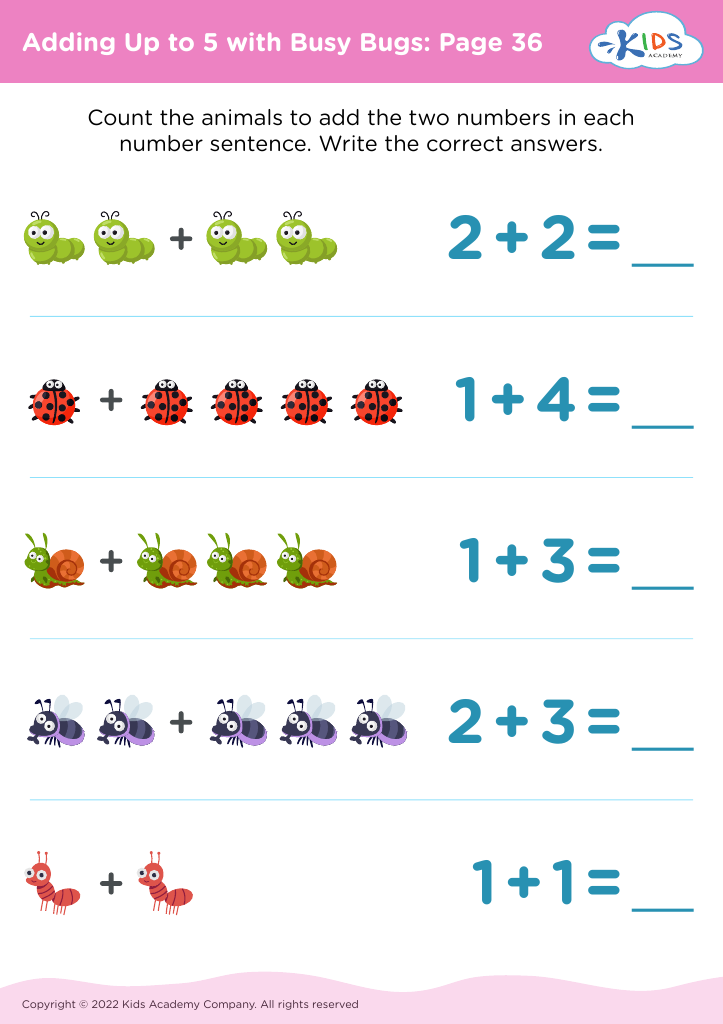
Adding Up to 5 with Busy Bugs: Page 36
Worksheet
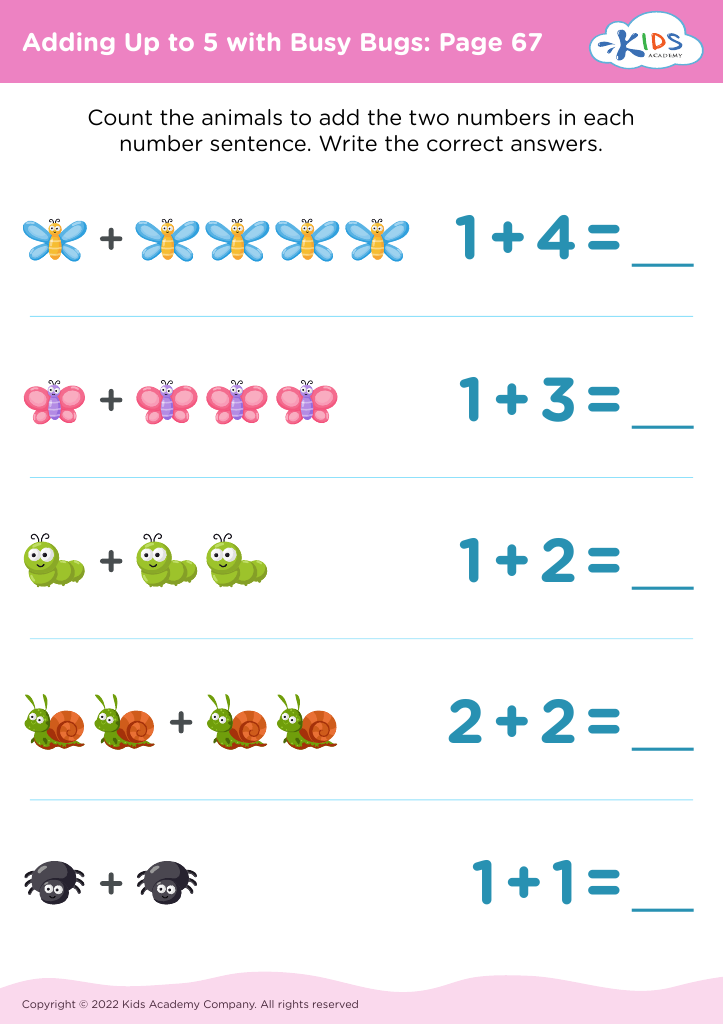
Adding Up to 5 with Busy Bugs: Page 67
Worksheet
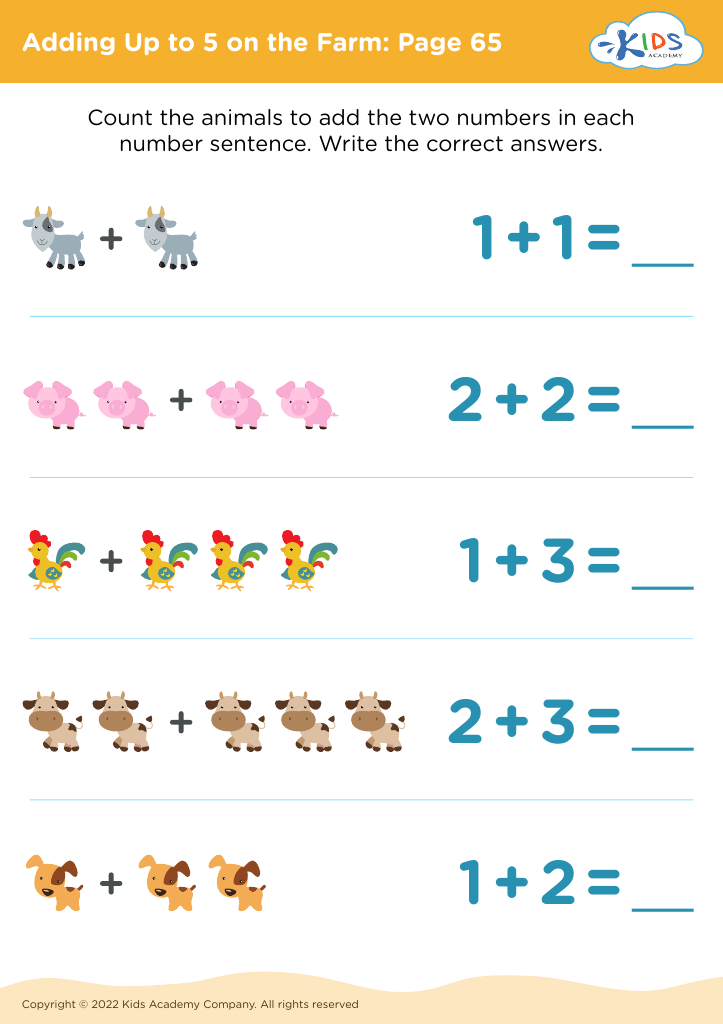
Adding Up to 5 on the Farm: Page 65
Worksheet
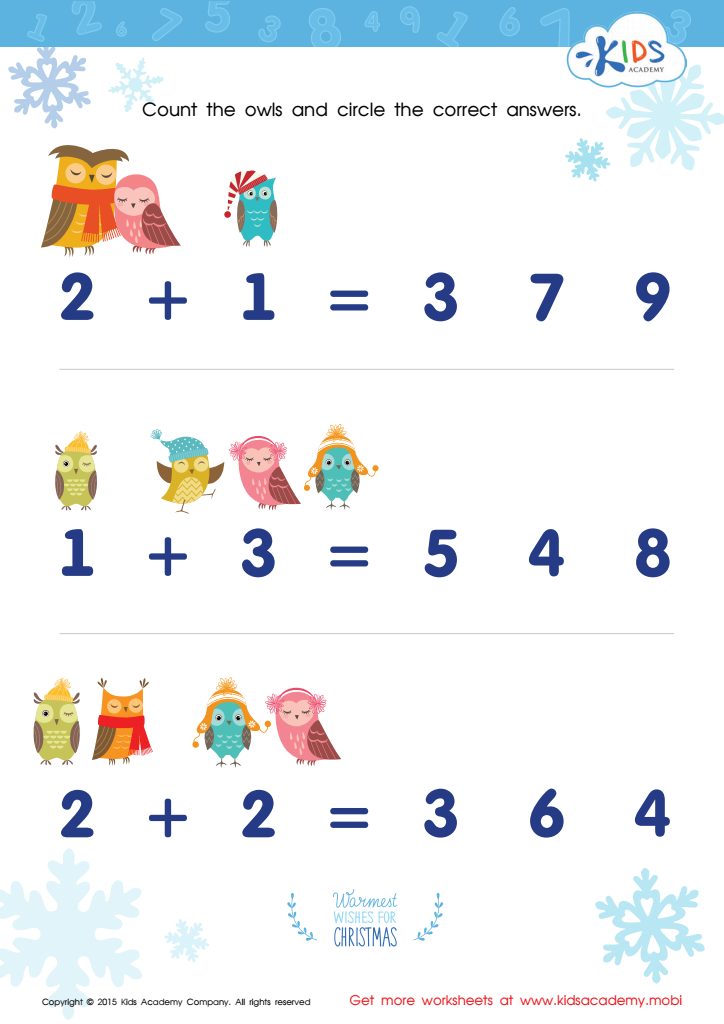
Math PDF Worksheet: Count Little Owls

Count Little Owls Worksheet
Math fun awaits! Count the cute little owls and practice adding single digits up to three indoors. Bright pictures help kids solve these simple problems. Get the free worksheets and enjoy the holiday season with Kids Academy!
Count Little Owls Worksheet
Worksheet
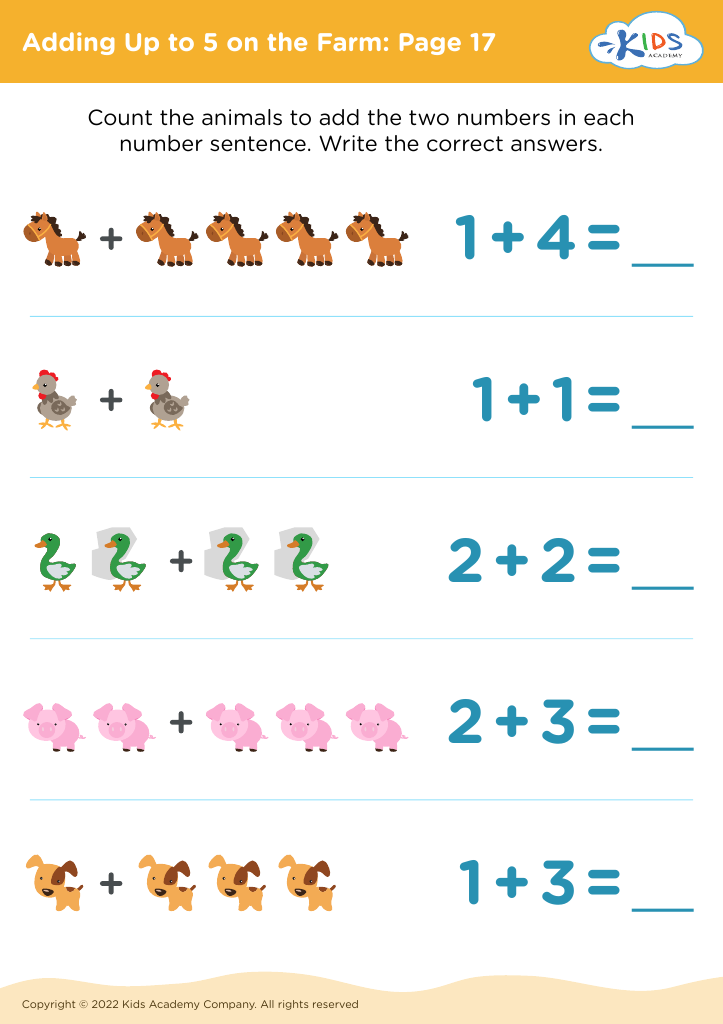
Adding Up to 5 on the Farm: Page 17
Worksheet
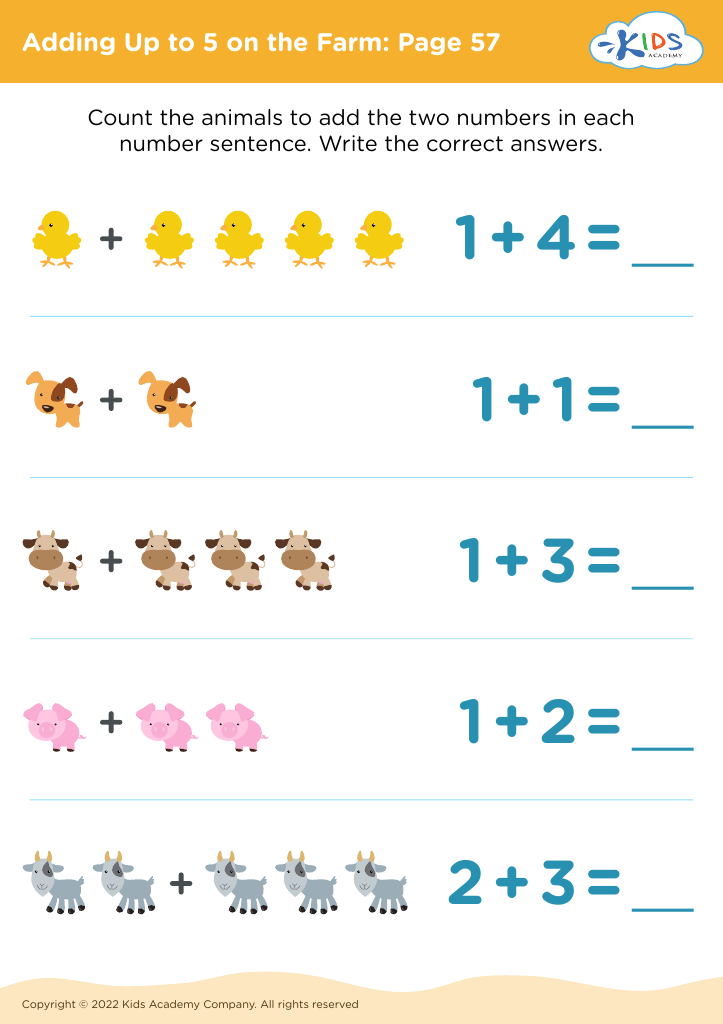
Adding Up to 5 on the Farm: Page 57
Worksheet
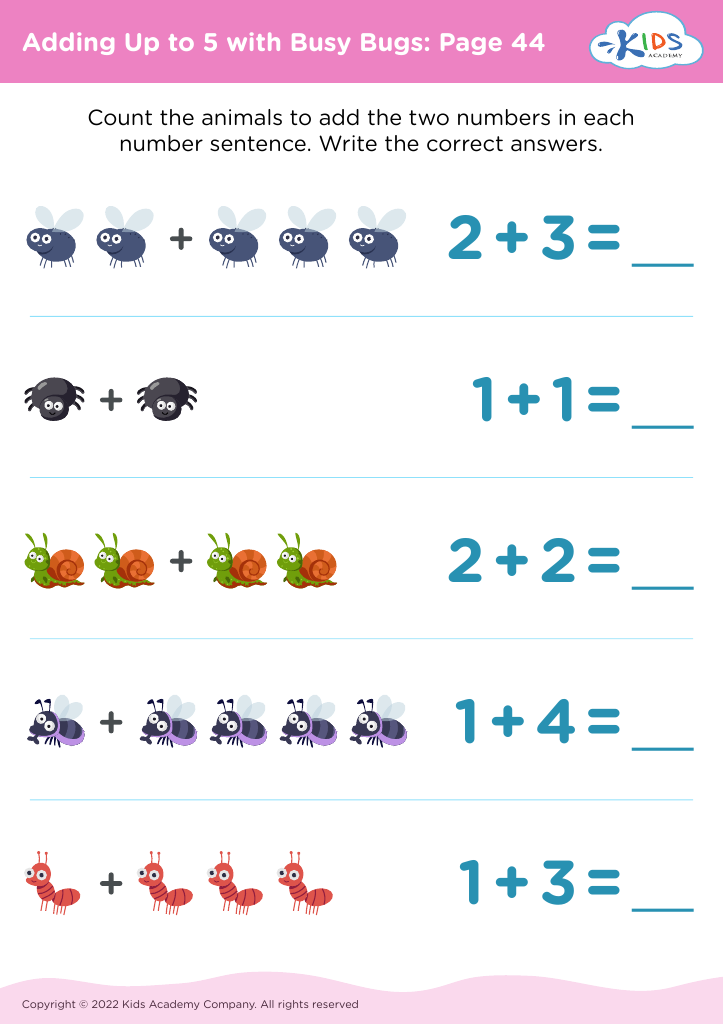
Adding Up to 5 with Busy Bugs: Page 44
Worksheet
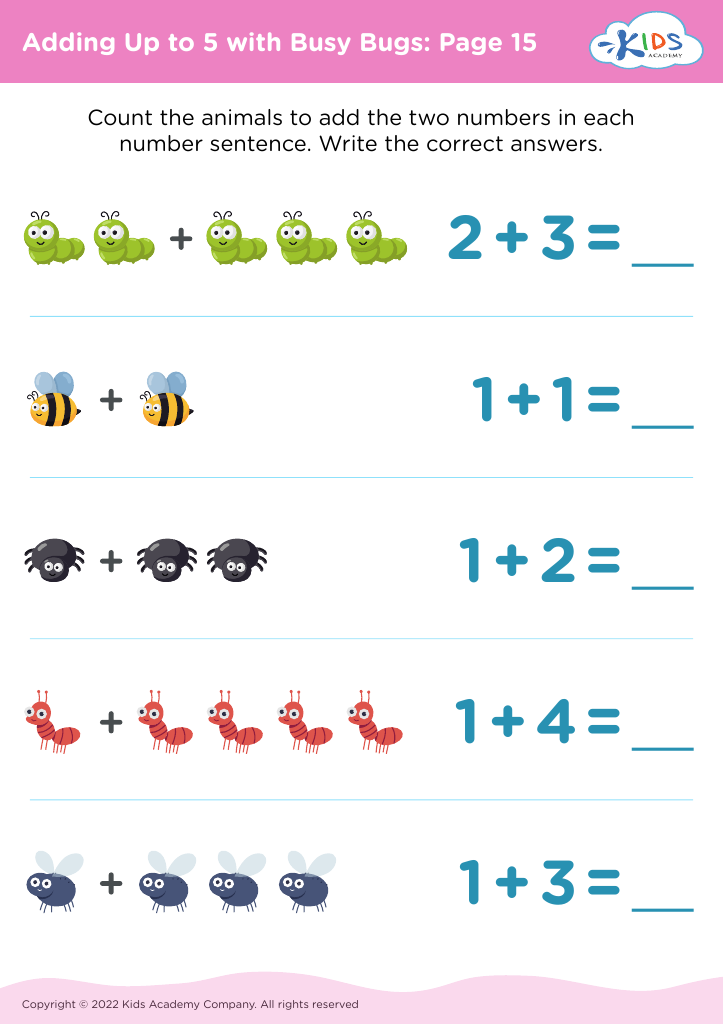
Adding Up to 5 with Busy Bugs: Page 15
Worksheet


Understanding quantity and addition at ages 3-4 is crucial for early childhood development, serving as foundational pillars for future mathematical understanding. At this formative age, children are incredibly receptive to learning through play and exploration.

First, grasping basic quantity concepts helps young children make sense of their world. They begin to understand that numbers represent quantities and differences between groups of objects, aiding cognitive development. Engaging them in activities that illustrate adding quantities, such as counting blocks or adding fruits into a basket, makes abstract concepts tangible and comprehensible.

Second, early introduction to addition fosters problem-solving and critical thinking skills. For instance, by figuring out how many more blocks are needed to reach a certain number, children practice reasoning and analytical skills that are valuable across learning areas and in real-life scenarios.

Social-emotional development is also enhanced through cooperative learning with peers or guidance from parents and teachers. Working together to solve simple addition problems encourages communication, patience, and teamwork.

Finally, early mathematical proficiency is a strong predictor of academic success. By laying the groundwork for arithmetic skills, we set the stage for more complex mathematical concepts children will encounter later. Thus, prioritizing understanding quantity and addition aids not just immediate learning but long-term academic and personal development as well.