Problem-solving abilities Geometry Worksheets for Ages 3-4
3 filtered results
-
From - To
Discover our engaging Problem-Solving Abilities Geometry Worksheets designed specifically for children aged 3-4! These worksheets introduce early learners to essential concepts of geometry through fun, interactive activities. Each worksheet is crafted to enhance cognitive skills by encouraging kids to solve simple problems using shapes and patterns. By navigating through these enjoyable challenges, children develop critical thinking and spatial awareness while fostering a love for math in a playful environment. Perfect for parents and educators alike, these resources make learning geometry a delightful experience. Start your child's mathematical journey today with our captivating worksheets!
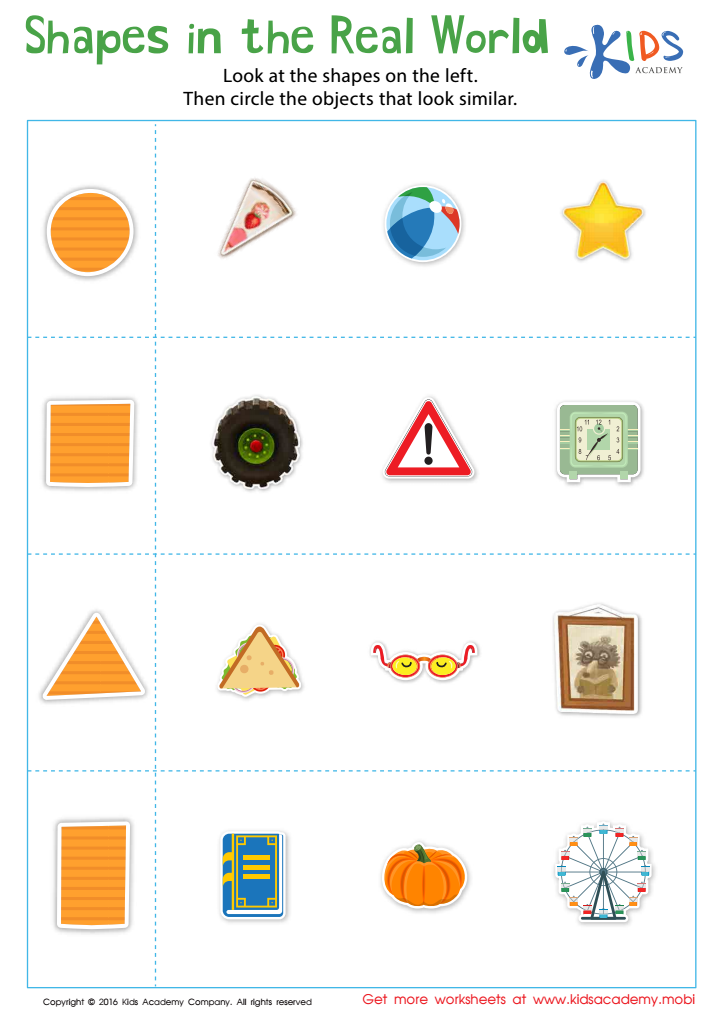
Shapes in the Real World Worksheet
 Assign to My Students











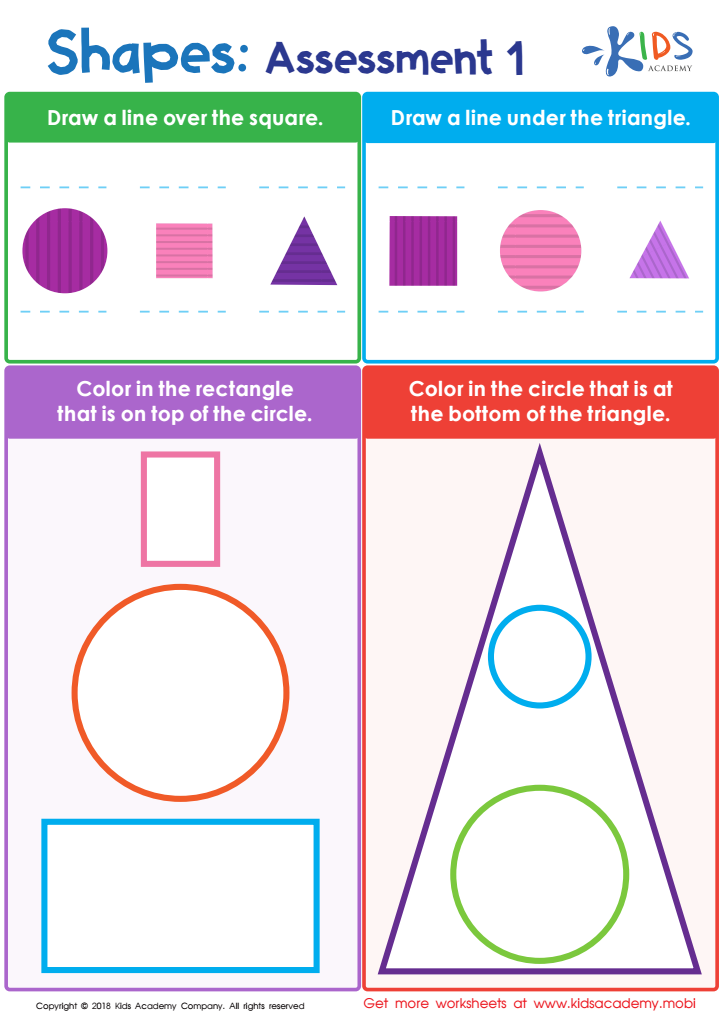
Shapes: Assessment 1 Worksheet
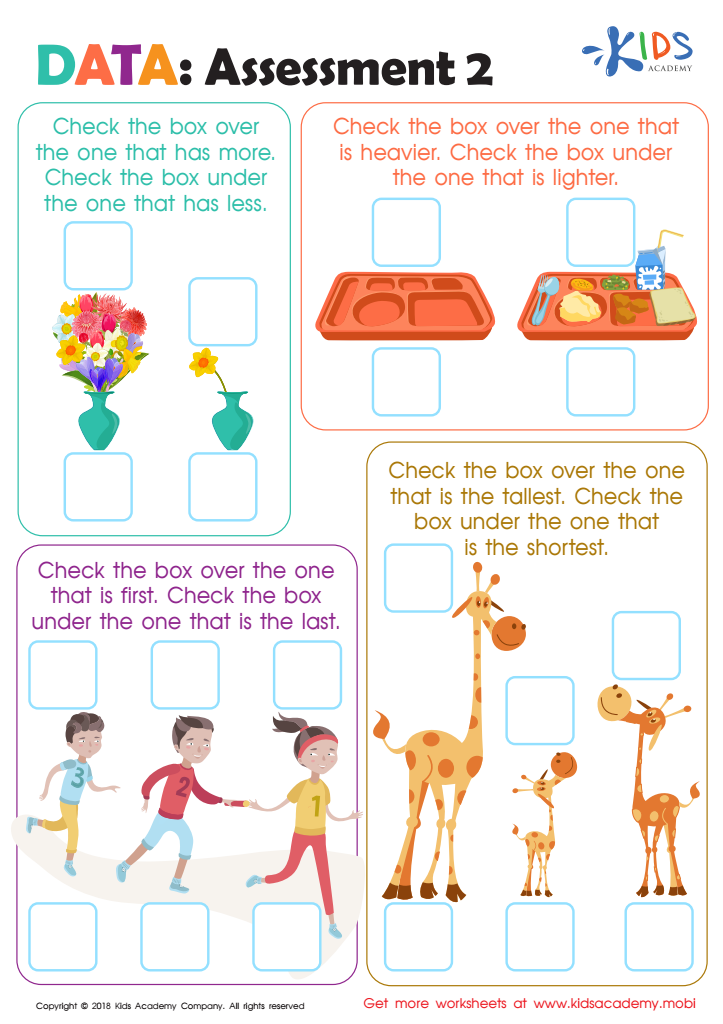
Data: Assessment 2 Worksheet








Parents and teachers should prioritize developing problem-solving abilities in geometry for ages 3-4 because these skills lay the foundation for critical thinking and spatial awareness. At this stage, young children are naturally curious and eager to explore their environment. Introducing basic geometric concepts—such as shapes, sizes, and spatial relationships—stimulates their cognitive development and encourages analytical thinking.
Engaging children in activities like shape sorting, building with blocks, or drawing enhances their ability to recognize patterns and make connections, which are essential components of problem-solving. Additionally, understanding geometry helps children navigate the world around them, fostering independence and confidence in their ability to tackle challenges.
Furthermore, developing these skills early provides a competitive edge as they progress through their education. Geometry is not just a mathematical concept; it integrates logic, reasoning, and creativity—qualities that contribute to holistic development. By nurturing problem-solving in geometry, parents and teachers help build the groundwork for future STEM (science, technology, engineering, and mathematics) learning, cultivating a love for exploration and discovery. This investment in early education ultimately leads to more proficient learners who are capable of addressing complex problems in the future.








