
Basic Math understanding Numbers Worksheets for Ages 3-4
3 filtered results
Difficulty Level
Grade
Age
-
From - To
Subject
Activity
Standards
Enhance your child's early math skills with our "Basic Math Understanding Numbers Worksheets for Ages 3-4." These engaging, age-appropriate worksheets are designed to introduce young learners to numbers and basic math concepts through fun and interactive activities. Ideal for preschoolers, our worksheets help children grasp counting, number recognition, and simple addition and subtraction. By incorporating colorful images and playful exercises, we keep kids entertained while they develop critical early math skills. Perfect for parents and teachers aiming to build a strong math foundation, these worksheets are a valuable resource for young learners' academic growth.
Favorites
With answer key
Interactive
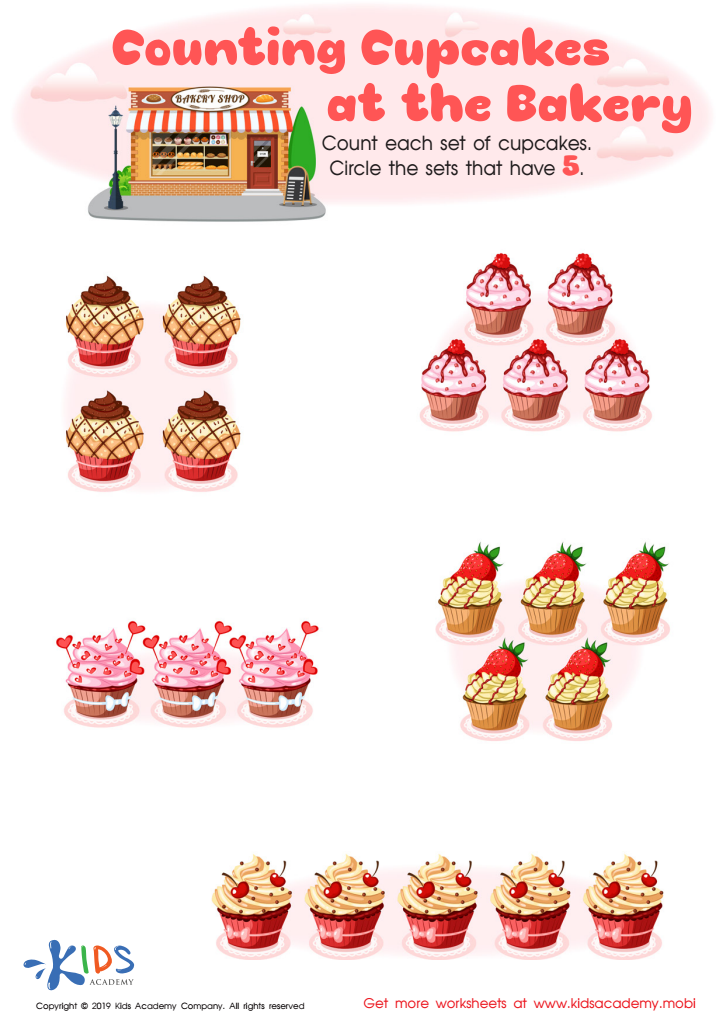
Counting Cupcakes Worksheet
This fun worksheet for preschoolers uses cupcakes to teach counting. Kids must circle the groups of cupcakes that add up to 5. The delicious treats make learning fun and engaging!
Counting Cupcakes Worksheet
Worksheet
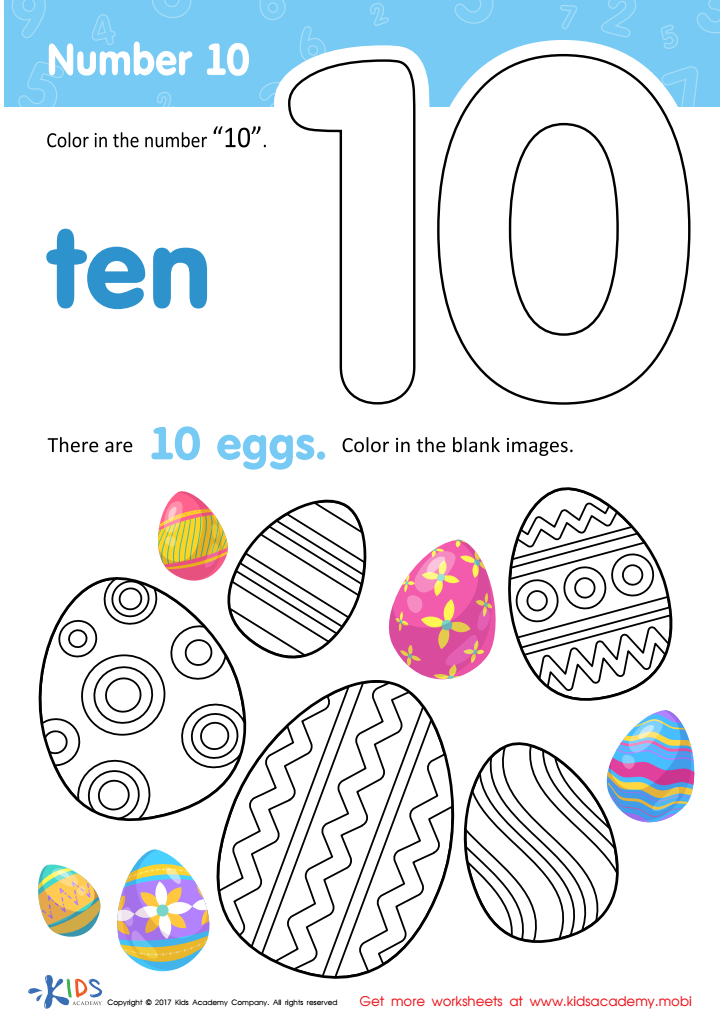
Number 10 Printable
Easter eggs are a great way to combine creativity and learning! Help your child explore the number 10 with our fun coloring page. The intricate designs will spark their imagination and fuel their artistic side, while they practice important numeracy basics. Get creative with eggs and enjoy the fun, no matter the time of year!
Download (PDF)
 Assign to My Students
Assign to My Students
Number 10 Printable
Worksheet
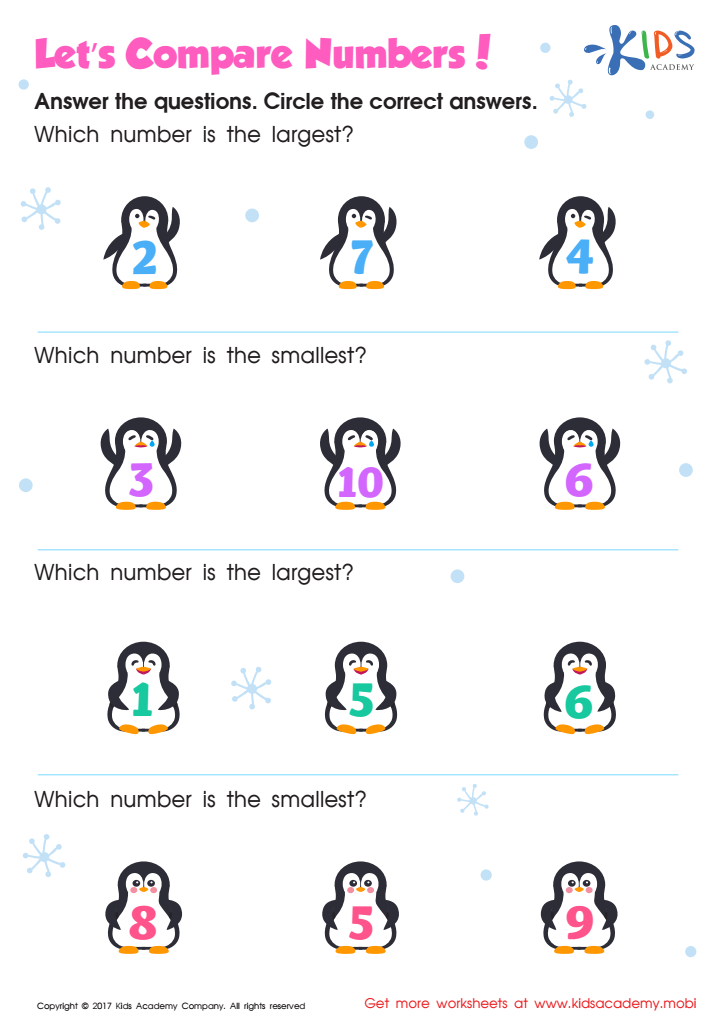
Comparing Numbers 1–10 Worksheet Kindergarten
Help your child sort out numbers 1-10 with this fun worksheet! They'll practice comparing numbers and boost their number sense. Plus, it features cute little penguins with numbers on their bellies - they make learning even more exciting!
Comparing Numbers 1–10 Worksheet Kindergarten
Worksheet
Join Kids Academy for Free
Who is primarily going to use this learning content?








Engaging young children in basic math, especially number concepts, has profound impacts on their cognitive, social, and emotional development. For ages 3-4, understanding numbers lays a critical foundation for future academic success and everyday life skills. During these formative years, children are particularly receptive to learning foundational concepts that make complex topics more approachable later on.
Firstly, number comprehension aids in developing essential cognitive abilities such as problem-solving, memory, and logical reasoning. When children grasp numbers, they automatically start organizing information in their environment, enhancing their intellectual development.
Secondly, early math skills play a pivotal role in fostering a positive attitude towards learning. When parents and teachers make numbers relatable and fun, children are more likely to develop a curiosity and enthusiasm for academics. This association can lead to sustained interest and perseverance in school.
Socially, engaging in basic math helps young children develop collaborative skills. Participating in number games and activities fosters a cooperative spirit, enriching their social interactions. Additionally, understanding quantities and comparisons aids emotional confidence and independence, helping kids make informed choices.
Overall, nurturing number understanding at this tender age helps align children with long-term academic paths and equips them with essential life skills, making it an indispensable part of early education.








