Understanding Sequences Numbers Worksheets for Ages 3-4
3 filtered results
-
From - To
Unlock the world of early mathematics with our “Understanding Sequence Numbers Worksheets” designed for ages 3-4! These engaging worksheets introduce young learners to foundational concepts of number sequencing in a fun and interactive way. Through vibrant illustrations and age-appropriate activities, children will develop their ability to recognize and order numbers, fostering essential skills for future mathematical success. Our carefully crafted exercises promote cognitive development, enhance problem-solving skills, and encourage fine motor skills as little hands tackle tracing, counting, and matching tasks. Perfect for home or classroom use, these worksheets provide an excellent resource for parents and educators to support early learning!
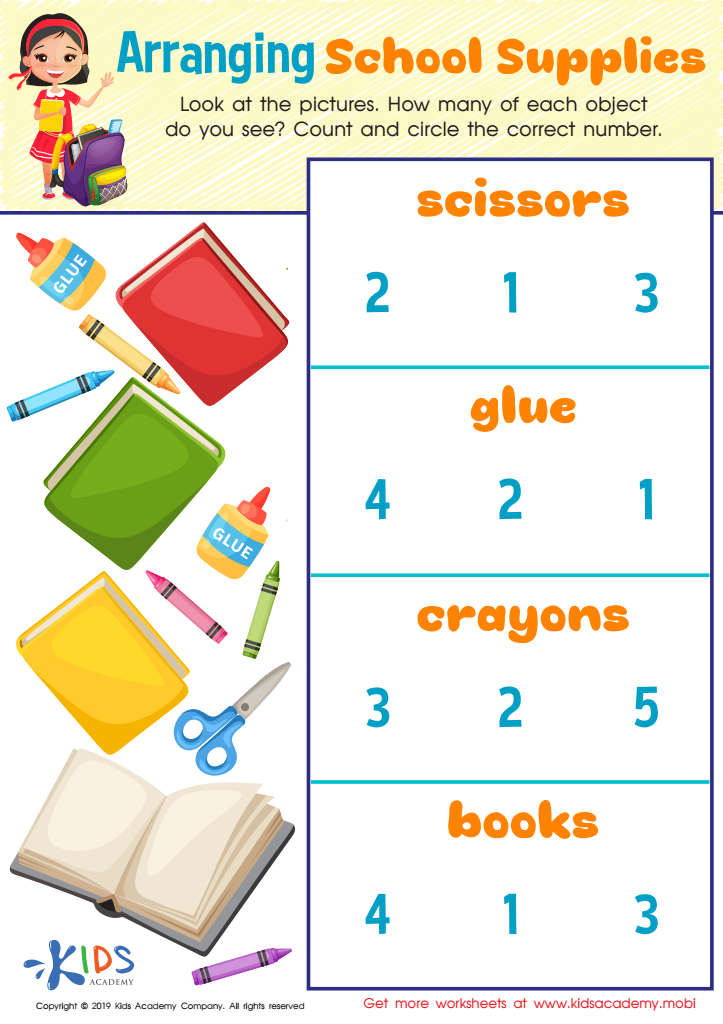
Arranging School Supplies Worksheet
 Assign to My Students
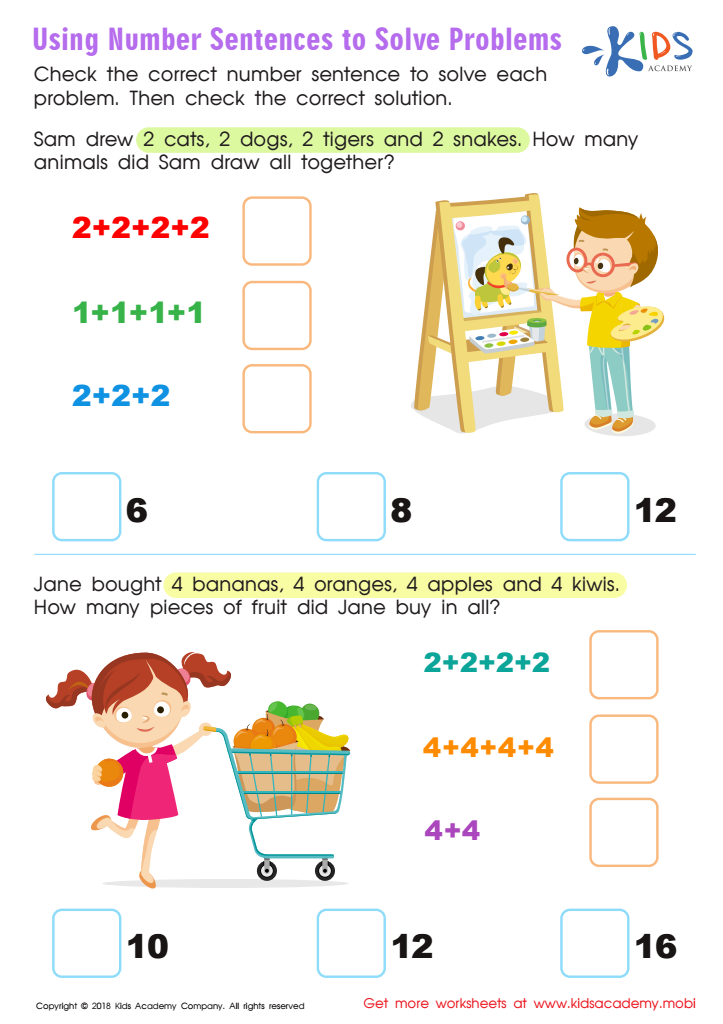
Using Number Sentences to Solve Problems Worksheet
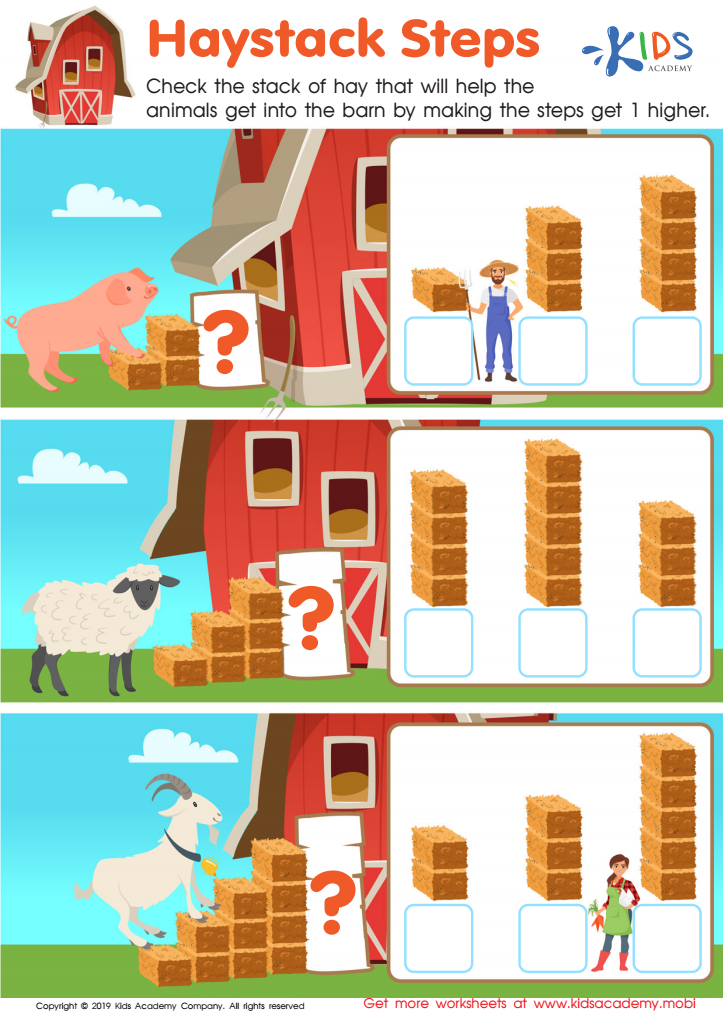
Haystack Steps Worksheet








Understanding sequence numbers is crucial for young children, particularly those aged 3-4, as it lays the foundation for essential math skills. At this stage, children are naturally curious and eager to learn, making it the ideal time to introduce them to basic numerical sequences.
Firstly, sequence numbers help develop critical cognitive skills. Recognizing and understanding patterns teach children to predict what comes next, aiding in problem-solving abilities. Engaging in sequences also introduces them to counting, encouraging numerical literacy.
Moreover, sequence numbers improve memory and concentration. Activities like counting games and rhythmic claps help them focus and recall information better, enhancing their overall cognitive development. These skills are invaluable as they progress into higher education.
Parents and teachers should integrate sequence numbers into everyday activities, such as cooking or sorting toys, to make learning enjoyable and relatable. This connection between learning and real-world applications fosters a love of learning early on.
Finally, mastering sequences builds confidence in young learners. A solid grasp of numbers prepares them for more complex math concepts later in life, ensuring a smoother transition into formal schooling. By nurturing this foundational skill, adults play a pivotal role in each child's educational journey and overall development.








