Understanding sequencing Numbers Worksheets for Ages 3-4
4 filtered results
-
From - To
Discover our engaging "Understanding Sequencing Numbers Worksheets" designed for ages 3-4, perfect for young learners! These worksheets promote essential number sequencing skills, helping children grasp the concept of order through fun and interactive activities. Our resources enable kids to identify patterns, enhance counting abilities, and develop critical thinking. With colorful visuals and age-appropriate exercises, children will enjoy exploring numbers and sequences in a playful manner. Encourage early math skills while ensuring an enjoyable learning experience. Download our worksheets today and watch your little ones thrive as they build a strong foundation in number sequencing! Ideal for preschool and home learning environments.
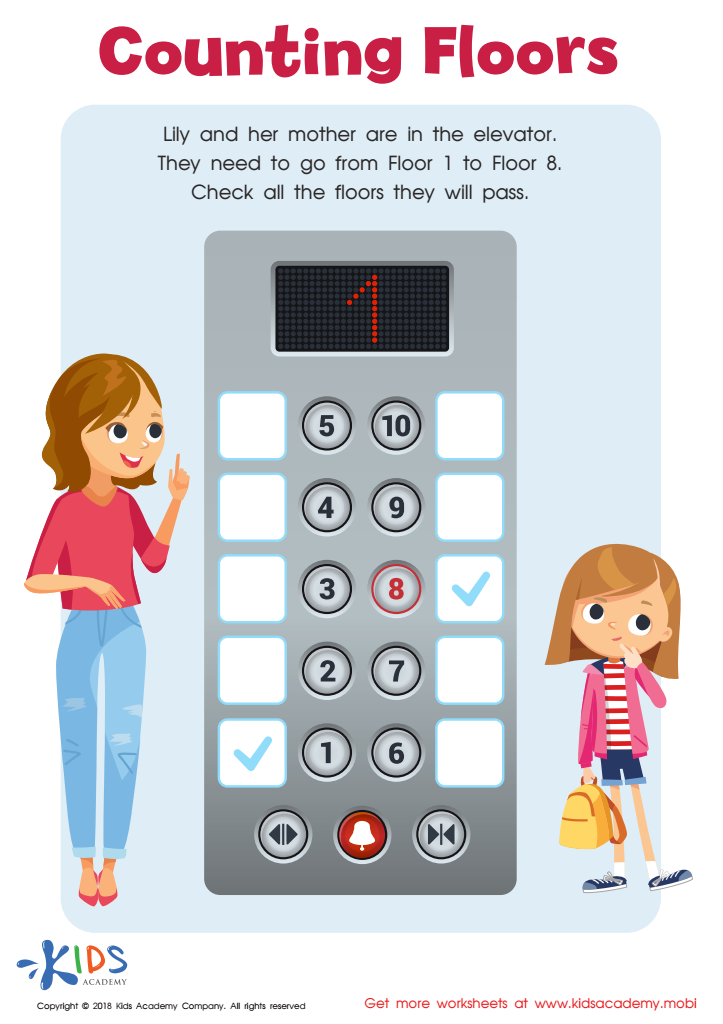
Counting Floors Worksheet
 Assign to My Students
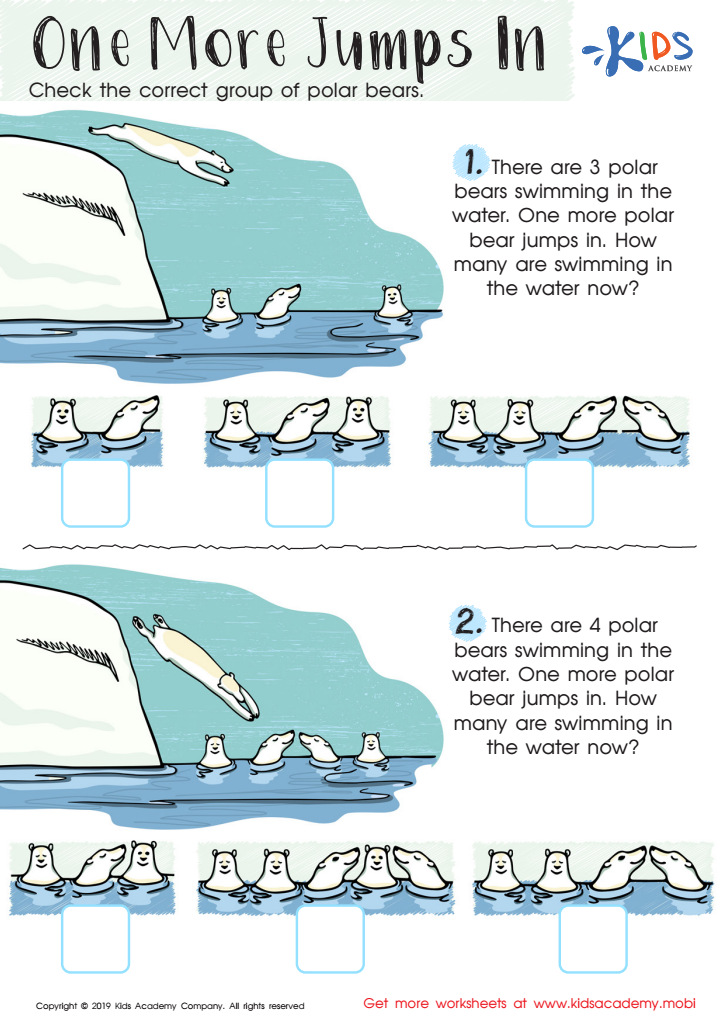
One More Jumps In Worksheet
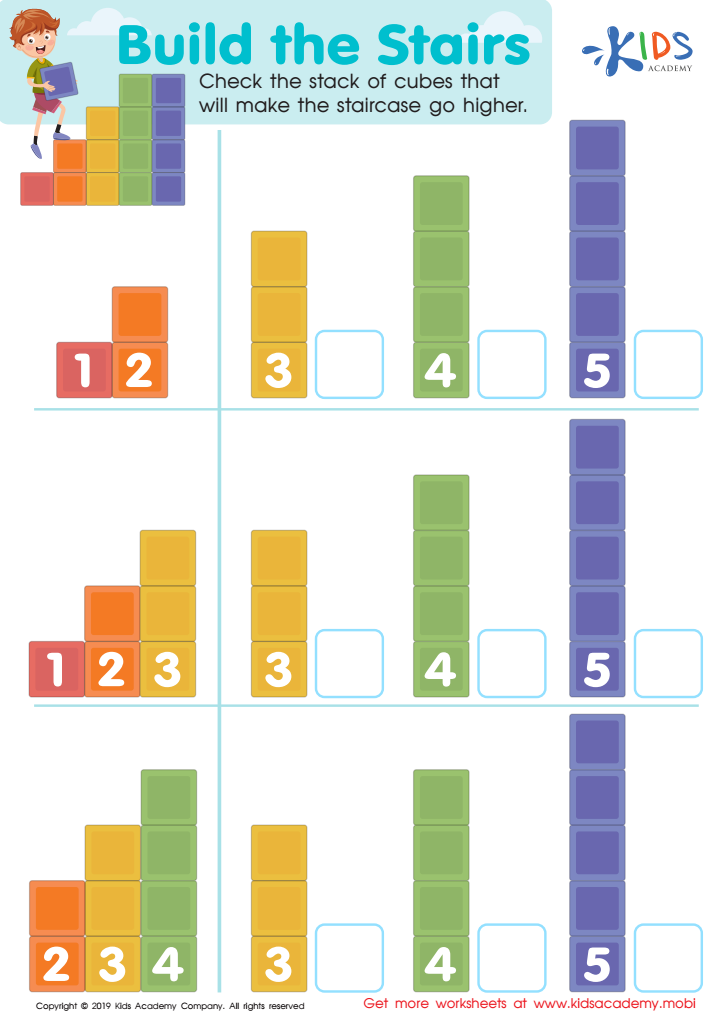
Build the Stairs Worksheet
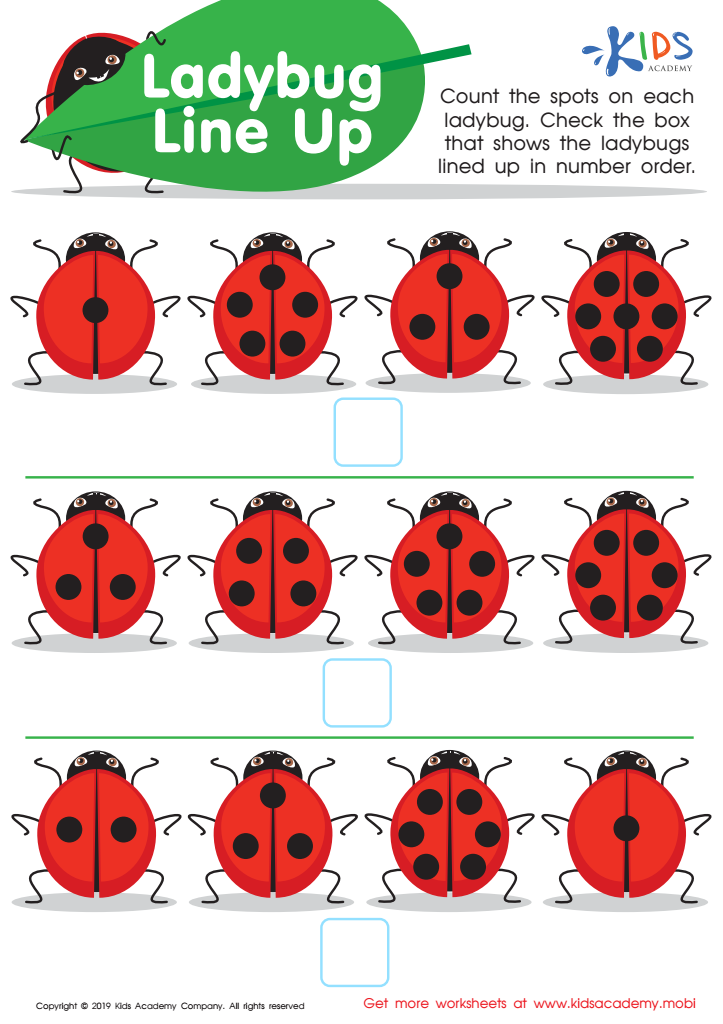
Ladybug Line Up Worksheet


%20(1).jpg)





Understanding sequencing numbers is crucial for young children aged 3-4, as it lays the foundation for mathematical skills that are essential in their education and everyday life. For parents and teachers, fostering this understanding helps children develop cognitive skills, such as problem-solving and critical thinking.
When children learn to recognize and arrange numbers in sequence, they enhance their ability to follow directions and routines, which boosts their overall sense of organization. It also supports their understanding of patterns, which are foundational to more complex math concepts they will encounter in later stages of learning. Engaging in number sequencing activities increases language development, as caregivers and educators frequently describe these activities, enabling vocabulary expansion and communication skills.
Additionally, nurturing early numeracy influences confidence in handling numbers, paving the way toward a positive mathematical mindset as children progress through school. Parents and teachers can integrate fun activities like number songs, counting games, and hands-on materials to make learning enjoyable. By prioritizing number sequencing in early childhood, adults contribute to a strong mathematical foundation that promotes future success in academics and beyond. Supporting this skillsets up children for a brighter, more math-savvy future, beneficial in a world increasingly centered on numerical reasoning.








