
Addition skills Math Worksheets for Ages 3-4
106 filtered results
Difficulty Level
Grade
Age
-
From - To
Subject
Activity
Standards
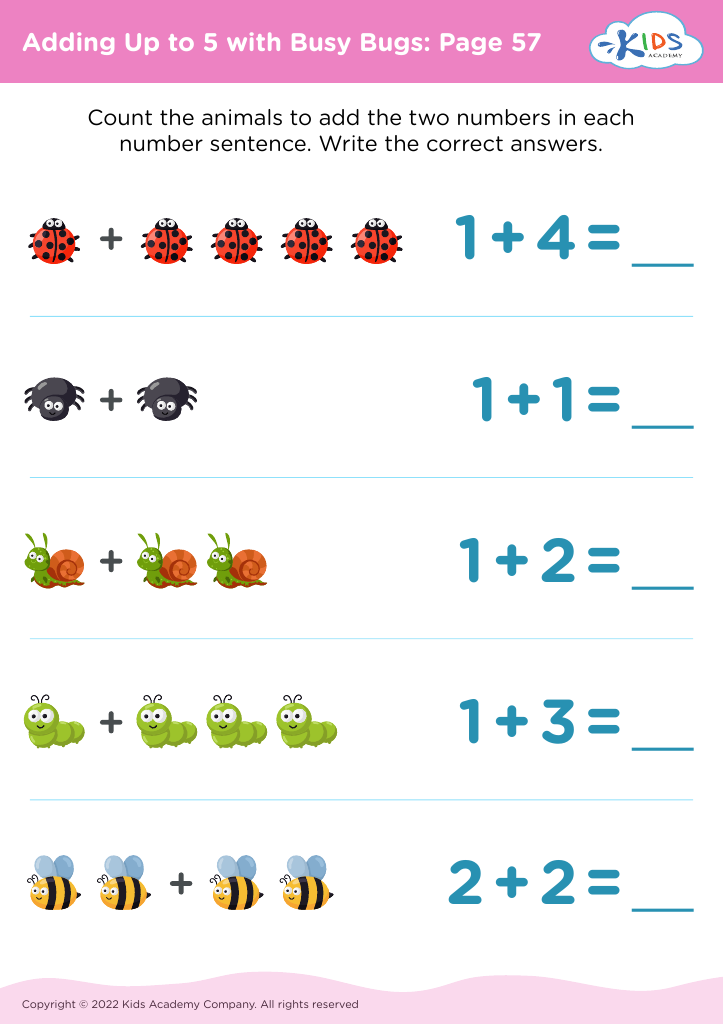
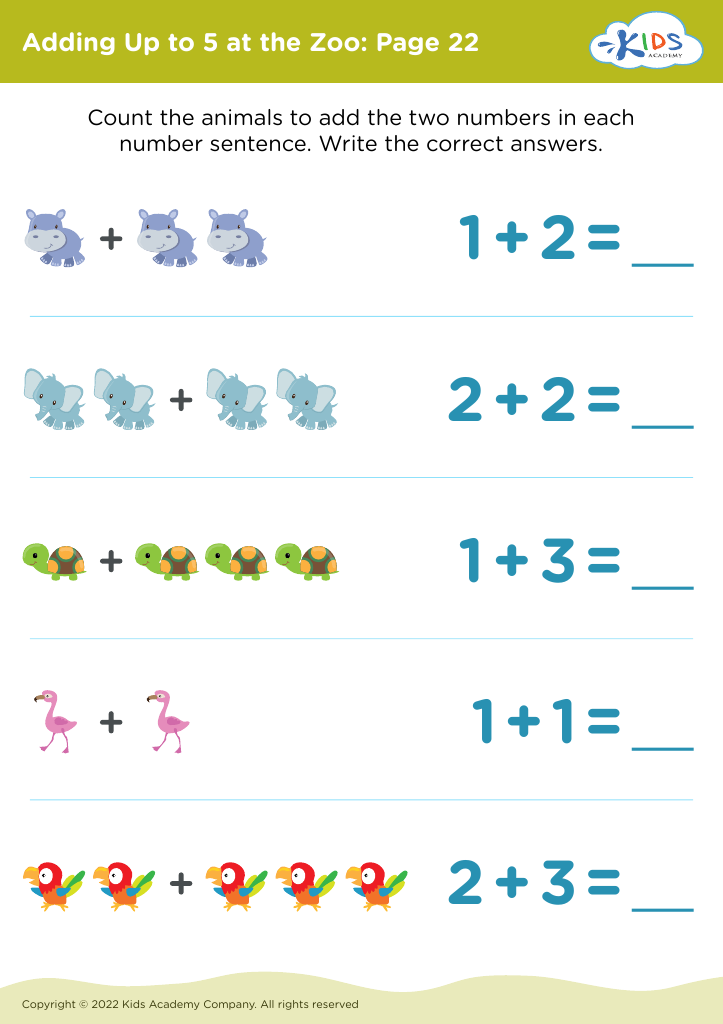
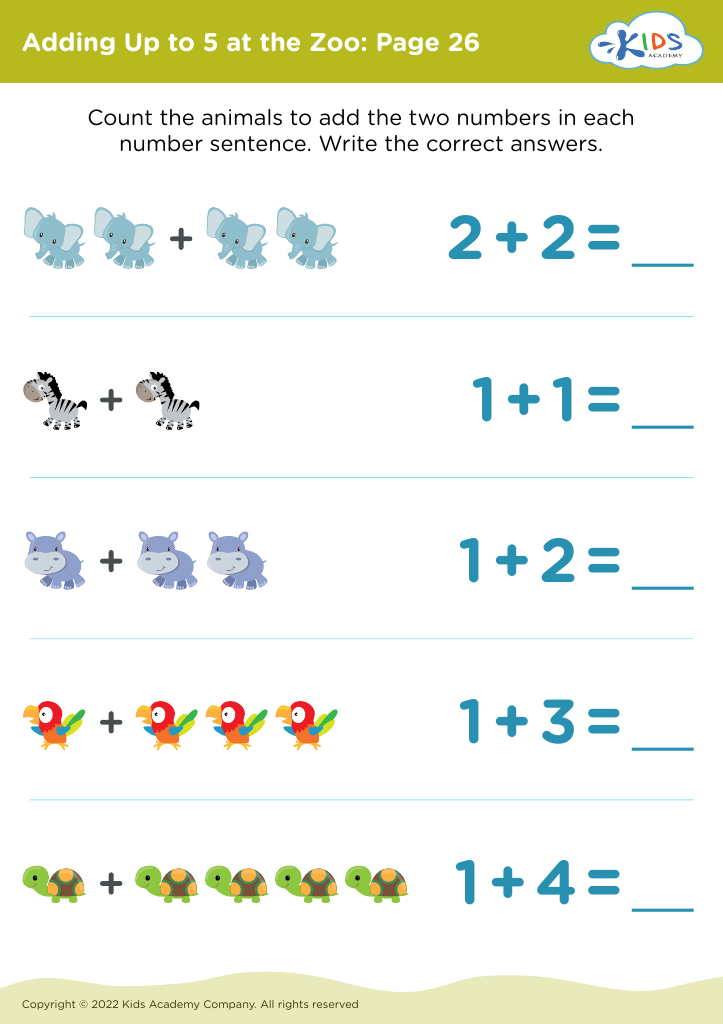
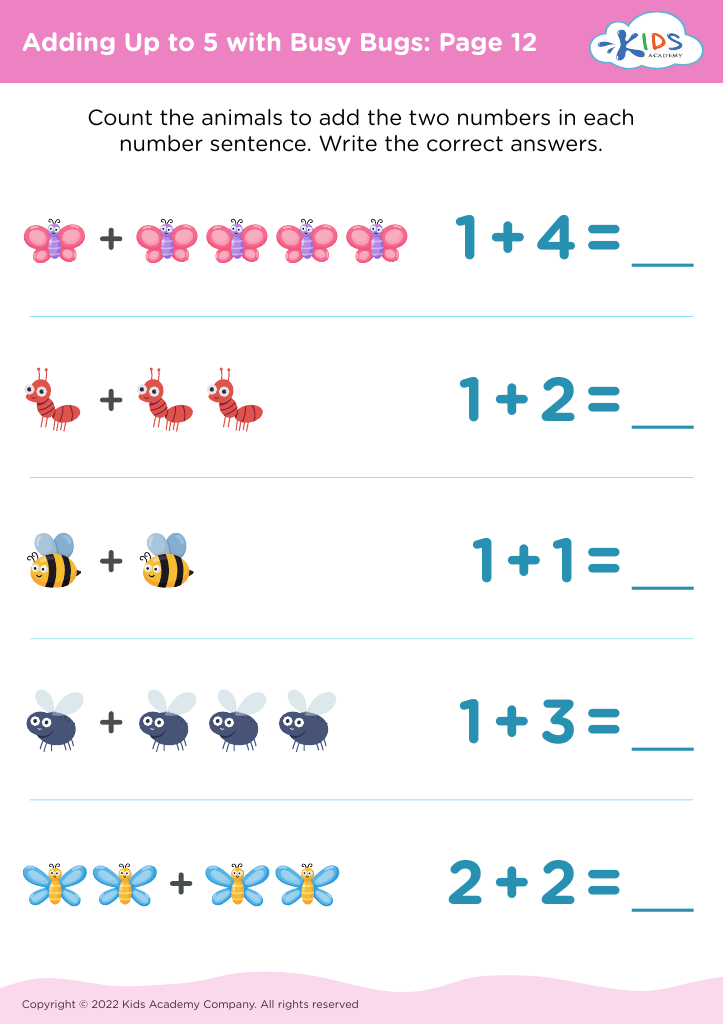
Boost your child's early math journey with our engaging Addition Skills Math Worksheets tailored for ages 3-4. Designed to make learning fun and effective, these resources help little ones master basic addition through colorful, interactive exercises. Each worksheet combines playful elements with educational content, promoting number recognition, counting, and simple sums. Perfect for home or classroom use, these activities encourage confident early math skills and a love for learning. Set a solid foundation for future math success and watch your child thrive with our expertly-crafted addition worksheets. Discover the joy of learning with Kids Academy today!
Favorites
With answer key
Interactive
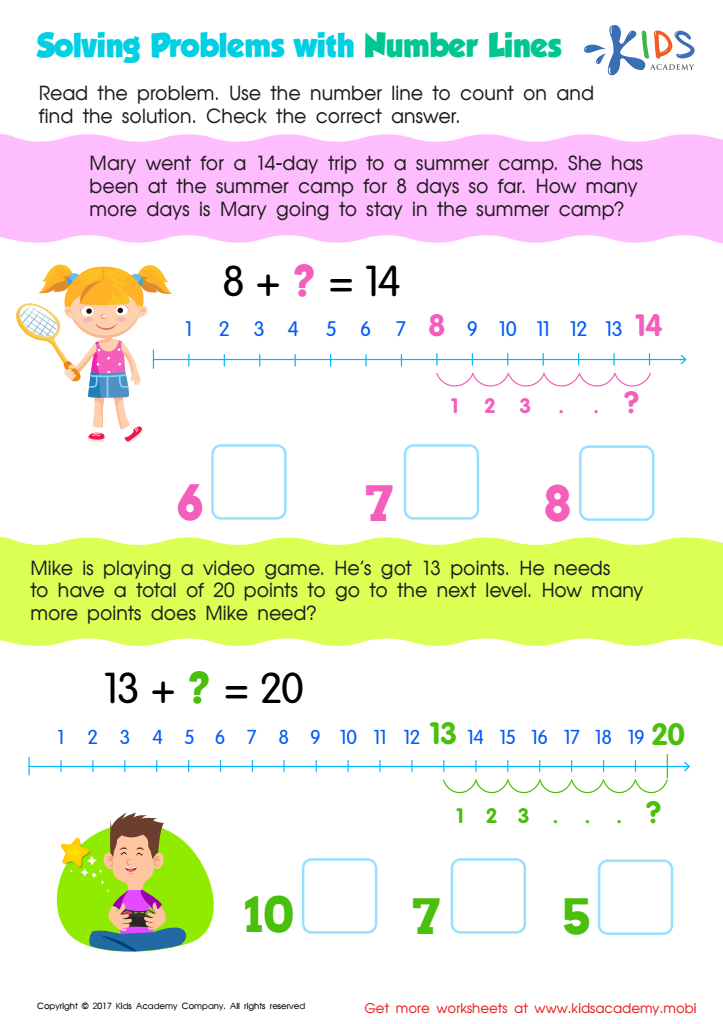
Solving Problems: Number Lines Worksheet
Number lines are fun and help build number sense and reasoning. This worksheet uses them to help students count on to find a solution to an equation. They'll have fun counting with familiar numbers and 10-bases, while also working on algebraic reasoning.
 Assign to My Students
Solving Problems: Number Lines Worksheet
Worksheet
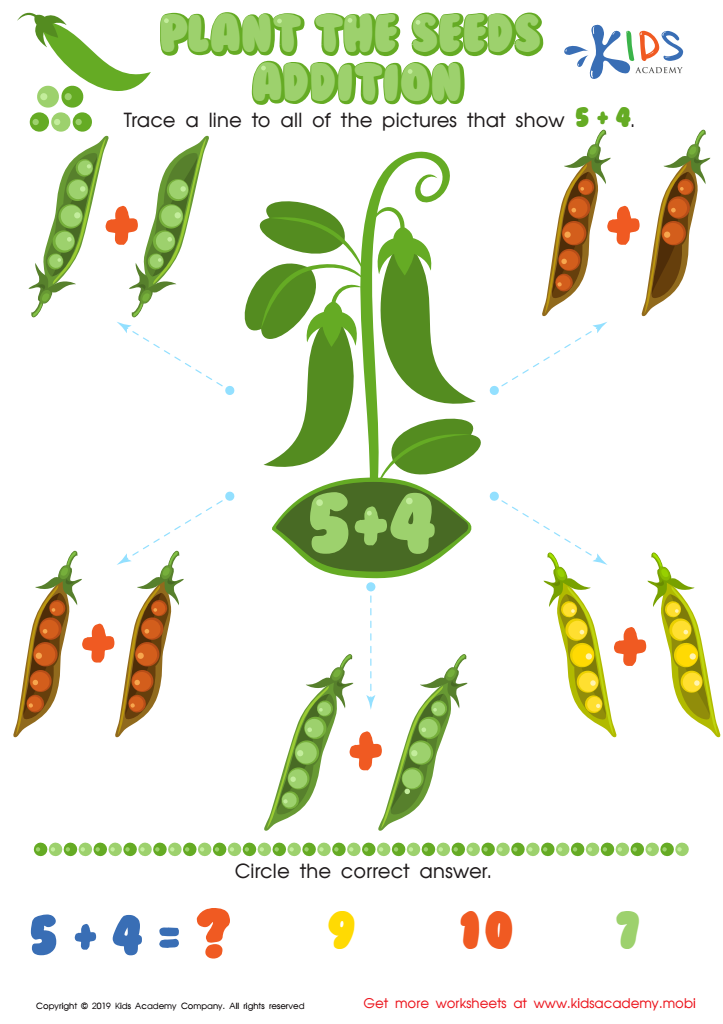
Plant the Seeds Addition Worksheet
This worksheet combines math and learning about plants. Ask kids to name their favorite plants and which ones they see the most. Have them trace a line to all pictures in the middle which show the equation 5+4. Enjoy the beauty of plants while introducing math skills!
Plant the Seeds Addition Worksheet
Worksheet
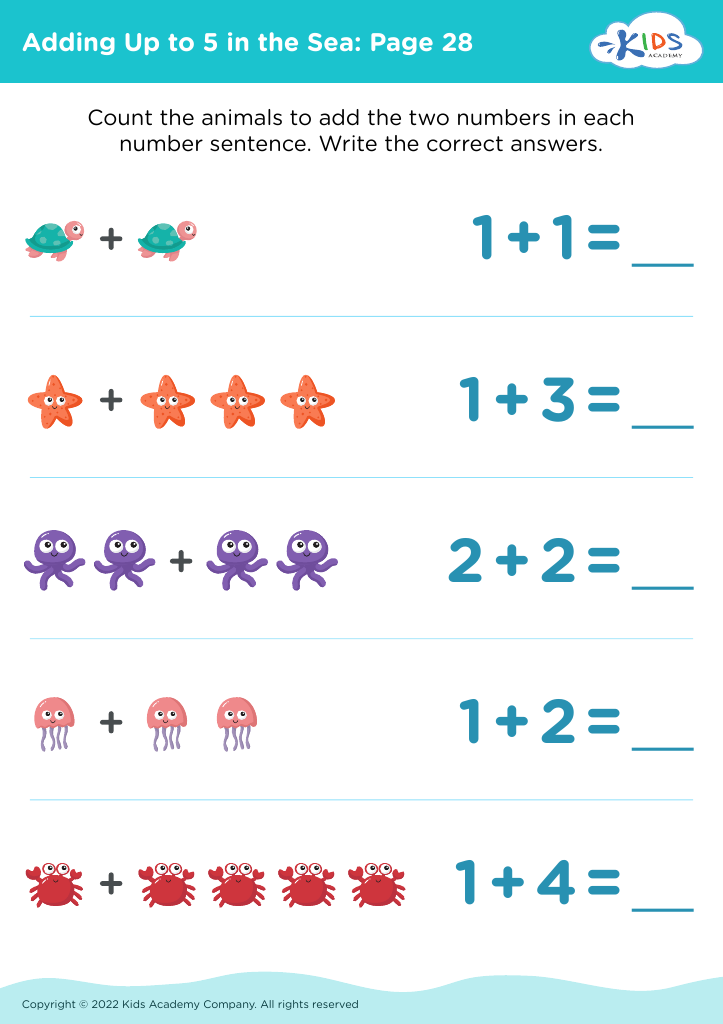
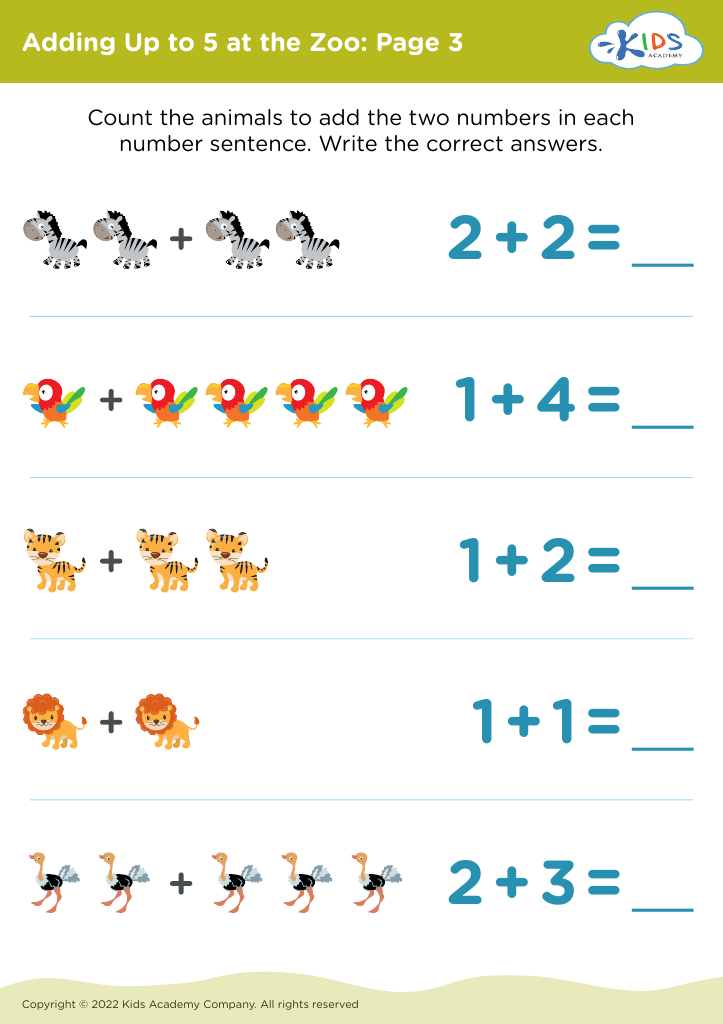
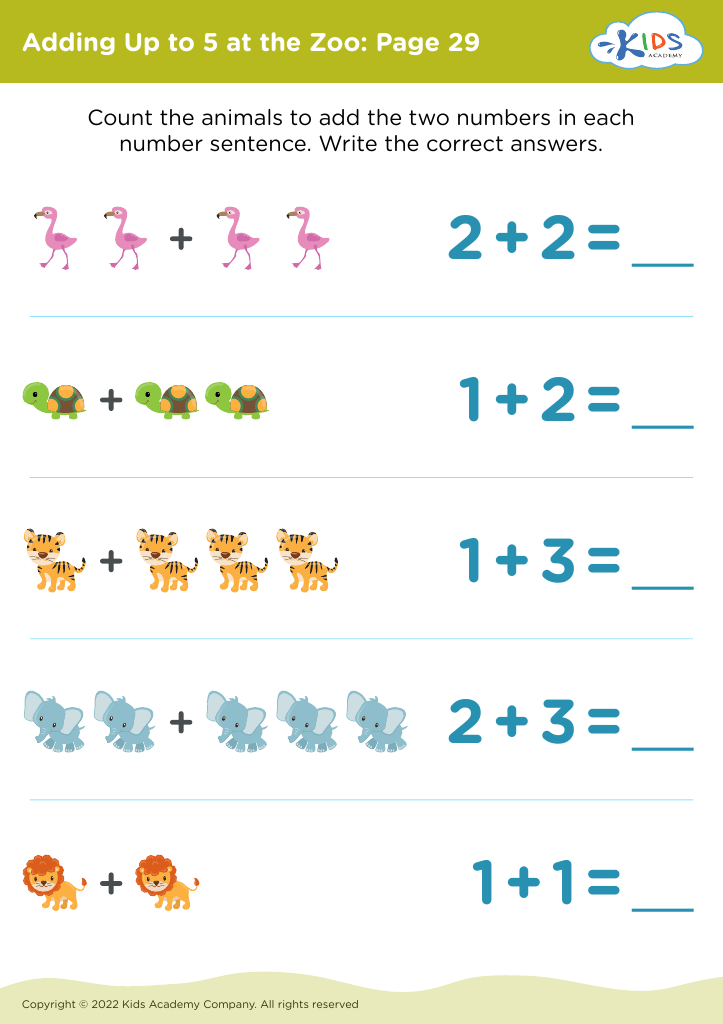
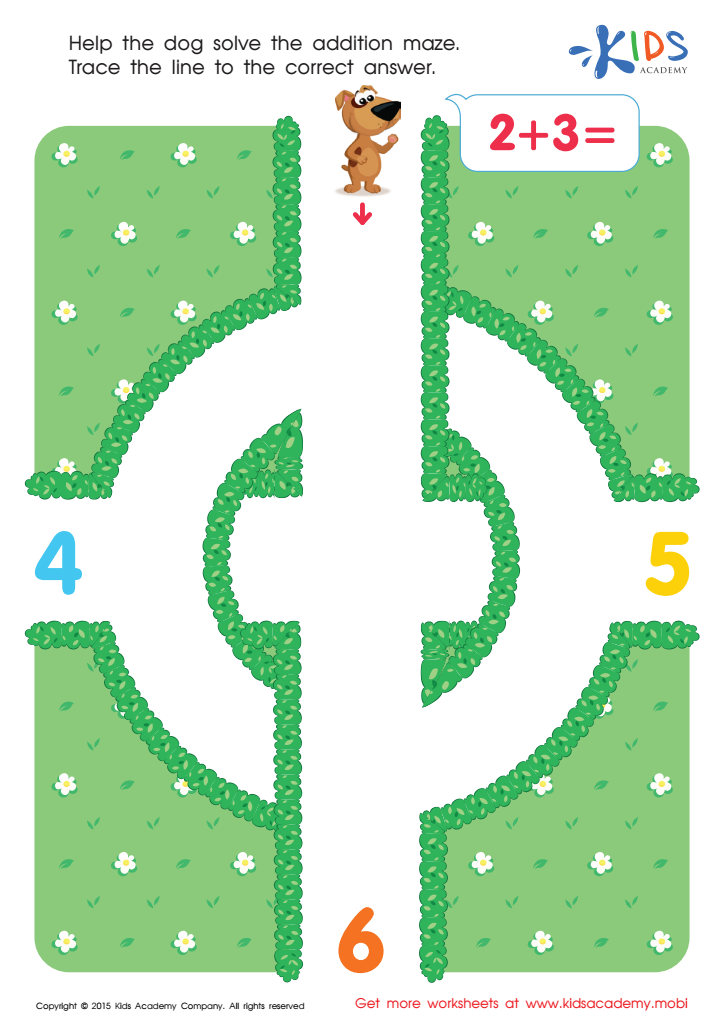
Two And Three Addition Worksheet
Give your children the task and let them find the path to the right answer while they make their way through the maze, and don't forget to let them trace the path.
Two And Three Addition Worksheet
Worksheet
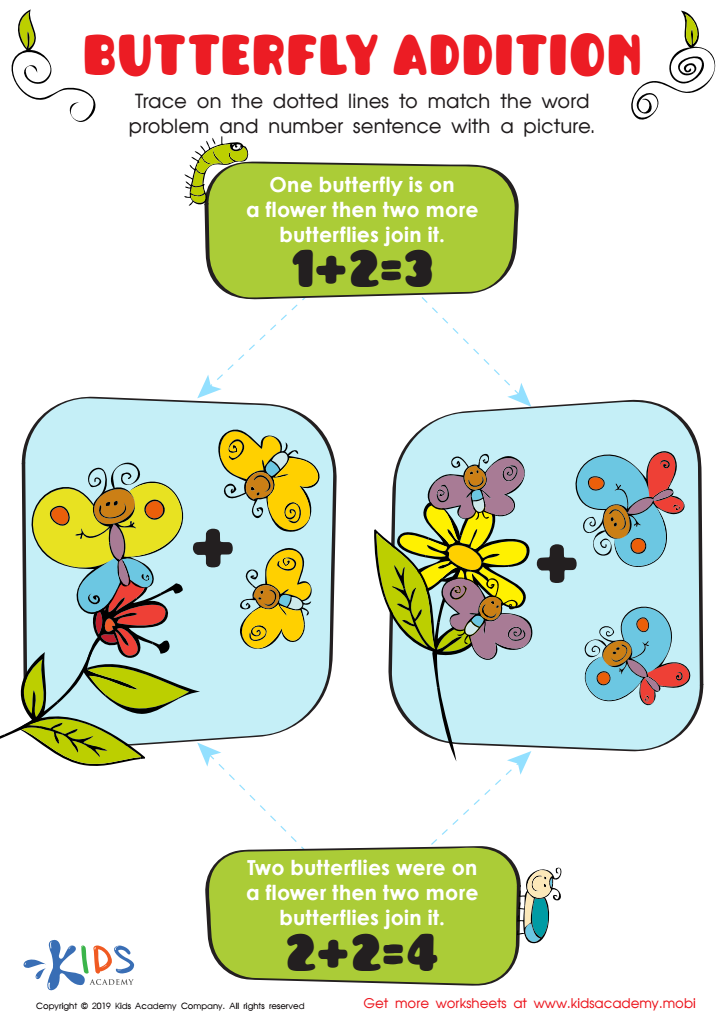
Butterfly Addition Worksheet
This tracing sheet is great for kids to work on math skills and have fun too. Read the word problems to them, then help them trace the dotted lines to match the problem and number sentence to a picture. Not only is it educational, it's beautiful too - your kids will love learning about butterflies!
Butterfly Addition Worksheet
Worksheet
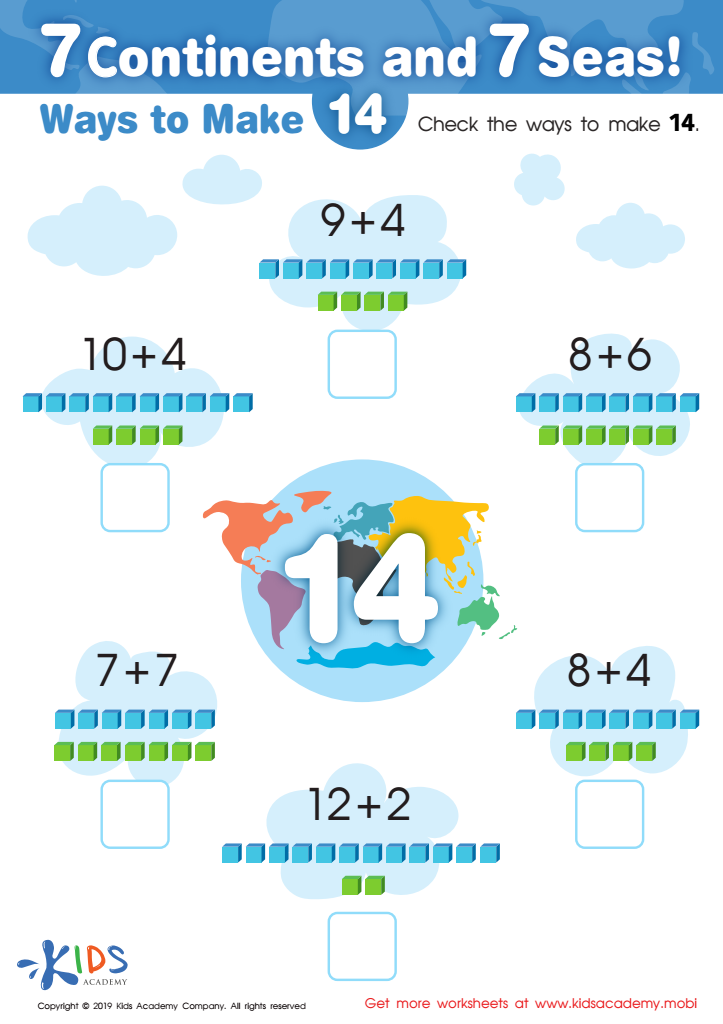
7 Continents and 7 Seas Worksheet
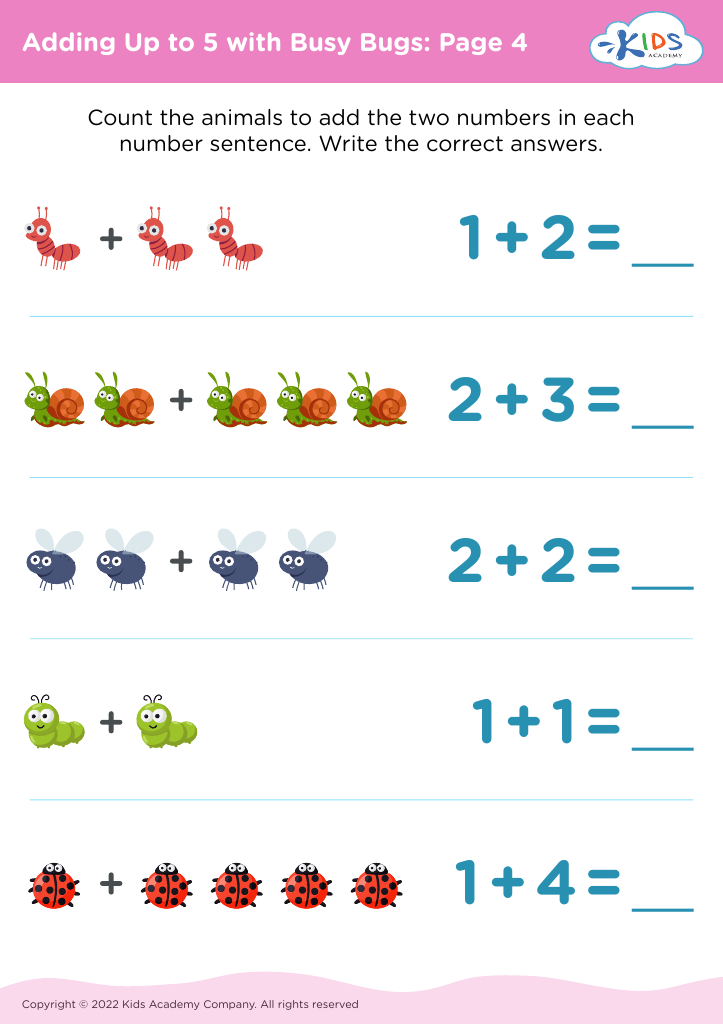
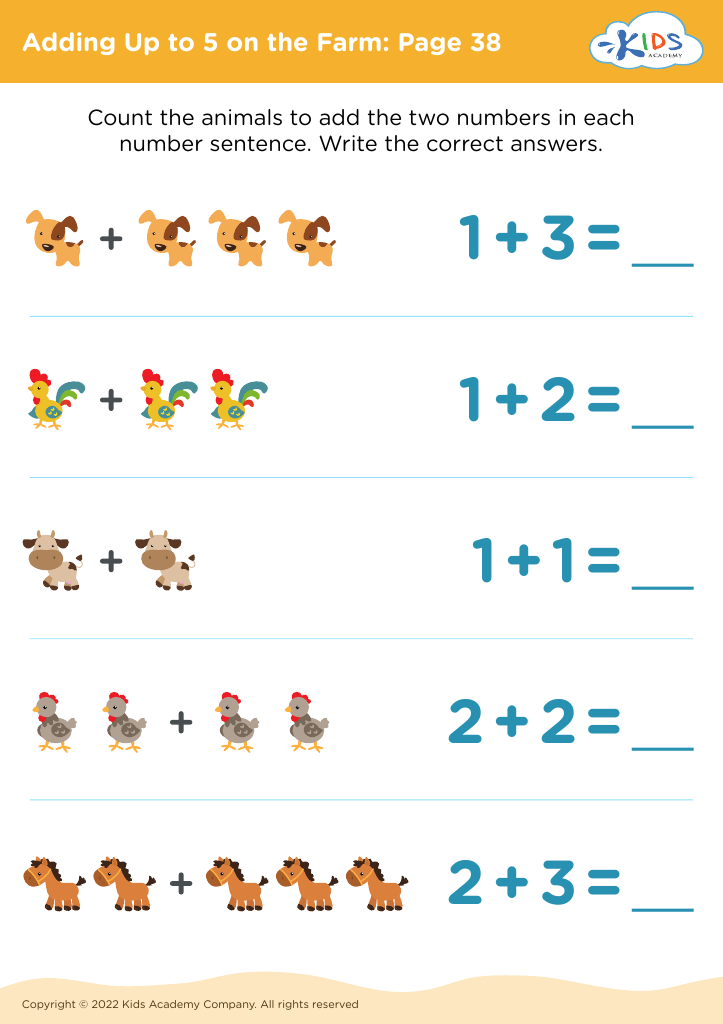
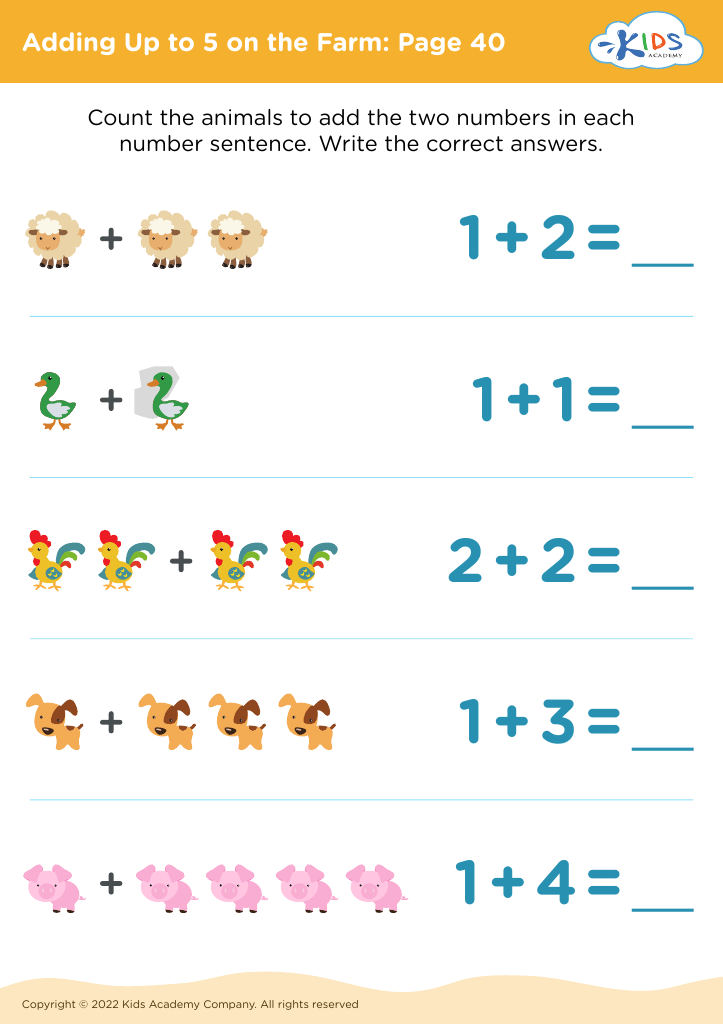
Remind kids of the continents and show them how different numbers can add up to the same figure. Give examples, like 2+2 =4, and 3+1 =4. Ask if they can provide other examples, then work through the simple additions in this worksheet with them. Ask them to circle all equations that make 14.
7 Continents and 7 Seas Worksheet
Worksheet
Join Kids Academy for Free
Who is primarily going to use this learning content?







Developing addition skills at an early age creates a crucial foundation for a child's overall math proficiency and cognitive development. At ages 3-4, children are beginning to grasp basic mathematical concepts, and introducing addition helps enhance their understanding of numerical relationships and patterns. Early mastery of addition fosters problem-solving skills and encourages logical thinking, which are essential for academic success.
When young children practice addition, they build their counting abilities and improve their number sense. This early intervention allows them to see numbers not just as symbols, but as representations of amounts that can be manipulated in various ways. It also empowers them to undertake more complex mathematical operations later on with greater ease and confidence.
Moreover, highlighting addition in early education helps to cultivate a positive attitude toward math. Children who engage in enjoyable and playful addition activities are more likely to develop an enthusiasm for mathematical learning, reducing anxiety and building mathematical resilience.
From a developmental perspective, addition exercises stimulate brain development, enhancing children's abilities to concentrate, differentiate, and make connections. Parents and teachers responsible for fostering these formative addition skills are essentially setting the stage for children's future educational triumphs and real-world problem-solving capabilities.








