Check out this FREE Trial Lesson on Math for age 3-4!

Sorting Objects into 3 Categories

Favorites
With answer key
Interactive
  • 3-4
  • Addition skills
  • Math
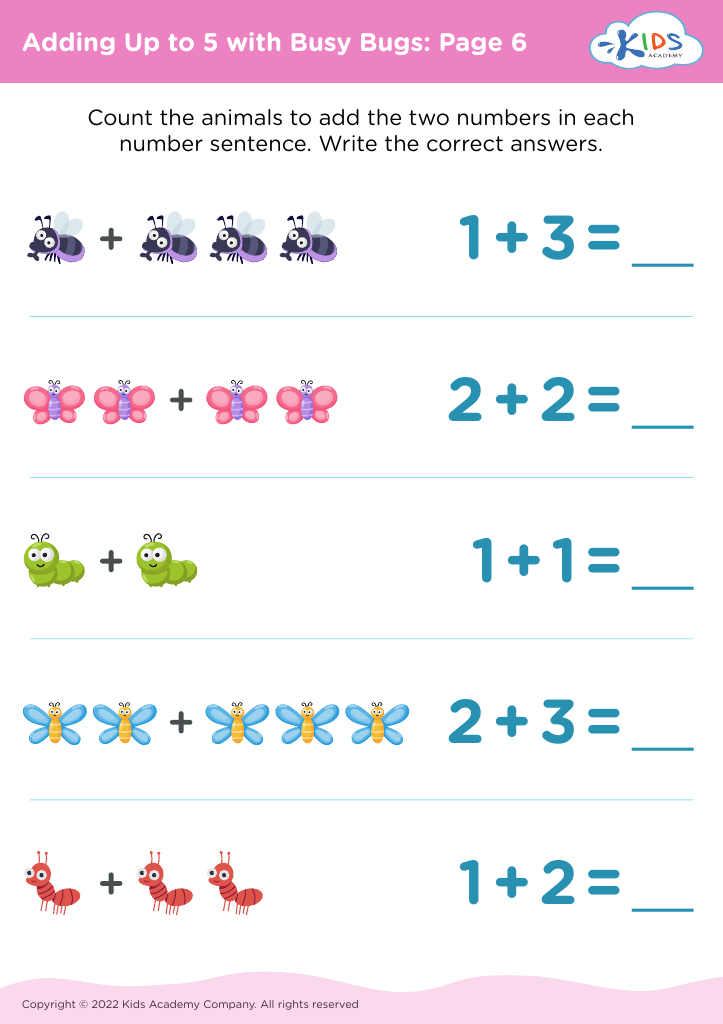
Adding Up to 5 with Busy Bugs: Page 6
Worksheet
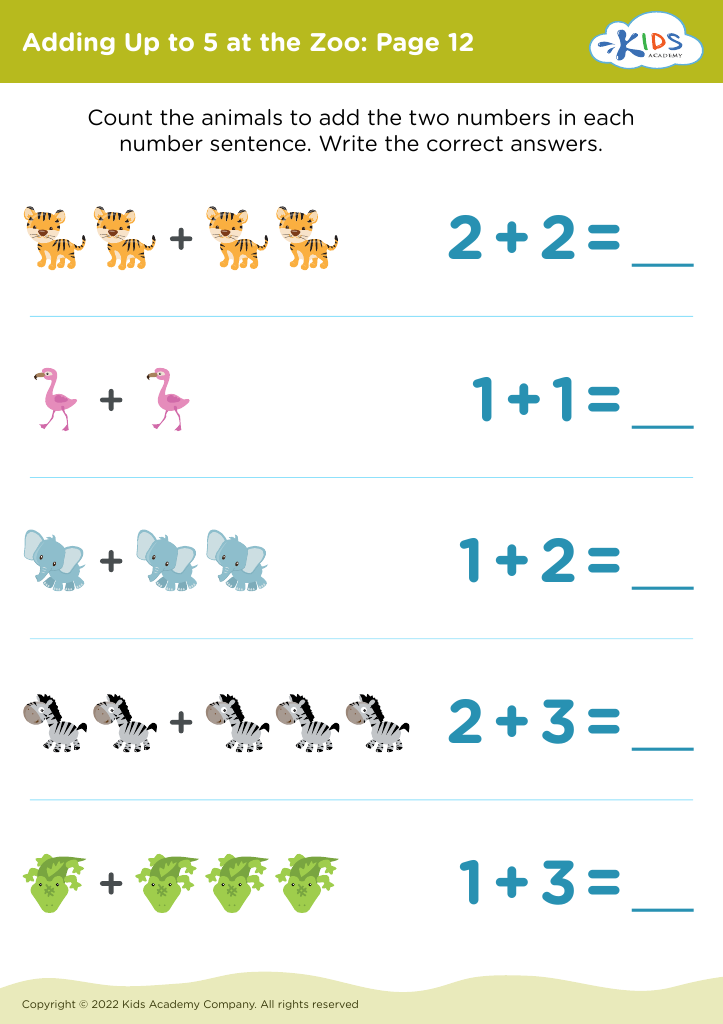
Adding Up to 5 at the Zoo: Page 12
Worksheet
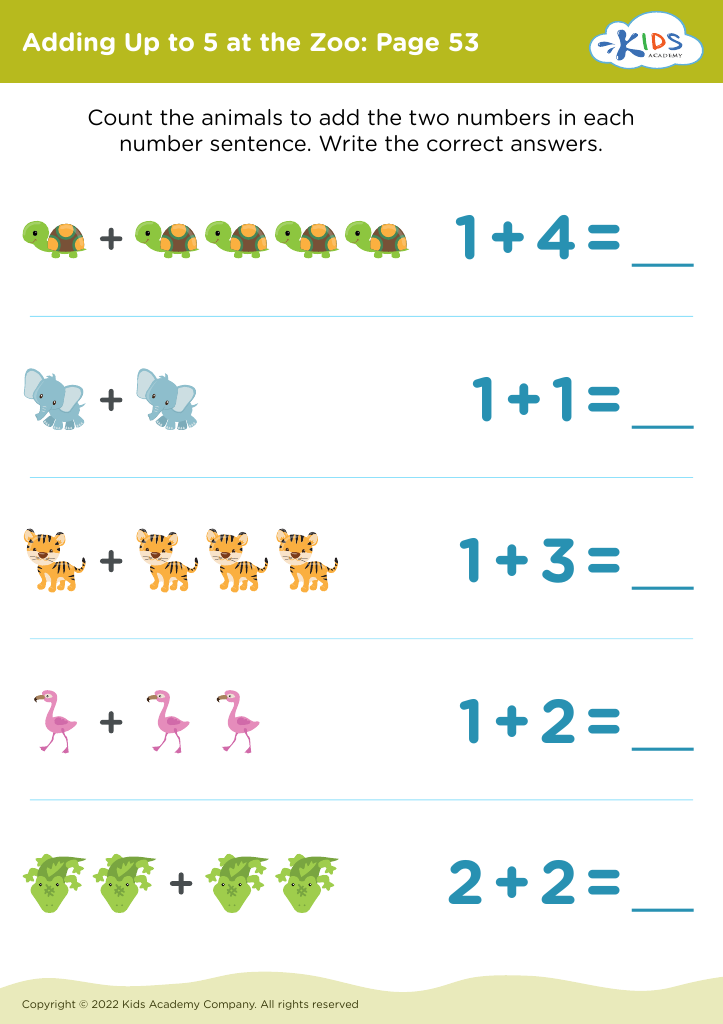
Adding Up to 5 at the Zoo: Page 53
Worksheet
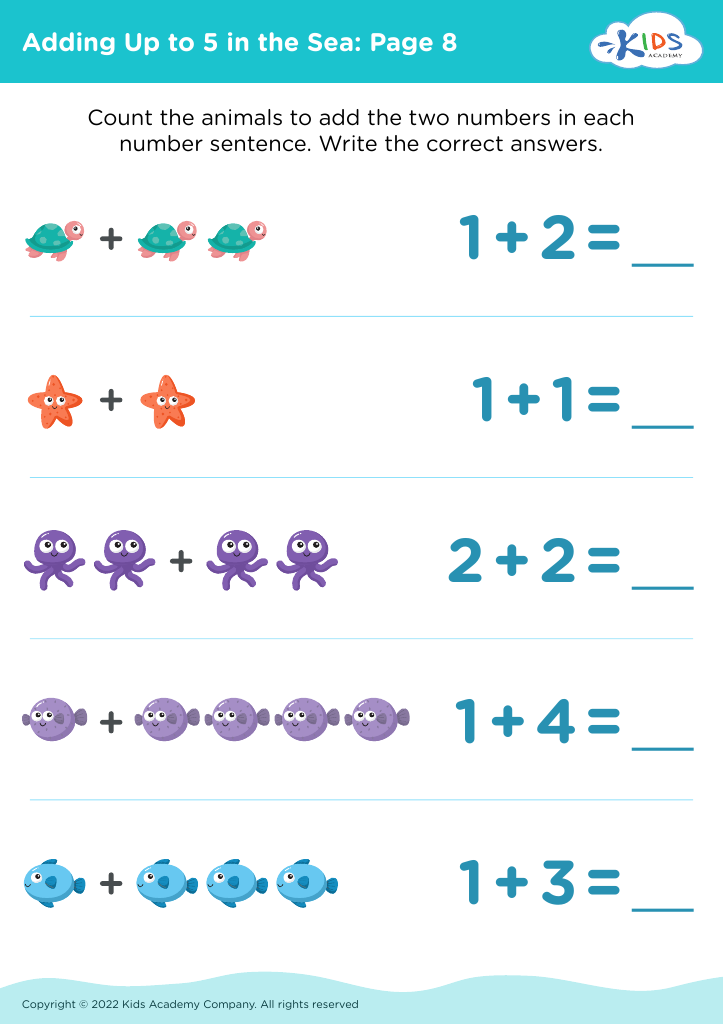
Adding Up to 5 in the Sea: Page 8

Adding Up to 5 in the Sea: Page 8

Adding Up to 5 in the Sea: Page 8
Worksheet
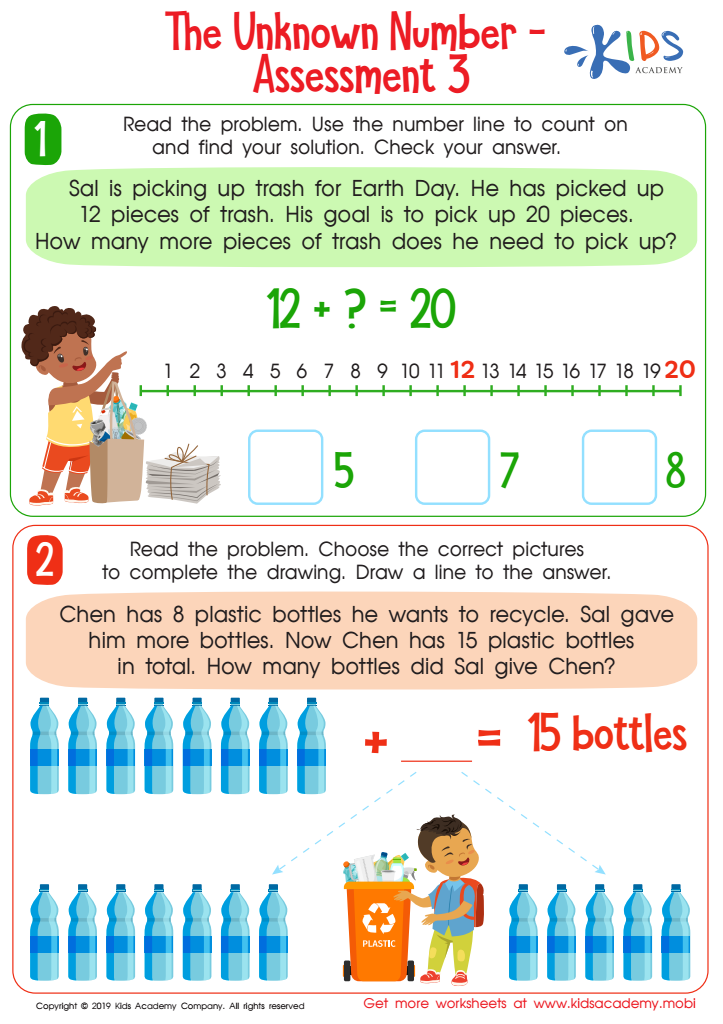
The Unknown Number - Assessment 3 Worksheet

The Unknown Number - Assessment 3 Worksheet

Read the Earth Day-themed word problem aloud to your kids, pointing to the pictures as you go. Use the number line to help them count on and find the answer. Then check it together. Doing this can help them learn more about Earth Day and meet other children who are doing their part to keep it clean.
The Unknown Number - Assessment 3 Worksheet
Worksheet
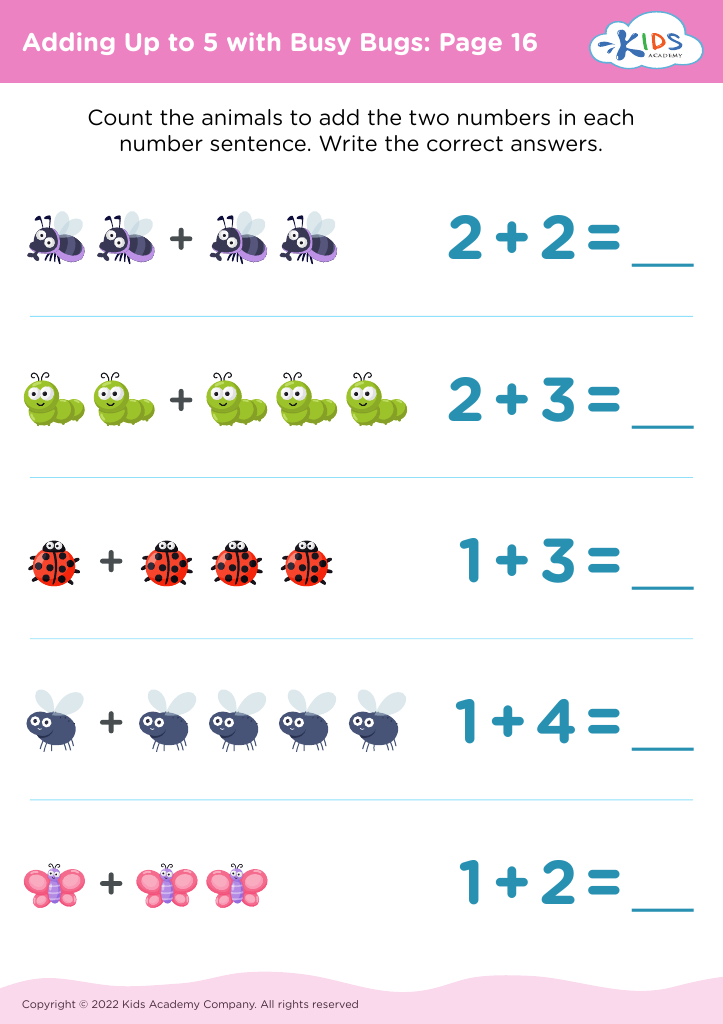
Adding Up to 5 with Busy Bugs: Page 16
Worksheet
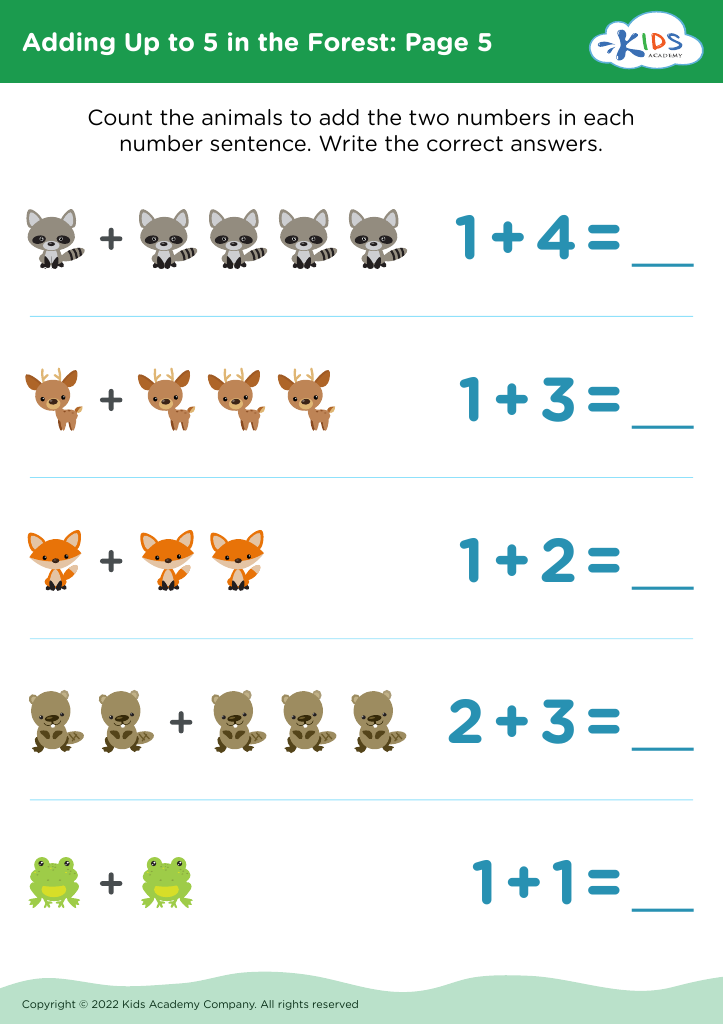
Adding Up to 5 in the Forest: Page 5
Worksheet
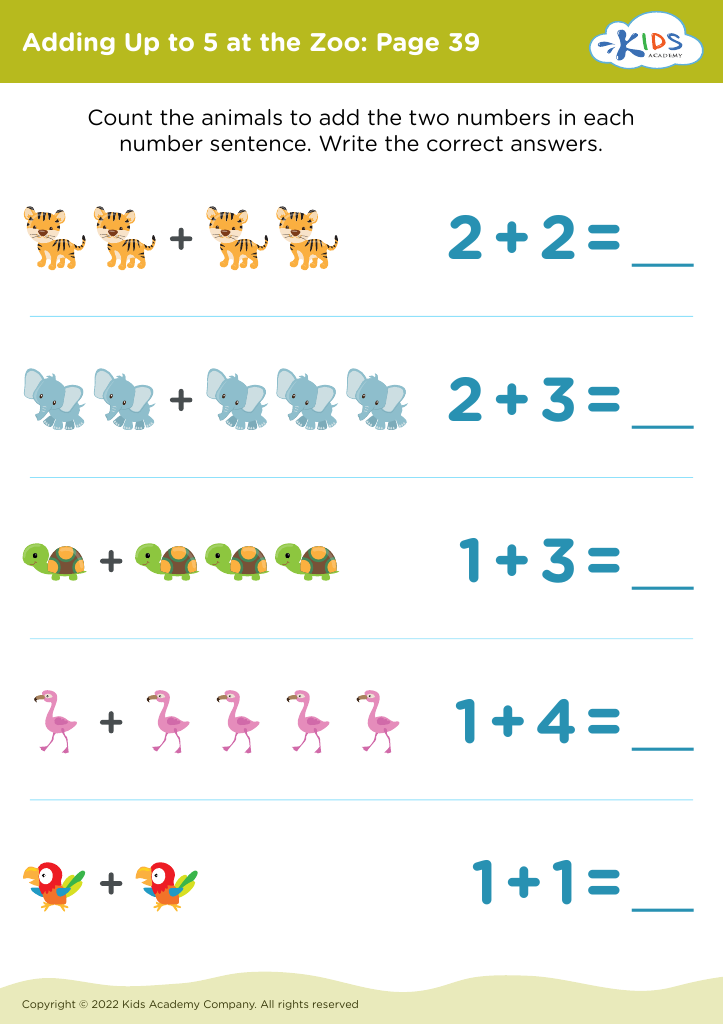
Adding Up to 5 at the Zoo: Page 39
Worksheet
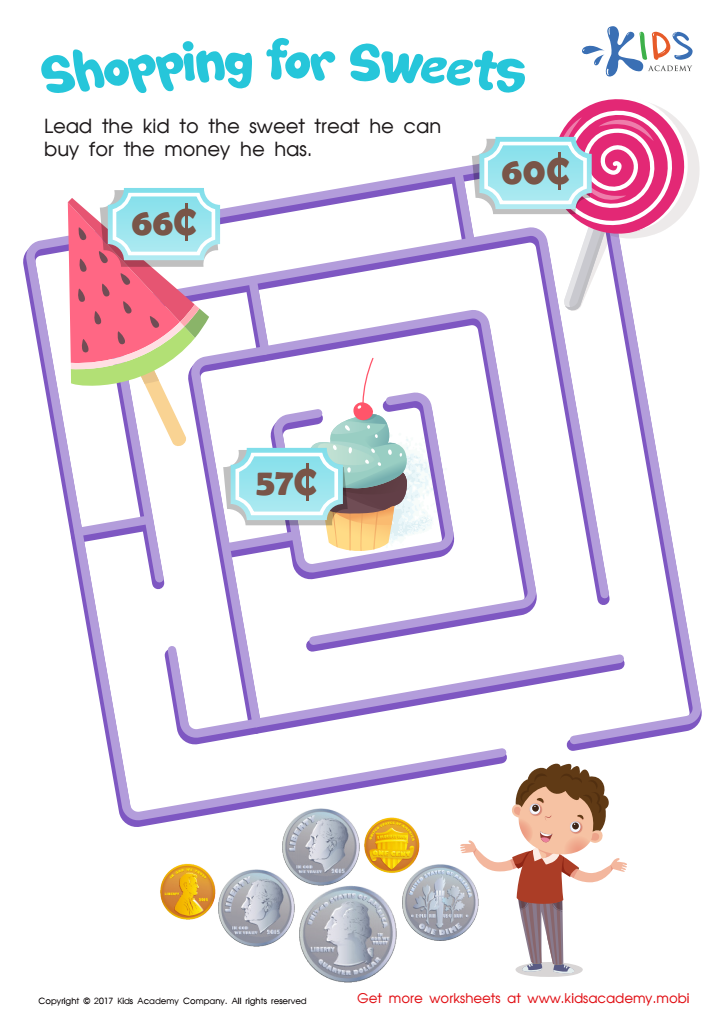
Money Worksheet: Shopping for Sweets

Shopping for Sweets Worksheet

Help your child hone their math and money skills with Shopping for Sweets! They'll count coins, work their way through a maze, and find the amount of money. Fun and educational - perfect for kids!
Shopping for Sweets Worksheet

Worksheet
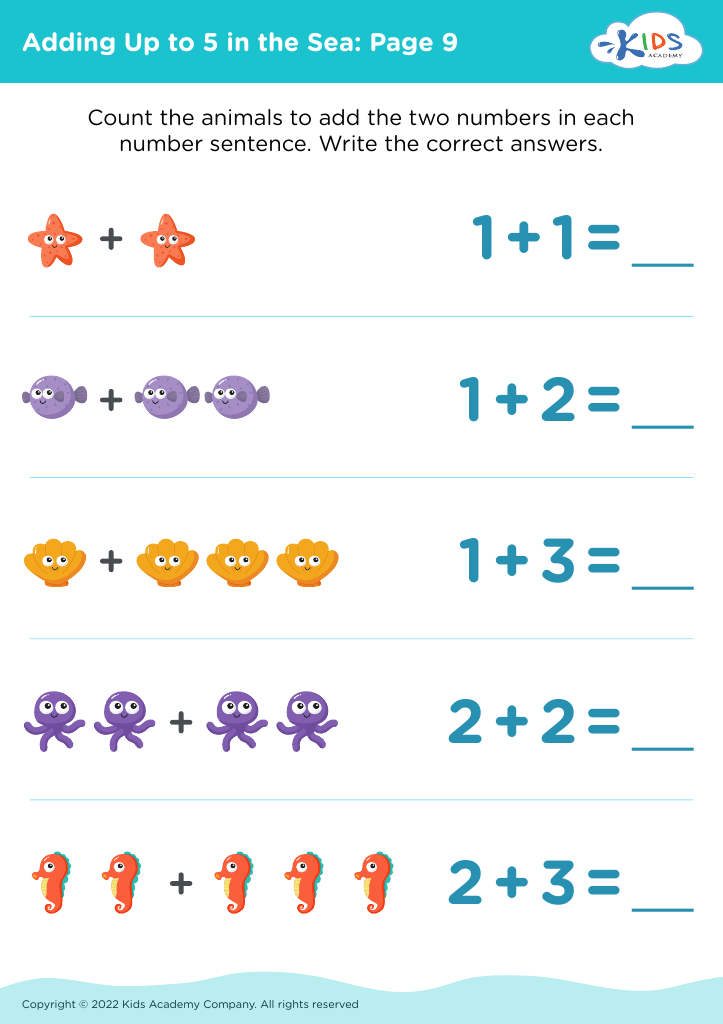
Adding Up to 5 in the Sea: Page 9

Adding Up to 5 in the Sea: Page 9

Adding Up to 5 in the Sea: Page 9
Worksheet


... 4 5

Developing addition skills at an early age creates a crucial foundation for a child's overall math proficiency and cognitive development. At ages 3-4, children are beginning to grasp basic mathematical concepts, and introducing addition helps enhance their understanding of numerical relationships and patterns. Early mastery of addition fosters problem-solving skills and encourages logical thinking, which are essential for academic success.

When young children practice addition, they build their counting abilities and improve their number sense. This early intervention allows them to see numbers not just as symbols, but as representations of amounts that can be manipulated in various ways. It also empowers them to undertake more complex mathematical operations later on with greater ease and confidence.

Moreover, highlighting addition in early education helps to cultivate a positive attitude toward math. Children who engage in enjoyable and playful addition activities are more likely to develop an enthusiasm for mathematical learning, reducing anxiety and building mathematical resilience.

From a developmental perspective, addition exercises stimulate brain development, enhancing children's abilities to concentrate, differentiate, and make connections. Parents and teachers responsible for fostering these formative addition skills are essentially setting the stage for children's future educational triumphs and real-world problem-solving capabilities.