Basic subtraction skills Math Worksheets for Ages 3-4
3 filtered results
-
From - To
Welcome to our Basic Subtraction Skills Math Worksheets for Ages 3-4! These engaging and interactive worksheets are designed to help young learners develop essential subtraction skills through fun activities. Each worksheet features colorful visuals and age-appropriate exercises that foster an enjoyable learning experience. As children practice subtraction, they'll build confidence and enhance their critical thinking abilities. Perfect for preschool and homeschool settings, these worksheets encourage children to discover math concepts in an exciting way. Explore our collection today and watch your little ones gain the foundational skills they need for future math success! Start their journey with subtraction now!
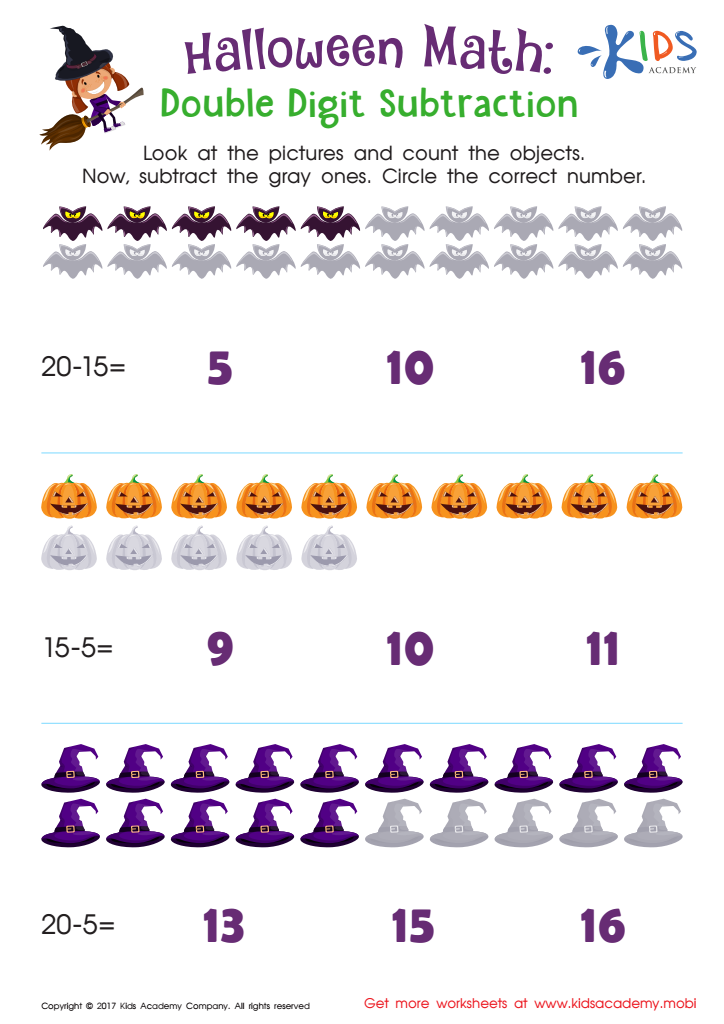
Halloween Math Subtraction Worksheet
 Assign to My Students
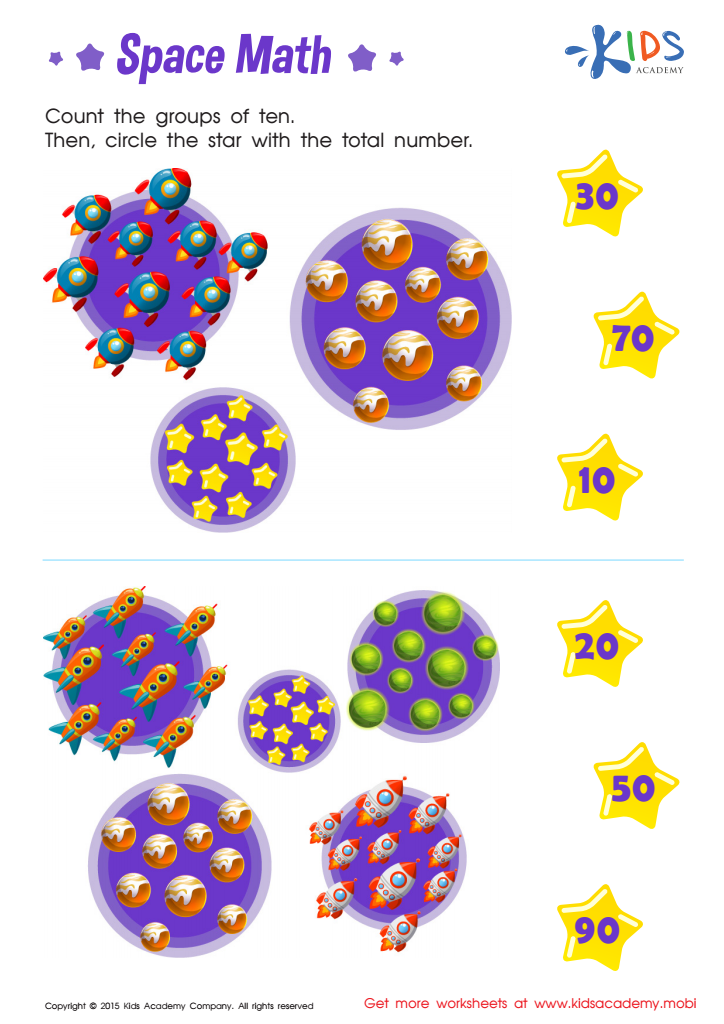
Learn dozens: Space math Worksheet
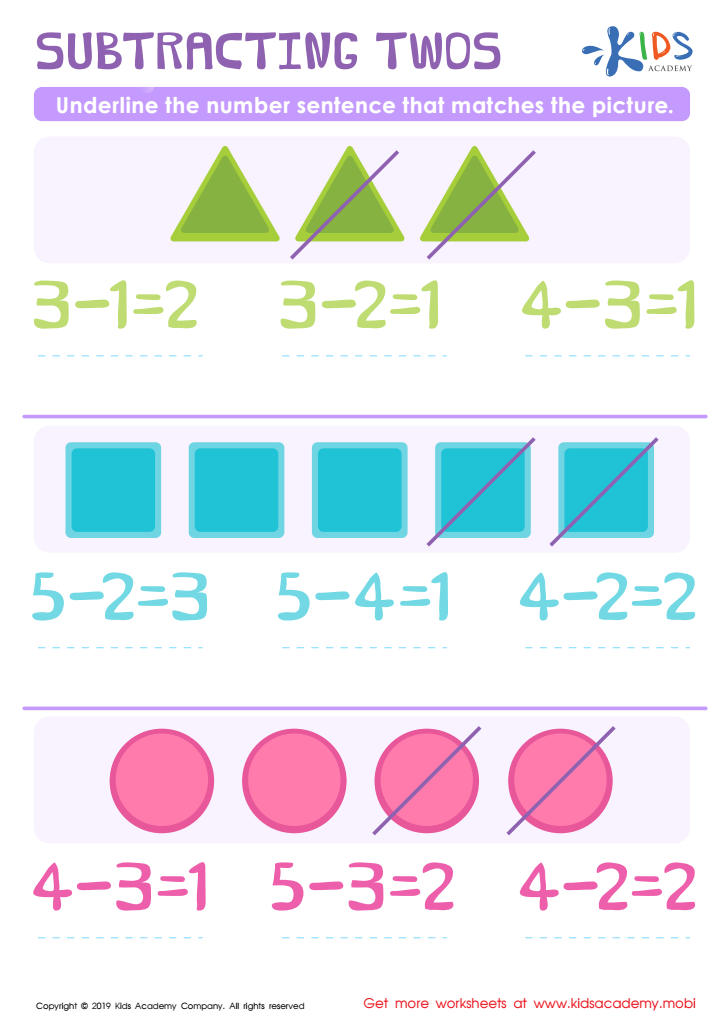
Subtracting Twos Worksheet








Basic subtraction skills can be crucial for children aged 3-4, and both parents and teachers should prioritize their development for several reasons. First, mastering subtraction lays the foundation for more complex mathematical concepts that will arise in later education. Early exposure helps children understand the relationship between addition and subtraction, fostering a holistic understanding of numbers.
At this young age, children naturally engage in play-based learning. Incorporating subtraction into games and activities can enhance their critical thinking and problem-solving skills while also making learning fun. For instance, using tangible objects like toys or snacks creates a visual and interactive experience that reinforces the concept of taking away or losing items.
Moreover, numbers and basic math can boost a child’s confidence. As they begin to grasp subtraction, children experience a sense of achievement, encouraging a positive attitude toward learning. Lastly, these skills aid in developing cognitive abilities, language skills, and even emotional intelligence, as children learn to discuss and express their experiences with numbers. By prioritizing basic subtraction skills, parents and teachers contribute significantly to a child's overall development, laying the groundwork for future academic success and lifelong learning.








