Number comprehension Math Worksheets for Ages 3-4
17 filtered results
-
From - To
Discover our engaging "Number Comprehension Math Worksheets for Ages 3-4" at Kids Academy! Designed to ignite a love for numbers, these worksheets help toddlers recognize numerals, count objects, and grasp basic math concepts. With vibrant illustrations and interactive tasks, children build foundational skills while having fun. Perfect for preschoolers and early learners, our carefully crafted exercises promote cognitive development, improve fine motor skills, and establish a strong math foundation. Parents and educators can easily integrate these worksheets into daily routines, making learning both exciting and effective. Embrace the joy of learning numbers with Kids Academy!
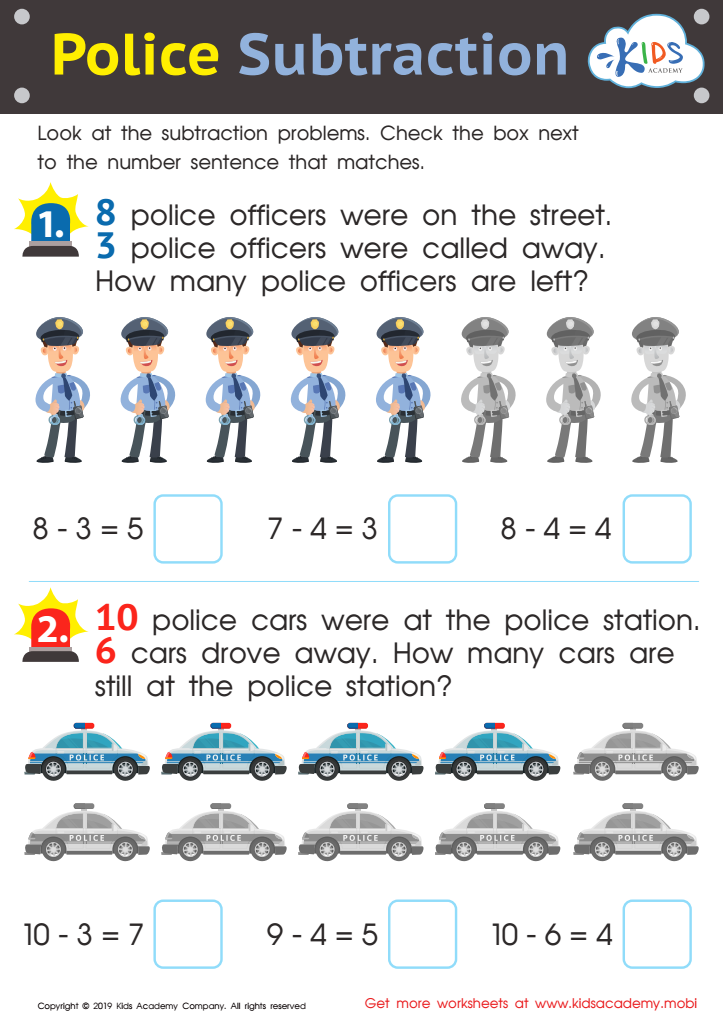
Police Subtraction Worksheet
 Assign to My Students
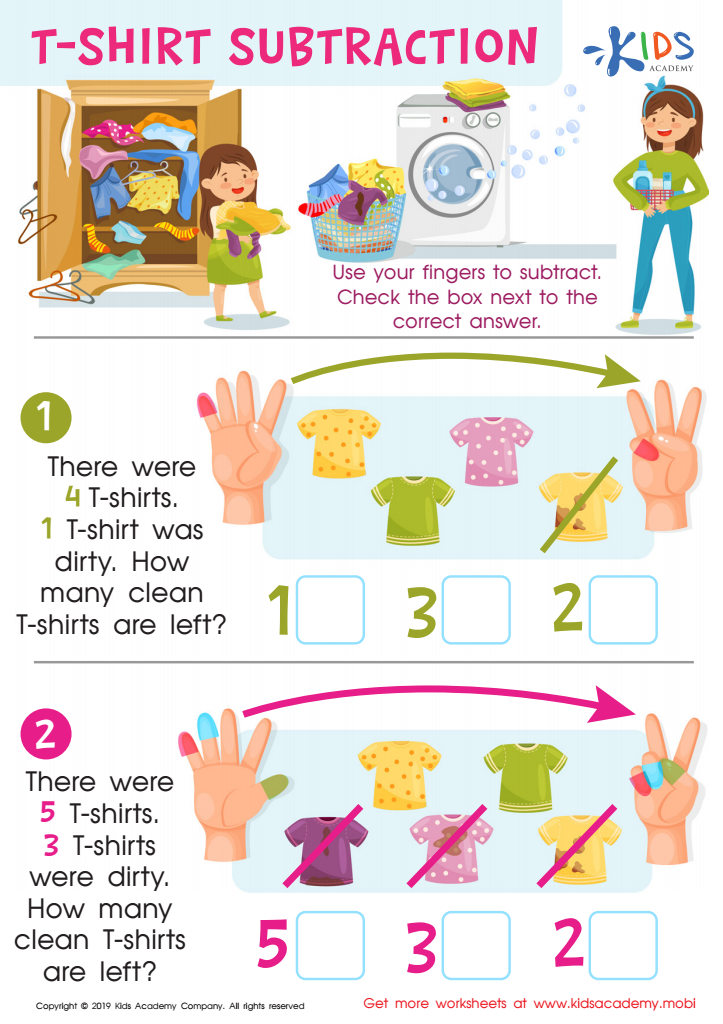
T-shirt Subtraction Worksheet
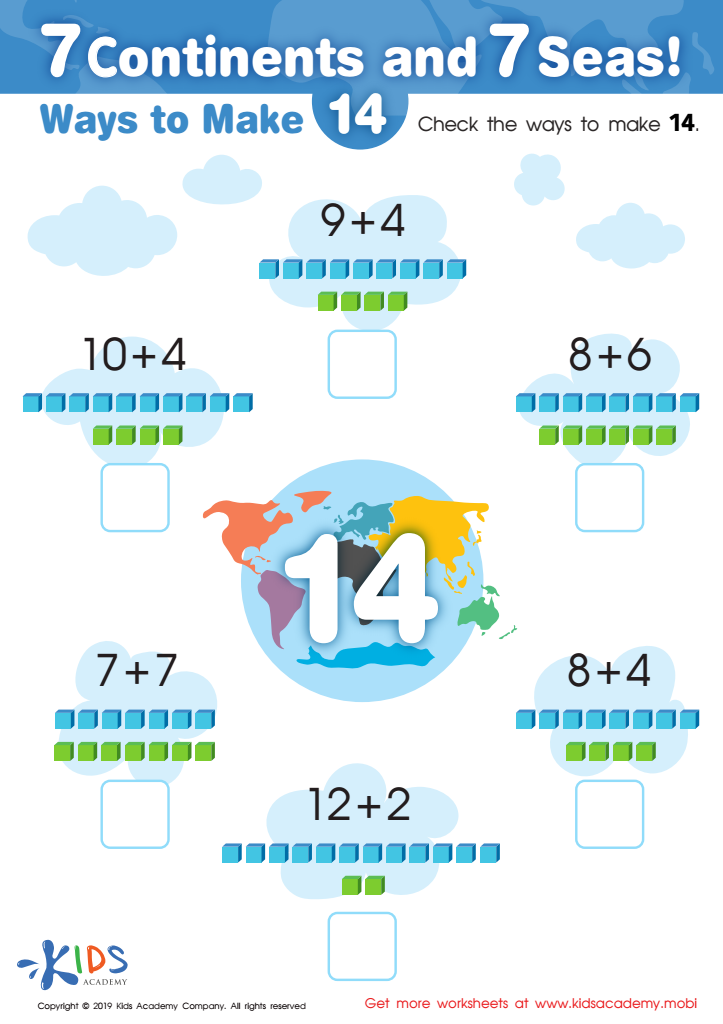
7 Continents and 7 Seas Worksheet
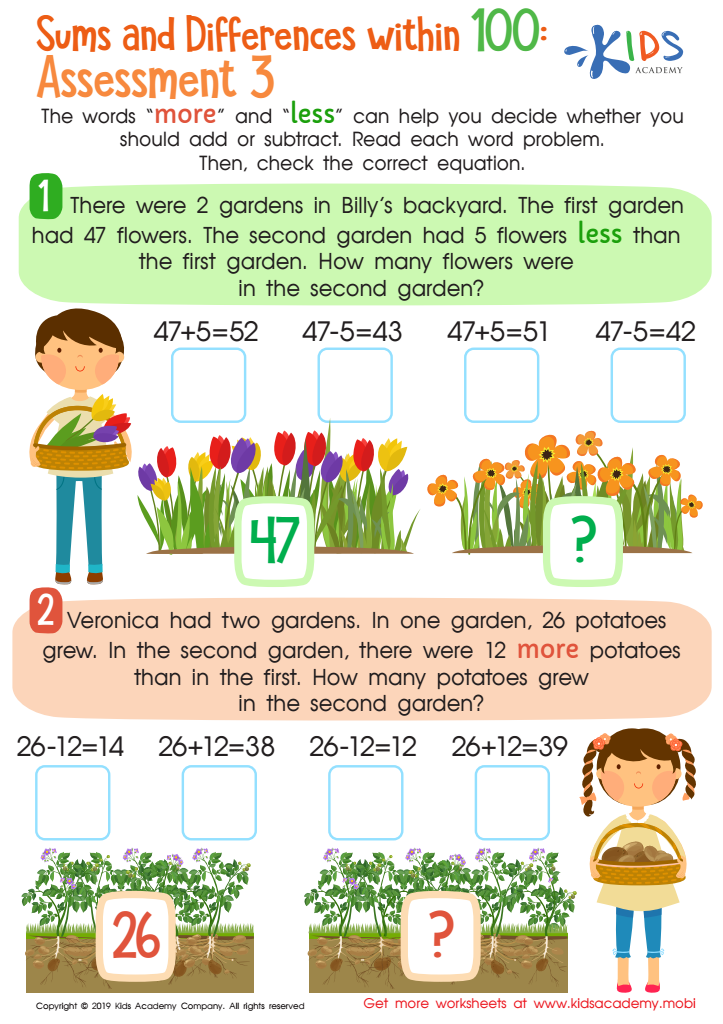
Sums and Differences Within 1 - Assessment 1 Worksheet
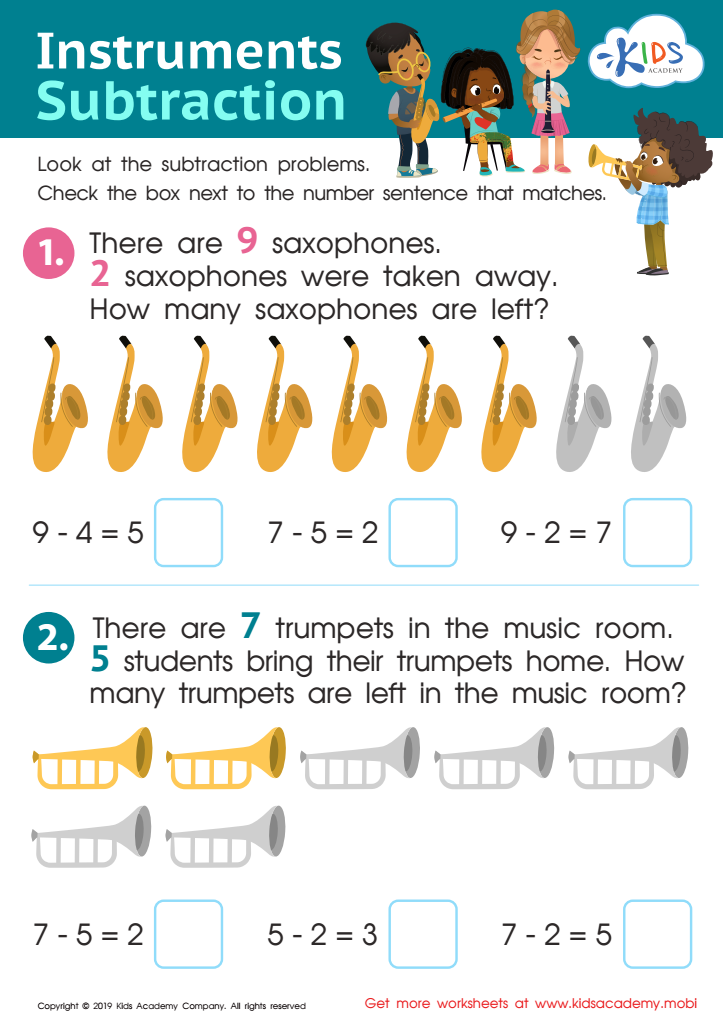
Instrument Subtraction Worksheet
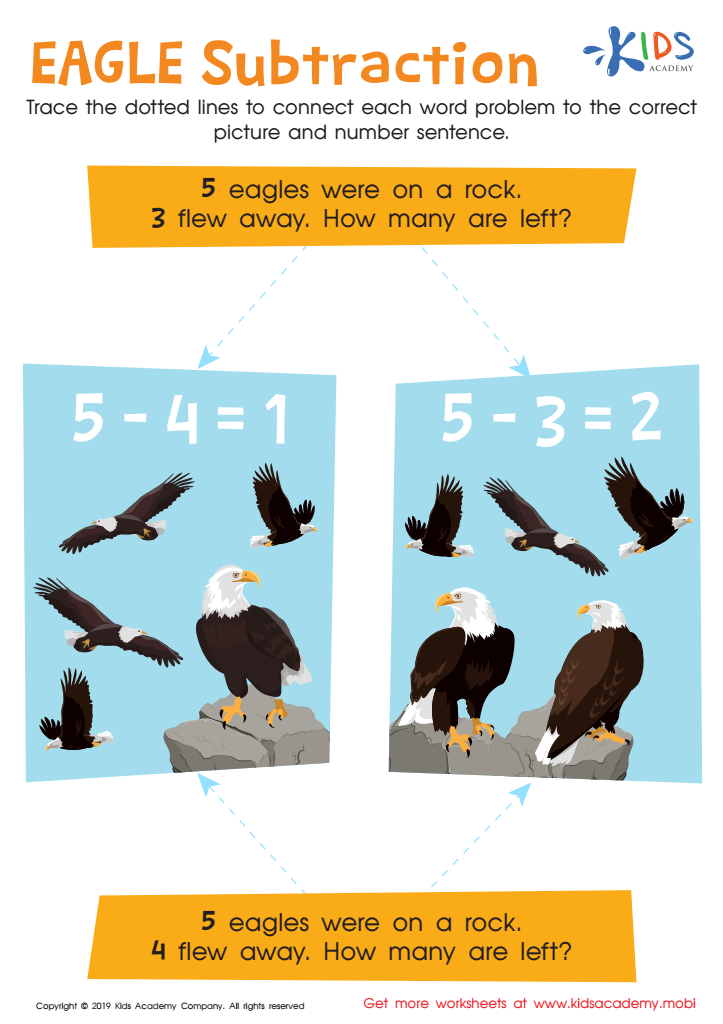
Eagle Subtraction Worksheet
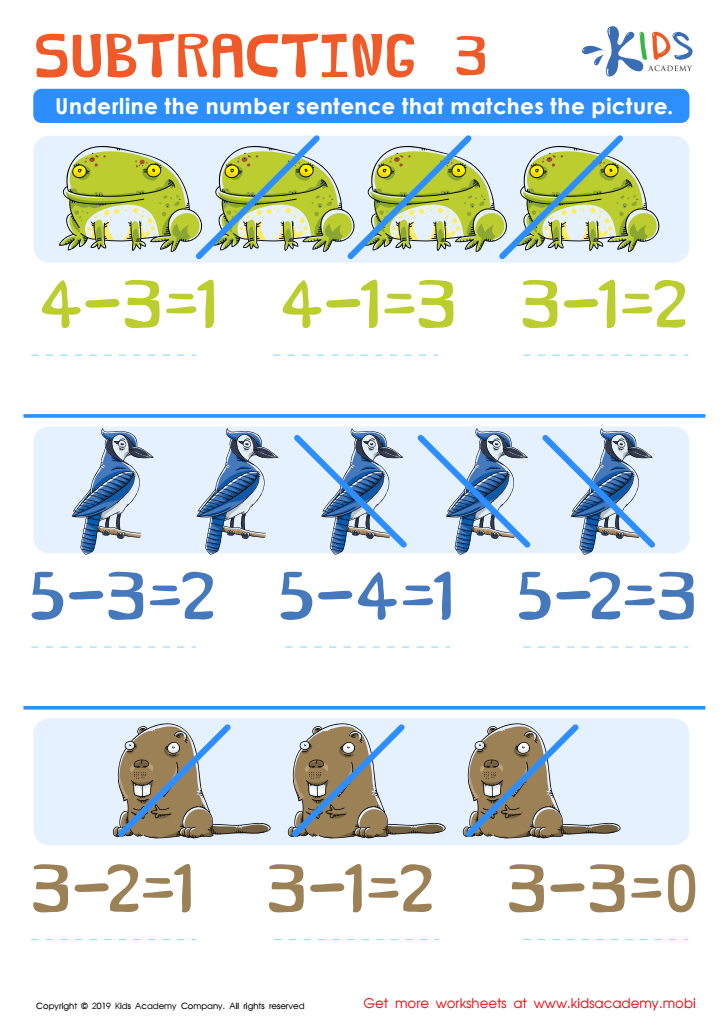
Subtracting 3 Worksheet
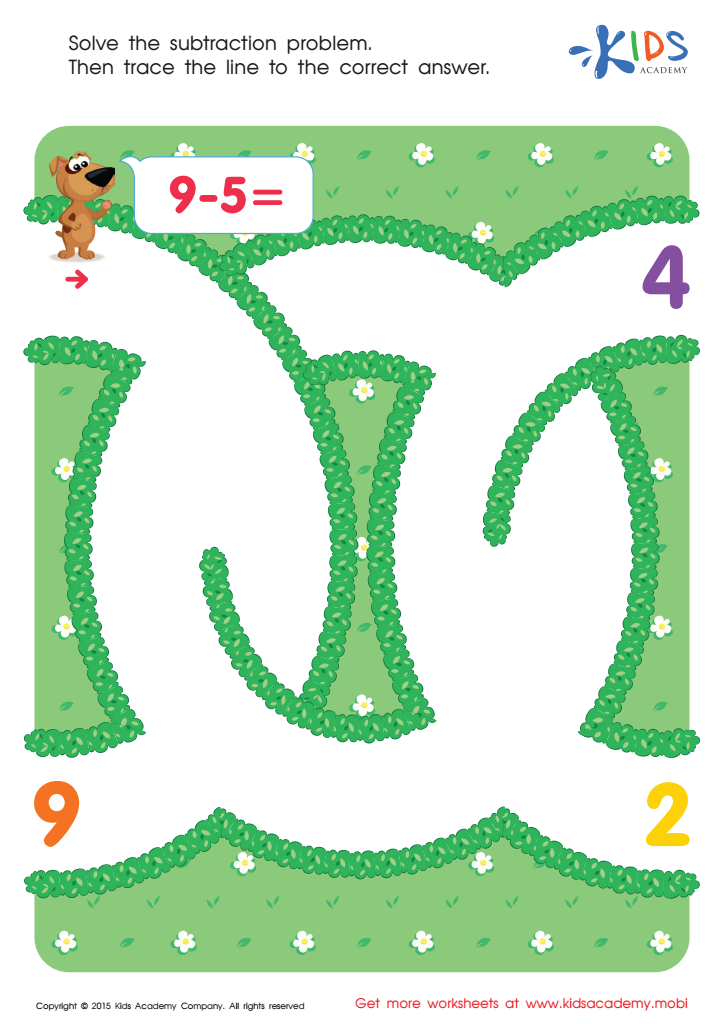
Subtraction Nine And Five Worksheet
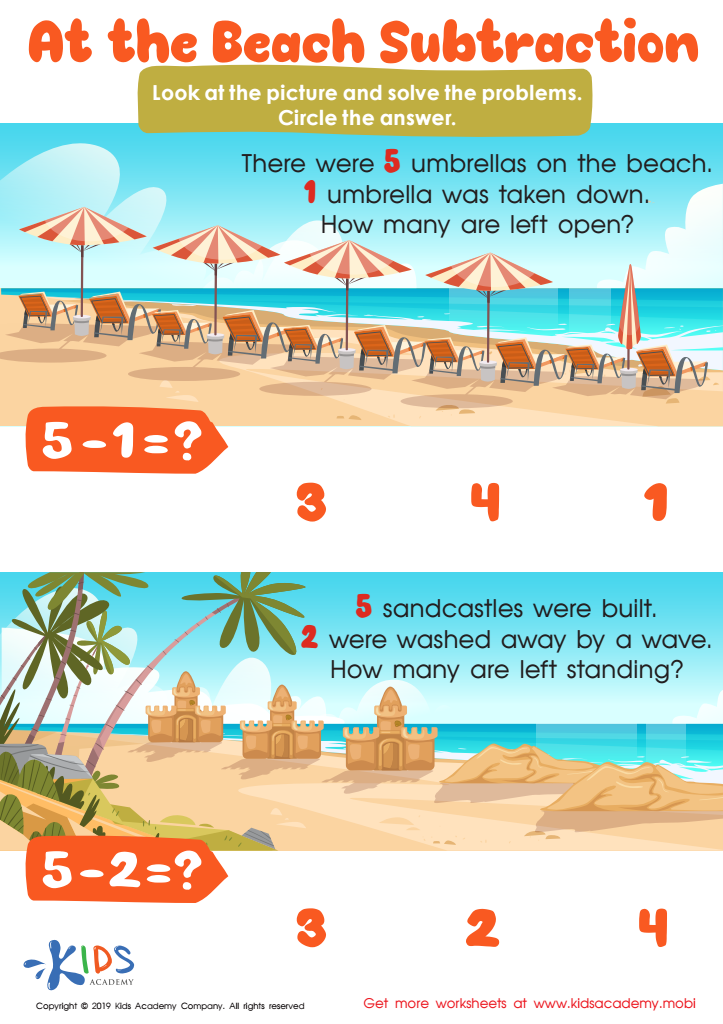
At the Beach Subtraction Worksheet
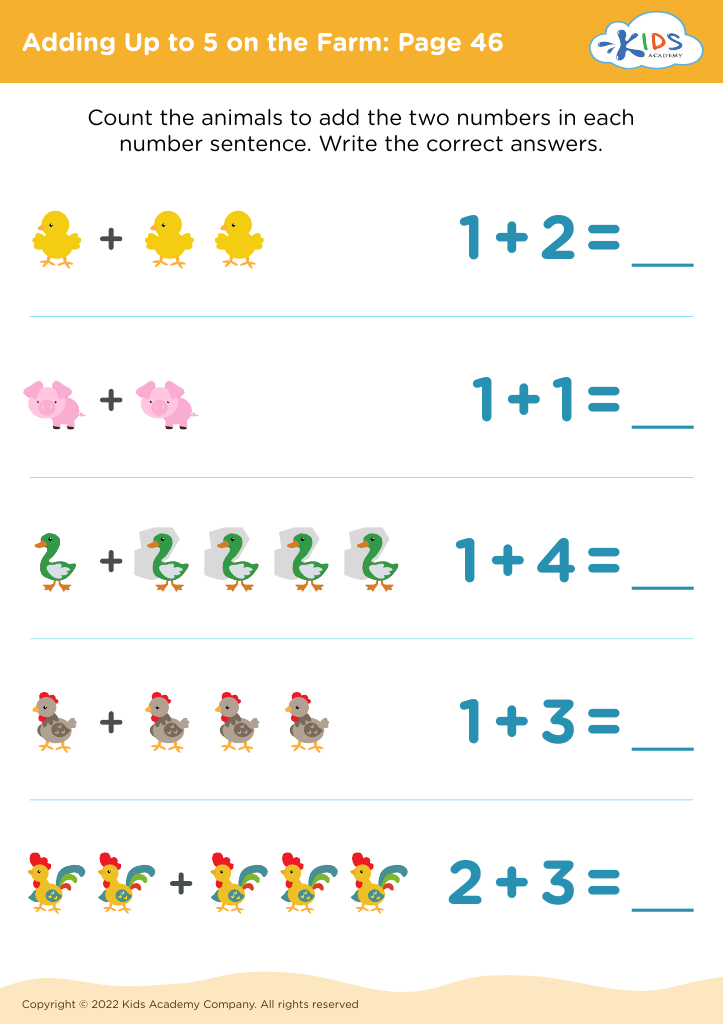
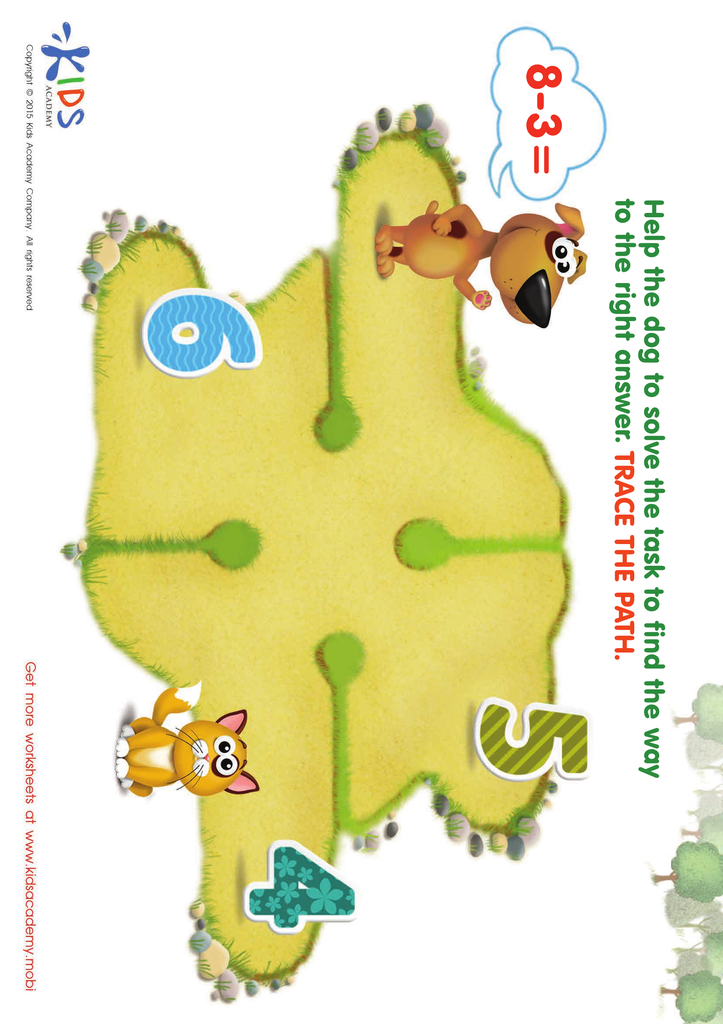
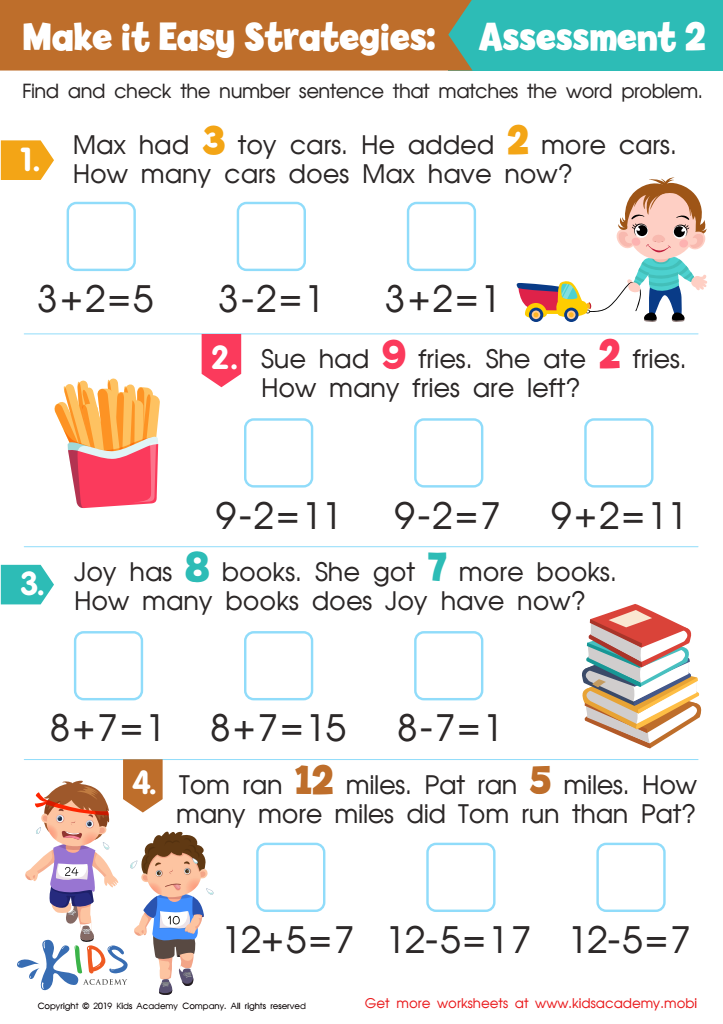
Make it Easy Strategies: Assessment 2 Worksheet
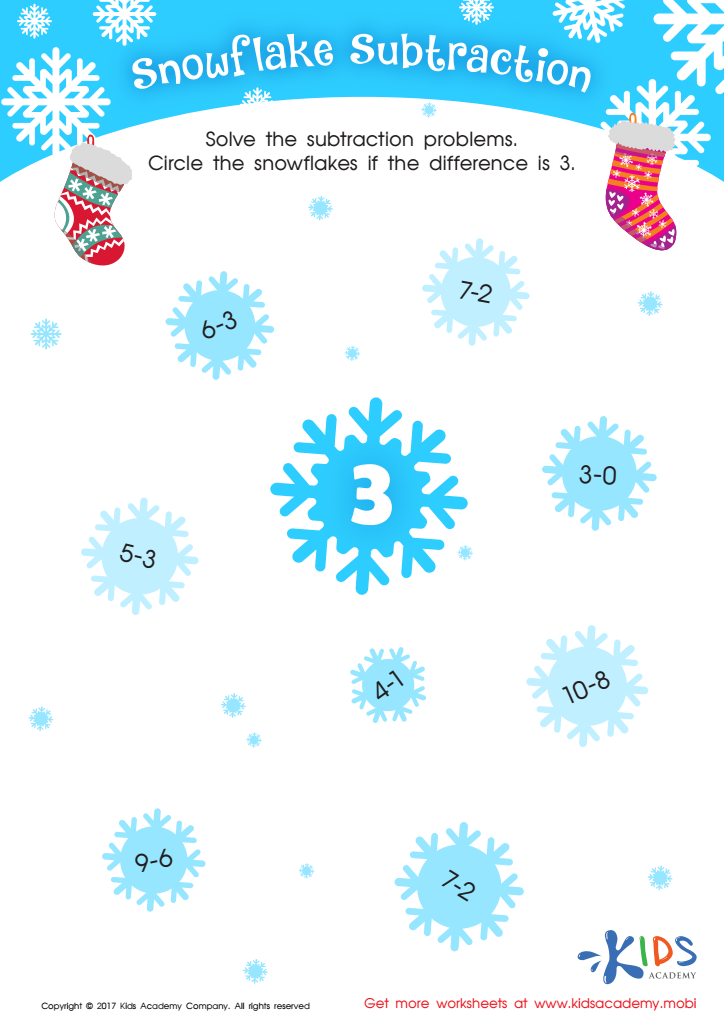
Snowflake Subtraction Worksheet
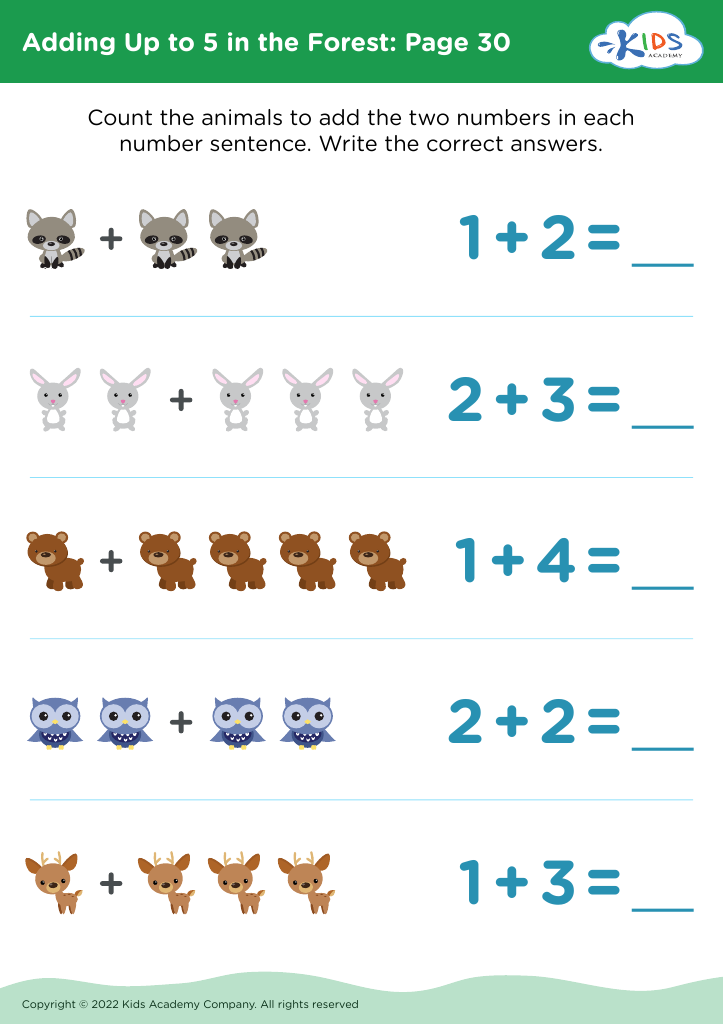
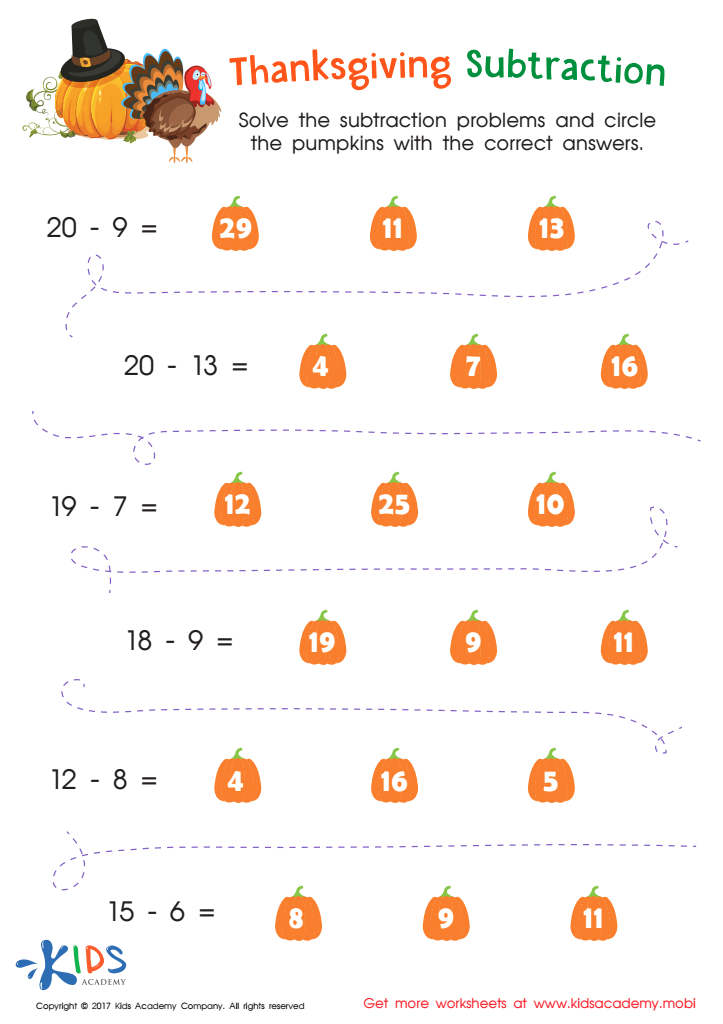
Thanksgiving Subtraction Substraction Worksheet
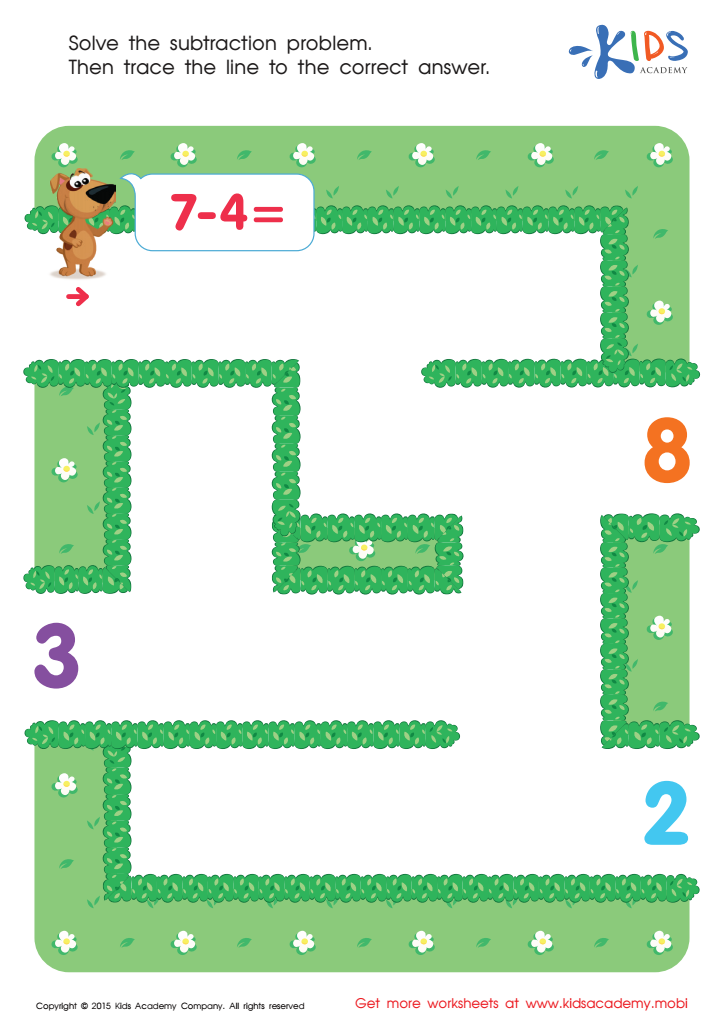
Subtraction Seven Minus Four Worksheet
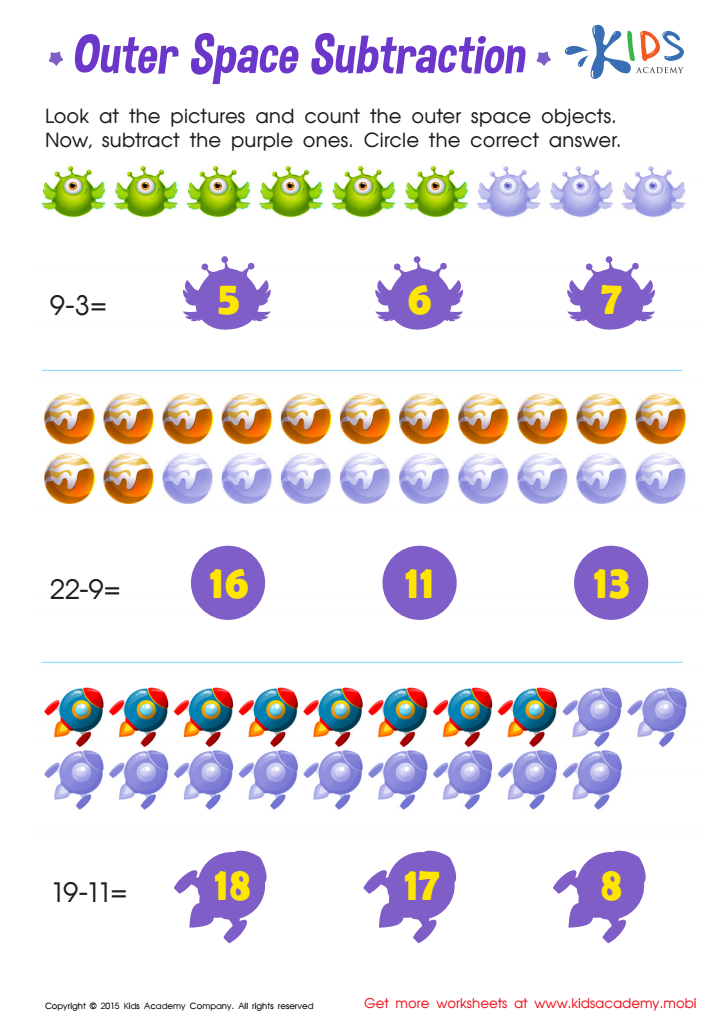
Outer Space Substraction Worksheet







Number comprehension in early years plays a pivotal role in a child's overall cognitive development and educational trajectory. For children aged 3-4, understanding numbers isn't just about recognizing digits; it's about grasping fundamental concepts such as quantity, order, and basic arithmetic, which form the foundation for more advanced mathematical skills.
Firstly, early number comprehension fosters critical thinking and problem-solving abilities. When children learn to count, identify patterns, and understand relationships between numbers, they begin to develop logical reasoning skills. These skills are not only crucial for math but for everyday tasks and future learning.
Moreover, early familiarity with numbers can build confidence and reduce anxiety related to math in later years. Engaging in number-related activities, such as counting objects, playing numerical games, or singing number songs, can make learning feel fun and accessible. This positive early experience can foster a lifelong interest in and a positive attitude towards mathematics.
Furthermore, numbers are ubiquitous in daily life. From telling time and managing money to participating in sports, understanding numbers is essential. Parents and teachers who emphasize number comprehension early on are equipping children with tools to navigate and make sense of the world around them.
In essence, prioritizing number comprehension at a young age sets the stage for academic success and practical life skills. It empowers children to approach problem-solving with confidence and curiosity, laying the groundwork for their future educational and personal growth.








