Observational skills Math Worksheets for Ages 3-4
6 filtered results
-
From - To
Enhance your child's learning journey with our "Observational Skills Math Worksheets" designed for ages 3-4. These engaging worksheets help little learners develop critical thinking and attention to detail as they explore various mathematical concepts through observation. Perfect for early childhood education, our resources provide fun activities that encourage counting, comparing, and identifying patterns. By honing observational skills, children build a strong foundation for future math success while enjoying interactive learning experiences. You'll find a variety of colorful, child-friendly worksheets that make learning exciting and effective. Start nurturing your child's math proficiency today with our specially designed worksheets!
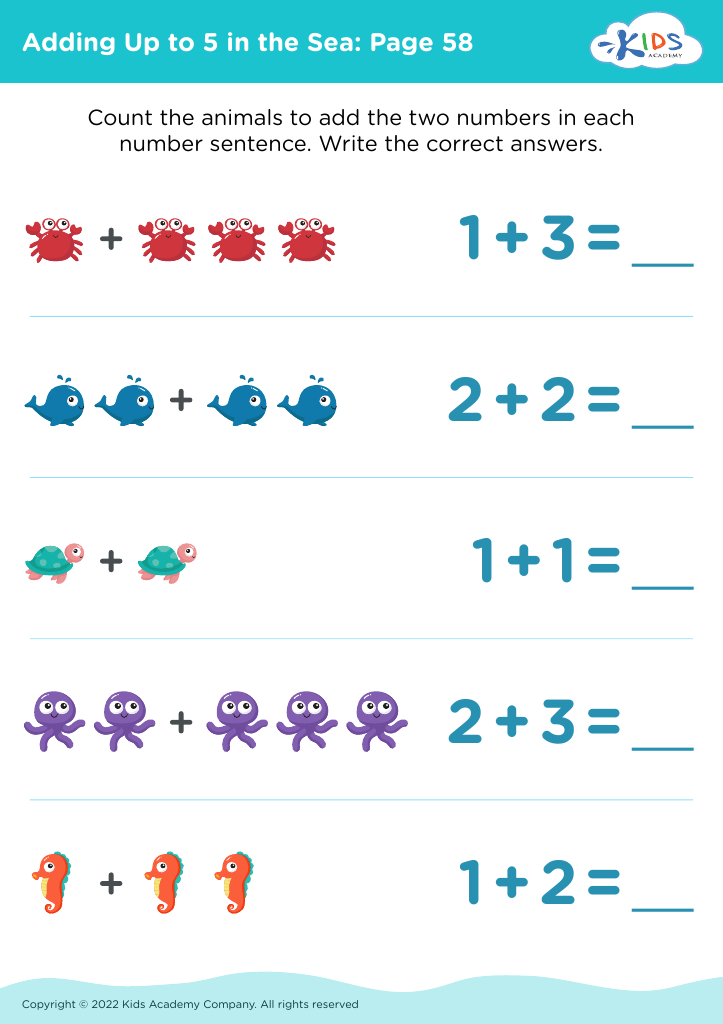
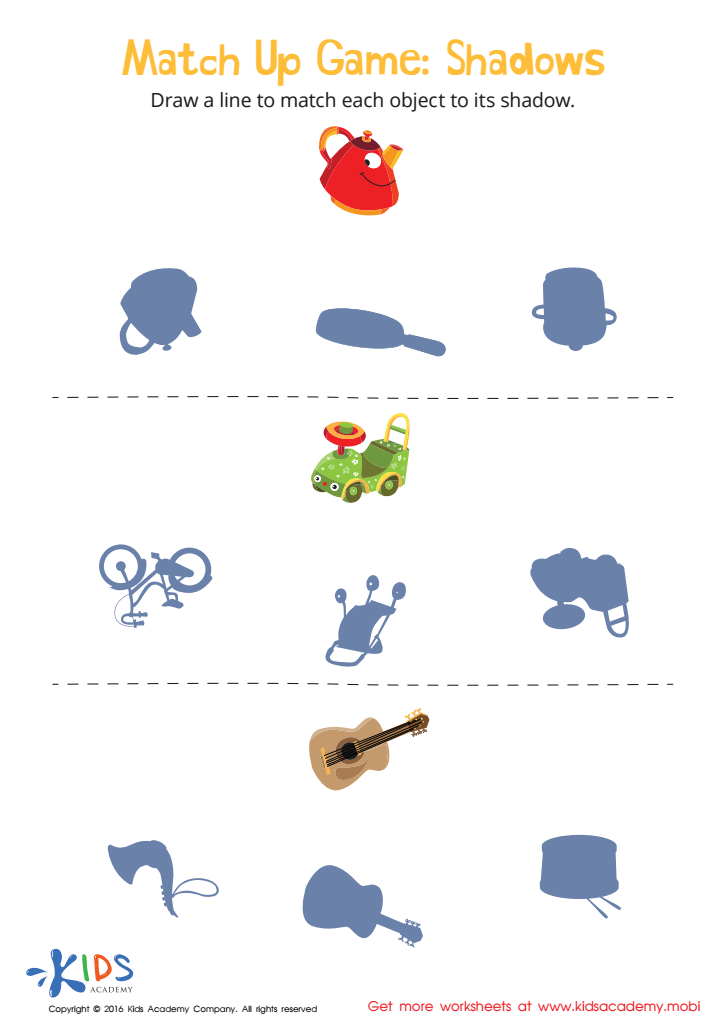
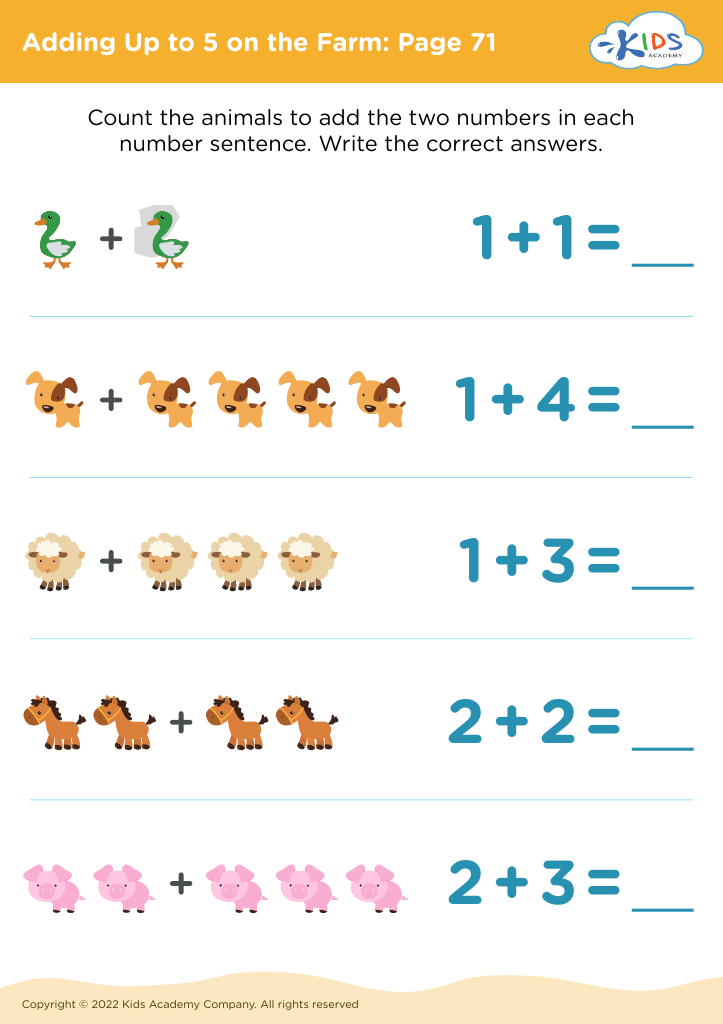
 Assign to My Students
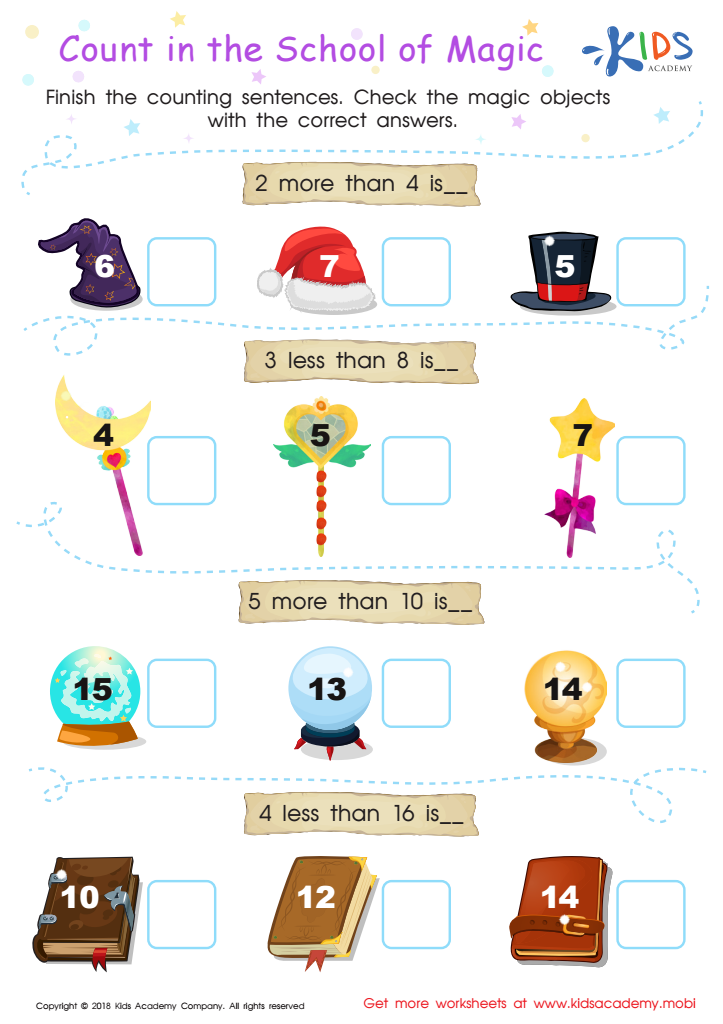
Count in the School of Magic Worksheet
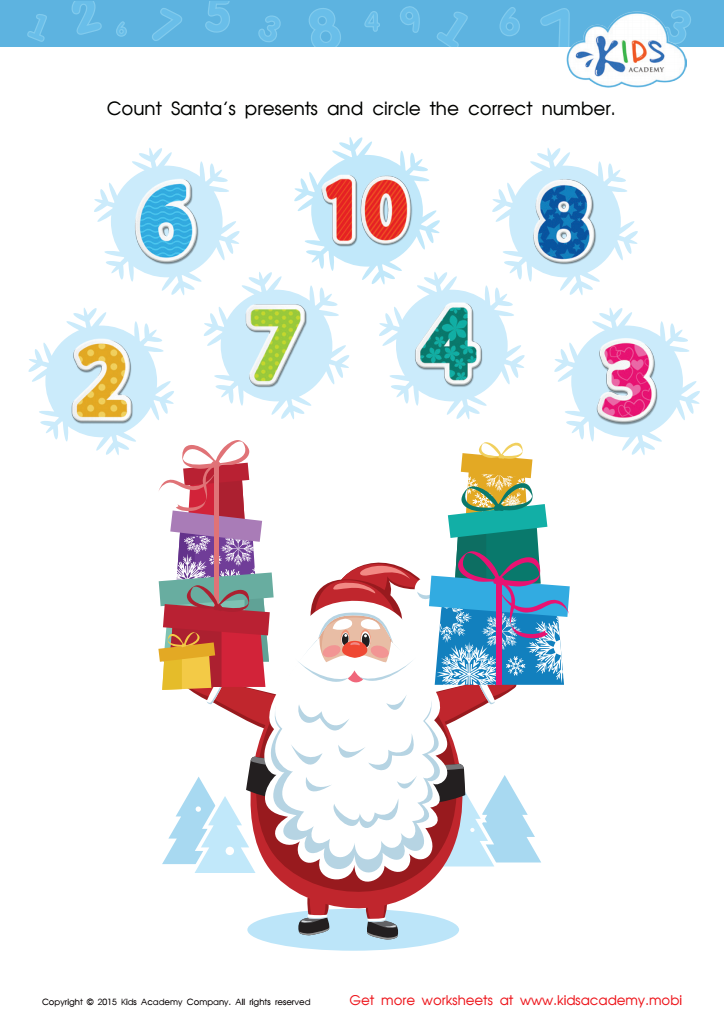
Count Santa's Presents Worksheet
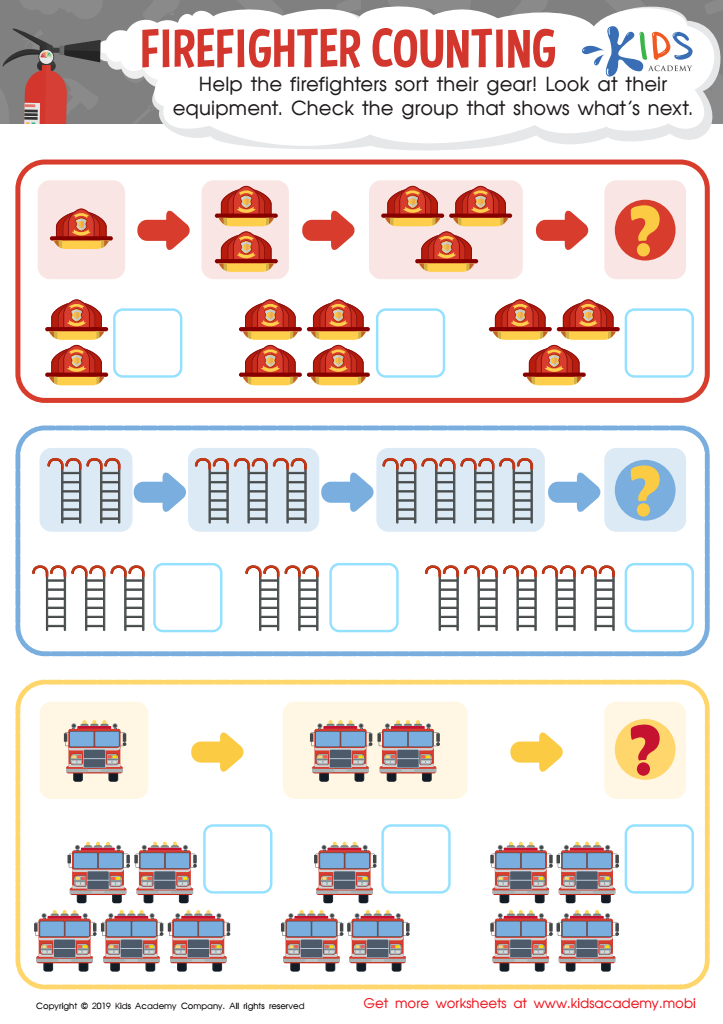
Firefighter Counting Worksheet


.jpg)





Observational skills in math are crucial for children aged 3-4, as they form the foundation for future mathematical understanding. At this developmental stage, children are naturally curious and eager to explore their environment. Encouraging observational skills helps them notice patterns, shapes, and quantities in everyday situations, paving the way for them to make connections to more complex mathematical concepts later on.
Parents and teachers should care about fostering these skills because they directly impact a child's problem-solving abilities and critical thinking. Observational skills enable children to engage in activities like counting objects, comparing sizes, and recognizing geometric shapes, which are all essential early math skills. Moreover, when educators and caregivers promote exploration and discussion about what children observe, they enhance language development and communication skills, further supporting overall cognitive growth.
Additionally, strong observational skills encourage a love for learning. When children learn to look closely and explore their surroundings, their interest in math can blossom into a lifelong appreciation for the subject. Supporting these skills at an early age cultivates a confident, curious learner who is ready to embrace future challenges in mathematics and beyond.








