Understanding subtraction Math Worksheets for Ages 3-4
4 filtered results
-
From - To
Welcome to our "Understanding Subtraction Math Worksheets" designed specifically for children ages 3-4! These engaging worksheets are perfect for introducing young learners to the concept of subtraction through fun and interactive activities. With colorful illustrations and age-appropriate exercises, children will grasp basic subtraction skills in a playful manner. Our resources encourage number recognition and counting, helping to build a strong mathematical foundation. Parents and educators can easily integrate these worksheets into daily lessons or at-home practice. Start your child's journey towards math mastery today with our thoughtfully crafted subtraction worksheets, paving the way for future learning success!
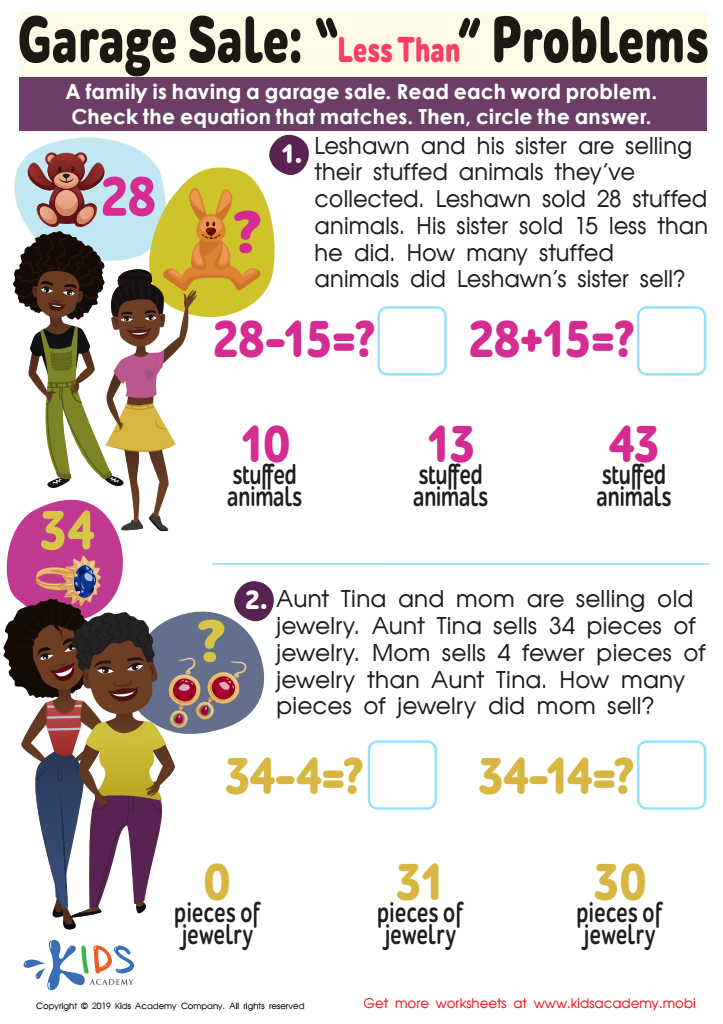
Garage Sale Less Than Worksheet
 Assign to My Students
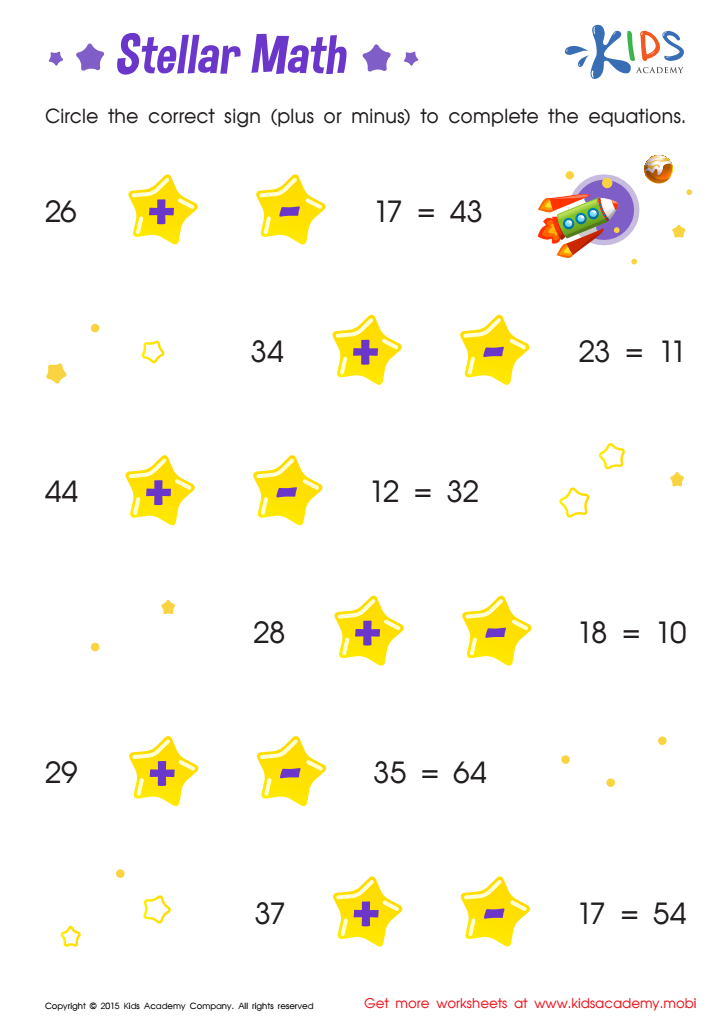
Stellar Math Substraction Worksheet
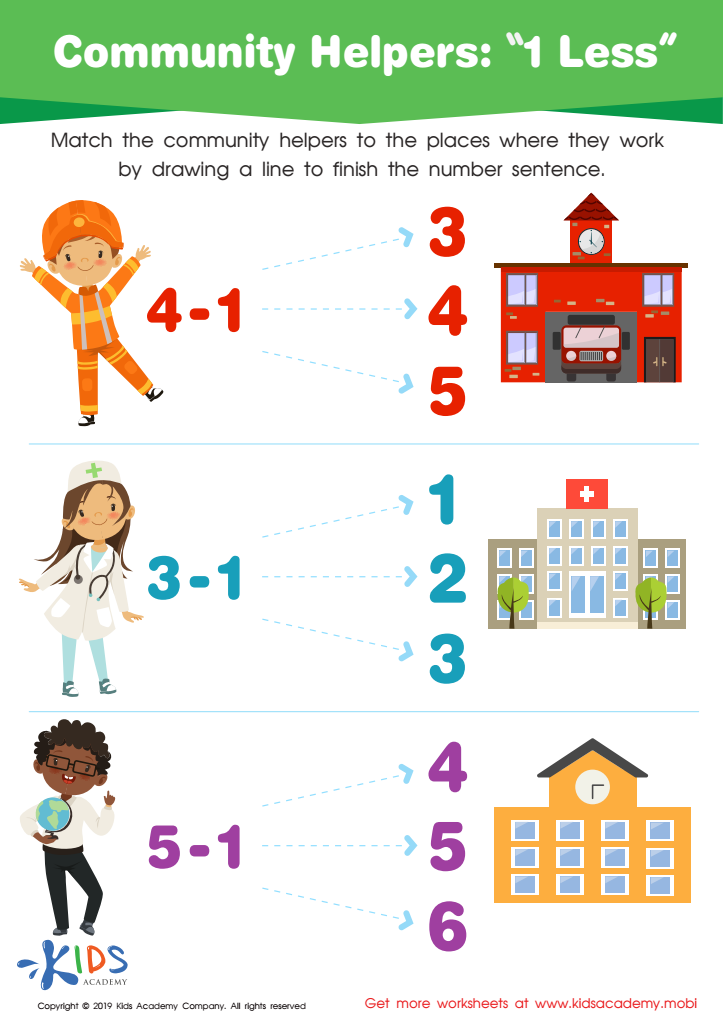
Community Helpers: 1 less Worksheet
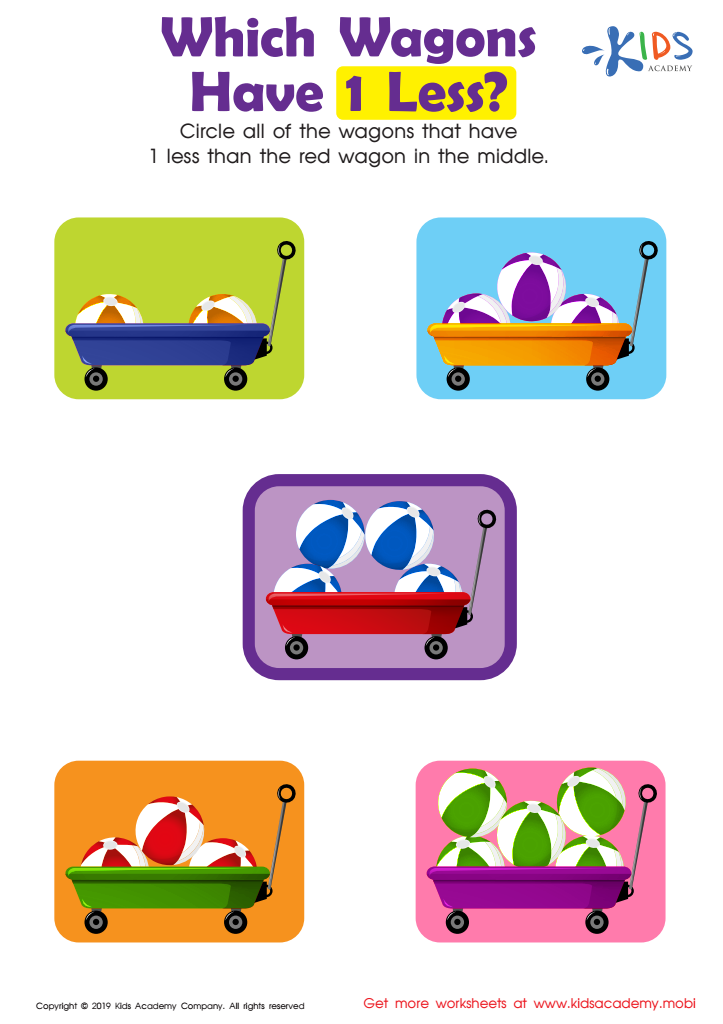
Which Wagons Have 1 Less? Worksheet







Understanding subtraction at an early age is crucial for young children, particularly those aged 3-4, as it lays the foundation for mathematical thinking and problem-solving skills. During this formative stage, kids begin to explore the concepts of quantity, comparison, and separation, helping them make sense of the world around them.
For parents and teachers, fostering subtraction skills can enhance children's cognitive development, promoting spatial awareness, logical reasoning, and critical thinking. Engaging in subtraction activities through play, songs, and hands-on experiences makes learning fun and accessible, reinforcing their confidence and interest in math.
Additionally, mastering basic subtraction prepares children for more complex mathematical concepts in later years. It encourages the development of perseverance and resilience as they learn to tackle challenges and solve problems independently.
Moreover, early understanding of subtraction helps children relate to everyday situations, such as sharing and counting, making math relevant and practical. By introducing these concepts in a supportive environment, parents and teachers not only nurture math skills but also encourage positive attitudes toward learning that can last a lifetime. Investing in these foundational skills ensures children are well-prepared for their educational journey.








