
Counting practice Numbers 11–20 Worksheets for Ages 3-4
4 filtered results
Difficulty Level
Grade
Age
-
From - To
Subject
Activity
Standards
Help your preschooler master counting with our engaging Counting Practice Worksheets for Numbers 11-20, designed specifically for children ages 3-4. These printable worksheets provide fun activities that encourage number recognition and counting skills through vibrant illustrations and interactive exercises. Each worksheet offers an opportunity to practice and reinforce numbers in a playful way, making learning enjoyable. Perfect for parents and educators looking to strengthen early math skills at home or in the classroom. Watch your child gain confidence and joy in learning as they progress through these thoughtfully crafted worksheets that lay the foundation for future mathematical success!
Favorites
With answer key
Interactive
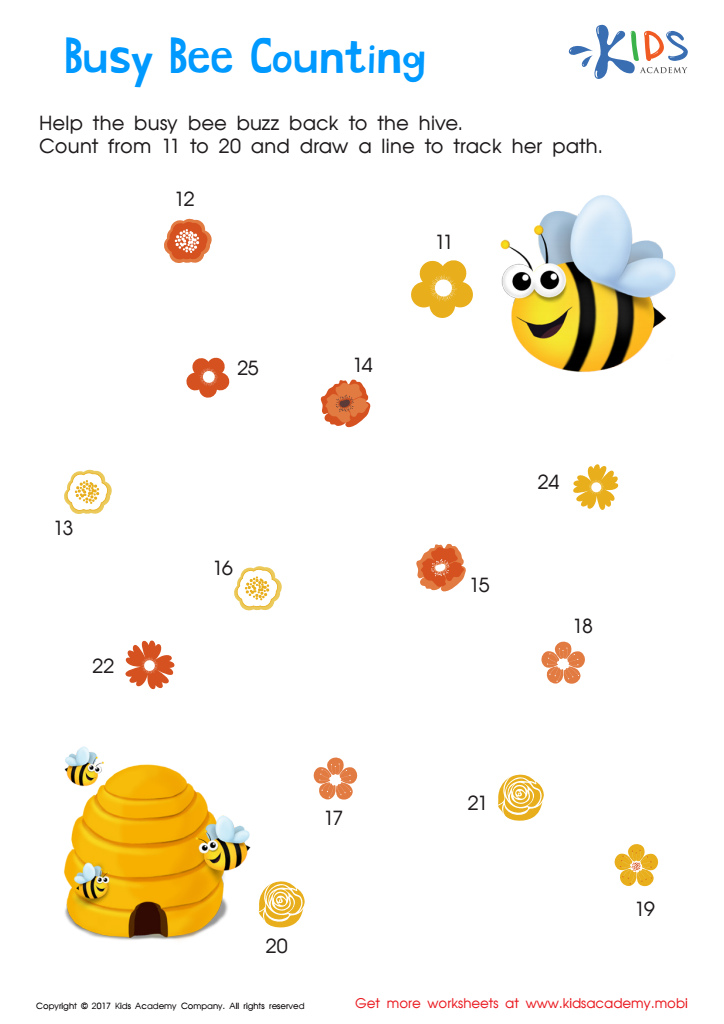
Ordering 11–20: Busy Bee Counting Worksheet
Help your child master counting from 11 to 20 with our connect the dot counting worksheet. Kids will have fun counting, drawing and problem-solving with this vibrant worksheet. With clear directions, adorable pictures and a sense of purpose, your child will develop crucial numeracy skills without even knowing it!
 Assign to My Students
Ordering 11–20: Busy Bee Counting Worksheet
Worksheet
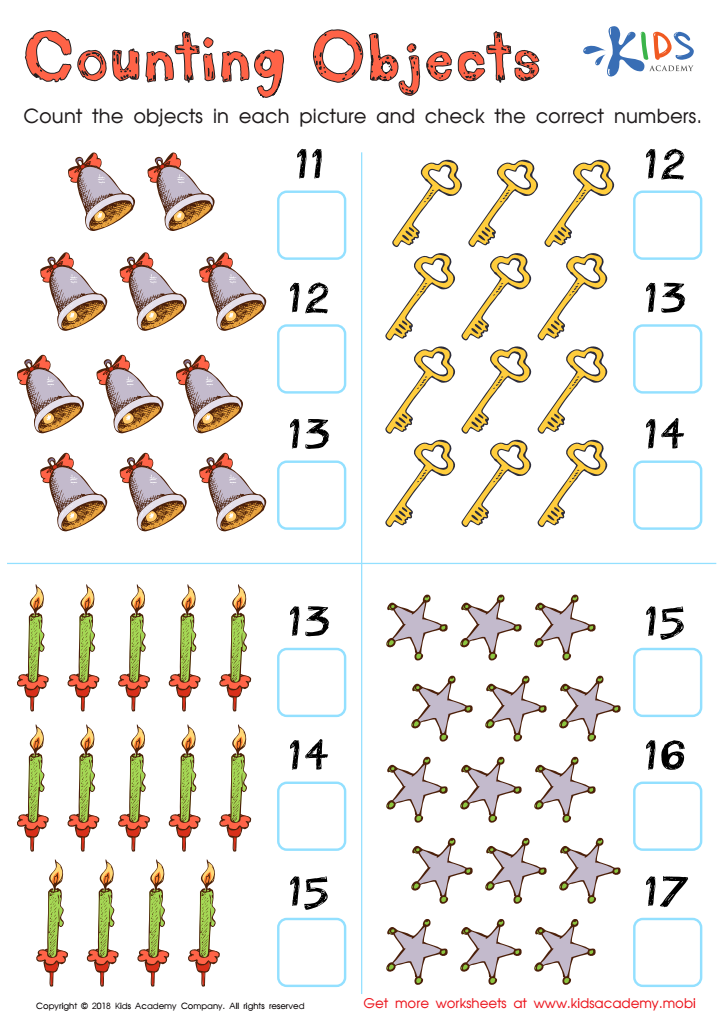
Counting Numbers Worksheet For Kindergarten
This worksheet is a great way to get your child practicing foundational math skills. With bright pictures to count, counting numbers just got a lot more fun! Get them ready for future math success and help them hone their early math skills.
Counting Numbers Worksheet For Kindergarten
Worksheet
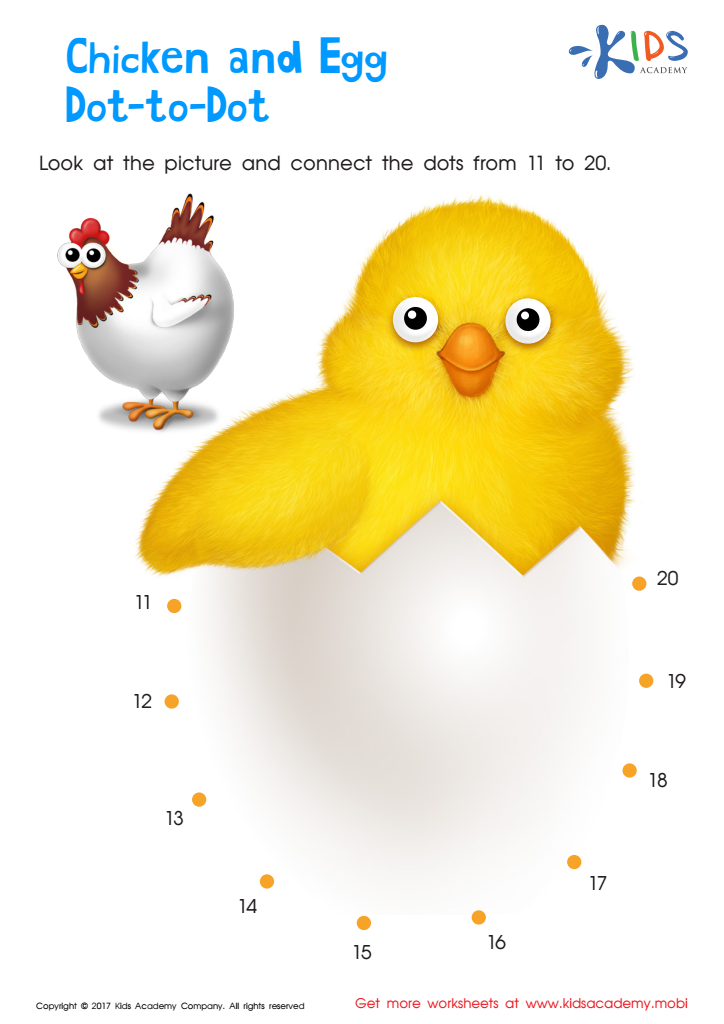
Ordering 11–20: Chicken & Egg Dot–to–dot Worksheet
Help your child hatch the chick and practice their counting skills with this dot to dot worksheet – the chicken came first! Connect the dots 11-20 to have fun and learn at the same time. Experience meaningful practice and gain confidence while drawing great pictures.
Ordering 11–20: Chicken & Egg Dot–to–dot Worksheet
Worksheet
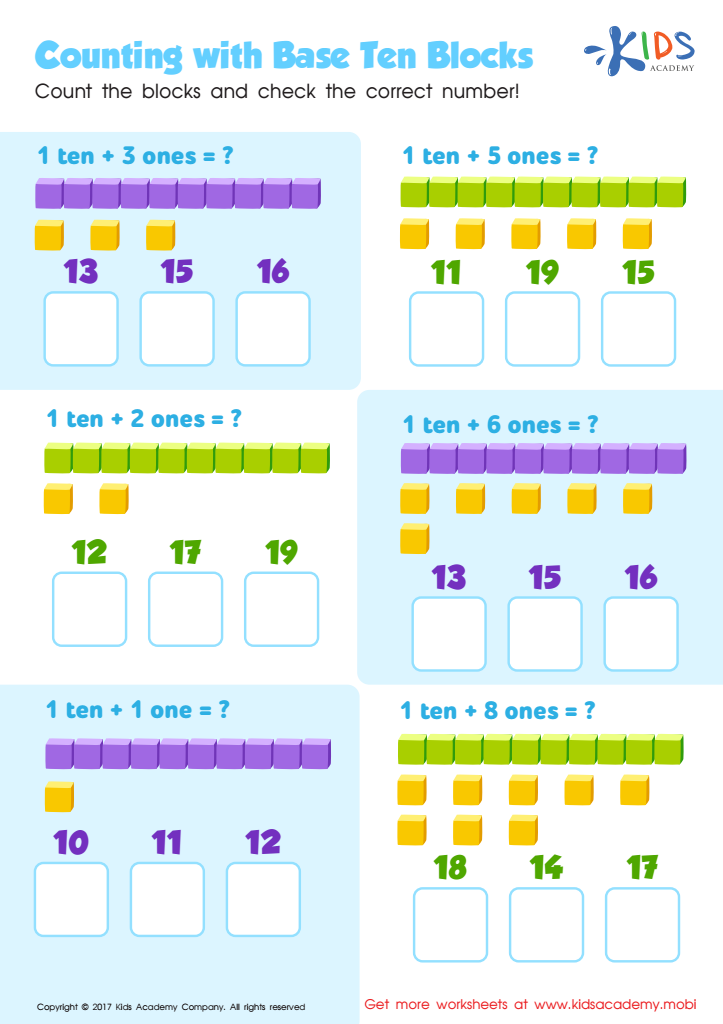
Counting with Base Ten Blocks Worksheet
Math has different levels and gets harder as your child progresses. Don't be surprised when they bring home an algebra worksheet! In this one, they will add 1 tens to varying numbers and fill in the total. This builds their understanding of base tens.
Counting with Base Ten Blocks Worksheet
Worksheet
Join Kids Academy for Free
Who is primarily going to use this learning content?



Counting practice for numbers 11–20 is crucial for children ages 3-4 as it lays a strong foundation for their mathematical understanding. At this age, children are developing key cognitive skills, and incorporating counting into their daily activities enhances their ability to recognize numerals, understand quantities, and strengthen their problem-solving abilities.
Parents and teachers play a vital role in nurturing these skills. By focusing on numbers 11–20, children transition from basic counting to more complex numerical concepts. This period allows them to connect the concept of quantity with the written numerals, which is essential for future math learning.
Engaging in counting activities helps improve a child's memory and concentration, skills that are beneficial not only in math but across all areas of learning. Furthermore, counting fosters language development as children learn to verbalize numbers and quantities, enriching their vocabulary.
Additionally, practicing these higher numbers introduces children to the patterns and relationships within numbers, setting the stage for more advanced mathematical concepts like addition and subtraction. In summary, targeted counting practice for numbers 11–20 supports early numeracy skills and develops a child's overall cognitive and linguistic capabilities, underscoring the importance of parental and educational support.








