Fine Motor Skills Numbers 11–20 Worksheets for Ages 3-4
6 filtered results
-
From - To
Enhance your child’s fine motor skills with our "Fine Motor Skills Numbers 11–20 Worksheets for Ages 3-4". These engaging, educational worksheets are designed to help young learners develop essential hand-eye coordination while recognizing and writing numbers. Each activity fosters precise movements through tracing, counting, and coloring tasks. Perfect for early learners, these easy-to-follow worksheets make learning fun and interactive, promoting both number familiarity and fine motor skill improvement. Parents and educators will find these worksheets an excellent resource to support developmental milestones in preparation for preschool and kindergarten. Discover effective, playful learning at Kids Academy!
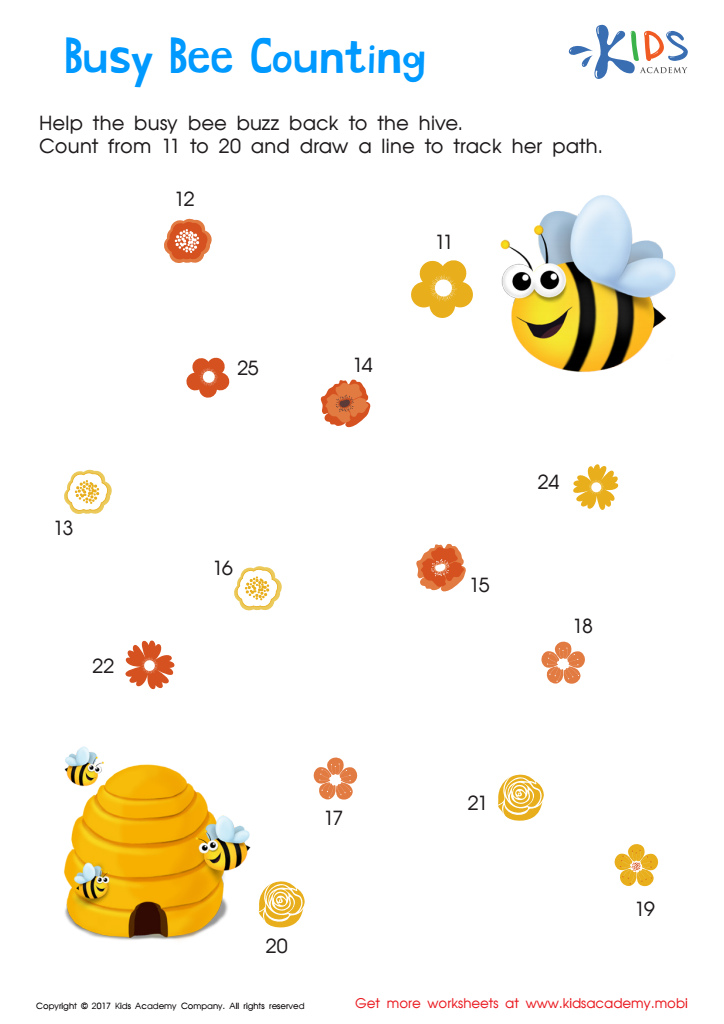
Ordering 11–20: Busy Bee Counting Worksheet
 Assign to My Students
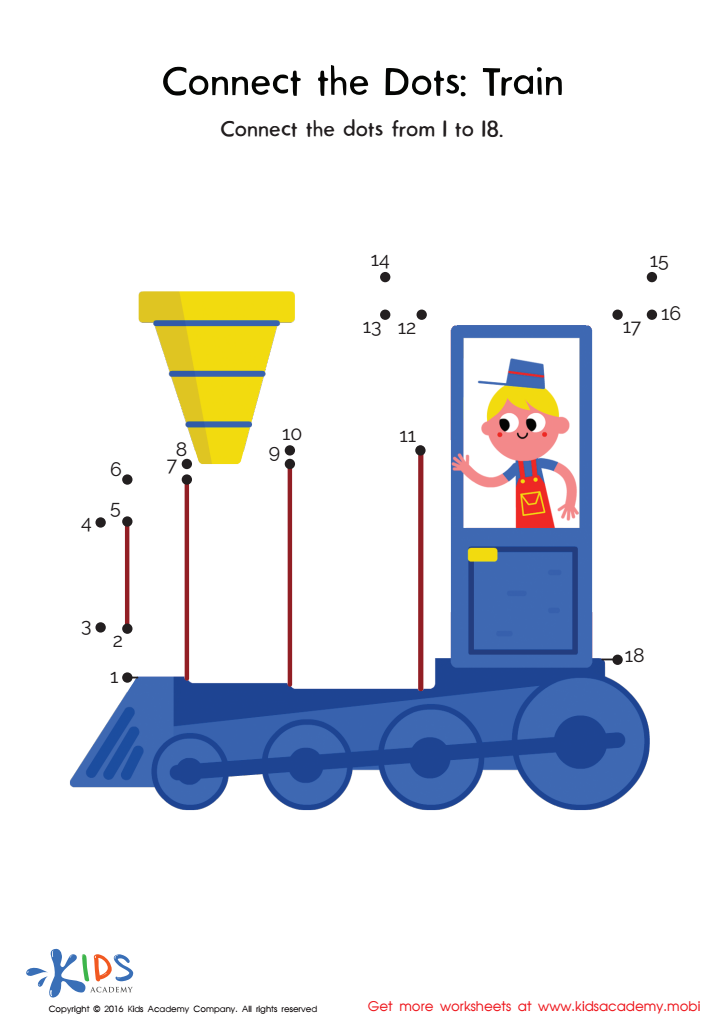
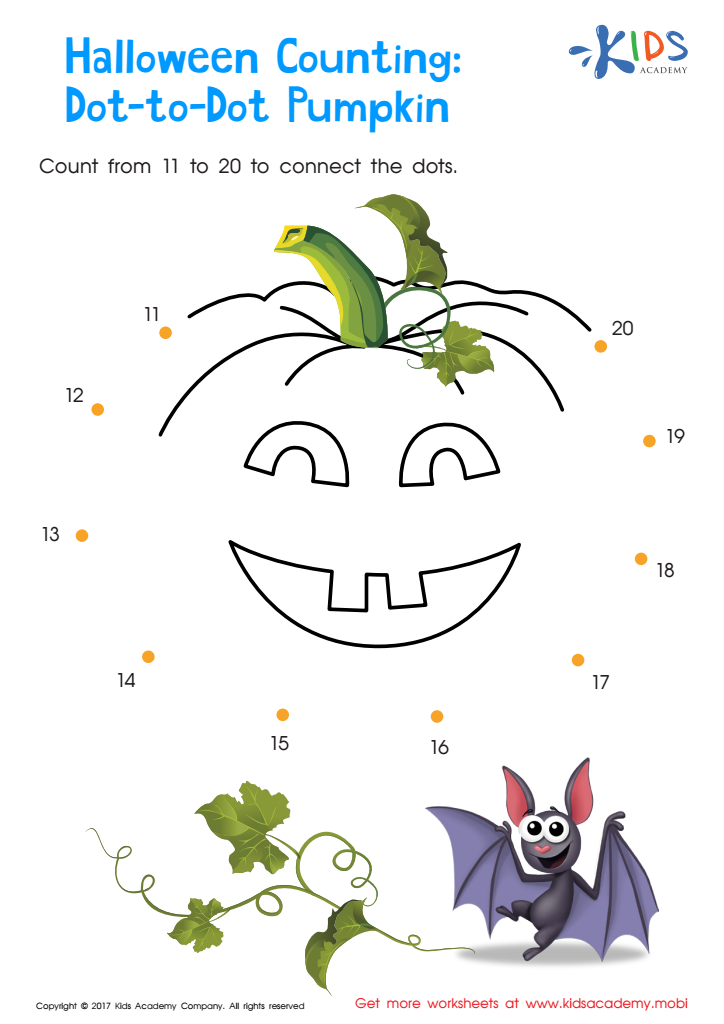
Ordering 11–20: Halloween Counting Worksheet
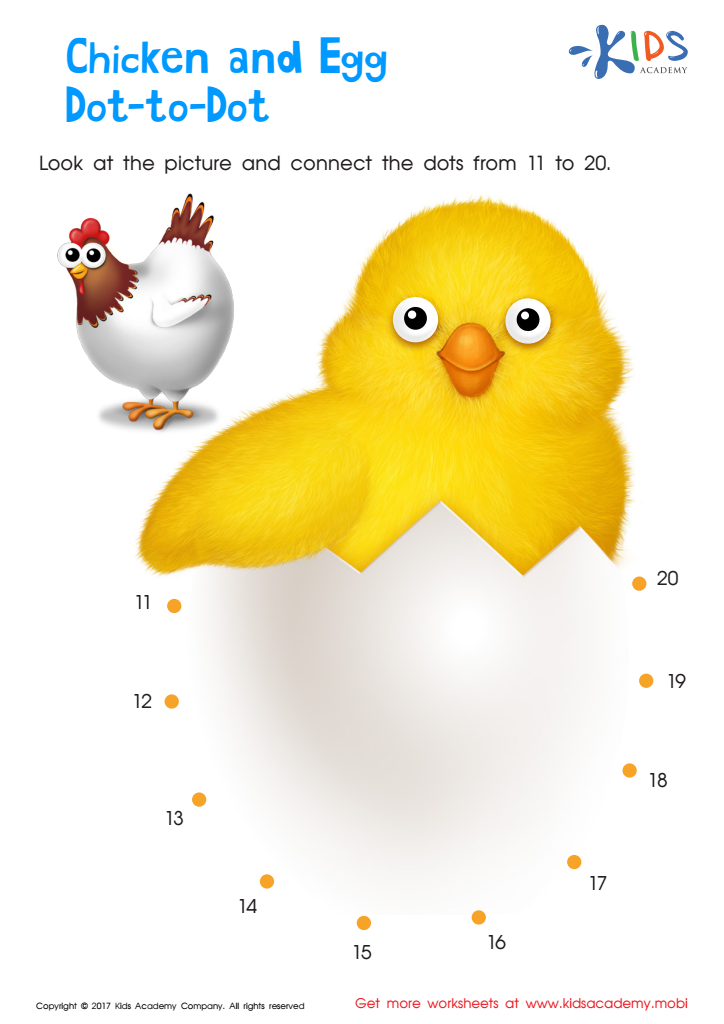
Ordering 11–20: Chicken & Egg Dot–to–dot Worksheet
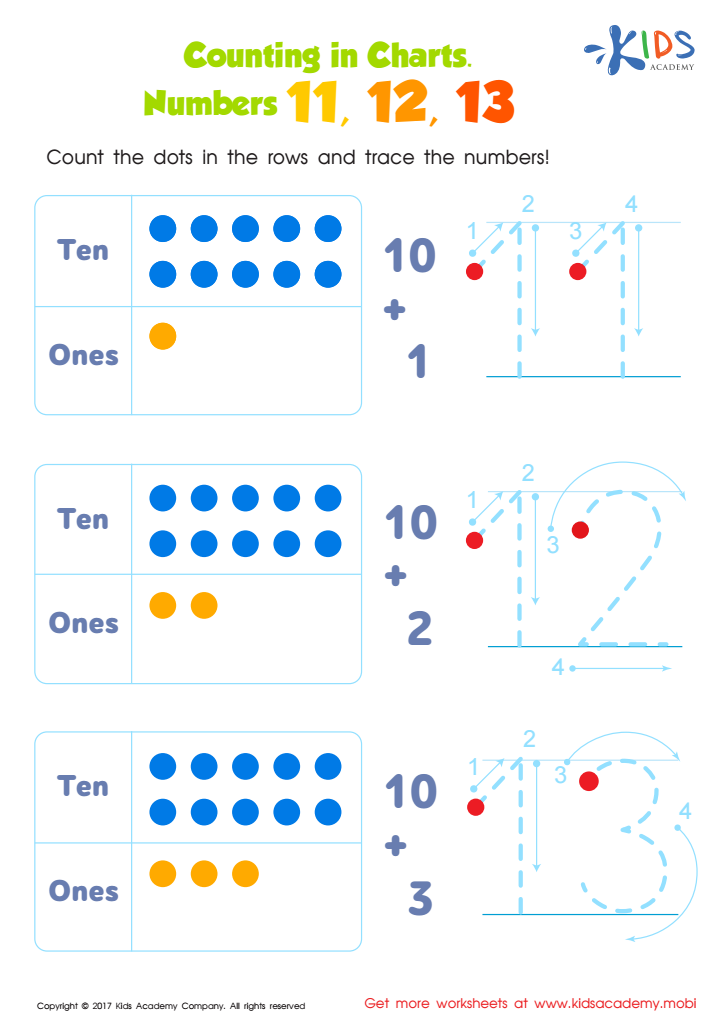
Number Tracing Worksheet For Kindergarten
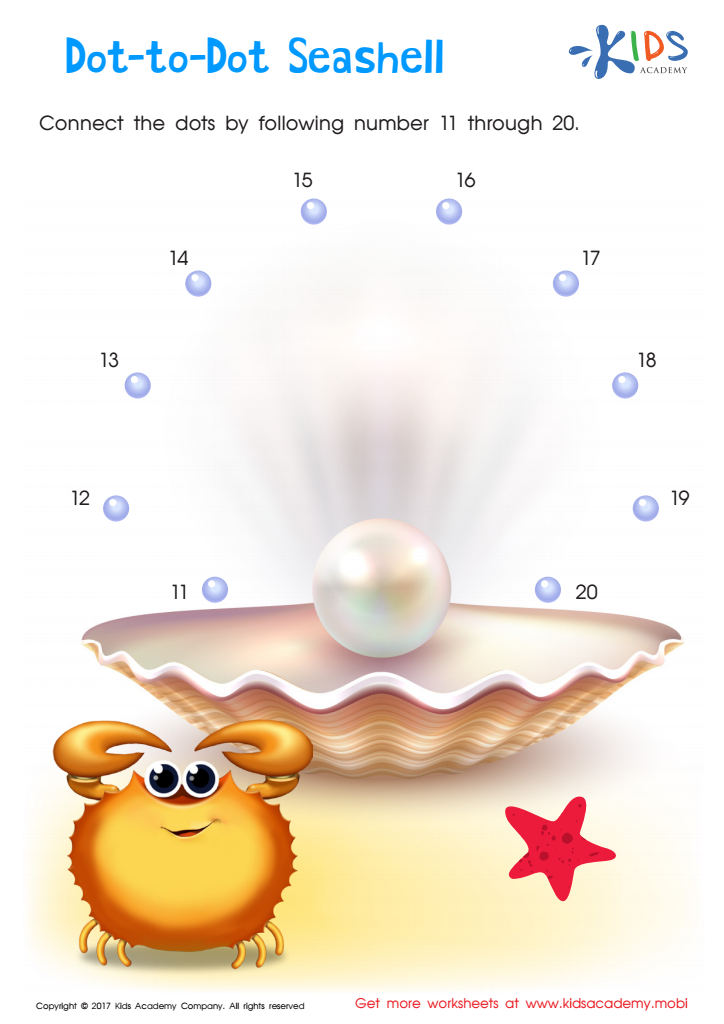
Ordering 11–20: Dot–to–dot Seashell Printable



Fine motor skills involve the coordination of small muscles—in particular, the muscles controlling the hand and fingers—with the eyes. For young children, especially those ages 3-4, the development of these skills is critical for laying the foundation for future academic and everyday tasks. In practicing fine motor activities related to numbers 11-20, children develop essential hand strength, dexterity, and coordination.
Focusing on numbers 11-20 serves a dual purpose: it reinforces number recognition and counting skills while simultaneously refining fine motor abilities. Activities like tracing numbers, connecting dots, or crafting with numbers can enhance the precision of movements necessary for writing and other precise hand tasks. An improved fine motor skill set ensures children can handle pencils, scissors, and other tools more effectively, promoting self-sufficiency and confidence in the classroom.
Caring about these developmental aspects early on ensures children are prepared for the rigors of more complex skills and tasks they will encounter later in their educational journey. It also supports cognitive development, linking the tactile and visual aspects of learning, which can lead to better retention and understanding of numbers. Hence, parents and teachers should prioritize fine motor skill development in conjunction with numeracy for a well-rounded early childhood education.








