
Basic Math Skills Reading Worksheets for Ages 3-4
8 filtered results
Difficulty Level
Grade
Age
-
From - To
Subject
Activity
Standards
Welcome to our collection of Basic Math Skills Reading Worksheets for Ages 3-4! Designed to introduce young children to foundational math concepts, these engaging worksheets combine fun and learning. Featuring vibrant illustrations and simple, age-appropriate activities, kids will explore essential skills like counting, number recognition, and basic addition. Our resources support early math development, reinforcing your child's understanding through play. Each worksheet is easy to print, making it perfect for home or classroom use. Boost your preschooler's confidence and readiness for future learning with these interactive math worksheets, promoting a strong foundation for a lifelong love of numbers!
Favorites
With answer key
Interactive
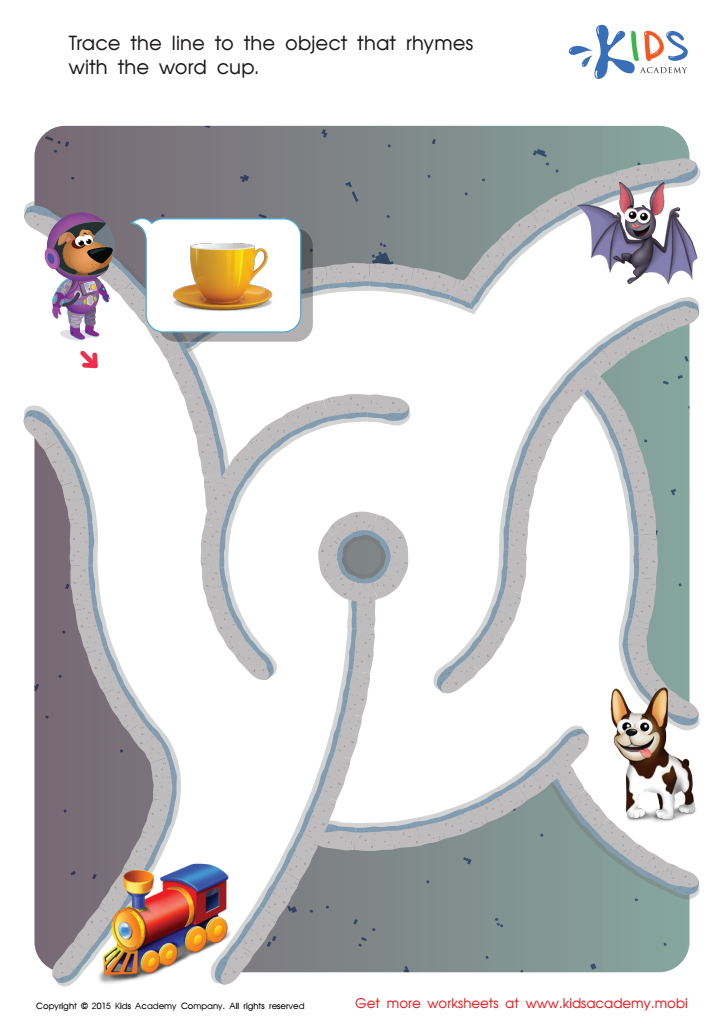
Cup Rhyming Words Worksheet
Kids Academy offers funny worksheets to help kids practice their vocabulary. Try the new one with the dog, matching objects to their rhyming words! Explore more activities and worksheets to learn English Language words and phrases.
 Assign to My Students
Cup Rhyming Words Worksheet
Worksheet
Join Kids Academy for Free
Who is primarily going to use this learning content?







Parents and teachers should prioritize basic math skills for children ages 3-4 because these foundational skills are critical for early cognitive development and later academic success. During this stage, children develop essential concepts such as number recognition, counting, and simple problem-solving. Engaging them in math-related activities fosters not only numerical understanding but also enhances critical thinking and logic.
Introducing basic math skills at a young age supports brain development; it helps children increase their curiosity about the world around them. Using everyday experiences—like counting fruits during snack time or sorting toys by size and color—makes learning interactive and fun. These skills are closely linked to language development as well; discussing quantities, comparisons, and patterns enhances vocabulary and communication.
Moreover, research shows that early math skills can predict later achievement in both math and reading. By cultivating these abilities in preschoolers, parents and teachers lay a strong groundwork for lifelong learning. Furthermore, instilling a positive attitude toward math can reduce math anxiety in later years, setting children up for success in school and ultimately contributing to their overall self-confidence. Engaging young learners through playful and meaningful math experiences fosters both academic and emotional growth.








