Critical thinking skills Reading Worksheets for Ages 3-4
3 filtered results
-
From - To
Boost early literacy and cognitive development with our "Critical Thinking Skills Reading Worksheets for Ages 3-4." Designed by educational experts, these engaging worksheets foster analytical thinking, comprehension, and problem-solving through fun and interactive reading activities. Your little one will delight in identifying patterns, making connections, and answering thought-provoking questions tailored to their developmental stage. Equip your preschooler with essential critical thinking skills that lay a strong foundation for future academic success. Start your child’s educational journey with our printables today!
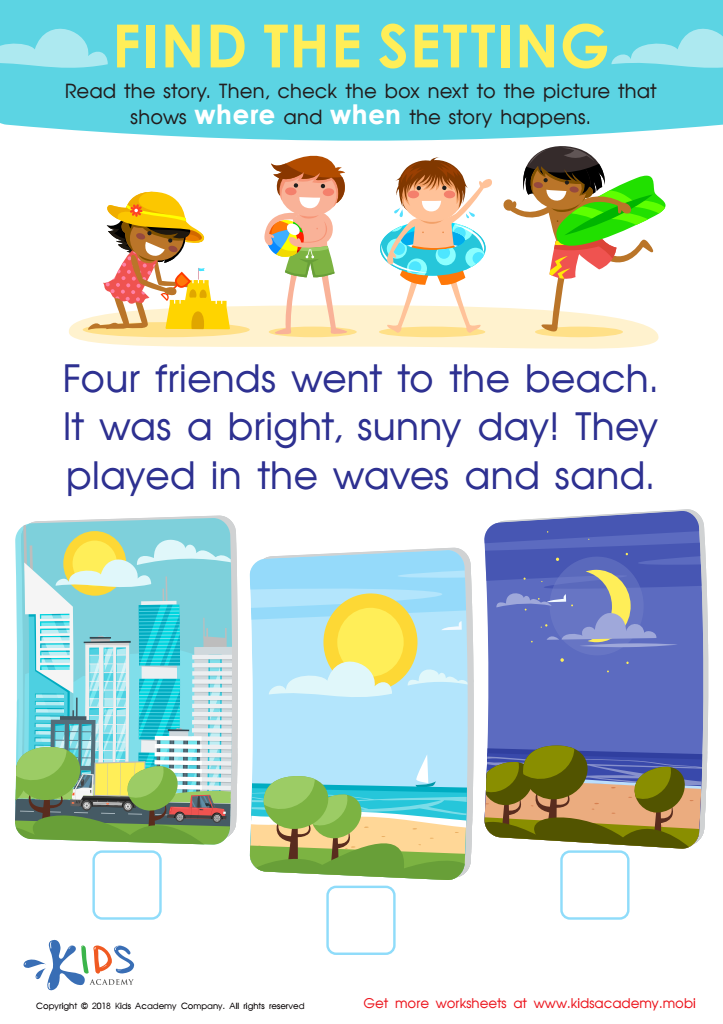
Find the Setting Worksheet
 Assign to My Students
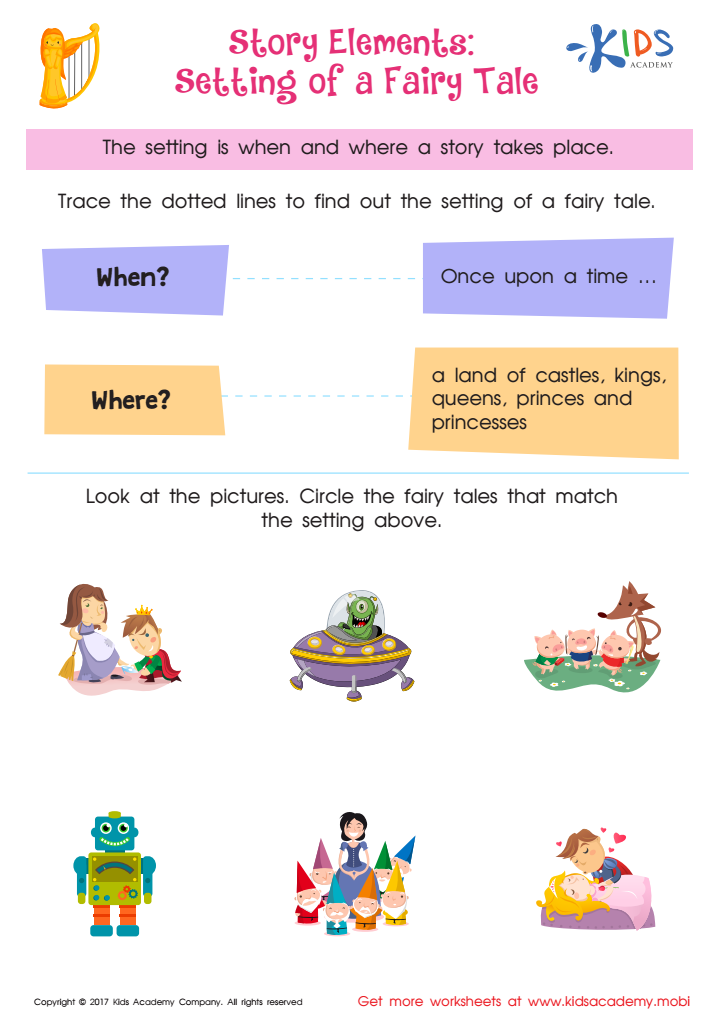
Story Elements: Setting of a Fairy Tale Printable
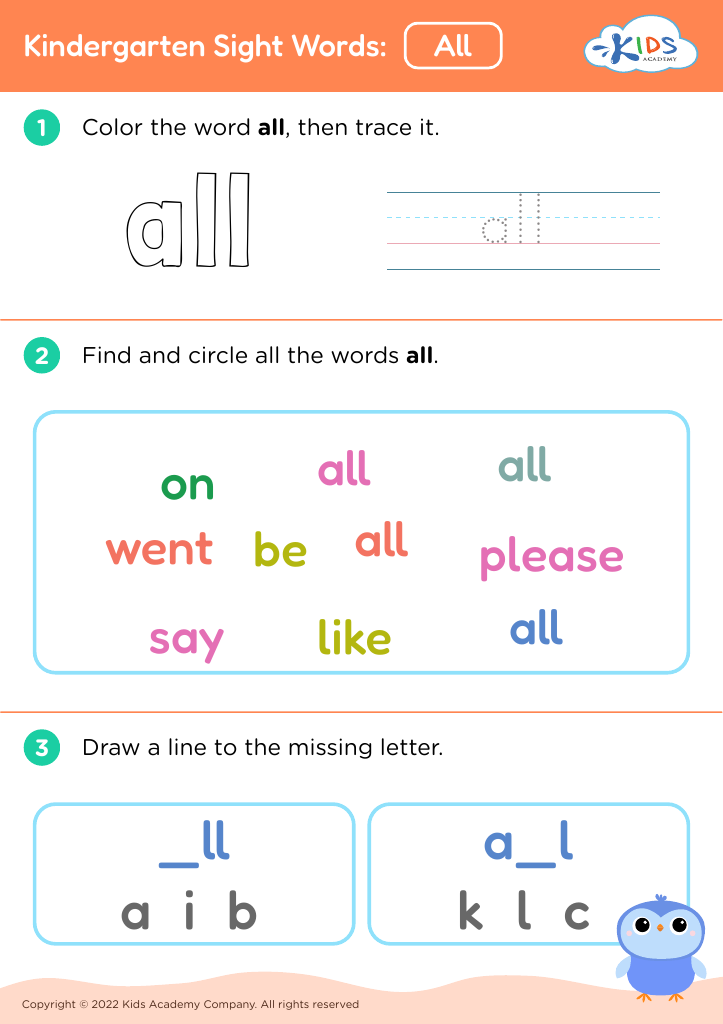






Critical thinking skills are foundational for the early development of children because they empower young minds to analyze, evaluate, and synthesize information. Introducing critical thinking skills through reading at ages 3-4 is essential because it lays the groundwork for lifelong learning and problem-solving abilities.
At this impressionable age, children's brains are incredibly elastic and ready to absorb new concepts and ideas. Engaging children in stories that provoke questions, foster curiosity, and encourage them to think beyond the book’s narrative can foster cognitive development. When children are encouraged to predict outcomes, question characters' actions, and relate the story to their own experiences, they not only understand the text better but also learn to think deeply and independently.
For parents and teachers, emphasizing these skills is crucial because children who develop critical thinking skills early are more likely to excel academically and make informed decisions later on. Beyond academic success, they become more empathetic and socially adept, as critical thinking engages them in recognizing multiple perspectives. It's an investment in their future confidence and competence, enabling them to tackle more complex and abstract problems as they grow older. In sum, nurturing critical thinking through reading for young children equips them with essential life skills that transcend the pages of a book.








