
Develop critical thinking Reading Worksheets for Ages 3-4
4 filtered results
Difficulty Level
Grade
Age
-
From - To
Subject
Activity
Standards
Our "Develop Critical Thinking Reading Worksheets for Ages 3-4" are designed to ignite young minds with engaging activities that enhance analytical skills and promote independent thinking. Tailored for preschoolers, these worksheets use fun, age-appropriate content to help children understand basic concepts, identify patterns, and make simple decisions. With vibrant illustrations and interactive tasks, kids will enjoy learning while building a strong foundation in critical thinking that sets the stage for future academic success. Explore our collection to support your child’s early cognitive development in a playful and effective manner!
Favorites
With answer key
Interactive
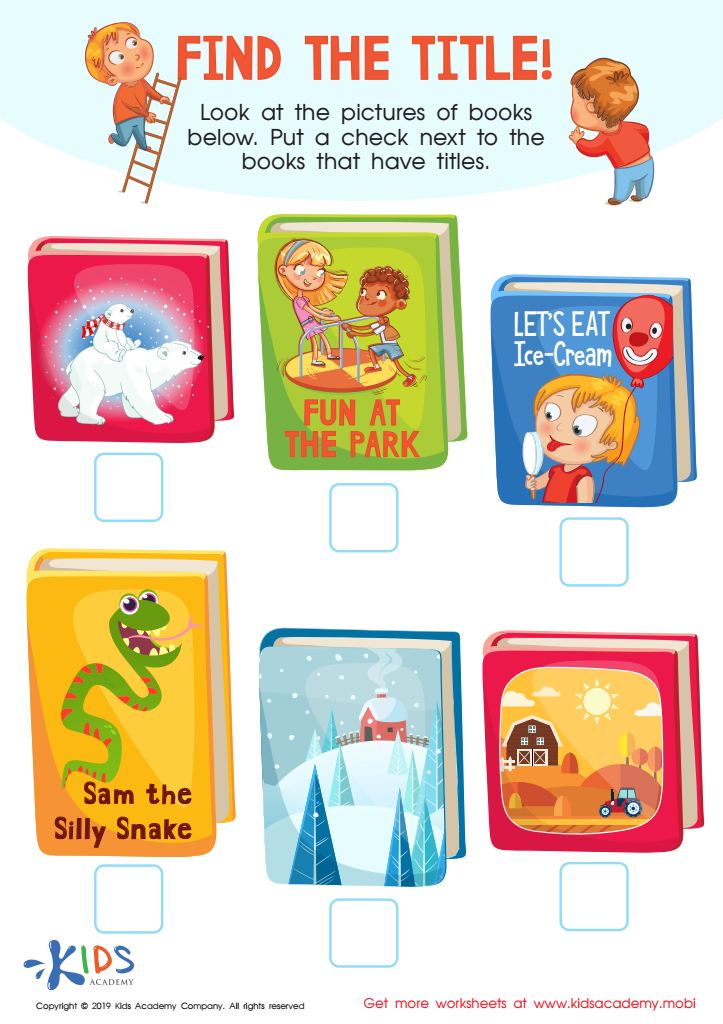
Find the Title Worksheet
Help your kids to identify the colors of the books on this worksheet. Ask them to spot the differences between the six books, such as which ones have titles printed on their covers. Ask them to put a check next to the books with titles. This activity will promote your kids' thinking skills.
 Assign to My Students
Find the Title Worksheet
Worksheet

Fox Rhyming Words Worksheet
Can your child rhyme a fox? Listen carefully and see if it's sun, beans, or ox! Help your child recognize rhymes with a pencil or crayon maze. Travel from the dog to the picture that rhymes. This worksheet builds pre-reading skills - a great way to learn!
Fox Rhyming Words Worksheet
Worksheet
Join Kids Academy for Free
Who is primarily going to use this learning content?








Developing critical thinking through reading for ages 3-4 sets the foundation for later learning and intellectual growth. At this age, children's brains are rapidly developing, and exposing them to reading not only enhances their language skills but also promotes cognitive development. Critical thinking involves questioning, analyzing, and evaluating information, and introducing these skills early helps children become more effective learners.
Reading with young children offers an opportunity to introduce new concepts and vocabulary in a way that is engaging and age-appropriate. As they listen and look at pictures, they start to make connections, ask questions, and predict outcomes, all of which are fundamental critical thinking skills. Encouraging discussions about the story and its characters helps children understand different perspectives and improves their problem-solving abilities.
Moreover, early development of critical thinking skills contributes to better academic performance in the longer term. It also fosters creativity and imagination, which are essential for innovative thinking. Furthermore, cultivating an early love for reading ensures that children view books as a source of joy and knowledge throughout their lives.
In summary, parents and teachers focusing on fostering critical thinking through reading at an early age help children develop essential cognitive skills, which lays a strong groundwork for future learning, academic success, and lifelong curiosity.








