
Listening skills Reading Worksheets for Ages 3-4
3 filtered results
Difficulty Level
Grade
Age
-
From - To
Subject
Activity
Standards
Enhance your child's listening skills with our engaging Reading Worksheets designed specifically for ages 3-4! These interactive resources promote active listening through fun activities and exercises that captivate young minds. Tailored to foster early literacy, our worksheets include delightful stories, matching games, and comprehension questions to sharpen auditory processing and understanding. Supporting your child's development, these worksheets cultivate essential skills such as following directions and responding to questions about content. Ideal for both parents and educators, our materials create enjoyable learning experiences that set the foundation for a lifetime of reading success. Explore our collection today and watch your child thrive!
Favorites
With answer key
Interactive
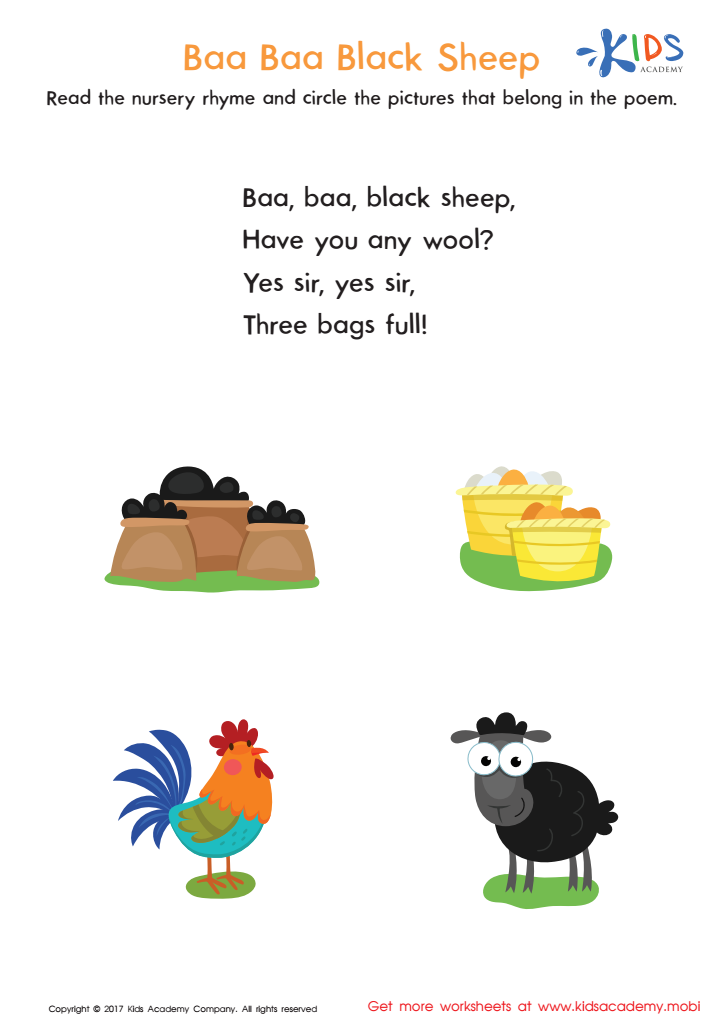
Baa Baa Black Sheep Printable
Jumpstart your child's reading skills with this printable Baa Baa Black Sheep worksheet! Recite the lines with them, then have them select the pictures associated with the poem to test comprehension. Fun and educational!
 Assign to My Students
Baa Baa Black Sheep Printable
Worksheet
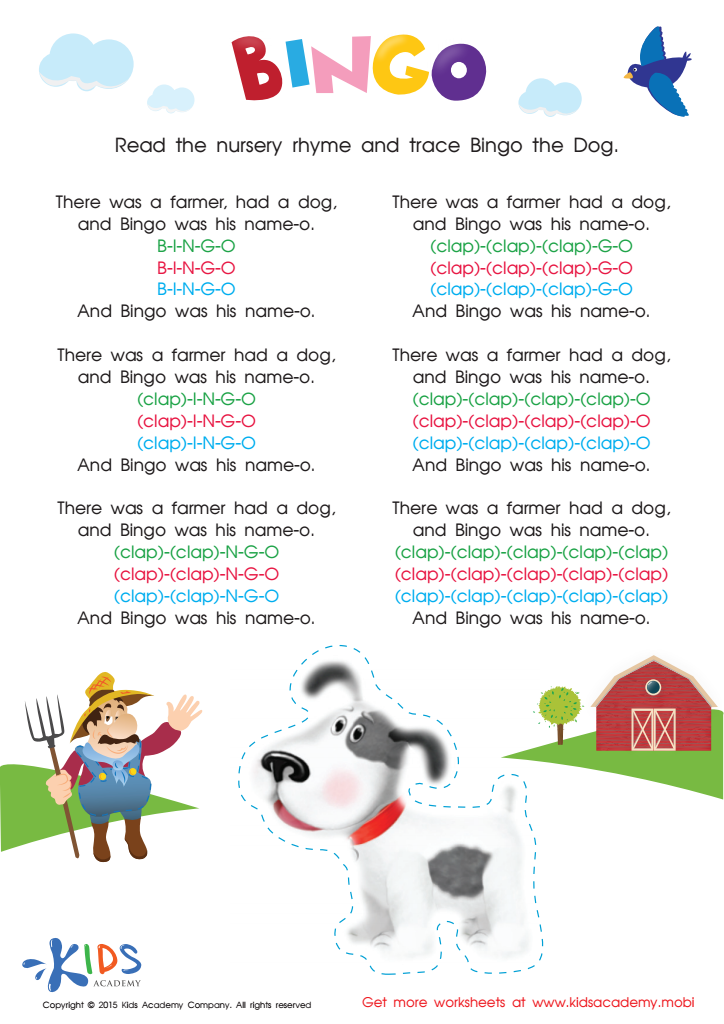
Nursery Rhymes: The Bingo Song Worksheet
Introduce The Bingo Song to your little ones. Have your kids sing some words and lines aloud, while you replace letters with claps. Add other activities: tapping, patting, jumping, and use your imagination. Print our free Bingo Song Coloring Pages and let your kids color them. Get more free worksheets at our website Kids Academy.
Nursery Rhymes: The Bingo Song Worksheet
Worksheet
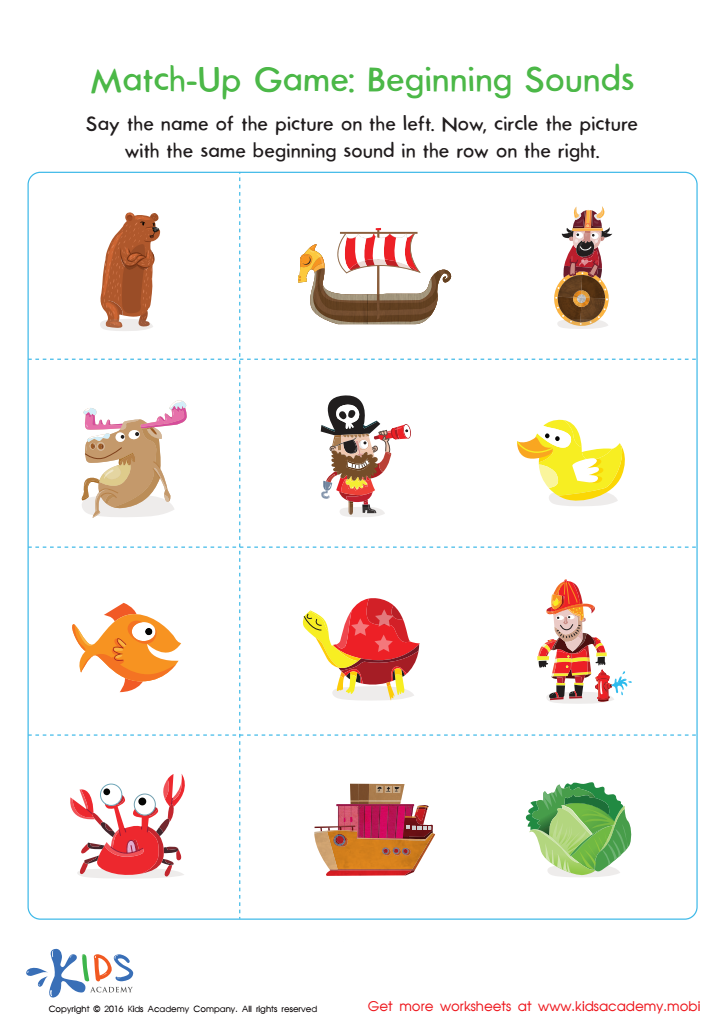
Match–Up Game: Beginning Sounds Worksheet
Start today with this beginning sounds match-up printable!
Teach your child to solve problems mentally with this beginning sounds match-up printable. They'll learn to categorize pictures based on phonics rules, developing mental stamina and focus. It's an important step for recognizing sounds and letters in print, building a foundation for reading and spelling. Start today and take your child's skills to the next level!
Match–Up Game: Beginning Sounds Worksheet
Worksheet
Join Kids Academy for Free
Who is primarily going to use this learning content?








Listening skills are fundamental for early literacy development, making them crucial for parents and teachers of children aged 3-4. During this developmental stage, children are naturally curious and absorb information from their environments. By nurturing good listening skills, adults can enhance children's ability to comprehend stories, follow instructions, and engage in social interactions.
When children listen attentively, they can better grasp the nuances of language, including vocabulary and sentence structure, thereby laying the groundwork for their reading abilities. This age is critical for developing phonemic awareness, a skill that permits children to recognize and work with sounds in spoken language, which is directly tied to reading success later on.
Additionally, strong listening skills foster communication skills, enabling children to express their thoughts, ask questions, and participate in discussions. These interactions not only help in building confidence but also strengthen social bonds.
In summary, fostering good listening skills in children aged 3-4 supports their cognitive development, enhances their capacity for understanding language, and sets a positive trajectory towards proficient reading abilities, making it a vital concern for both parents and teachers. Encouraging these skills can create joyful, engaging, and meaningful learning experiences for young children.








