
Matching skills Reading Worksheets for Ages 3-4
3 filtered results
Difficulty Level
Grade
Age
-
From - To
Subject
Activity
Standards
Our "Matching Skills Reading Worksheets for Ages 3-4" are specifically designed to enhance early literacy through engaging matching activities. These educational resources help young children develop essential reading and cognitive skills such as visual discrimination, problem-solving, and memory. Packed with colorful images and simple tasks, our worksheets make learning fun and effective. Perfectly tailored to preschoolers, these worksheets serve as an excellent foundation for future reading proficiency. Just print and start transforming your child’s learning journey today with our trusted, educator-approved materials. Ideal for at-home practice or preschool classroom use!
Favorites
With answer key
Interactive
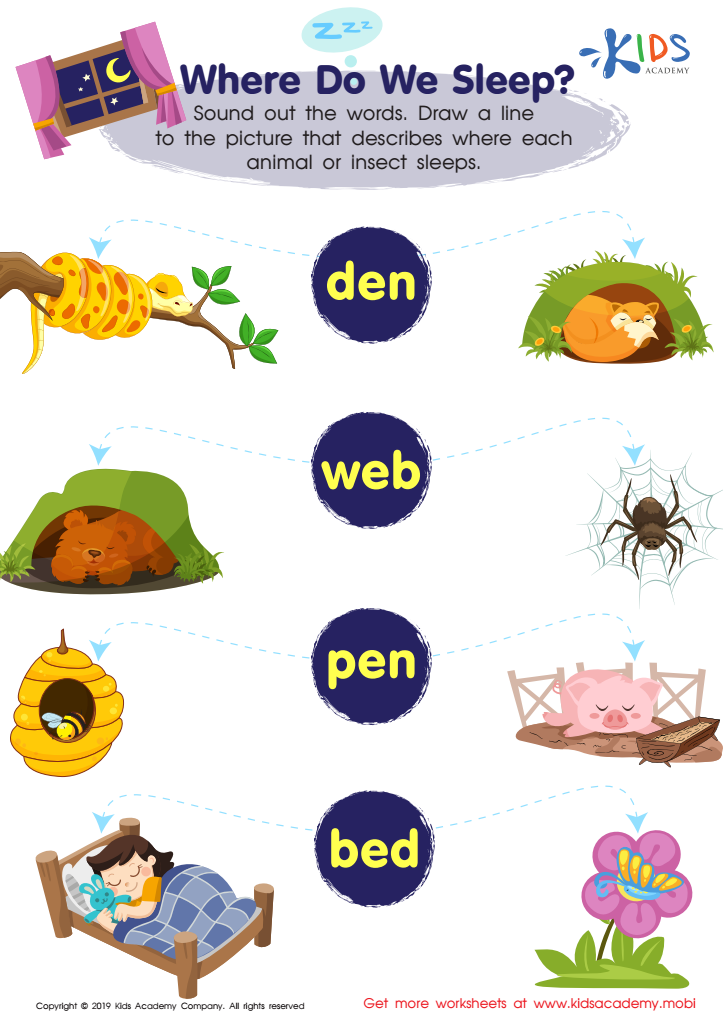
Where Do We Sleep Worksheet
Help your kids understand the importance of a safe space with this activity: Ask them to draw a line connecting the different animals and insects to the words that describe where they sleep. Remind them that everyone needs a sanctuary to rest – like the animals and insects in this printout.
 Assign to My Students
Where Do We Sleep Worksheet
Worksheet
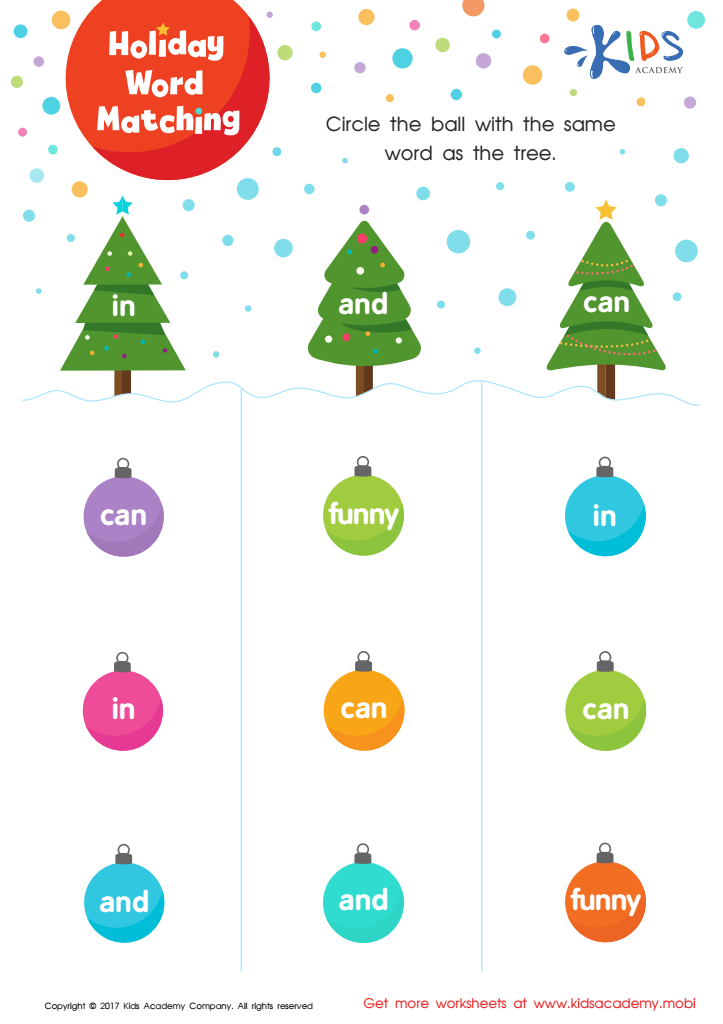
Holiday Word Matching Worksheet
Decorate with Kids Academy this year! Keep kids learning this holiday season with this festive worksheet. Let them look for sight words on Christmas trees then circle the matching ornament to decorate. It's a fun and educational way to enjoy the holidays!
Holiday Word Matching Worksheet
Worksheet
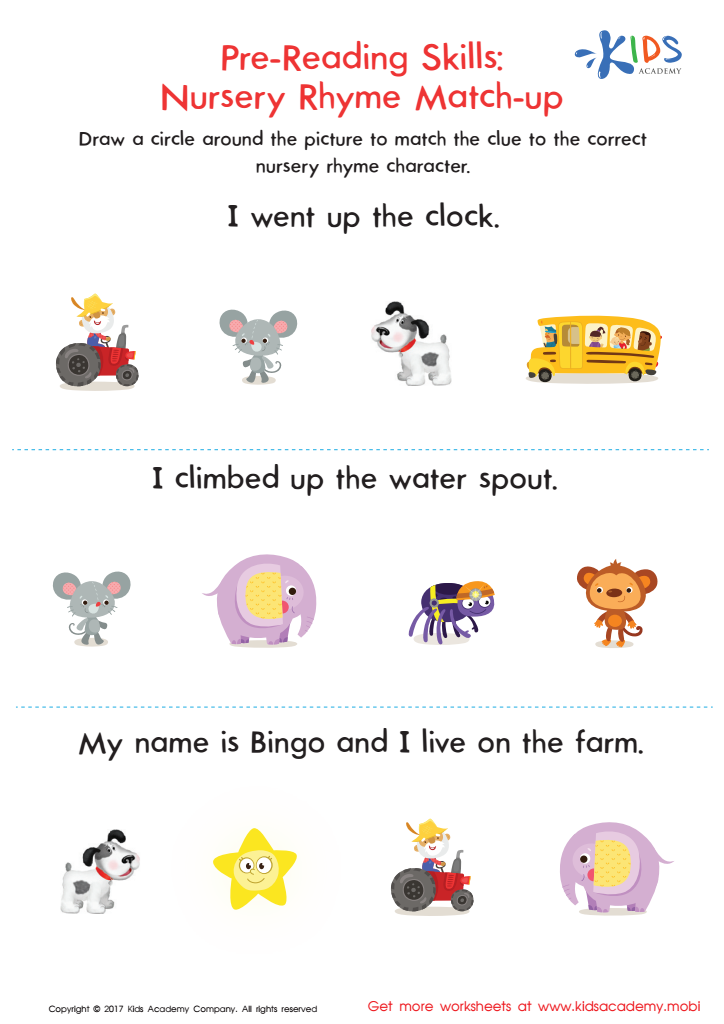
Nursery Rhyme Match–Up Worksheet
This worksheet helps kids build pre-reading skills using stories they know and love! By connecting with prior knowledge, kids can develop ideas about characters and set the stage for reading strategies.
Nursery Rhyme Match–Up Worksheet
Worksheet
Join Kids Academy for Free
Who is primarily going to use this learning content?






Matching skills in reading for children aged 3 to 4 are foundational for future literacy development and important for several reasons. At this critical preschool age, kids are experiencing rapid brain development, and introducing matching activities can nurture cognitive skills like attention to detail and logical thinking. When children learn to match pictures or words to corresponding items or sounds, they improve their visual memory and ability to recognize patterns, both of which are crucial for reading comprehension.
Parents and teachers should prioritize these skills because they serve as building blocks for more complex literacy skills, such as phonics and word recognition. Engaging in matching games can make the learning process fun and interactive, thereby instilling a love for reading at an early age. This positive association can lead to greater engagement in educational activities down the line.
Moreover, refining matching skills also helps enhance fine motor skills, when kids handle cards or pieces in matching games, and strengthen their hand-eye coordination. These activities also offer social benefits, teaching children how to follow rules, take turns, and cooperate with others. Overall, investing time in developing matching skills prepares children not just for kindergarten, but sets a strong foundation for lifelong learning.








