Rhyme recognition Reading Worksheets for Ages 3-4
3 filtered results
-
From - To
Explore our engaging Rhyme Recognition Reading Worksheets, expertly designed for children ages 3-4! These worksheets help young learners develop important early literacy skills while fostering a love for reading. Through fun activities, children will enhance their ability to identify and match rhyming words, boosting vocabulary and phonemic awareness. Each worksheet incorporates vibrant illustrations and interactive elements to captivate young minds. Ideal for parents and educators, these resources make learning enjoyable and effective. Ready to start your child’s reading adventure? Dive into our collection of rhyme recognition worksheets and watch your little ones thrive in their literacy journey with confidence and joy!
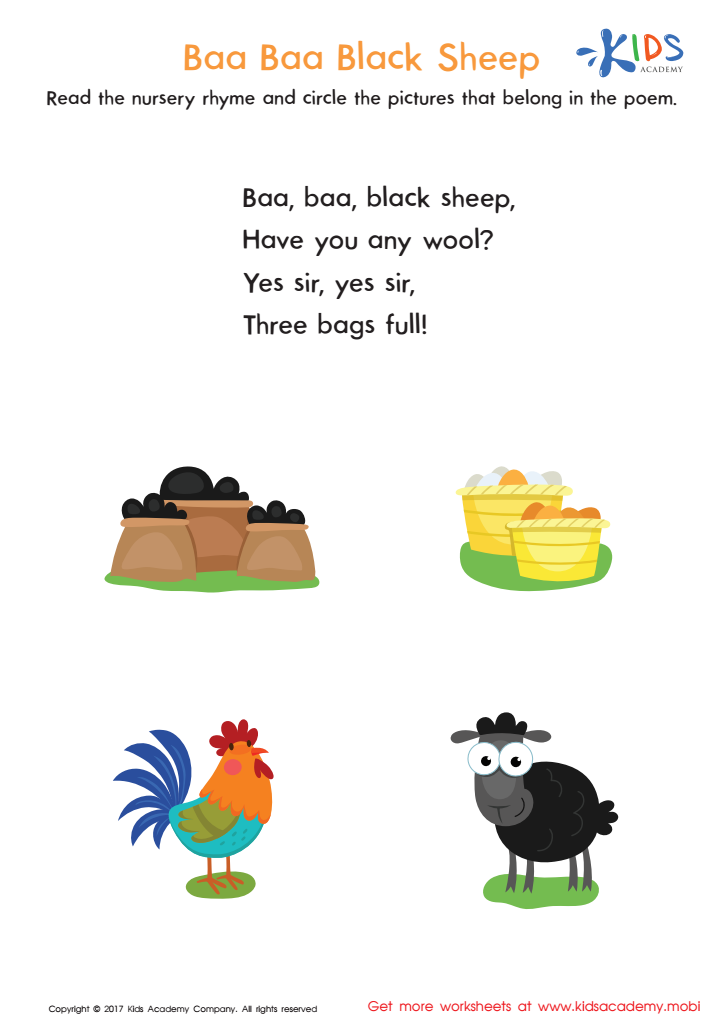
Baa Baa Black Sheep Printable
 Assign to My Students
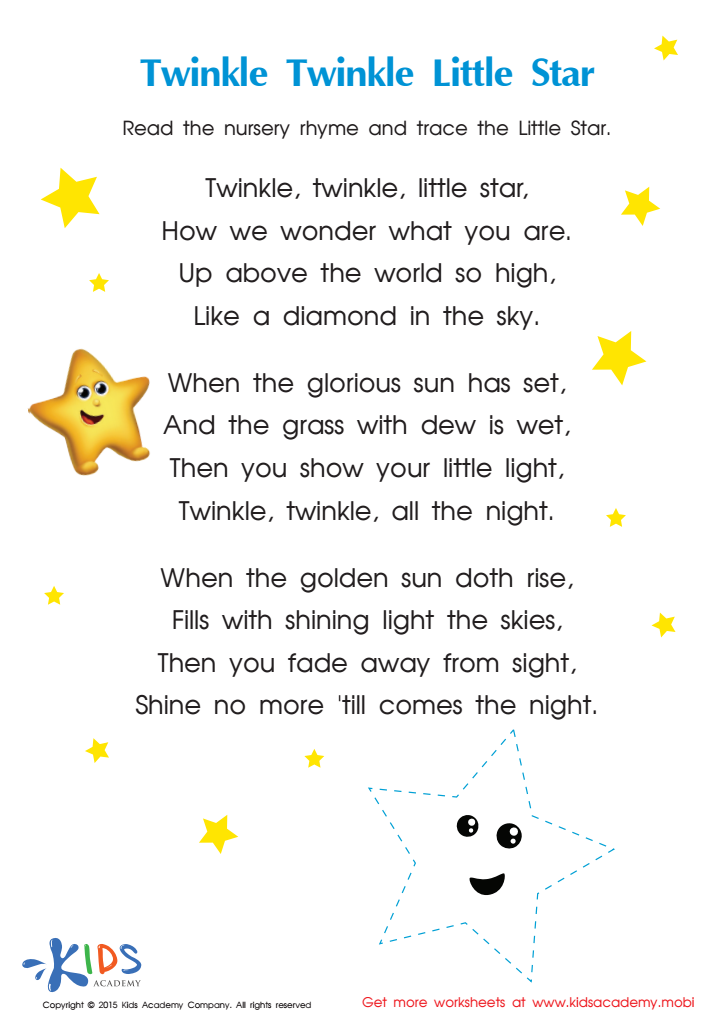
Nursery Rhymes: Twinkle Little Star Worksheet
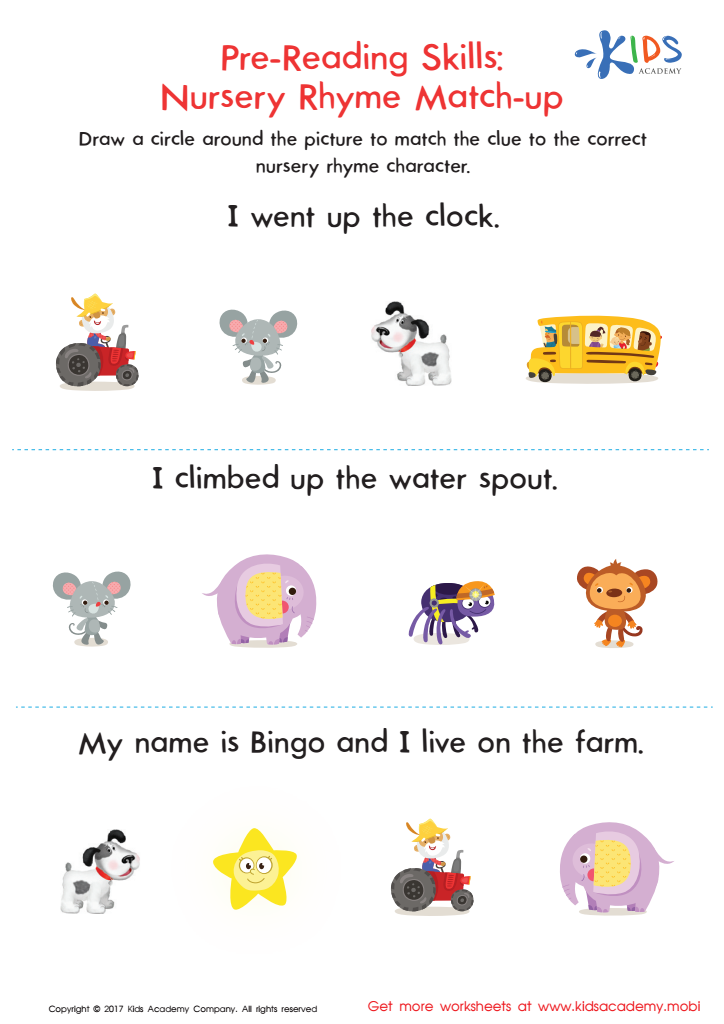
Nursery Rhyme Match–Up Worksheet






Rhyme recognition is a vital component of early literacy development for children aged 3 to 4. When parents and teachers prioritize rhyme recognition, they are aiding children in various ways that impact their future reading skills. One key reason to care about rhyme recognition is its role in phonemic awareness, which is the ability to hear and manipulate sounds in spoken words. When children can identify and produce rhymes, they enhance their ability to discern sound patterns, an essential skill for decoding words when they begin to read.
Moreover, engaging with rhymes encourages vocabulary development and language skills. Rhyming activities often involve playful language, which captivates young learners, making them more enthusiastic about reading and storytelling. Additionally, these activities foster memory skills since rhymes are easier for children to recall and repeat.
Ultimately, prioritizing rhyme recognition nurtures a love for language and reading in young children, encouraging them to explore books from an early age. The playful nature of rhyming promotes interaction and bonding between parents, teachers, and children, making learning a joyful and collaborative experience. By focusing on rhyme recognition, adults lay a strong foundation for literacy that can support children's academic success long into the future.








