Sound recognition Reading Worksheets for Ages 3-4
3 filtered results
-
From - To
Introduce your little learners to the wonders of reading with our engaging Sound Recognition Reading Worksheets designed for ages 3-4. At Kids Academy, we create fun, educational activities that help preschoolers identify and differentiate between various sounds, a crucial step in early literacy. Our expertly crafted worksheets feature vibrant illustrations and interactive exercises to keep young minds stimulated and eager to learn. Perfect for use at home or in the classroom, these printables aim to foster auditory discrimination and phonemic awareness, laying the foundation for successful reading skills. Explore our collection to give your child a head start on their reading journey!
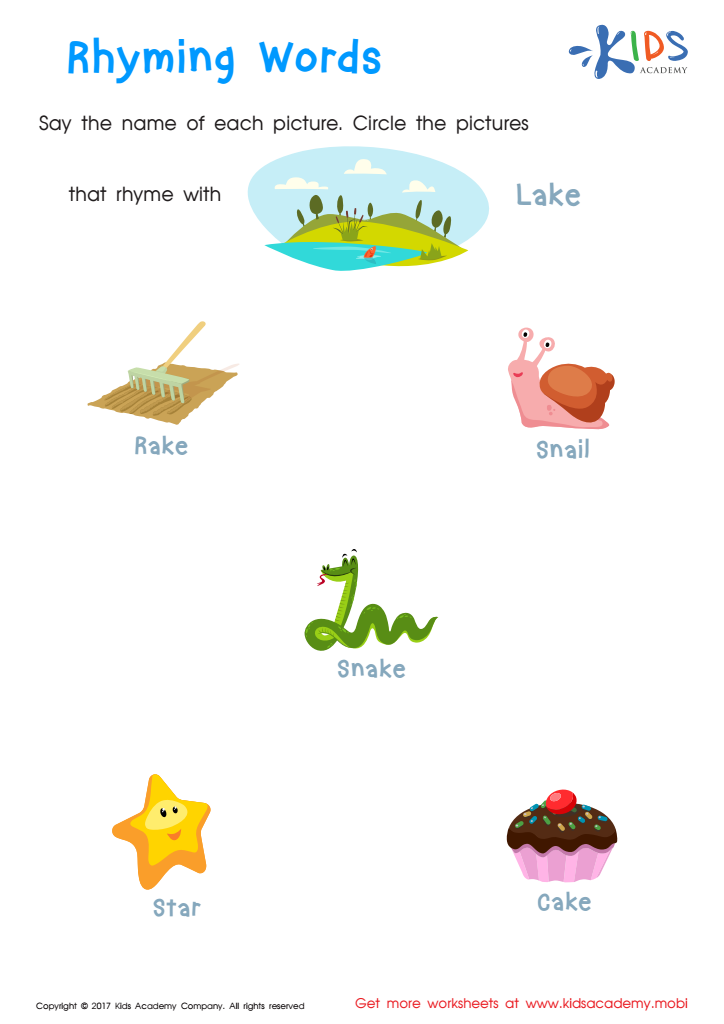
Rhyming Words Rhyming Worksheet
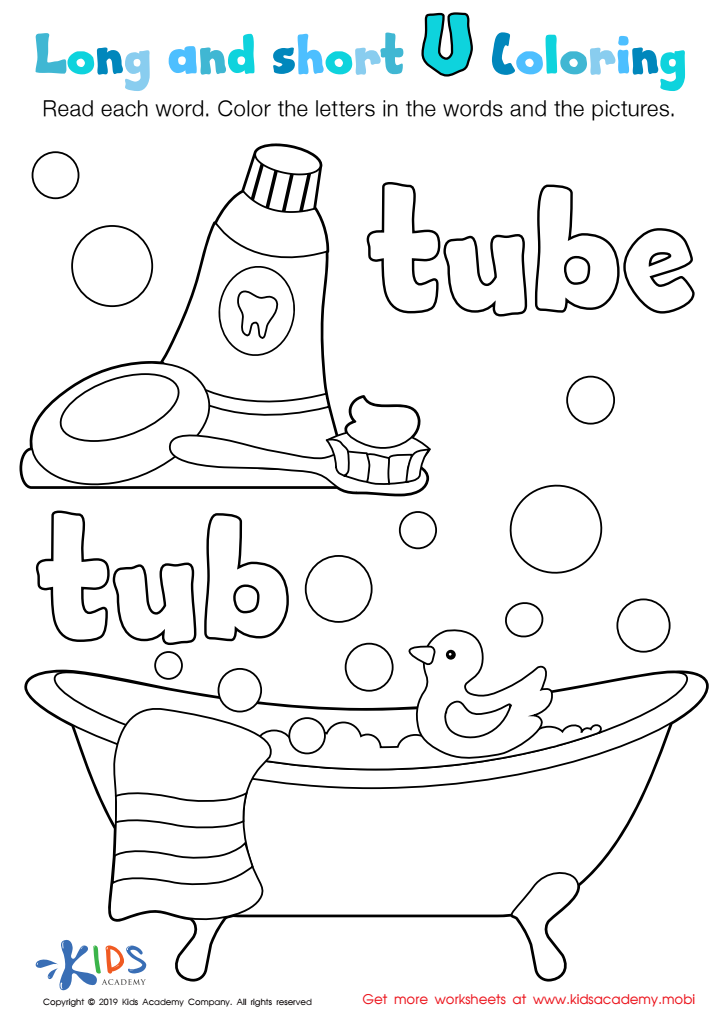
Long and Short U Worksheet
 Assign to My Students
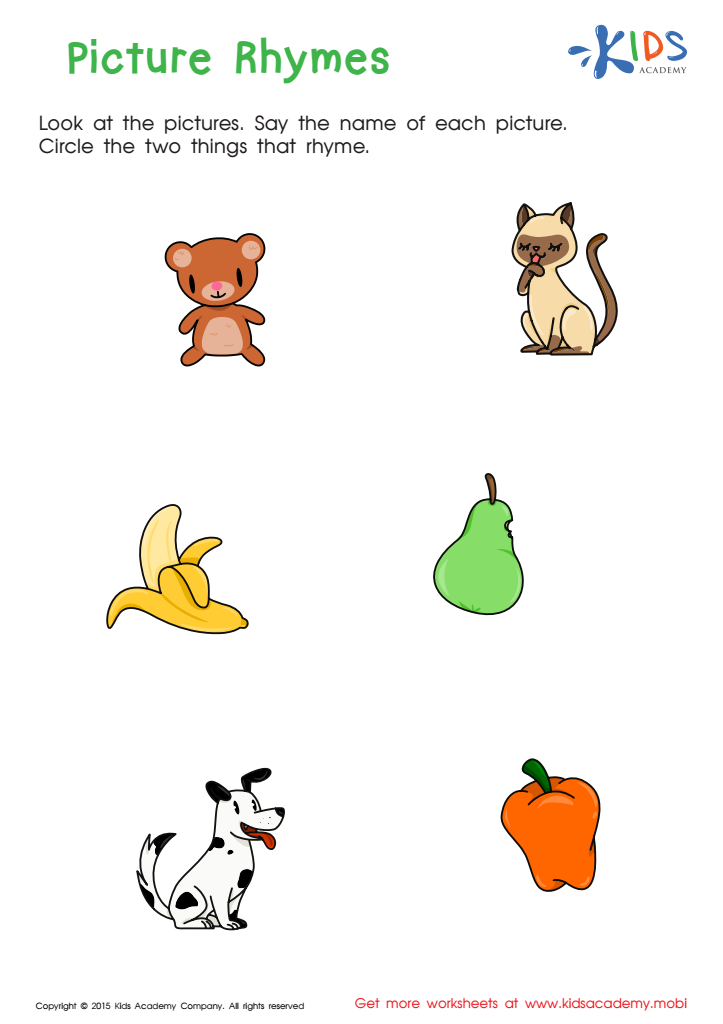
First Words: Picture Rhymes Worksheet







Sound recognition reading is crucial for children aged 3-4 because it forms the foundation for lifelong literacy and communication skills. During this critical developmental window, children's brains are highly adaptable, and they can quickly grasp new concepts. Phonemic awareness, or the ability to hear, identify, and manipulate individual sounds in words, is a key component of this stage.
Strong sound recognition skills enable children to decode words more effectively, which is essential for reading fluency. As they become adept at recognizing sounds, they develop better vocabulary and comprehension abilities. This early literacy competence can lead to a more confident and enthusiastic approach to learning.
For teachers and parents, supporting sound recognition creates a positive, interactive learning environment. Simple activities like rhyming games, story-time, and songs can significantly enhance a child's auditory discrimination and phonetic skills. Early sound recognition can also aid in identifying any reading-related challenges early on, allowing for timely intervention.
Ultimately, investing time and effort in developing sound recognition in early learners ensures they acquire critical skills necessary for academic success and effective communication. It's a foundational step that leads to better educational outcomes and fosters a love for reading and lifelong learning.








